Artwork
Landscape with a Windmill
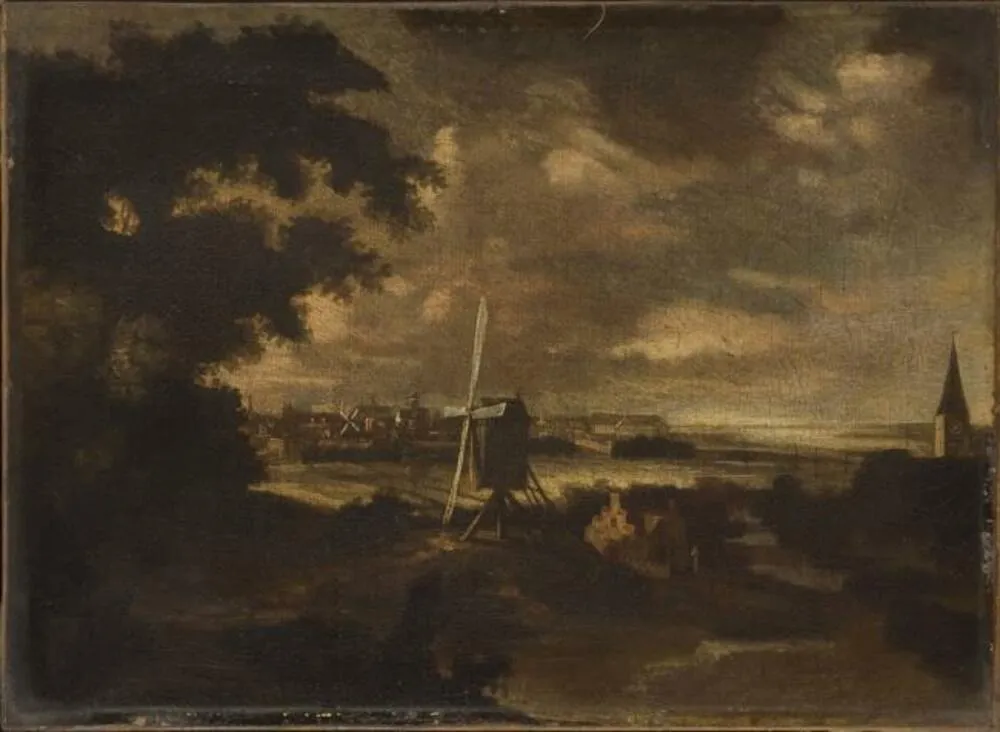
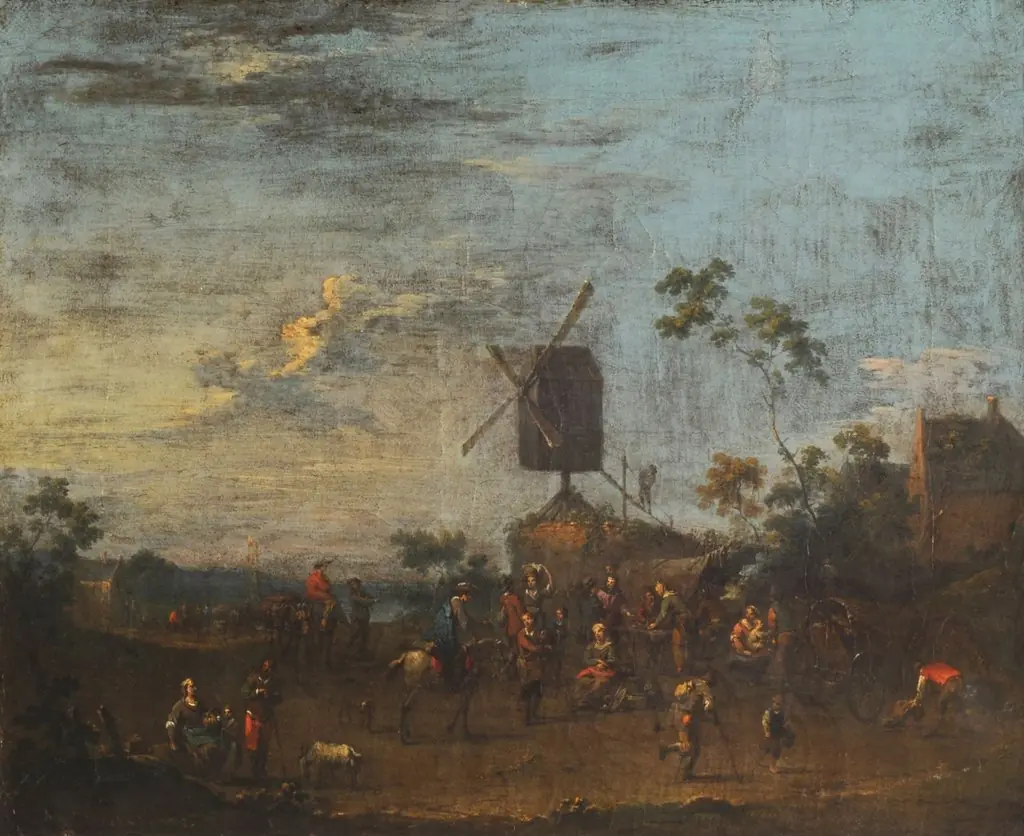
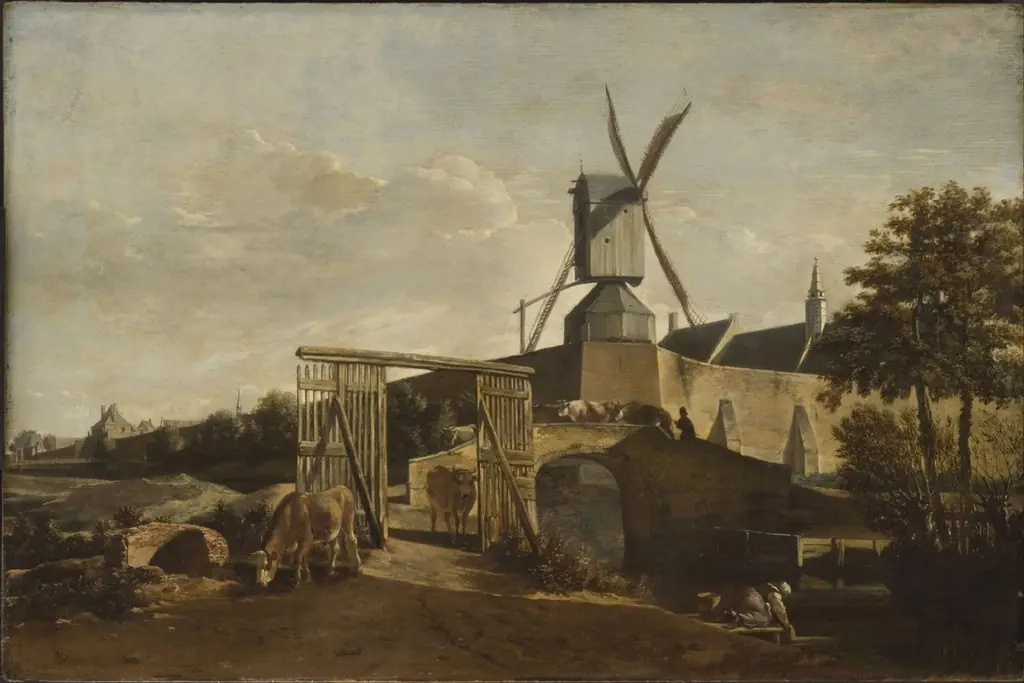
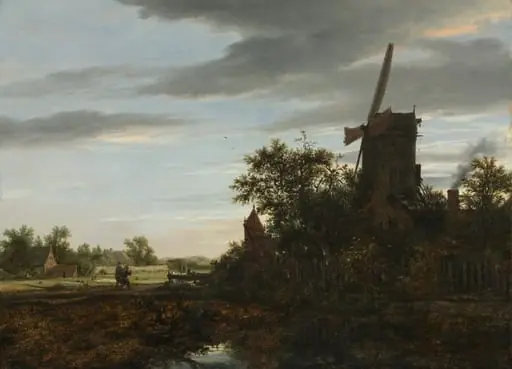
Landscape with a Windmill is an oil painting by the Dutch Golden Age artist Unknown. It dates from 1674 and is held in the collection of the Philadelphia Museum of Art. This oil painting depicts a quiet rural scene centered on a windmill, set against a muted landscape of fields and trees under a cloudy sky.
About this work
Overview
Subtle shifts in tone guide the viewer’s eye toward the windmill, which anchors the scene without dominating it through bold color or detail.
This oil painting depicts a quiet rural scene centered on a windmill, set against a muted landscape of fields and trees under a cloudy sky. The composition emphasizes stillness and atmospheric depth, with a restrained palette dominated by earthy browns and grays. Subtle shifts in tone guide the viewer’s eye toward the windmill, which anchors the scene without dominating it through bold color or detail.
Subject & Meaning
The windmill, a common feature of the Dutch countryside, functions as both a literal landmark and a quiet symbol of human presence within nature. Its placement at the center suggests stability amid the shifting sky and soft terrain. There is no human figure, yet the structure implies labor, routine, and harmony with the land, evoking a contemplative mood rather than narrative action.
Technique & Style
Soft, feathery brushwork renders the foliage and fields with a tactile looseness, while the windmill’s surfaces are modeled with careful chiaroscuro to suggest volume and solidity. The sky’s cloud formations are layered with thin glazes, creating a sense of movement and diffuse light. The contrast between delicate textures and defined forms enhances the painting’s quiet realism without theatricality.
History & Provenance
The painting’s origins are not documented in public records, but its style and materials align with Dutch landscape traditions of the late 17th or early 18th century. It lacks signatures or inscriptions, and its early ownership remains unknown. Its preservation suggests it was likely held in private collections, possibly within the Netherlands, before entering institutional care.
Context
During the period in which it was likely made, Dutch painters increasingly turned to serene, unidealized landscapes as subjects worthy of quiet observation. The windmill, once a symbol of economic power, had become a familiar, almost mundane fixture in rural life. This work reflects a broader cultural shift toward valuing the ordinary and the atmospheric over grand historical or mythological themes.
Legacy
Though not attributed to a major artist, the painting exemplifies the quiet aesthetic that defined much of Dutch landscape painting beyond its most celebrated names. Its restrained palette and emphasis on atmosphere influenced later generations who sought to capture the emotional weight of everyday scenery, contributing to the enduring appeal of understated naturalism in European art.
Artist & collection

 Domestic Scene
 Giacomo and Cardinal Marco, investing Andrea, Abbot of San Zeno, with his Benefice
 The Nymph of Fontainebleau
 Portrait of a Woman
 Madonna and Child with Saints in the Enclosed Garden
 Venus and Minerva
 Family Group of Four on Sofa
 Wall painting from Room H of the Villa of P. Fannius Synistor at Boscoreale