Artwork
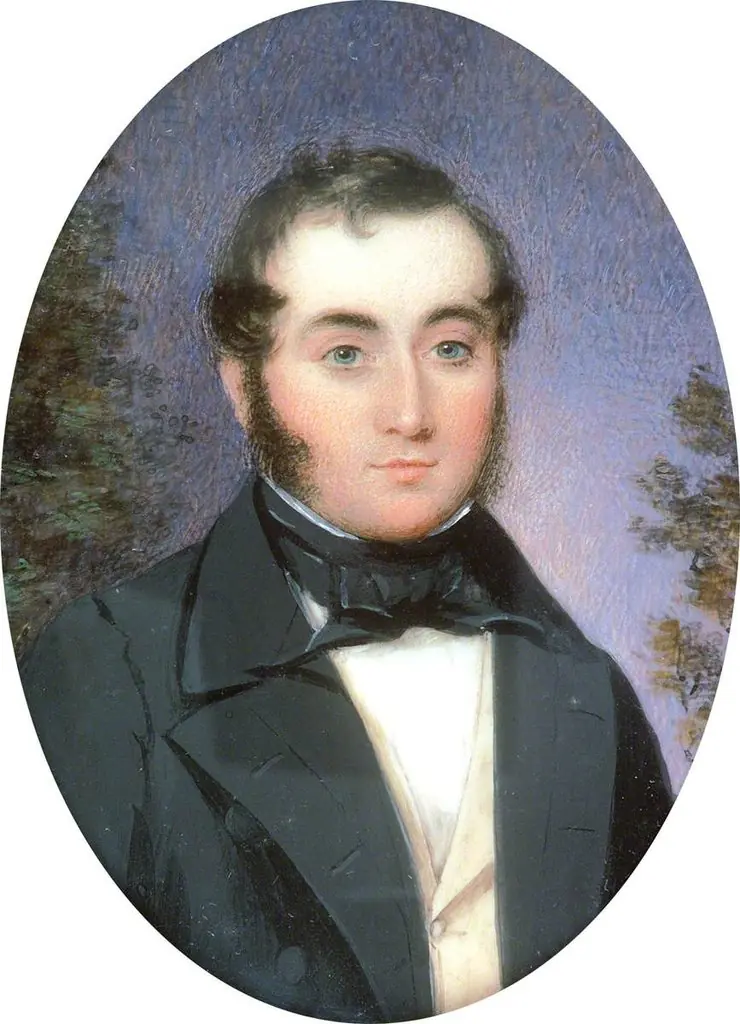
Thomas Davies, Llandingad
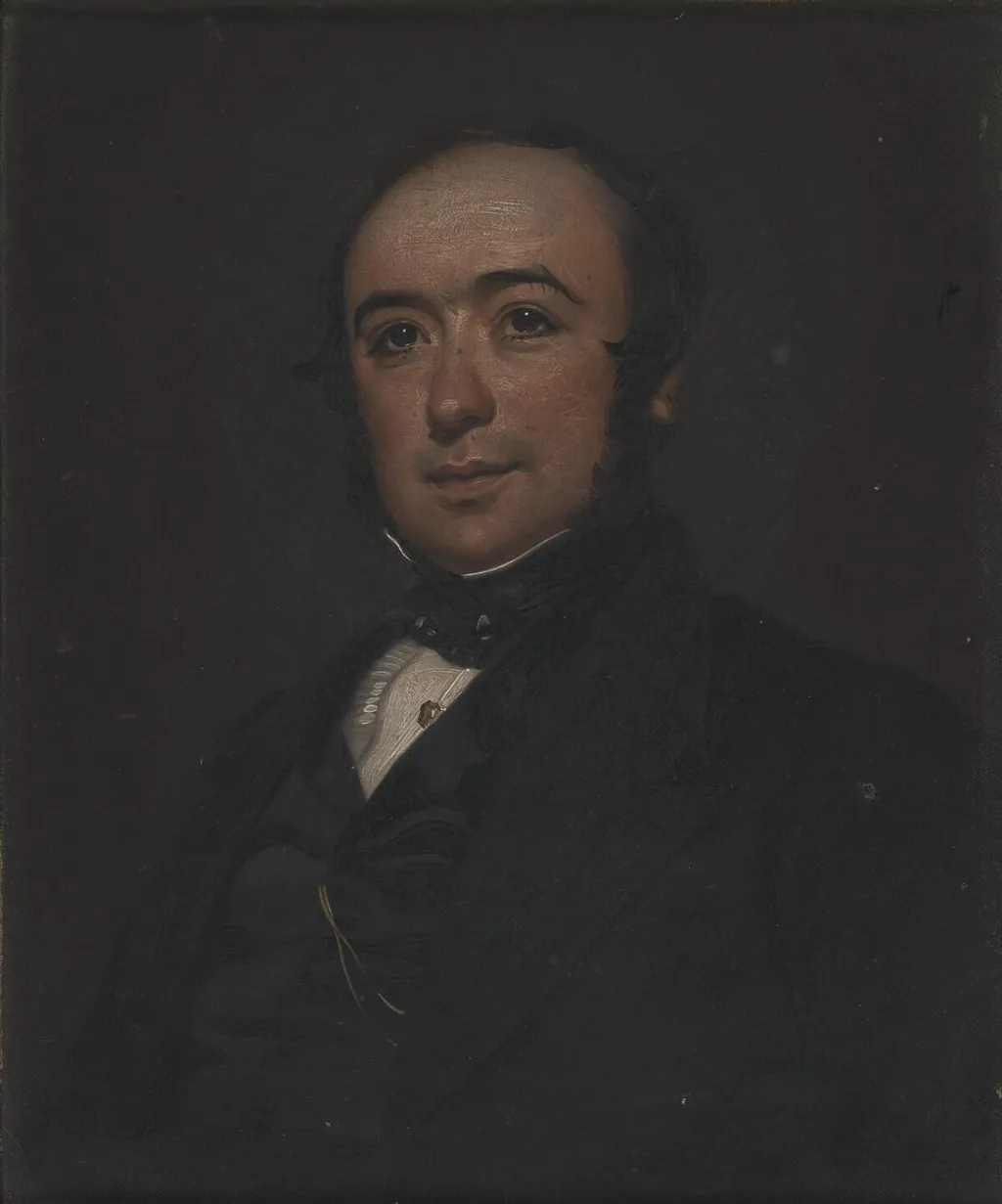
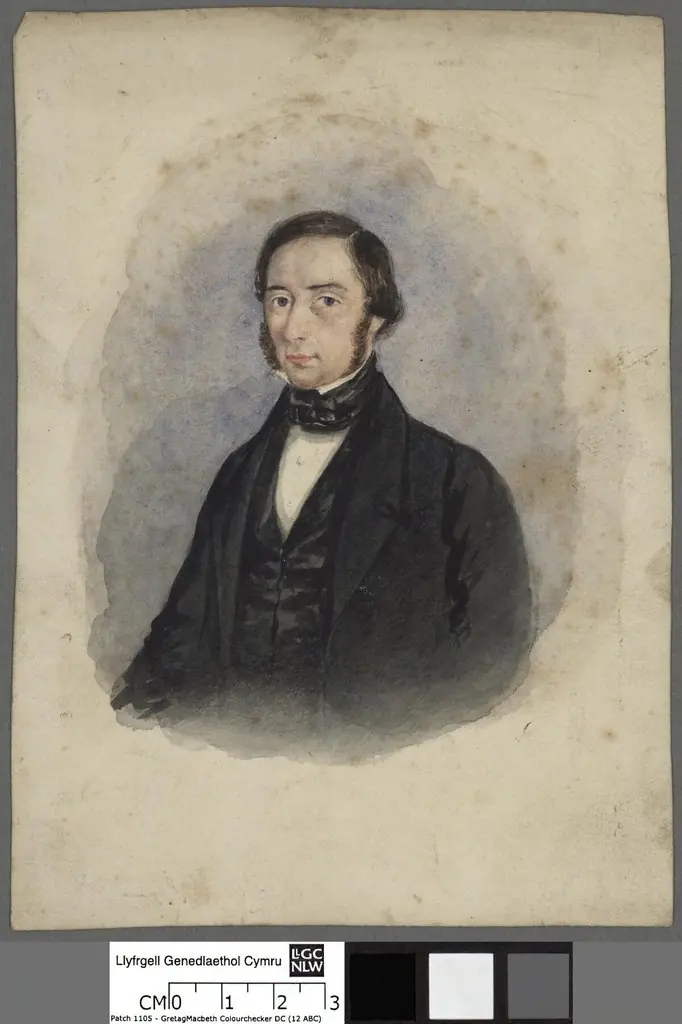
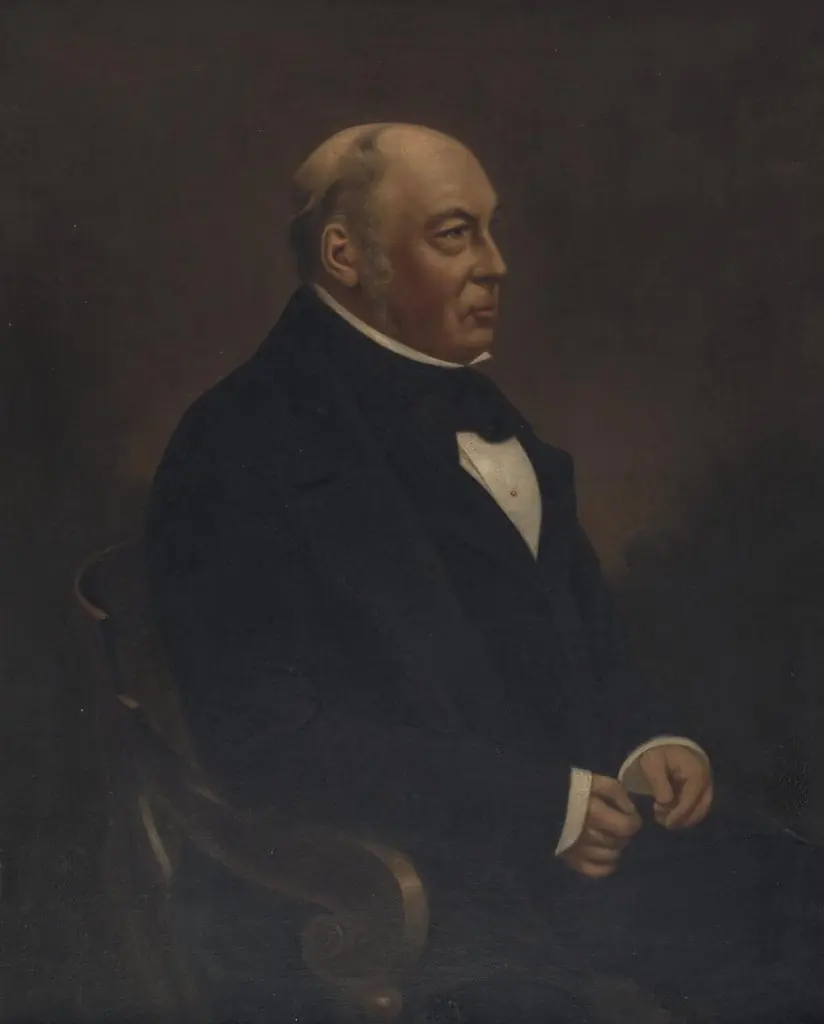
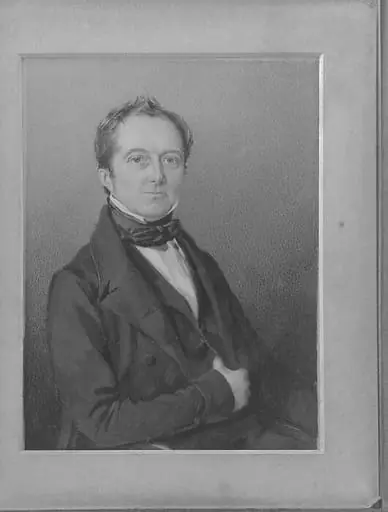
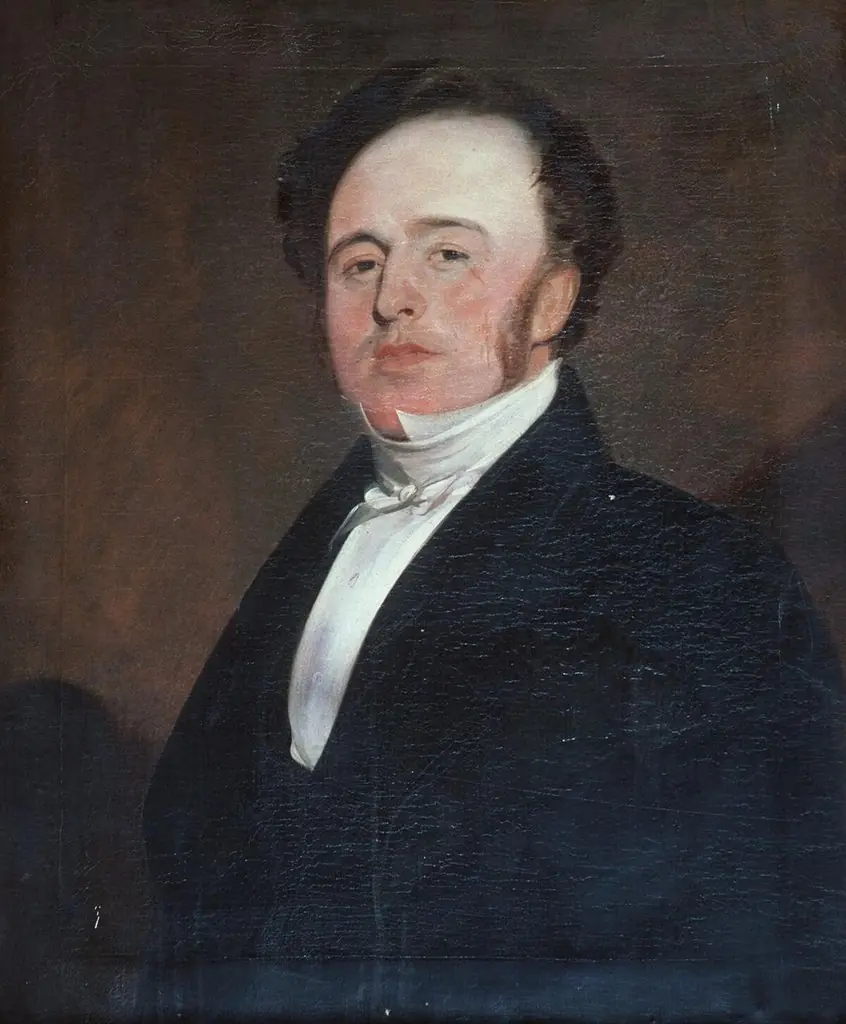
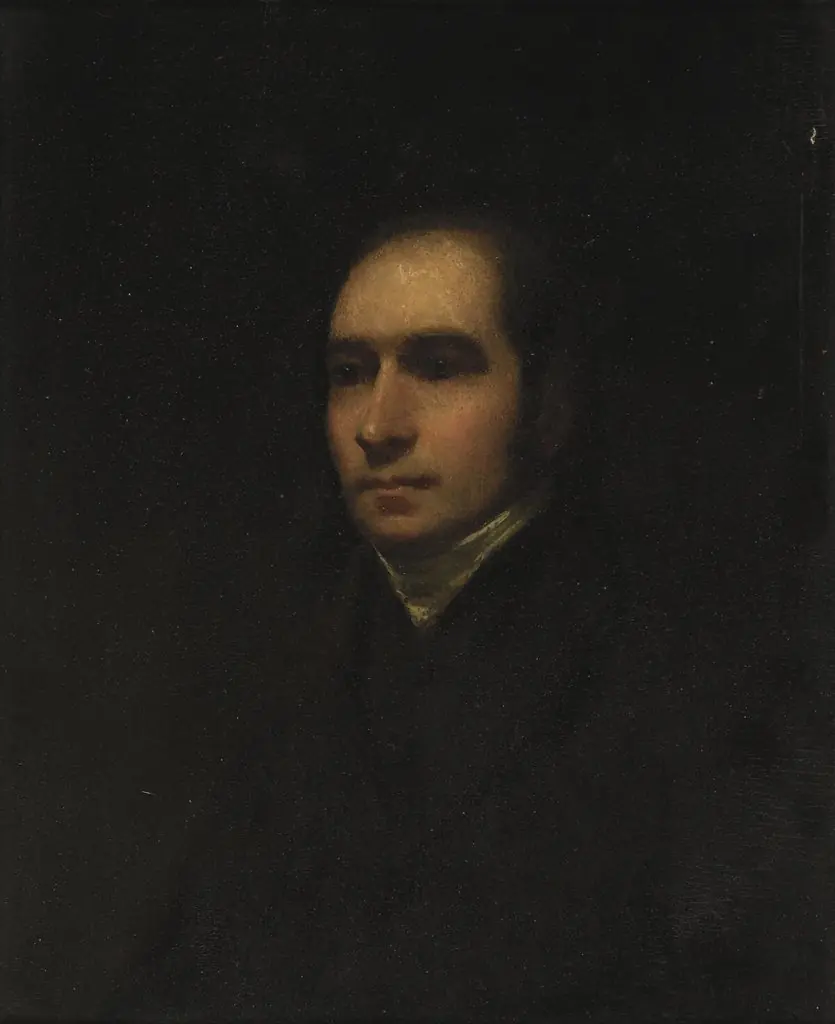
Thomas Davies, Llandingad is an oil painting by the British Romanticist artist Unknown. It dates from 1830 and is held in the collection of the National Library of Wales. Thomas Davies painted this portrait in oil on canvas, capturing a seated male figure in mid-torso view.
About this work
Overview
Thomas Davies painted this portrait in oil on canvas, capturing a seated male figure in mid-torso view. The subject is rendered against a deep, unbroken background that enhances the focus on his form. Subtle lighting and textured brushwork define the figure’s presence without elaborate setting or context, emphasizing a quiet, introspective mood.
Subject & Meaning
The man depicted wears a dark coat over a white shirt with a high collar and a dark bow tie, suggesting formal attire of the late 18th century. His turned head and direct gaze imply quiet engagement with the viewer, though no identity or narrative is recorded. The portrait conveys dignity through restraint, avoiding symbolic elements in favor of psychological presence.
Technique & Style
Davies employed chiaroscuro to model the figure’s face and clothing, using strong contrasts between light and shadow to create volume. Impasto is applied selectively on the shirt and collar, adding tactile richness. The dark background is rendered with minimal brushwork, allowing the subject to emerge through careful tonal gradation rather than detail.
History & Provenance
The painting’s early ownership is undocumented, and no exhibition or sale records from Davies’s lifetime are known to survive. It entered public collection holdings in the 20th century, likely through private acquisition or bequest. Its attribution to Davies is based on stylistic comparison with his other known portraits from the 1770s–1780s.
Context
Created during a period when British portraiture favored formal, seated compositions, Davies’s work aligns with the tradition of modest, psychologically grounded likenesses. Unlike grand aristocratic portraits, this piece reflects a more intimate, middle-class aesthetic, possibly commissioned by a professional or merchant class patron seeking understated representation.
Legacy
Though not widely exhibited, the painting contributes to understanding Davies’s approach to portraiture—focused on subtle expression and material presence over ornamentation. It remains a quiet example of late 18th-century British painting that values observation over spectacle, preserving a moment of individuality without theatricality.
Artist & collection

 Domestic Scene
 Giacomo and Cardinal Marco, investing Andrea, Abbot of San Zeno, with his Benefice
 The Nymph of Fontainebleau
 Portrait of a Woman
 Madonna and Child with Saints in the Enclosed Garden
 Venus and Minerva
 Family Group of Four on Sofa
 Wall painting from Room H of the Villa of P. Fannius Synistor at Boscoreale