Artwork
Portrait of William III, Prince of Orange and King of England after 1689
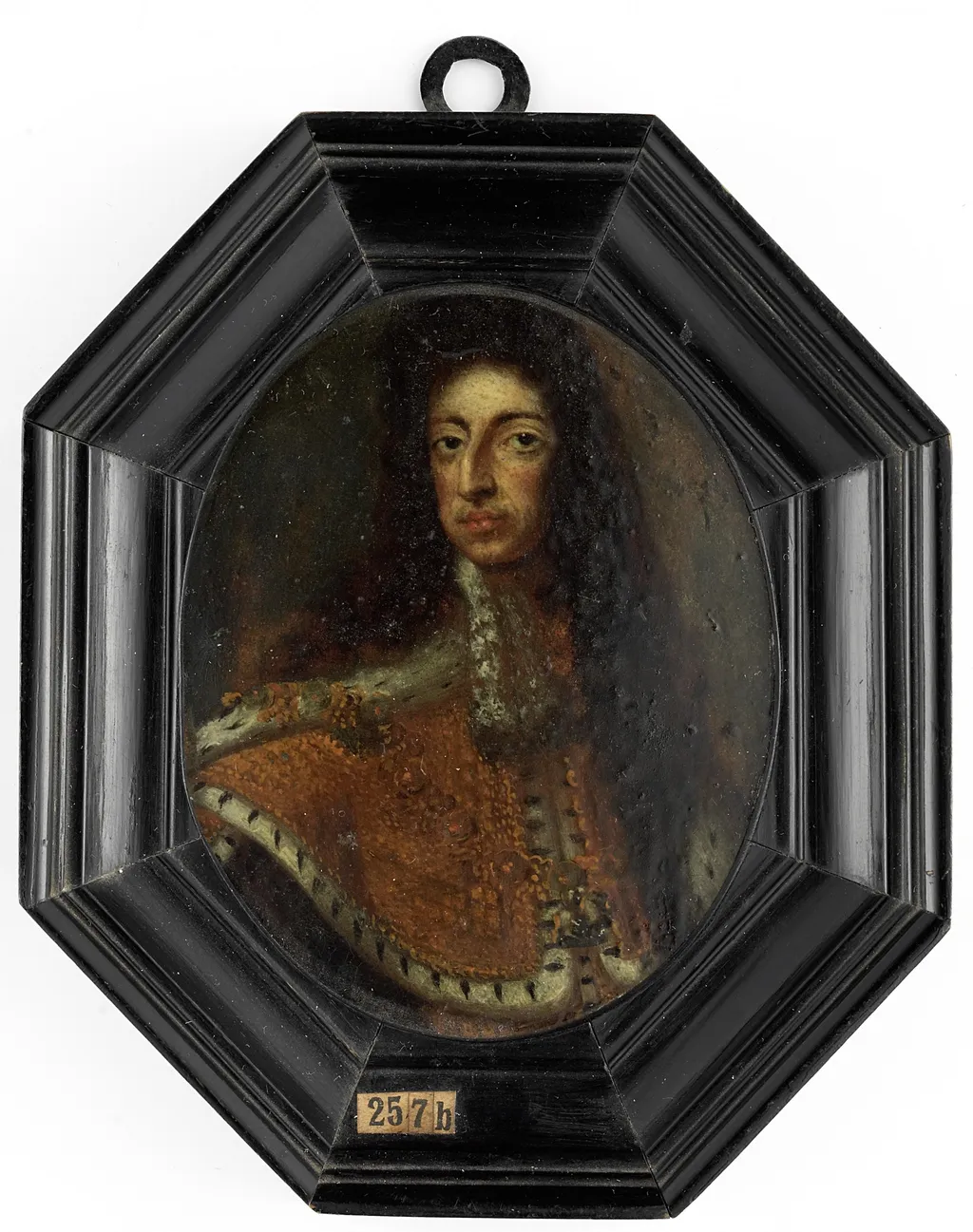
Portrait of William III, Prince of Orange and King of England after 1689 is an oil painting. It dates from 1698 and is held in the collection of the Rijksmuseum. This portrait, executed on tin and framed in a black octagon, depicts William III, Prince of Orange and King of England, subsequent to 1689.
About this work
Overview
This portrait, executed on tin and framed in a black octagon, depicts William III, Prince of Orange and King of England, subsequent to 1689. The subject is prominently featured with a calm, serious expression, set against a dark background that accentuates his face.
Subject & Meaning
The portrait specifically represents William III following his accession to the English throne in 1689, highlighting his dual role as Prince of Orange and King of England. His attire, including an orange and white outfit with a white ruff, reflects his status and affiliations.
Technique & Style
Unconventionally painted on tin, the work contrasts a somber, dark backdrop with the vivid, detailed depiction of the subject's face and clothing, emphasizing the sitter's presence. The focus on the face underscores the artist's intent to convey character and authority.
History & Provenance
Currently housed at the Rijksmuseum, the portrait's pre-museum history is not detailed here, though its creation post-1689 aligns with William III's reign in England.
Context
Produced during William III's rule, the portrait reflects the artistic and political climate of late 17th-century Europe, where such depictions served to solidify royal legitimacy and presence across territories.
Artist & collection