Artwork
Vishnu and Lakshmi
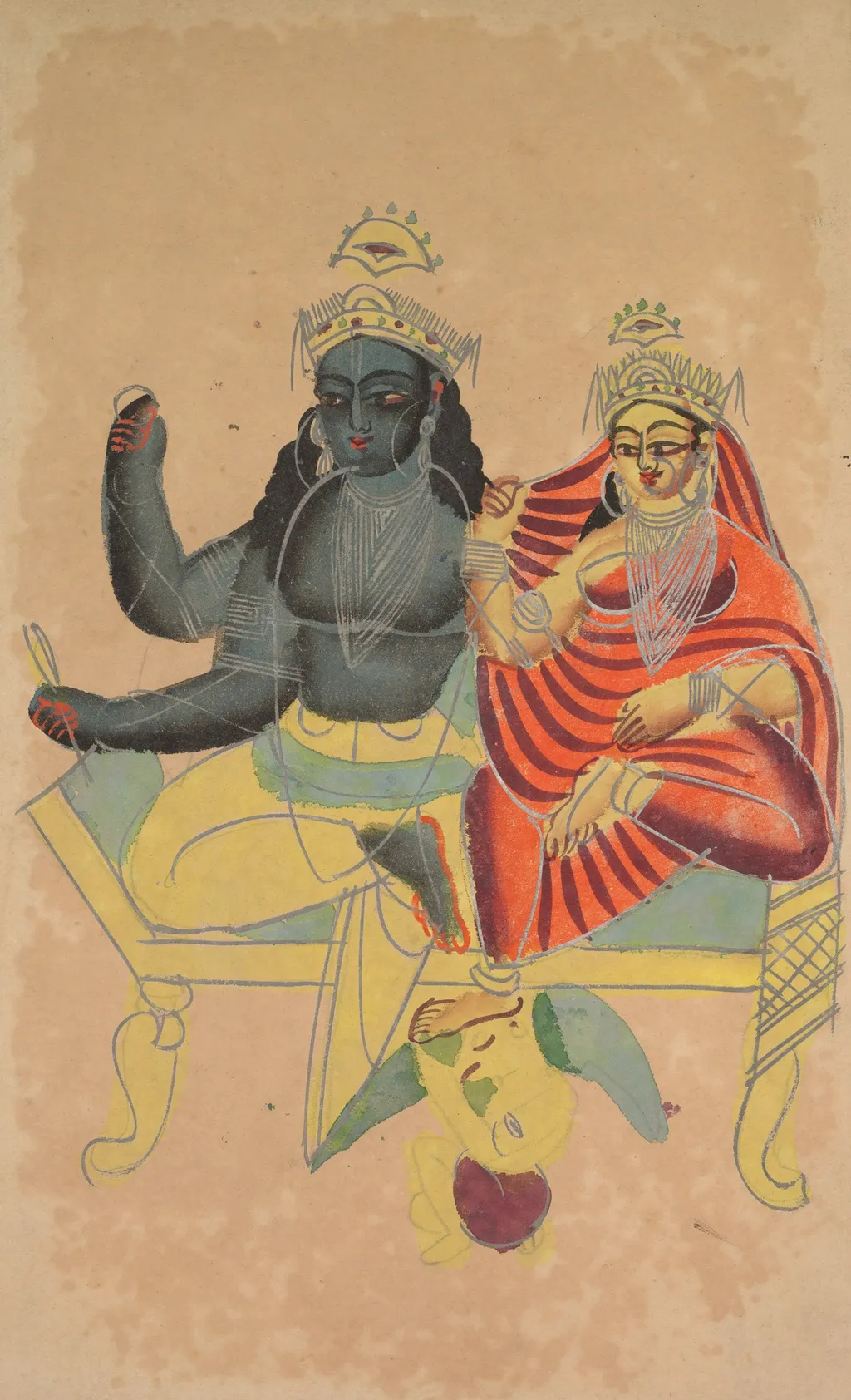
Vishnu and Lakshmi is an unspecified painting. It dates from 1896 and is held in the collection of the Cleveland Museum of Art.
About this work
Overview
The work depicts a dark‑skinned, four‑armed figure seated cross‑legged on a yellow platform, accompanied by a woman in a striped sari and a small child. The deity holds a diminutive object in one hand while the other three are gesturing. The background is a uniform light‑brown, and the figures are adorned with modest gold ornaments.
Subject & Meaning
The central figure’s blue‑black complexion and multiple limbs identify it as a Hindu deity, most likely Vishnu, while the accompanying woman, dressed in a red‑and‑white striped sari, represents his consort Lakshmi. The child’s presence introduces a domestic, familial dimension, blending the sacred narrative with everyday life.
Technique & Style
Executed in the Kalighat school’s characteristic flatness, the painting employs bold outlines and a limited palette of earthy tones and bright accents. The figures are rendered with simplified anatomy and stylised gestures, typical of 19th‑century Bengal water‑colour works on paper.
History & Provenance
Kalighat paintings emerged from the bustling Kalighat temple precincts of Kolkata during the mid‑1800s, catering to pilgrims and local patrons. This piece follows that tradition, though its precise ownership record is undocumented.
Context
The juxtaposition of divine iconography with ordinary attire reflects a period when popular religious art began to incorporate contemporary social settings, making mythic themes accessible to a broader audience.
Legacy
Works of this genre influenced later Indian popular art, informing visual vocabularies in print media and folk traditions that continued to merge sacred narratives with quotidian life.
Artist & collection
