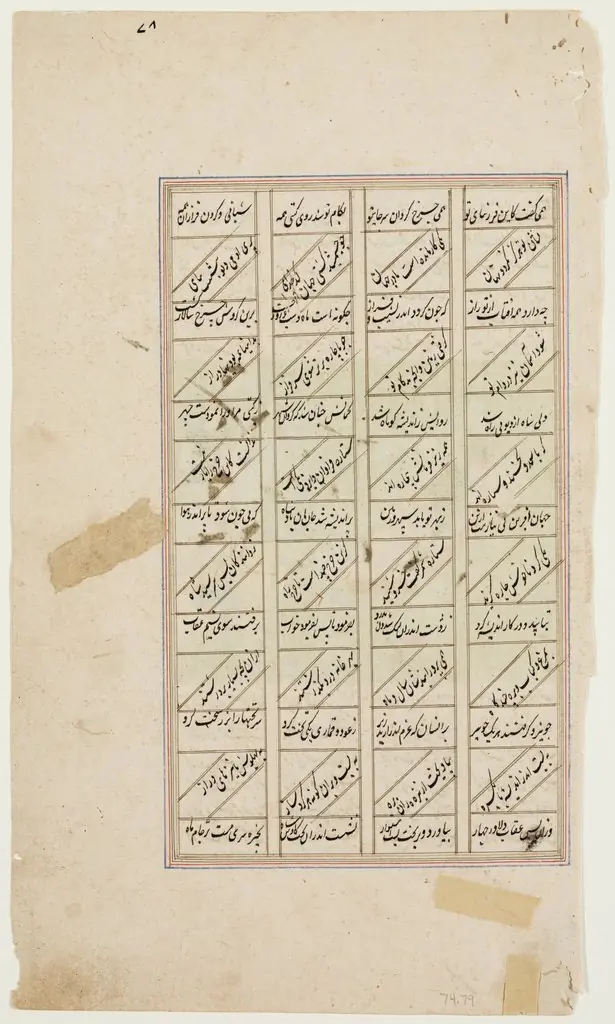
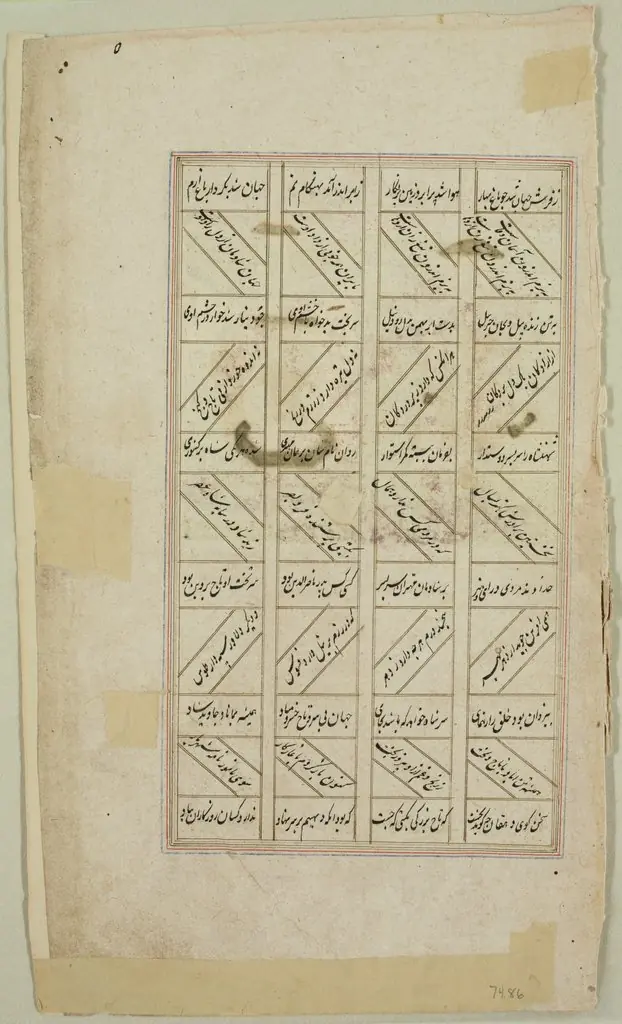
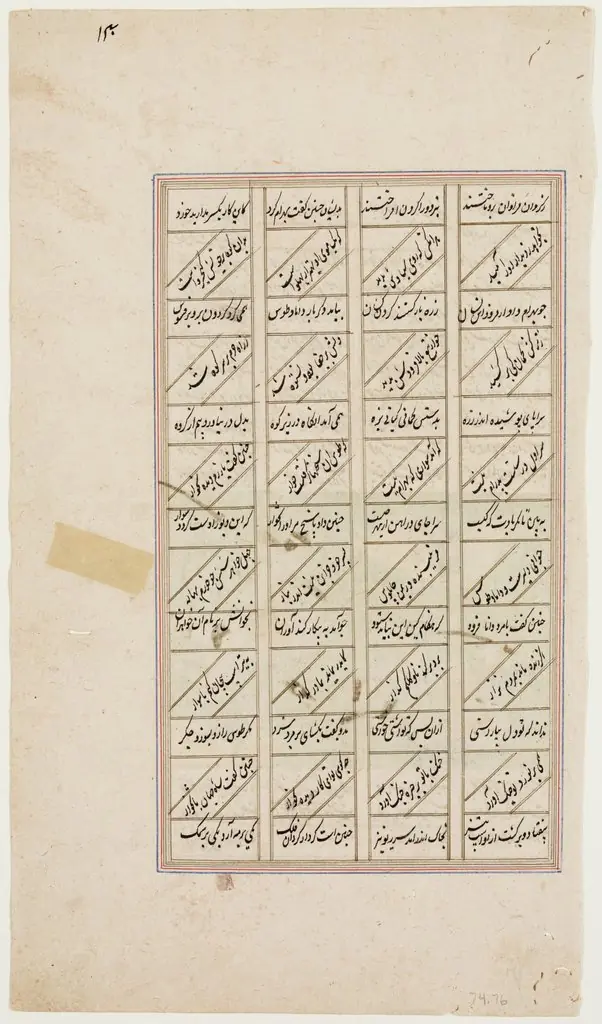
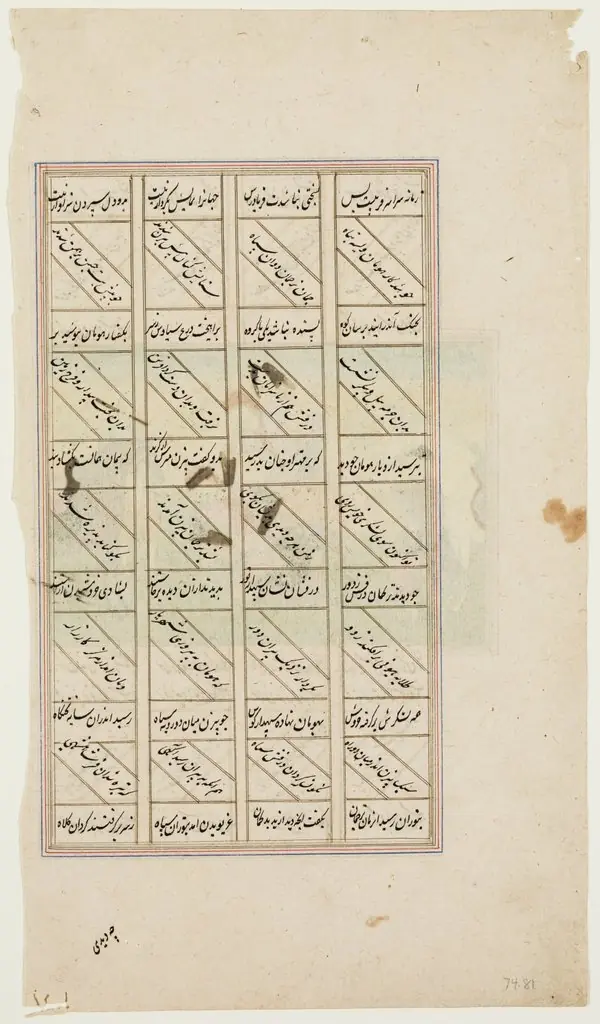
Artwork
Rustam and the Simurgh
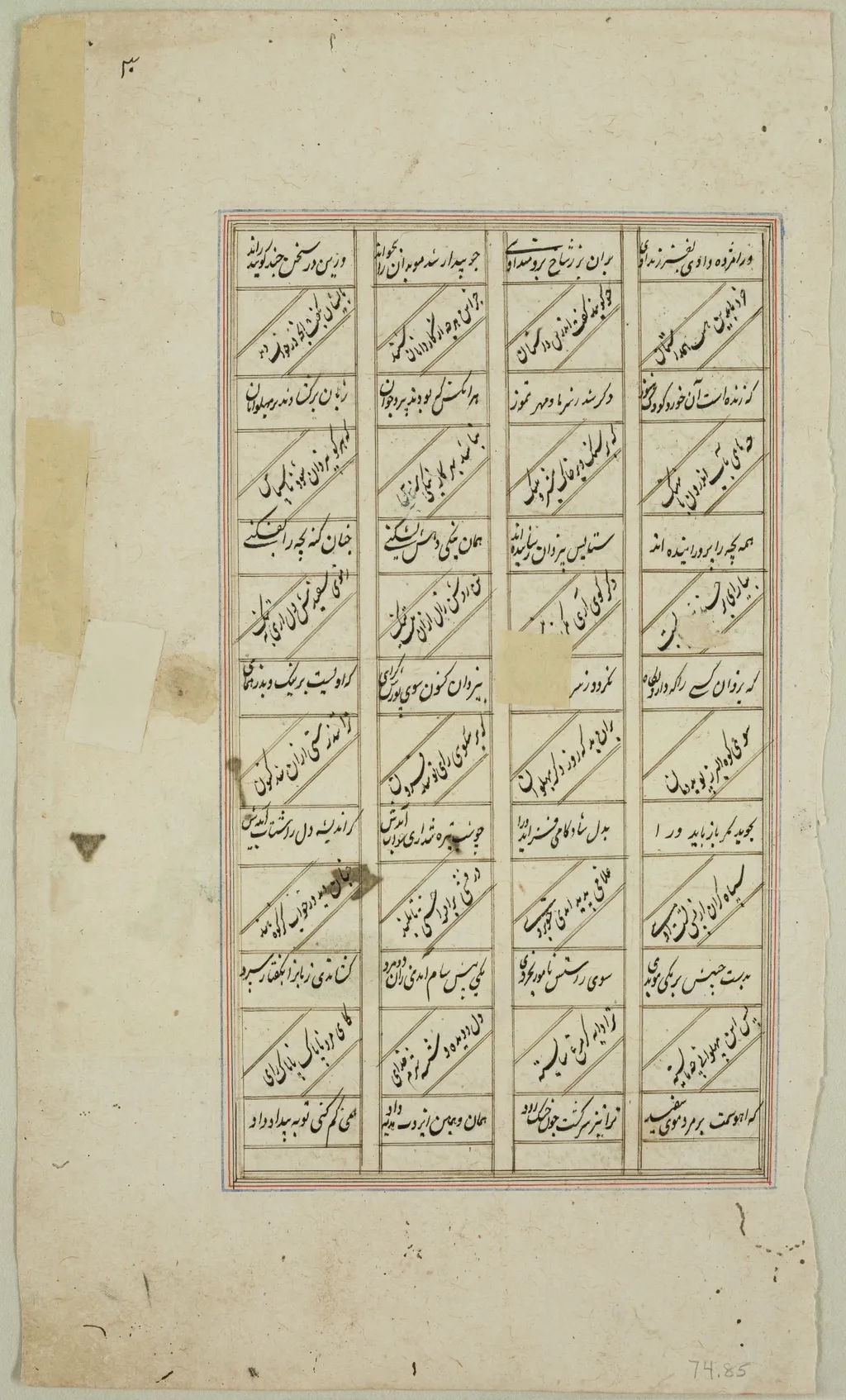
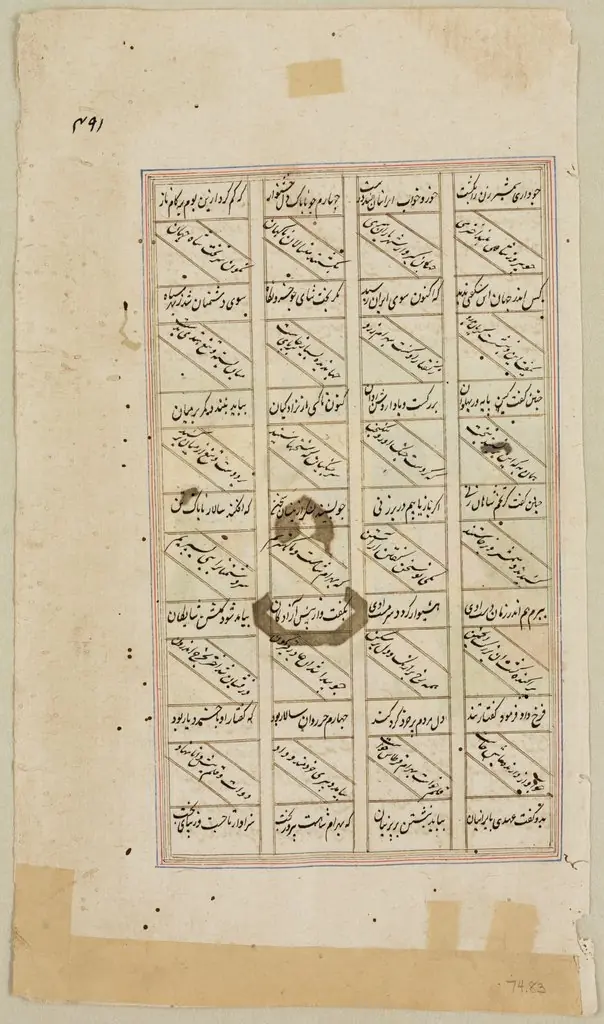
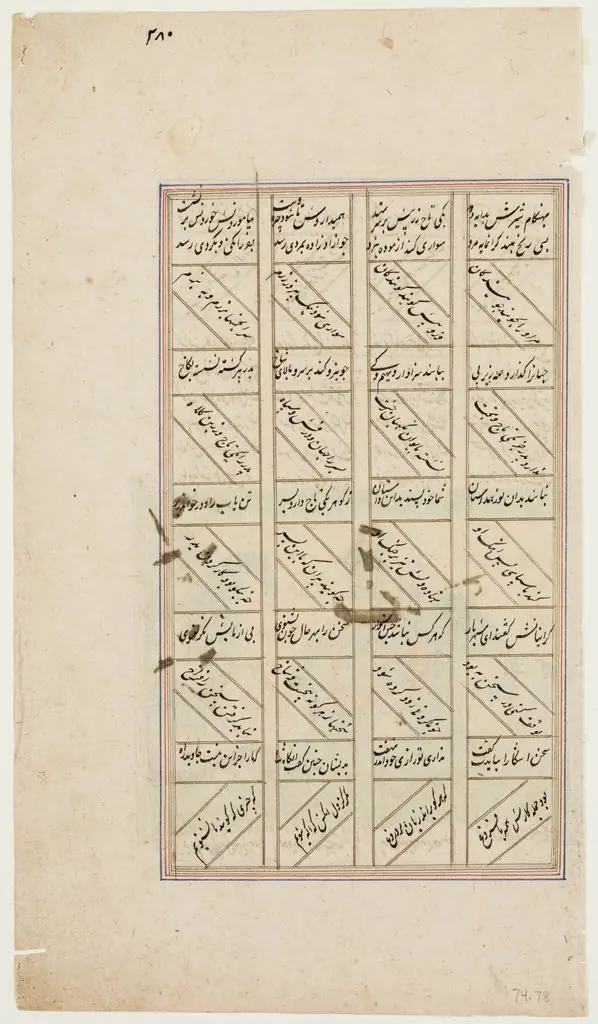
Rustam and the Simurgh is an unspecified painting by the Persian Miniature artist Unknown. It dates from 1620 and is held in the collection of the Detroit Institute of Arts.
About this work
Overview
This painting illustrates a moment from Persian epic tradition, capturing the hero Rustam in encounter with the Simurgh, a legendary bird of wisdom.
This painting illustrates a moment from Persian epic tradition, capturing the hero Rustam in encounter with the Simurgh, a legendary bird of wisdom. Set against a layered landscape, the composition emphasizes motion and tension through dynamic figures and vivid color. The scene is rendered with expressive brushwork that conveys energy rather than precise detail, aligning with Persian miniature traditions adapted for heightened emotional impact.
Subject & Meaning
Rustam, a central figure in the Shahnameh, is shown reaching toward the Simurgh, a divine bird symbolizing guidance and transformation. Their interaction suggests a pivotal moment of revelation or divine intervention in Rustam’s journey. The bird’s outstretched wings and the hero’s forward lean imply a meeting of mortal and celestial realms, reinforcing themes of destiny and spiritual trial embedded in Persian epic poetry.
Technique & Style
The artist employs bold, fluid brushstrokes to animate both figure and environment, avoiding rigid outlines in favor of dynamic forms. A palette of deep blues, earthy greens, and muted browns establishes atmospheric depth, while layered pigments suggest distance and texture. The style blends traditional Persian miniature conventions with a more expressive, almost theatrical handling of movement, characteristic of later Safavid-era innovations.
History & Provenance
This work likely originated in a royal atelier during the Safavid period, when illustrated manuscripts of the Shahnameh were highly prized. Though exact origins are undocumented, its stylistic features align with 16th- to 17th-century Persian court painting. It may have been part of a larger illustrated codex, later dispersed, with this scene surviving as a standalone folio in private or institutional collections.
Context
During the Safavid era, Persian painting flourished as a vehicle for reinforcing cultural identity through literary themes. The Shahnameh, composed centuries earlier, remained a vital source of national myth and moral instruction. Artists reinterpreted its episodes with increasing emotional intensity, reflecting both courtly patronage and a broader audience’s engagement with epic narratives as expressions of spiritual and political ideals.
Legacy
This painting contributes to a sustained visual tradition of illustrating Persian epic poetry, influencing later artists and collectors across the Islamic world. Its emphasis on movement and symbolic gesture helped shape how mythological narratives were rendered in painting. Though not widely known outside specialized circles, it remains a significant example of how literature and visual art intertwined in pre-modern Persian culture.
Artist & collection

 Domestic Scene
 Giacomo and Cardinal Marco, investing Andrea, Abbot of San Zeno, with his Benefice
 The Nymph of Fontainebleau
 Portrait of a Woman
 Madonna and Child with Saints in the Enclosed Garden
 Venus and Minerva
 Family Group of Four on Sofa
 Wall painting from Room H of the Villa of P. Fannius Synistor at Boscoreale