Artwork
Toba-e (Comic Picture)
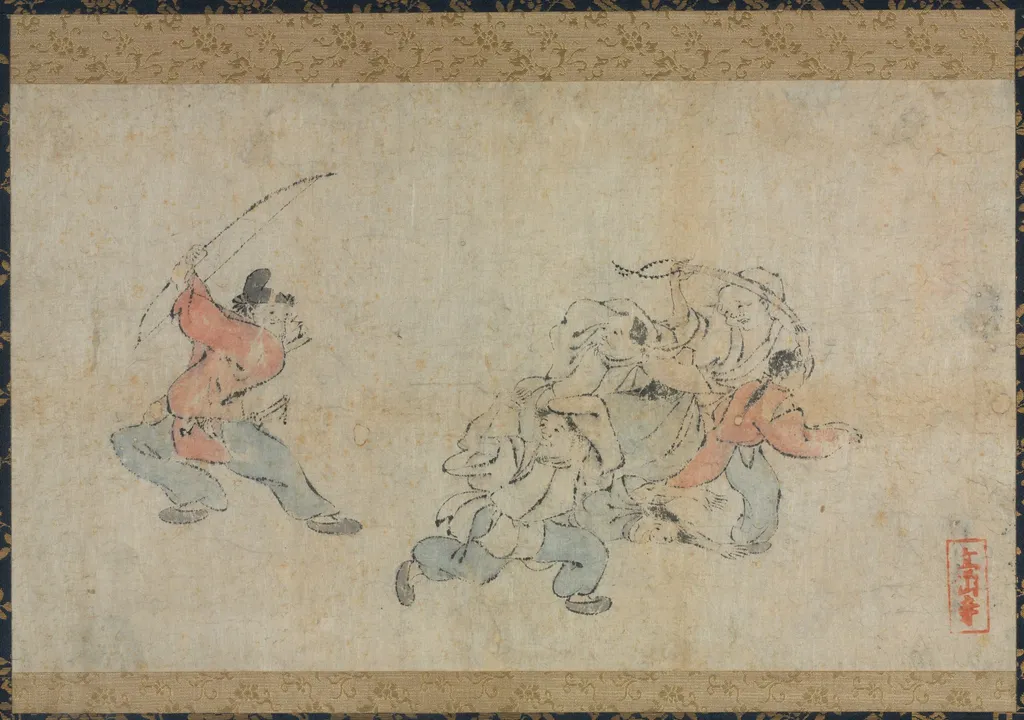
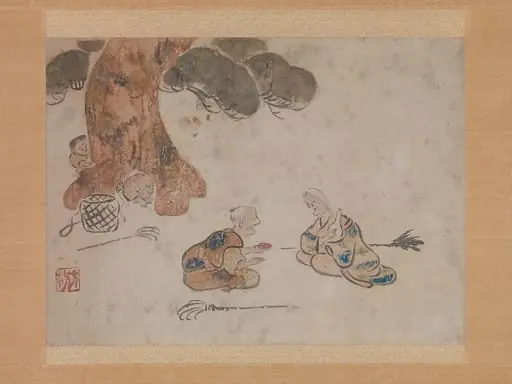
Toba-e (Comic Picture) is an unspecified painting. It dates from 1649 and is held in the collection of the Cleveland Museum of Art.
About this work
Overview
Beneath this figure lies a tangled mass of smaller, oversized‑headed characters rendered in alternating blue and red hues.
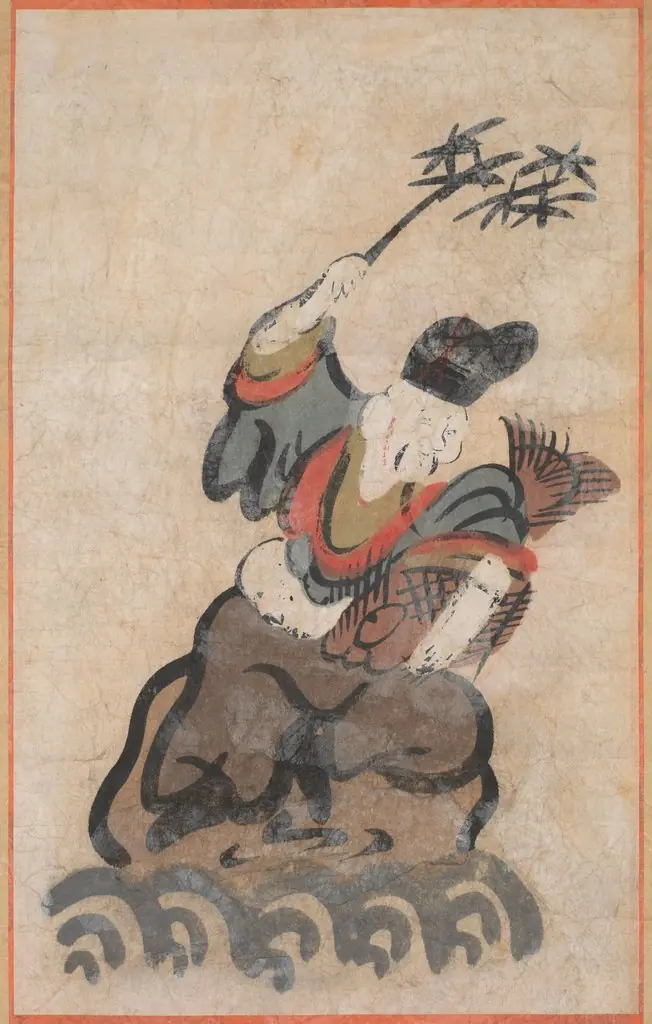
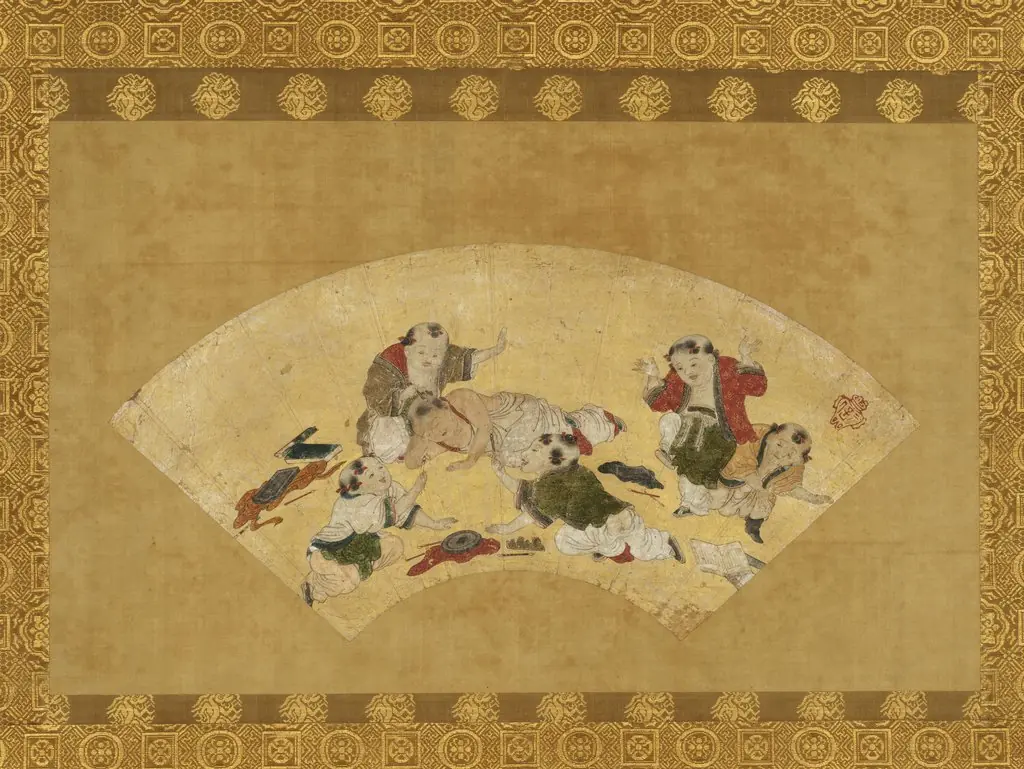
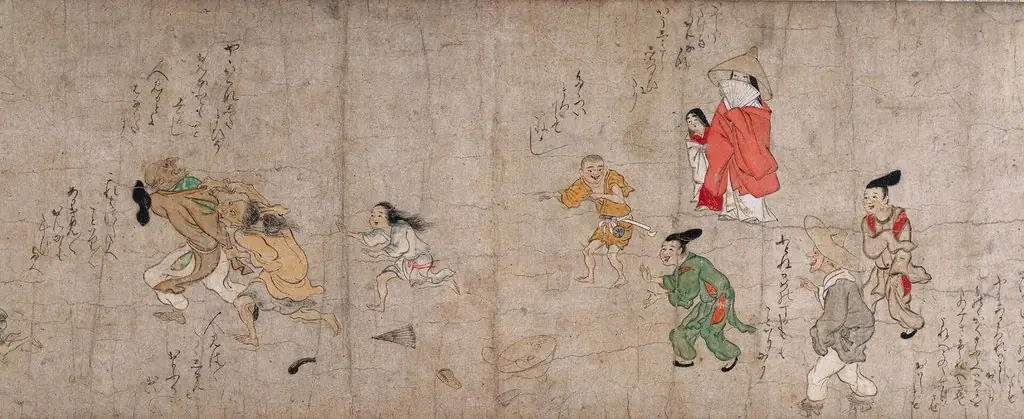
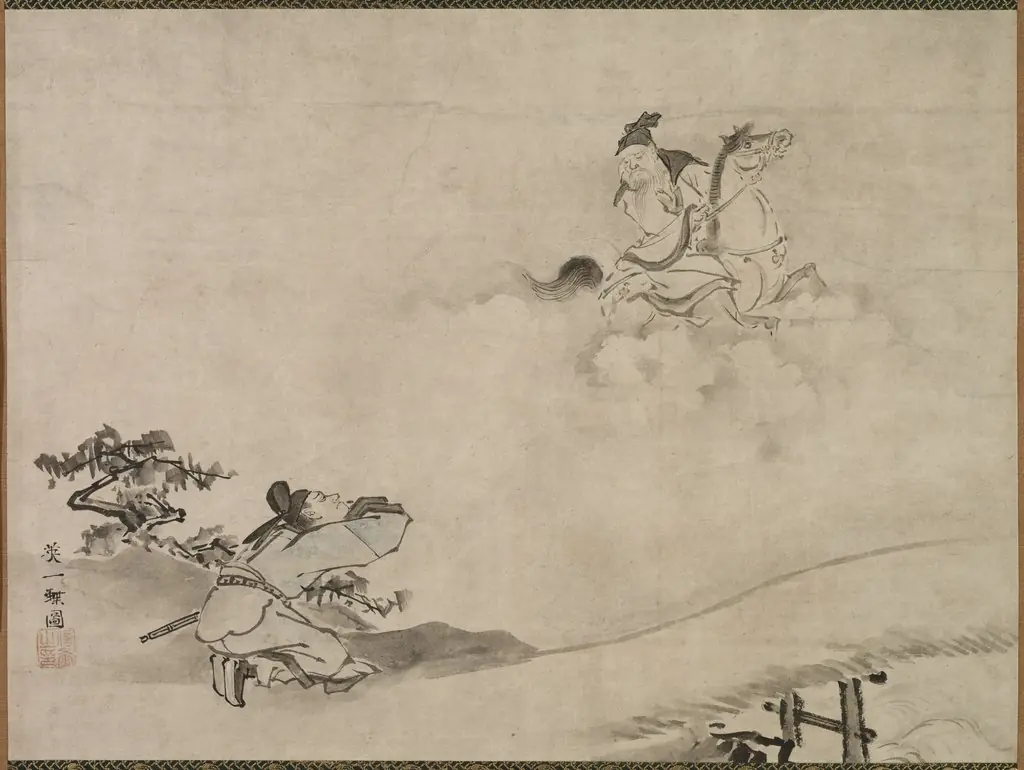
Toba‑e is a Japanese painting that depicts a dynamic composition centered on a standing figure in a red robe and blue trousers, holding a fan and gazing downward. Beneath this figure lies a tangled mass of smaller, oversized‑headed characters rendered in alternating blue and red hues. The work’s surface shows age‑related wear, with softened edges and faded coloration that suggest its historic origin.
Subject & Meaning
The central standing figure appears to observe a chaotic crowd of diminutive beings, perhaps alluding to themes of authority overseeing disorder or a narrative scene involving a deity and attendants. The exaggerated heads of the lower figures emphasize individuality within the crowd, a visual device common in Japanese narrative art to convey character and action.
Technique & Style
Executed in traditional Japanese painting methods, the work employs flat areas of color and bold outlines characteristic of the Toba‑e genre. The contrast between the vivid reds and blues and the subdued background creates visual tension, while the overlapping forms generate a sense of movement. Brushwork is evident in the delicate rendering of the fan and the textured, weathered edges.
History & Provenance
The painting belongs to the Toba‑e tradition of comic or narrative pictures that flourished in the Edo period. Though its precise origin is undocumented, its material condition—cracking varnish and faded pigments—indicates considerable age. The work has been part of a private collection before entering the museum’s holdings, where it contributes to the study of early Japanese genre painting.
Context
Toba‑e emerged as a popular visual form for storytelling, often illustrating folklore, theatrical scenes, or satirical episodes. This piece reflects the genre’s emphasis on lively composition and exaggerated characters, aligning with contemporaneous woodblock prints that conveyed humor and social commentary to a broad audience.
Legacy
As an example of early narrative painting, the work informs modern understandings of Edo‑period visual culture and its approaches to character depiction. Its preservation allows scholars to trace stylistic developments that later influenced ukiyo‑e printmakers and the broader trajectory of Japanese popular art.
Artist & collection