Artwork
Portret van een vorst
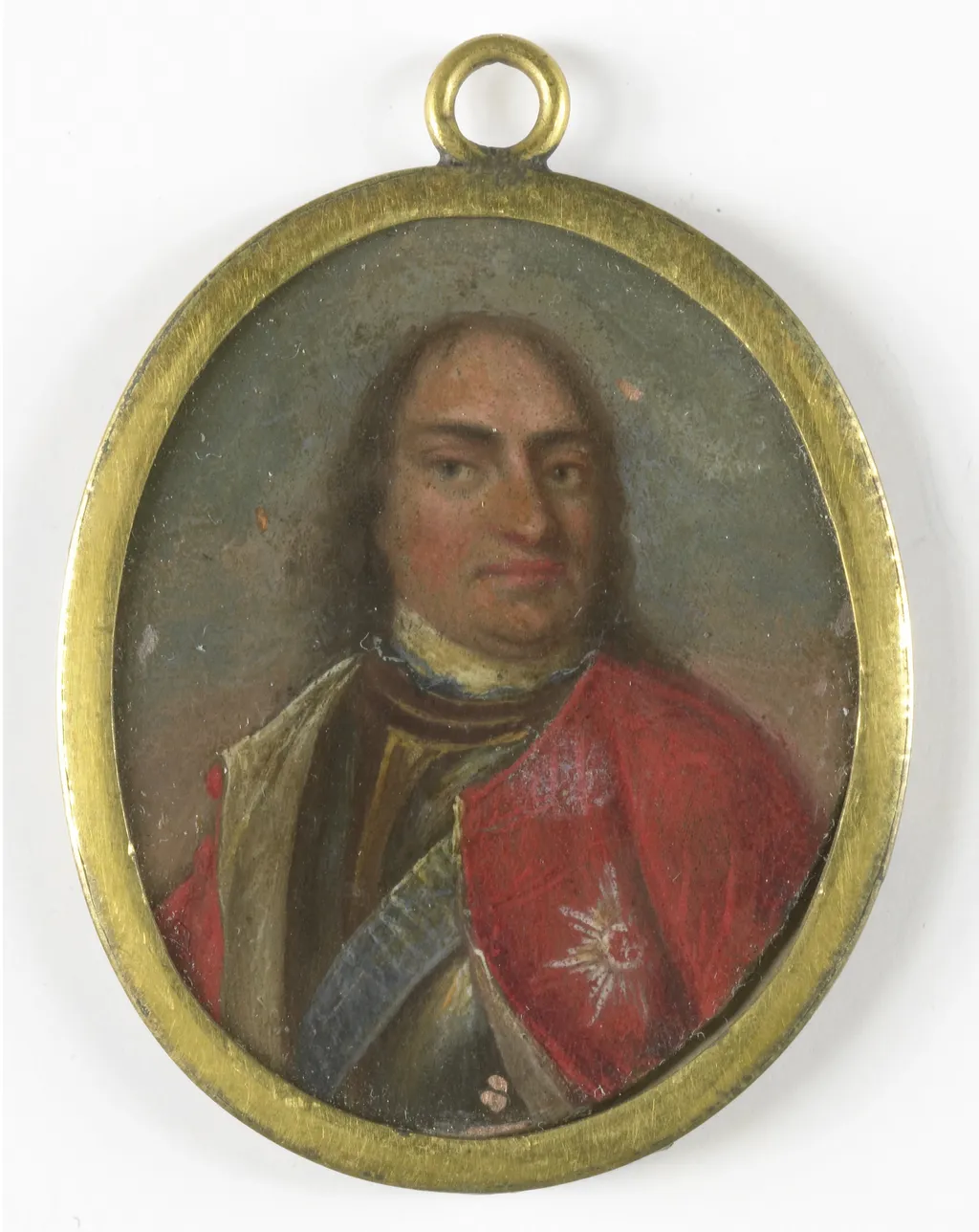
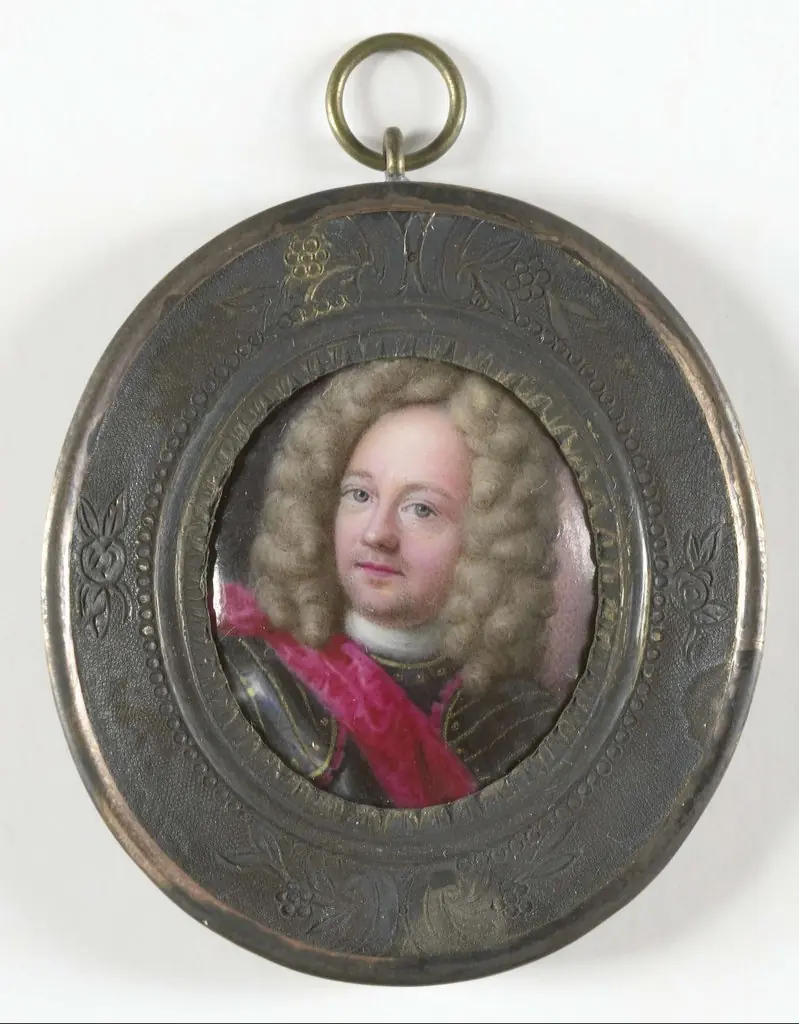
Portret van een vorst is an oil painting by Unknown. It dates from 1695 and is held in the collection of the Rijksmuseum. A small circular painting on copper depicts a nobleman against a dark green backdrop.
About this work
Overview
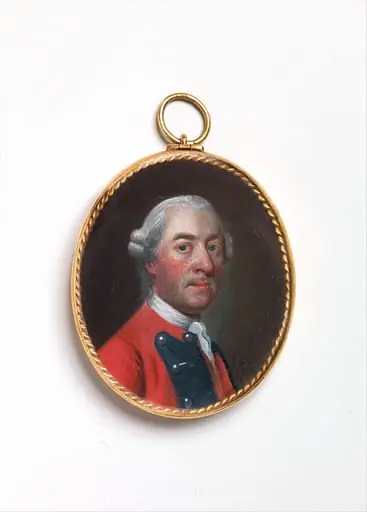
A small circular painting on copper depicts a nobleman against a dark green backdrop. The subject is rendered with precise detail, his figure drawn in sharp contrast to the deep background. A red coat adorned with white stars and a crisp white collar dominates the composition, guiding the viewer’s attention. The gold frame, visibly worn, suggests prolonged handling and use over time.
Subject & Meaning
The figure is likely a European prince or high-ranking noble, identified by the ornate military-style coat and formal bearing.
The figure is likely a European prince or high-ranking noble, identified by the ornate military-style coat and formal bearing. His serious expression and direct gaze convey authority and restraint. The stars on the coat may denote rank or order of chivalry, though the specific emblem remains unconfirmed. The portrait emphasizes dignity rather than personal emotion, typical of aristocratic representation in the period.
Technique & Style
The artist employed chiaroscuro to model the face and clothing with subtle gradations of light and shadow, enhancing three-dimensionality. Copper, a smooth and durable support, allowed for fine brushwork and luminous color saturation. The dark background isolates the figure, heightening visual impact. The tight cropping and rounded format suggest an intimate, possibly private commission rather than a public display.
History & Provenance
The painting’s origin is undocumented, but its materials and style align with 17th-century Northern European portraiture. The heavily worn gold frame indicates long-term ownership and frequent display, possibly within a family collection. No definitive records link it to a known artist or court, though its craftsmanship suggests a skilled workshop active in the Low Countries or Germany.
Context
During the 1600s, small-format portraits on copper were popular among elites for personal use, often kept in cabinets or carried as tokens of status. Such works balanced realism with symbolic elements—uniforms, collars, and posture—to communicate power without overt grandeur. This piece reflects a trend toward restrained, psychologically nuanced representation in aristocratic imagery.
Legacy
Though not widely exhibited or studied, the painting exemplifies the quiet sophistication of minor court portraiture. Its survival, with original frame intact, offers insight into how noble identities were preserved in private spheres. The work contributes to understanding the material culture of early modern European elites beyond grand state portraits.
Artist & collection

 Domestic Scene
 Giacomo and Cardinal Marco, investing Andrea, Abbot of San Zeno, with his Benefice
 The Nymph of Fontainebleau
 Portrait of a Woman
 Madonna and Child with Saints in the Enclosed Garden
 Venus and Minerva
 Family Group of Four on Sofa
 Wall painting from Room H of the Villa of P. Fannius Synistor at Boscoreale
 Portrait of Willem IV van Oranje- Nassau (1711-1751)
 Karl Wilhelm Ferdinand (1735-1806), Duke of Brunswick-Luneburg
 Joseph II (1741–1790), Emperor of Austria
 Portrait of John Churchill, Duke of Marlborough
 Portrait of Willem IV van Oranje- Nassau (1711-1751)
 Portrait of Frans I van Habsburg (1768-1835), emperor of Austria
 Portrait of Prince Willem IV (1711-51)
 John St. Clair
 Portrait of an Austrian officer