Artwork
Portret van een officier
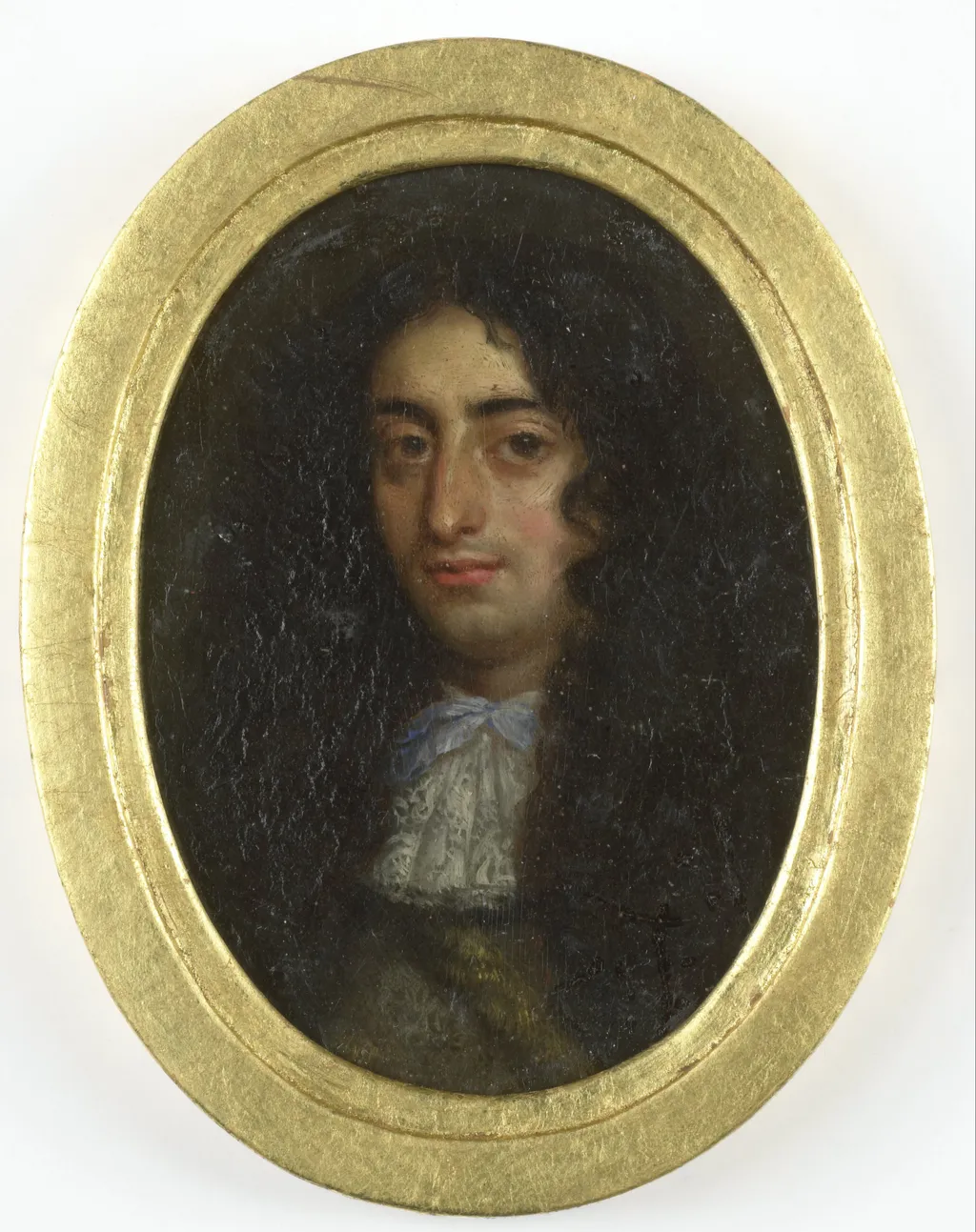
Portret van een officier is an oil painting. It dates from 1675 and is held in the collection of the Rijksmuseum. The work is an oval portrait executed on a copper plate, measuring modestly and set within a gilded frame.
About this work
Overview
The work is an oval portrait executed on a copper plate, measuring modestly and set within a gilded frame. The composition presents a solitary figure against a dark, unadorned background, allowing the sitter’s face to dominate the visual field. The overall effect is formal and restrained, characteristic of private portraiture in the early modern period.
Subject & Meaning
The sitter is a male officer, identifiable by his dark hair, solemn expression, and military attire. He wears a dark coat trimmed with a lace collar and a blue bow at the neck, indicating rank and possibly affiliation. The restrained demeanor and plain backdrop suggest an emphasis on personal dignity rather than narrative storytelling.
Technique & Style
Painted on copper, the portrait benefits from the metal’s smooth surface, which supports fine detail and a luminous finish. The artist employs chiaroscuro, contrasting strong light on the face with deep shadows in the surrounding space, thereby modeling the features with pronounced three‑dimensionality. The oval format and gilded framing reinforce the work’s ceremonial intent.
Context
The officer’s attire and insignia reflect the military fashion of the period, situating the piece within a broader tradition of elite portrait commissions.
Copper portraiture was relatively uncommon, often reserved for works intended for durability and a refined visual quality. The use of a dark, neutral background aligns with contemporary conventions that isolate the sitter, a practice seen in Dutch and Flemish portraiture of the 17th century. The officer’s attire and insignia reflect the military fashion of the period, situating the piece within a broader tradition of elite portrait commissions.
Artist & collection