Artwork
Ruins on the Coast of Naples, Italy, Moonlight
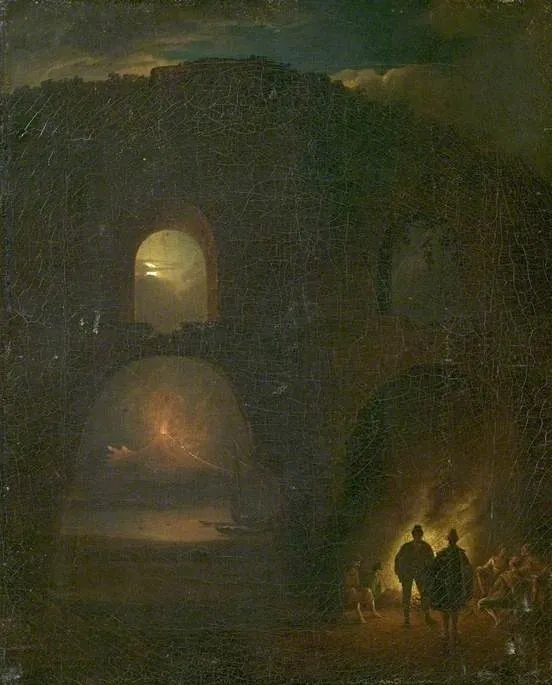
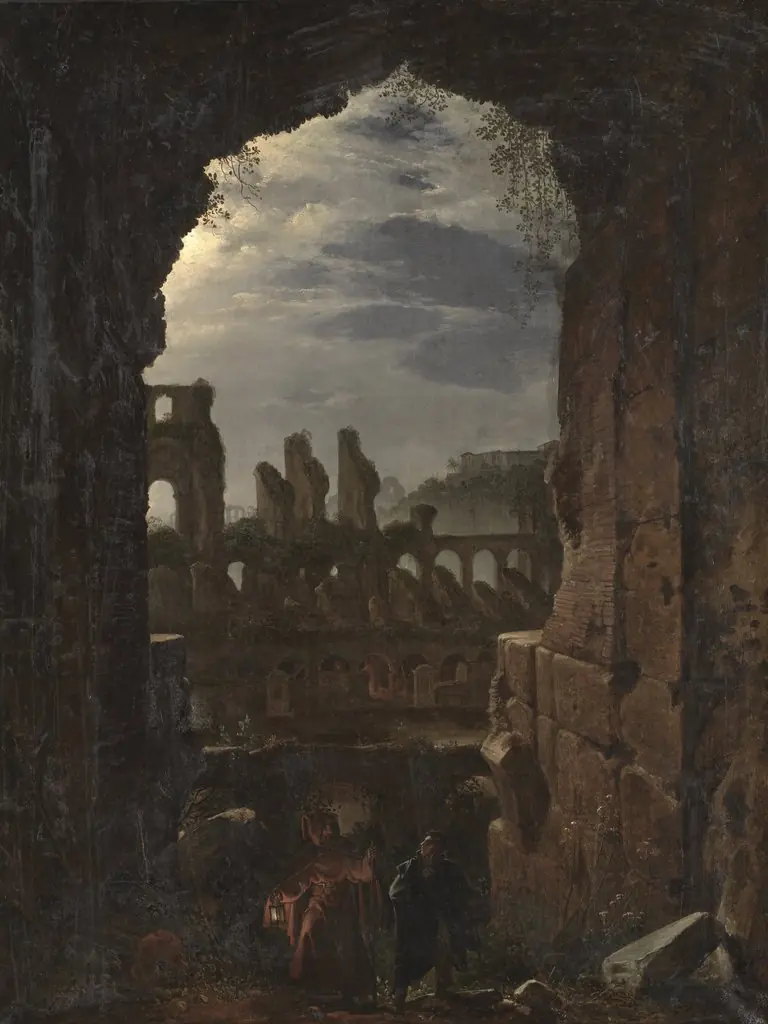
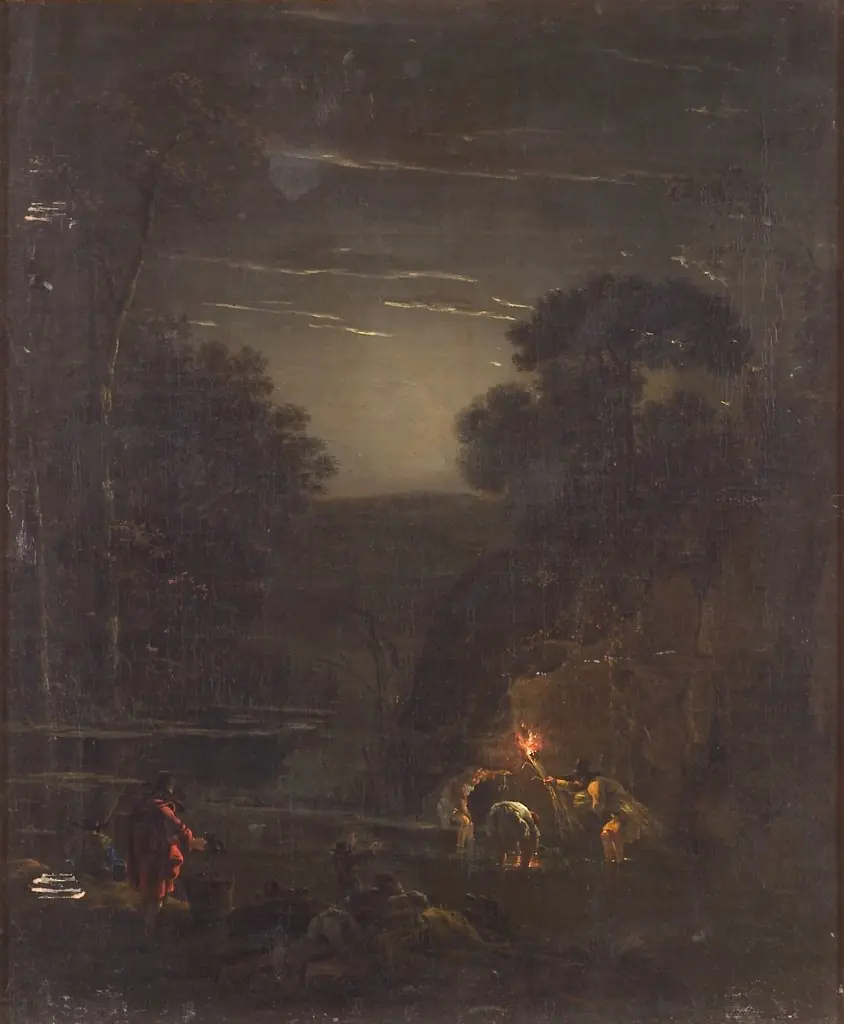
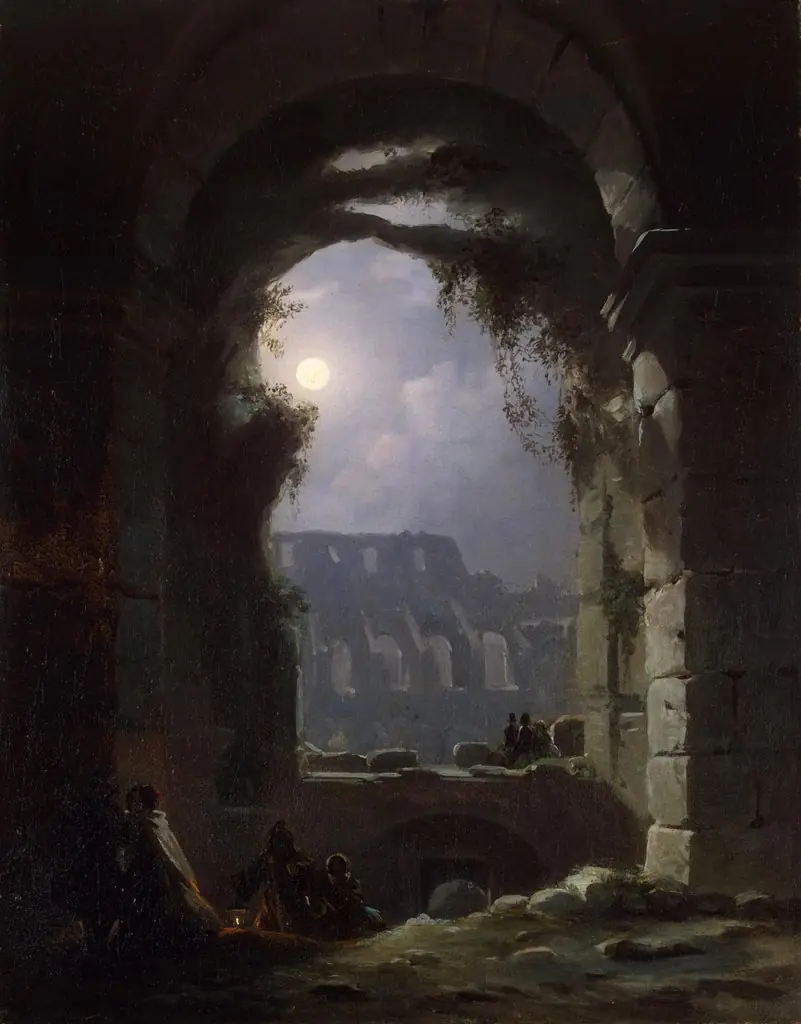
Ruins on the Coast of Naples, Italy, Moonlight is an oil painting by Unknown. It is held in the collection of the Derby Museum and Art Gallery. This oil painting depicts a nocturnal coastal scene near Naples, framed by ancient stone ruins under a full moon.
About this work
Overview
This oil painting depicts a nocturnal coastal scene near Naples, framed by ancient stone ruins under a full moon. A small group of figures gathers around a fire in the foreground, their forms illuminated against the darkened architecture behind them. The composition emphasizes contrast between warm artificial light and cool natural moonlight, reinforcing a mood of quiet solitude amid decay.
Subject & Meaning
The figures—two men near the fire, others seated or standing—suggest transient human presence amid enduring ruins. Their activity implies rest or ritual, contrasting with the silent, weathered arches that dominate the background. The scene evokes contemplation of time’s passage, where human life is fleeting against the weight of history, without overt narrative or symbolism.
Technique & Style
The artist employs chiaroscuro to heighten spatial depth and emotional tone. Moonlight filters through clouds, casting pale glows on stone, while the fire’s amber glow warms the foreground figures. Brushwork is restrained, favoring atmospheric blending over detail, allowing light and shadow to guide the viewer’s focus and evoke a sense of quiet immersion in the scene.
History & Provenance
Painted in the late 18th or early 19th century, the work aligns with European travelers’ fascination with classical ruins in southern Italy. It likely emerged from the tradition of vedute and romantic landscape painting, popular among collectors drawn to the sublime and melancholic qualities of the region’s antiquities. Its early ownership remains undocumented.
Context
During this period, artists and intellectuals increasingly viewed ruins not as mere relics but as vessels of emotional and philosophical reflection. The Naples coastline, rich with Greek and Roman remains, became a favored subject for those exploring themes of impermanence and nature’s reclamation. This painting fits within that broader cultural turn toward introspective landscape.
Legacy
Though not widely exhibited or reproduced, the work contributes to a quiet lineage of nocturnal ruin paintings that influenced later Romantic and realist traditions. Its restrained emotional tone and focus on atmosphere over drama distinguish it from more theatrical contemporaries, offering a subdued meditation on time and memory in landscape.
Artist & collection

 Domestic Scene
 Giacomo and Cardinal Marco, investing Andrea, Abbot of San Zeno, with his Benefice
 The Nymph of Fontainebleau
 Portrait of a Woman
 Madonna and Child with Saints in the Enclosed Garden
 Venus and Minerva
 Family Group of Four on Sofa
 Wall painting from Room H of the Villa of P. Fannius Synistor at Boscoreale