Artwork
Emperor Heraclius Denied Entry into Jerusalem
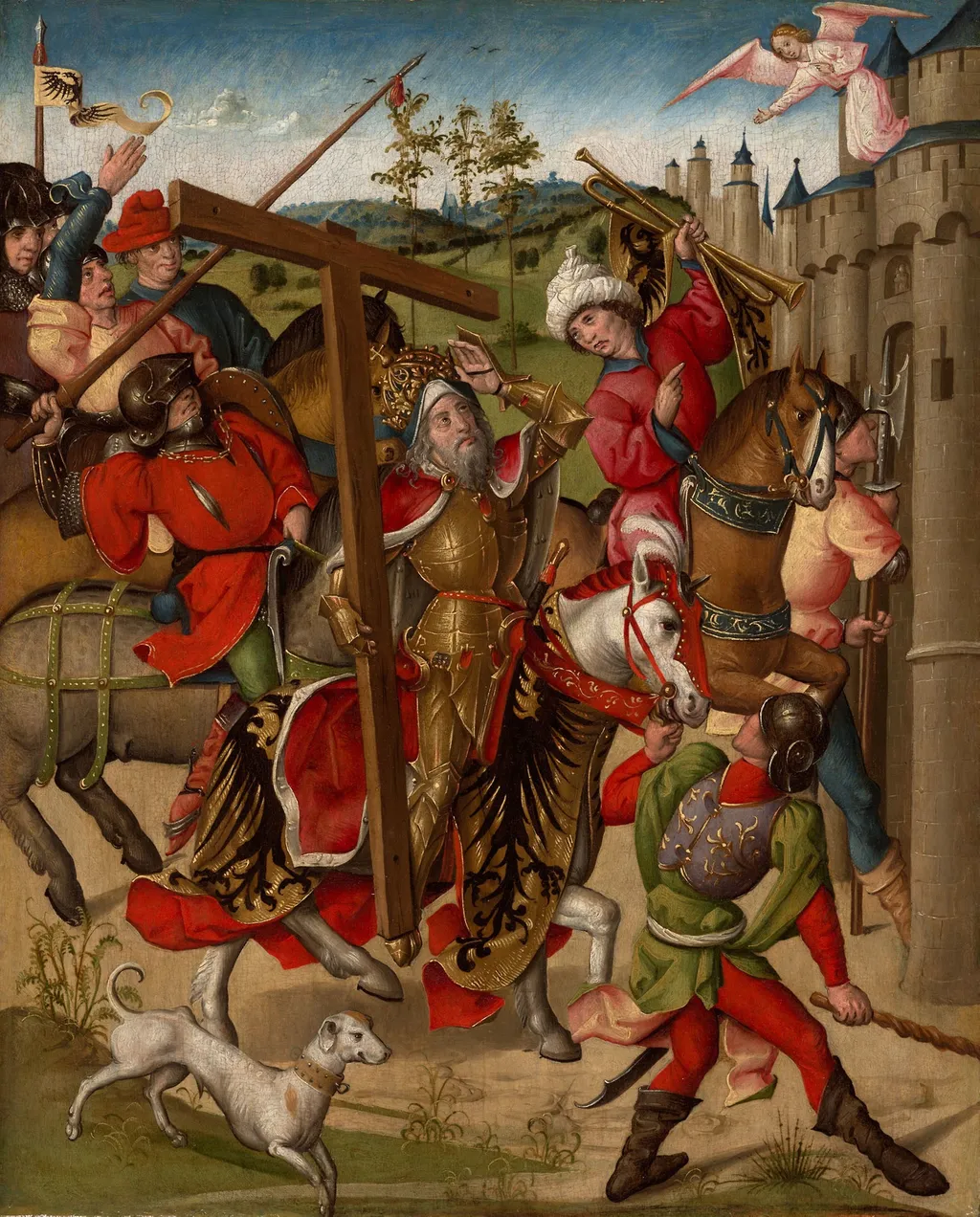
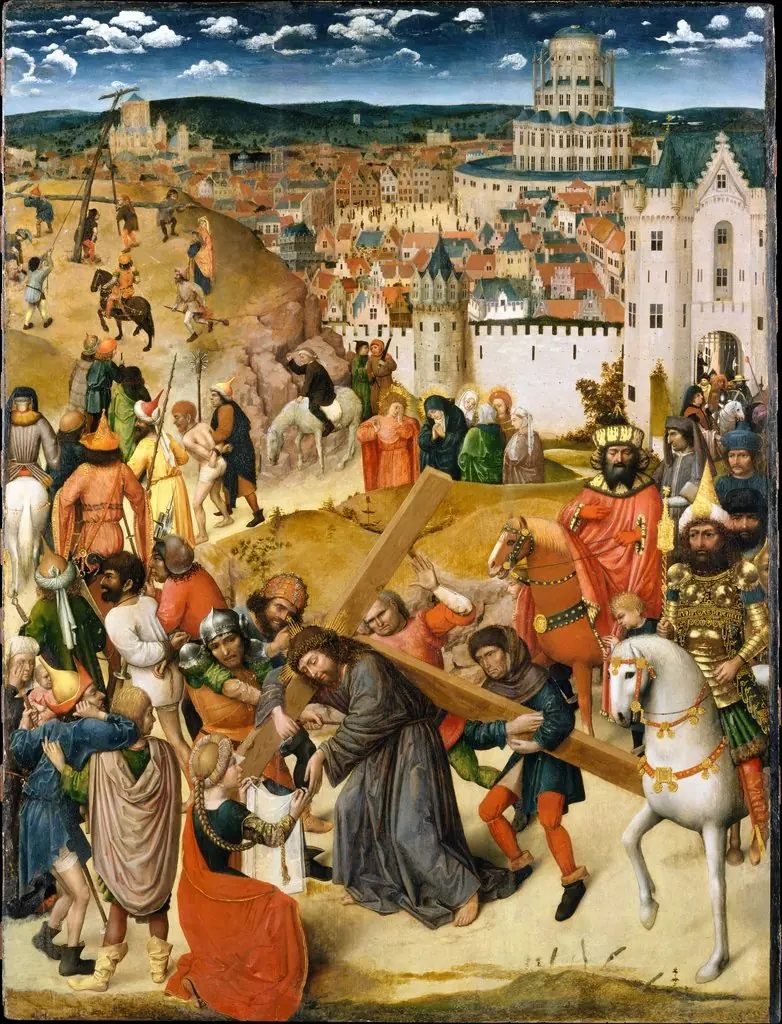
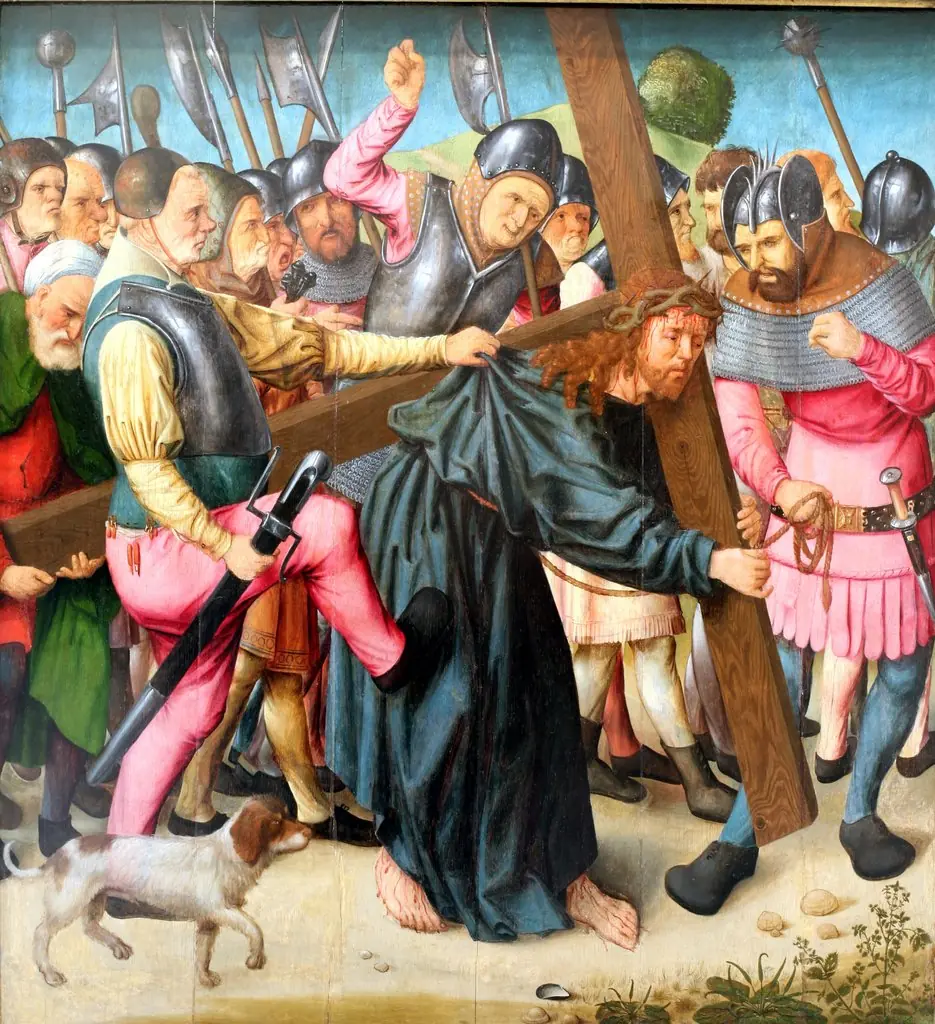
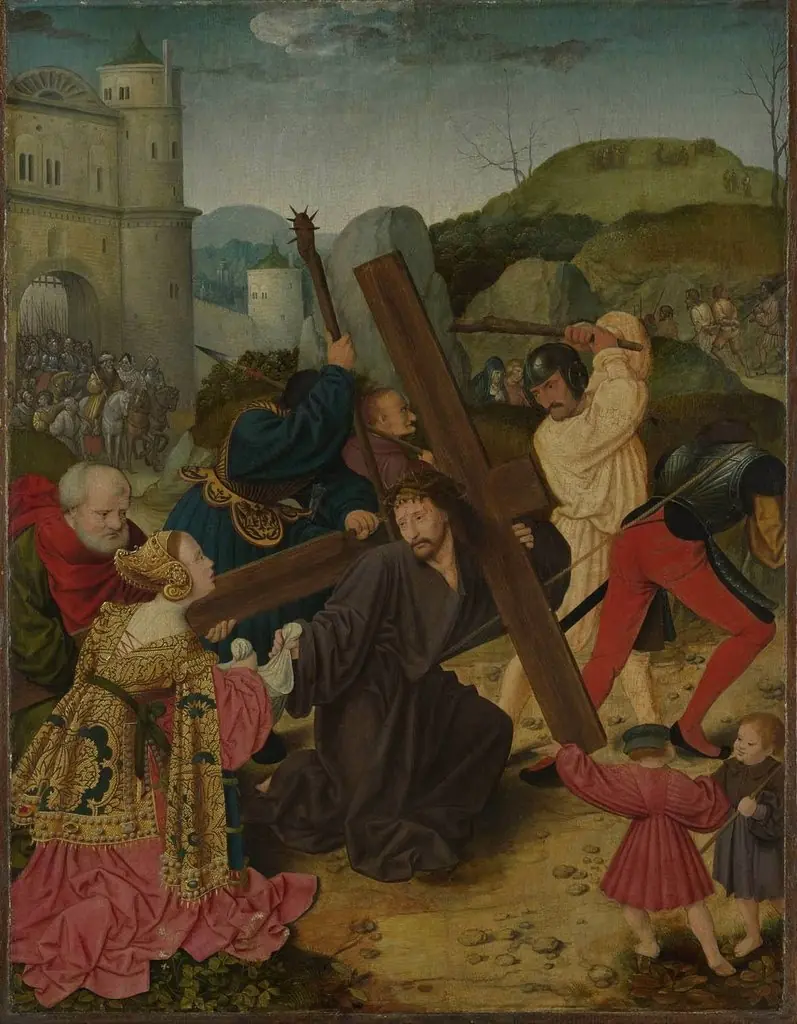
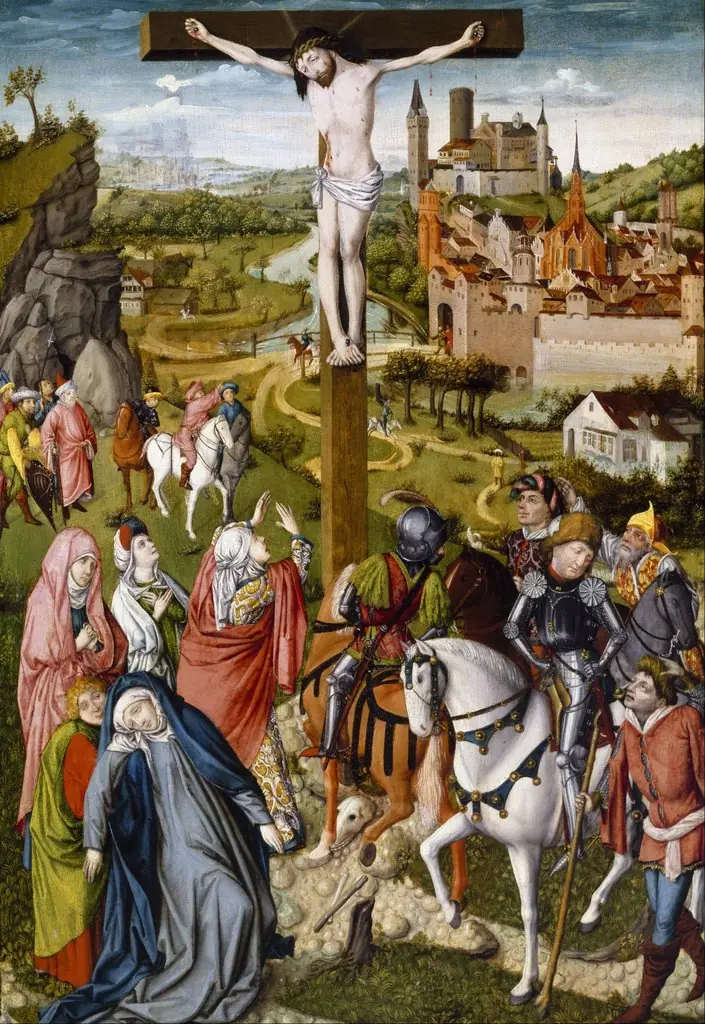
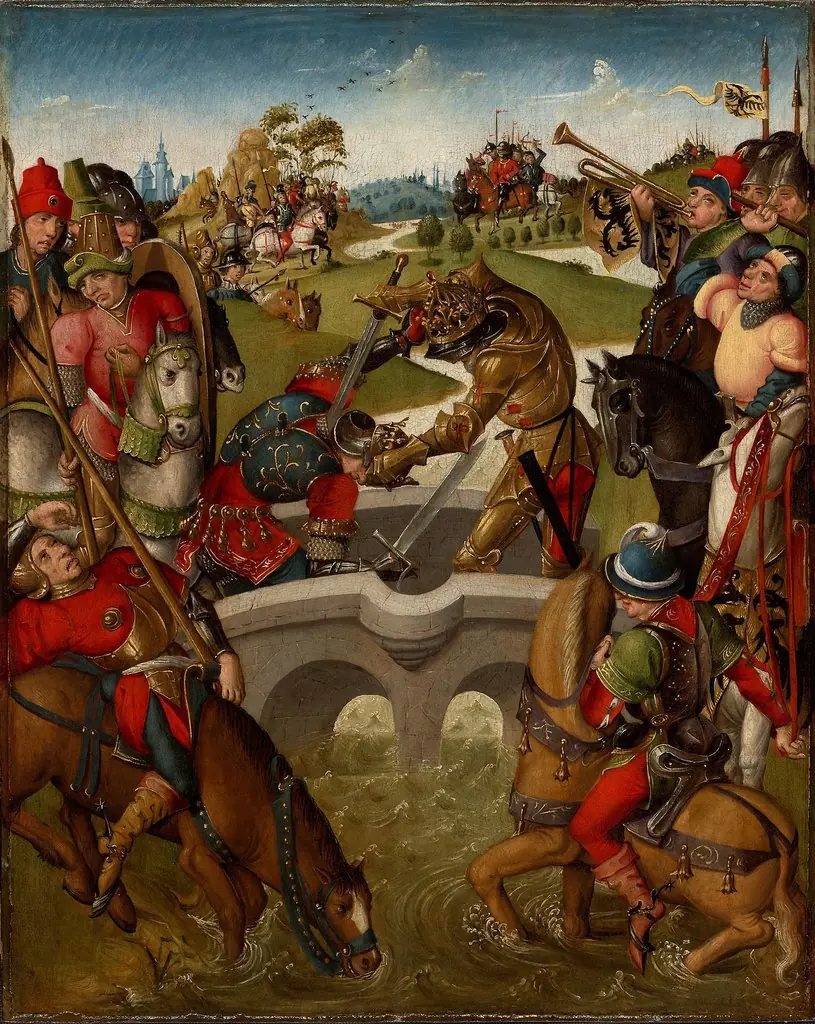
Emperor Heraclius Denied Entry into Jerusalem is an oil painting by the Byzantine icon painting artist Unknown. It dates from 1496 and is held in the collection of the Art Institute of Chicago. This oil painting portrays Emperor Heraclius being turned away from Jerusalem, a moment tied to early 7th-century Christian tradition.
About this work
Overview
This oil painting portrays Emperor Heraclius being turned away from Jerusalem, a moment tied to early 7th-century Christian tradition.
This oil painting portrays Emperor Heraclius being turned away from Jerusalem, a moment tied to early 7th-century Christian tradition. The scene is rendered in subdued earth tones—browns, olives, and grays—with careful attention to texture and atmosphere. The composition centers on the emperor’s imposing figure, contrasted against a quiet, restrained landscape. A small white dog in the foreground introduces a subtle dynamic element, grounding the narrative in tangible detail.
Subject & Meaning
The scene references the legend that Heraclius, having recovered the True Cross from the Persians, was barred from entering Jerusalem in his imperial regalia. According to tradition, he was instructed to dismount and walk humbly, dressed simply, as a sign of reverence. The painting captures this moment of spiritual submission, framing the emperor’s ceremonial armor and cross as symbols of earthly power momentarily subdued by religious humility.
Technique & Style
The artist employs glazing techniques to build depth in the muted palette, layering thin translucent washes of pigment to achieve subtle shifts in tone. This method enhances the atmospheric quality of the background and lends a quiet luminosity to the armor and fabric. Brushwork is precise but unobtrusive, favoring quiet realism over dramatic flourish, aligning with 19th-century historical painting conventions that prioritized narrative clarity over emotional intensity.
History & Provenance
The painting’s origin is not documented in major institutional records, and its creator remains unidentified. It likely dates to the 19th century, a period when European artists frequently revisited biblical and imperial themes from late antiquity. Its modest scale and restrained palette suggest it was intended for private collection rather than public exhibition, possibly commissioned by a patron interested in religious history or Byzantine iconography.
Context
In the 19th century, historical and religious subjects from the early Christian and Byzantine eras gained renewed interest among Western artists and collectors. This painting reflects a broader trend of romanticizing imperial piety, particularly stories that emphasized humility before divine authority. The inclusion of the dog and the sparse landscape aligns with contemporary preferences for naturalistic detail and symbolic quietude over grand spectacle.
Legacy
Though not widely exhibited or reproduced, the painting contributes to a lesser-known strand of 19th-century historical art that sought to humanize imperial figures through moments of moral or spiritual reckoning. Its quiet composition and technical restraint distinguish it from more theatrical treatments of similar subjects, offering a contemplative counterpoint to the era’s dominant grand narratives.
Artist & collection

 Domestic Scene
 Giacomo and Cardinal Marco, investing Andrea, Abbot of San Zeno, with his Benefice
 The Nymph of Fontainebleau
 Portrait of a Woman
 Madonna and Child with Saints in the Enclosed Garden
 Venus and Minerva
 Family Group of Four on Sofa
 Wall painting from Room H of the Villa of P. Fannius Synistor at Boscoreale