Artwork
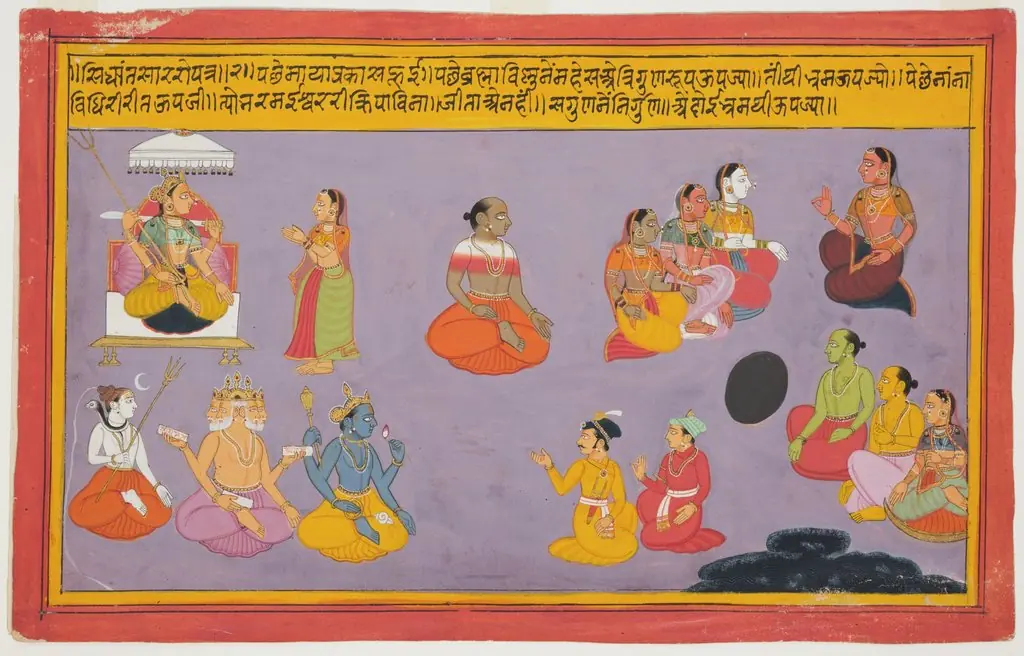
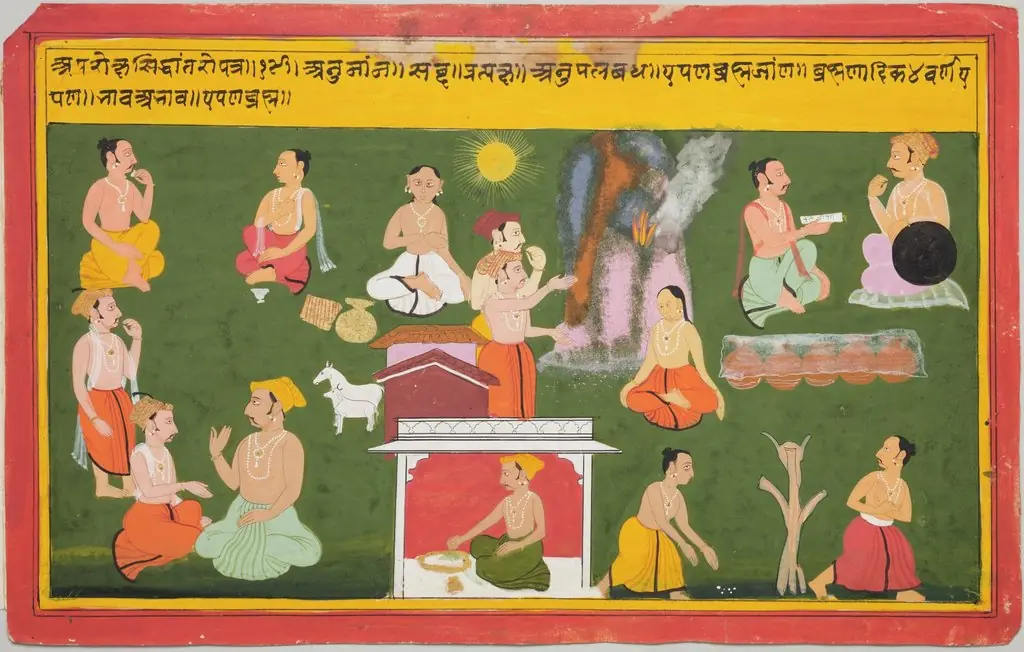
Gods and Brahmins Worshipping Durga, from the Bhagavata Purana (3 of 3)
Gods and Brahmins Worshipping Durga, from the Bhagavata Purana (3 of 3) is an unspecified painting by the Mughal Painting artist Unknown. It dates from 1700 and is held in the collection of the Detroit Institute of Arts.
About this work
Overview
This painting is the third panel in a series illustrating a scene from the Bhagavata Purana, depicting deities and Brahmins in devotion to the goddess Durga.
This painting is the third panel in a series illustrating a scene from the Bhagavata Purana, depicting deities and Brahmins in devotion to the goddess Durga. Rendered in a flat, decorative style, the composition centers on Durga seated on an ornate throne, surrounded by worshippers in varied postures. The solid red background intensifies the vivid hues of garments and jewelry, directing focus to the ritual gathering without spatial depth.
Subject & Meaning
The scene portrays a moment of divine reverence, with Durga, identified by her crown and regal posture, as the focal point of worship. Brahmins and celestial beings offer prayers, their gestures and arrangements reflecting hierarchical devotion. The figure holding prayer beads in the upper left may represent a priest or sage initiating the ritual, reinforcing the theme of sacred duty and spiritual surrender central to the Puranic narrative.
Technique & Style
The work employs mineral pigments on paper, with bold outlines and saturated colors typical of Pahari school traditions. Figures are stylized, lacking naturalistic perspective; clothing folds and ornaments are rendered with precise detail. The absence of landscape or architectural elements emphasizes symbolic presence over physical setting, aligning with devotional painting conventions of the period.
History & Provenance
Created in the early 19th century, likely in the Kangra or Guler region of the Himalayan foothills, the painting was part of a manuscript illustrating the Bhagavata Purana. It remained within royal or temple collections until the colonial era, when such works were acquired by European collectors and later entered institutional holdings, preserving its religious and artistic significance.
Context
Produced during a period when devotional texts were frequently illustrated for courtly and monastic audiences, this painting reflects the flourishing of Hindu miniature painting in North India. The emphasis on Durga as a sovereign deity aligns with regional worship practices and the broader Bhakti movement, which prioritized personal devotion and divine accessibility.
Legacy
As part of a tripartite narrative sequence, this panel contributes to the visual canon of Hindu iconography in manuscript painting. Its preservation allows study of how theological narratives were translated into intimate, portable art forms. The work continues to inform contemporary understandings of pre-colonial Indian aesthetics and religious expression.
Artist & collection

 Domestic Scene
 Giacomo and Cardinal Marco, investing Andrea, Abbot of San Zeno, with his Benefice
 The Nymph of Fontainebleau
 Portrait of a Woman
 Madonna and Child with Saints in the Enclosed Garden
 Venus and Minerva
 Family Group of Four on Sofa
 Wall painting from Room H of the Villa of P. Fannius Synistor at Boscoreale
 Bhaavata Purana (3 of 4 illustrations)
 Gods and Brahmins Worshipping Durga, from the Bhagavata Purana (1 of 3)
 Worship of Hindu Deities (1 of 18)
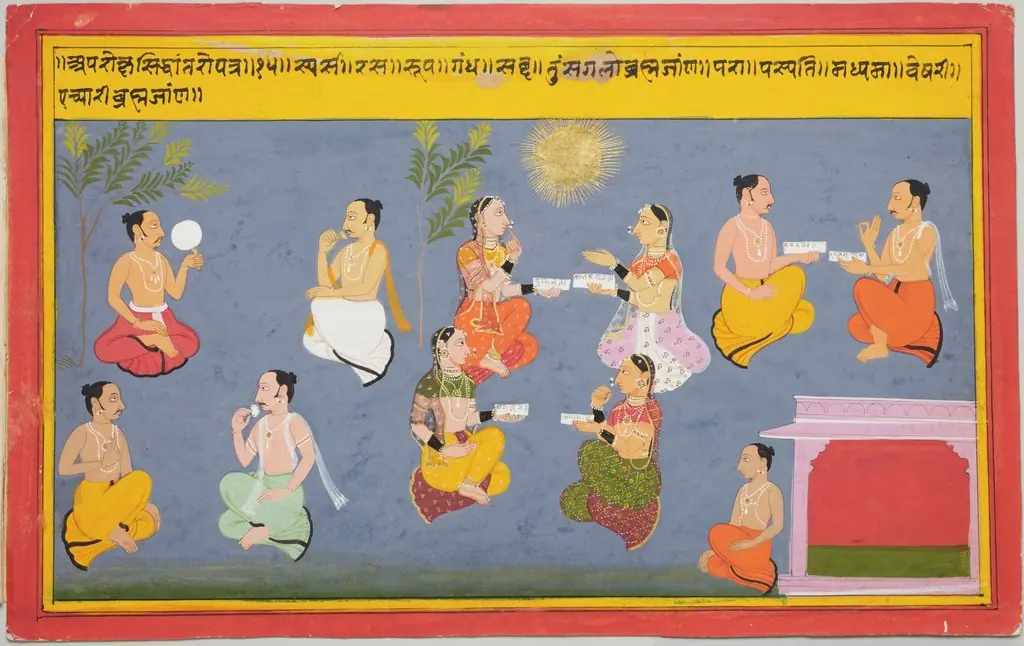 Worship of Hindu Deities (1 of 18)
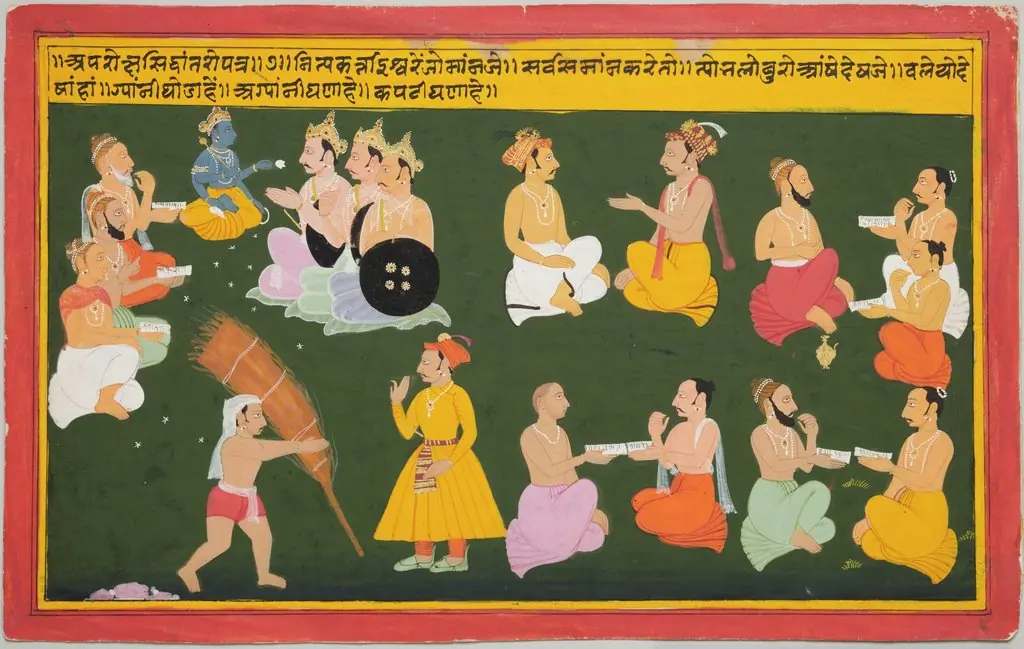 Worship of Hindu Deities (1 of 18)
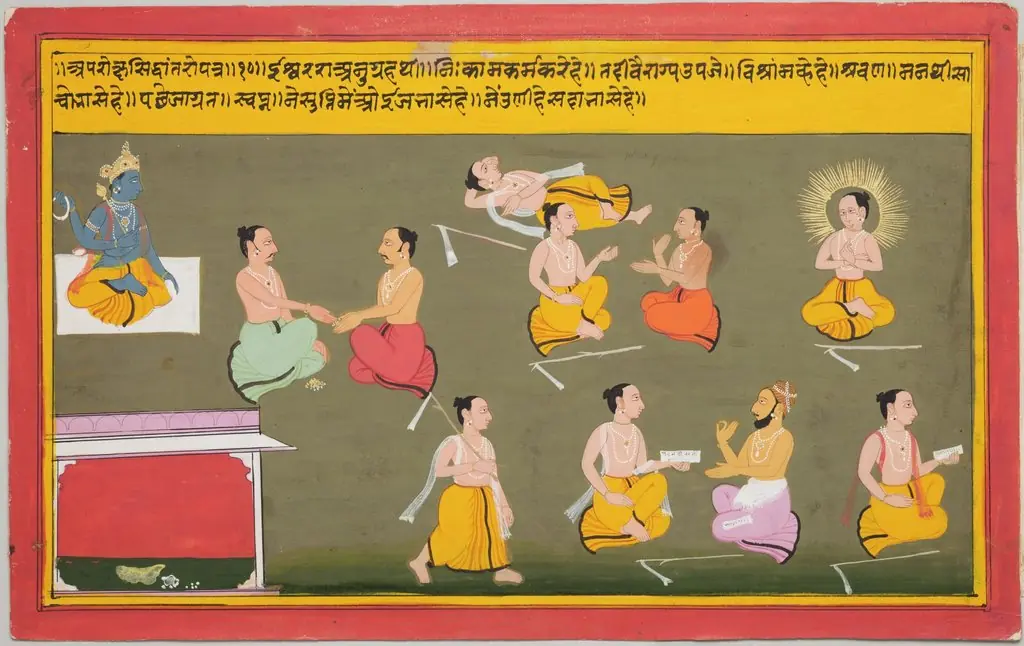 Worship of Hindu Deities (1 of 18)
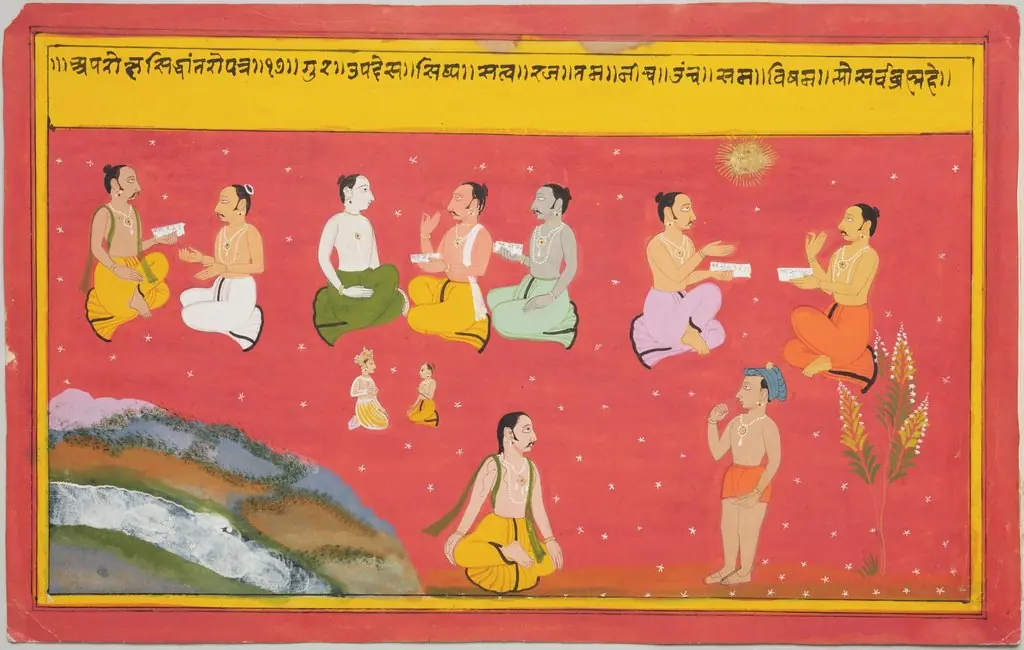 Worship of Hindu Deities (1 of 18)
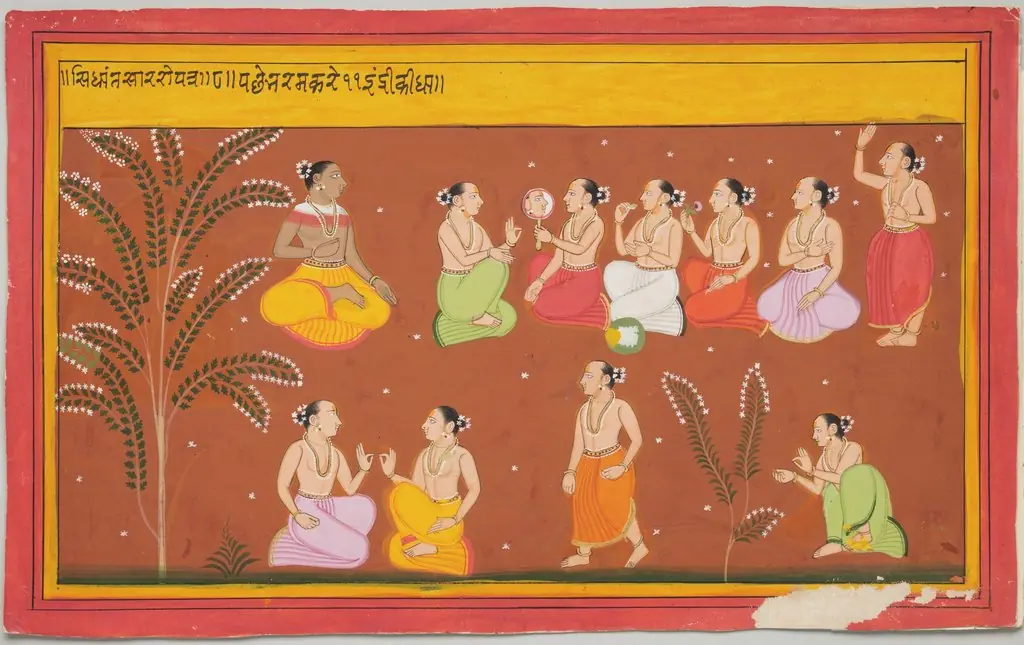 Worship of the Gods (3 of 17)
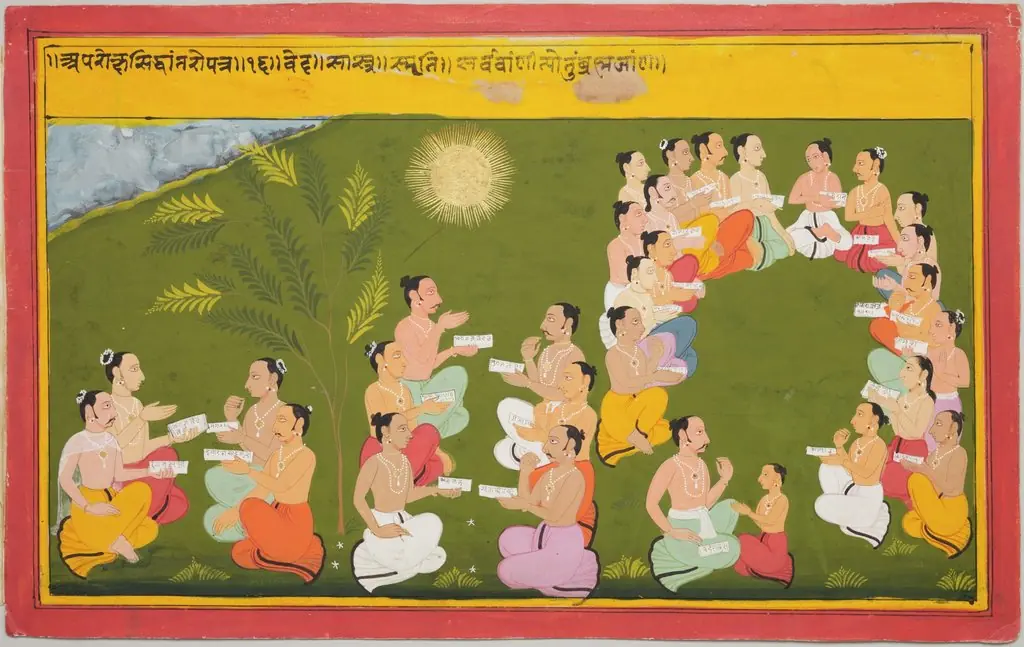 Worship of Hindu Deities (1 of 18)
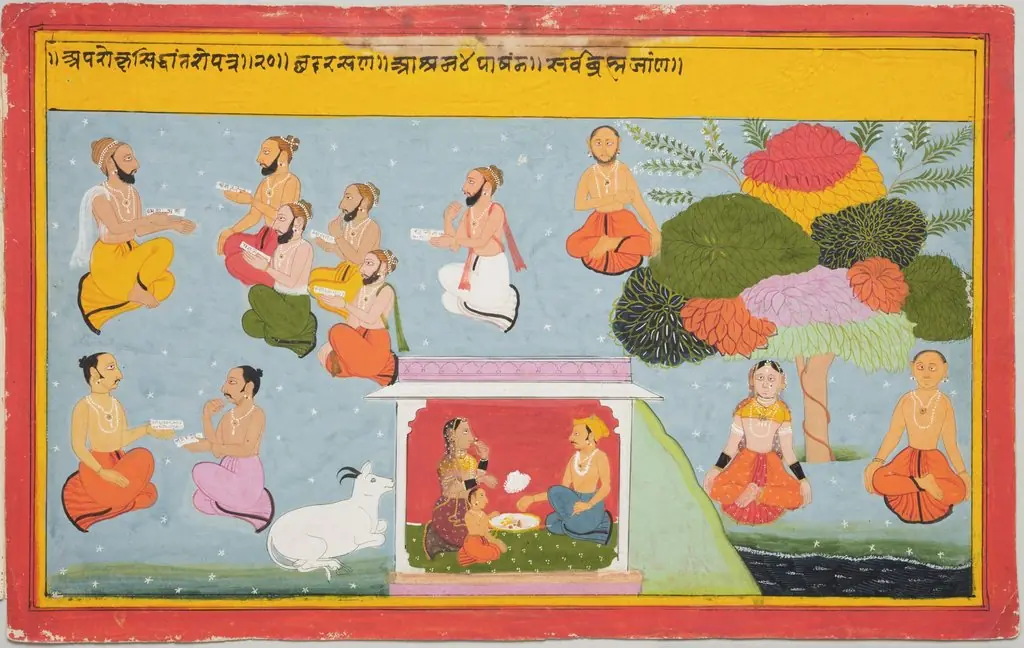 Worship of Hindu Deities (1 of 18)
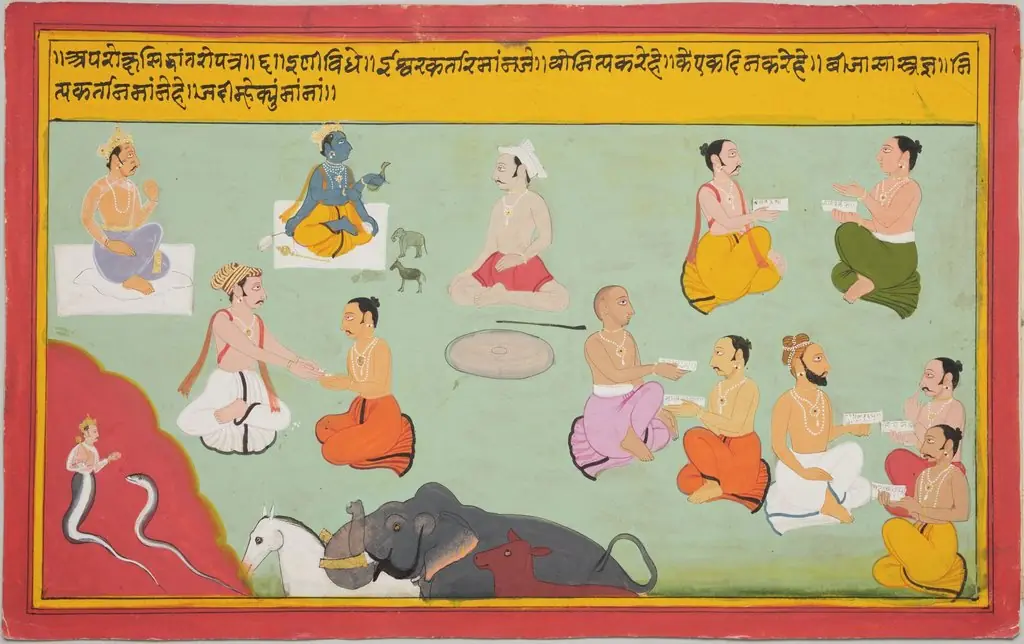 Worship of Hindu Deities (1 of 18)
 Worship of Hindu Deities (1 of 18)