Artwork
Tantric Manuscript "Sangrahani Sutra"
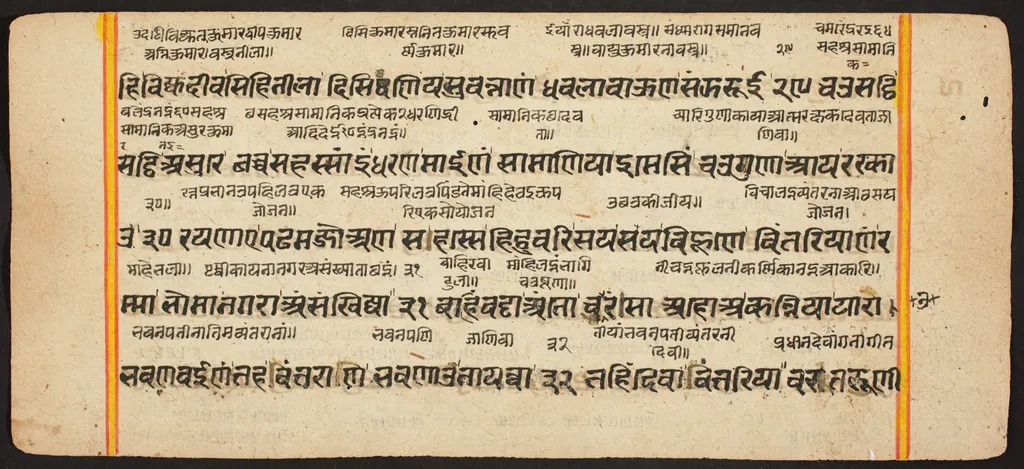
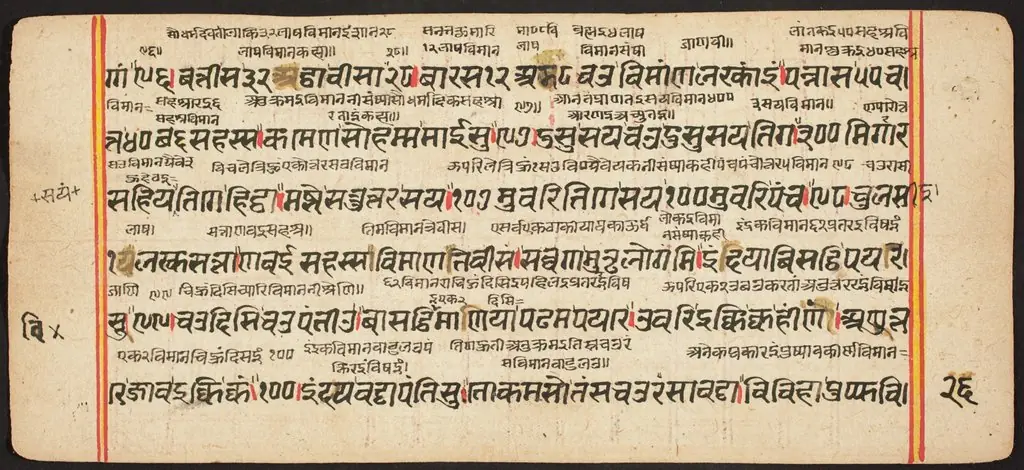
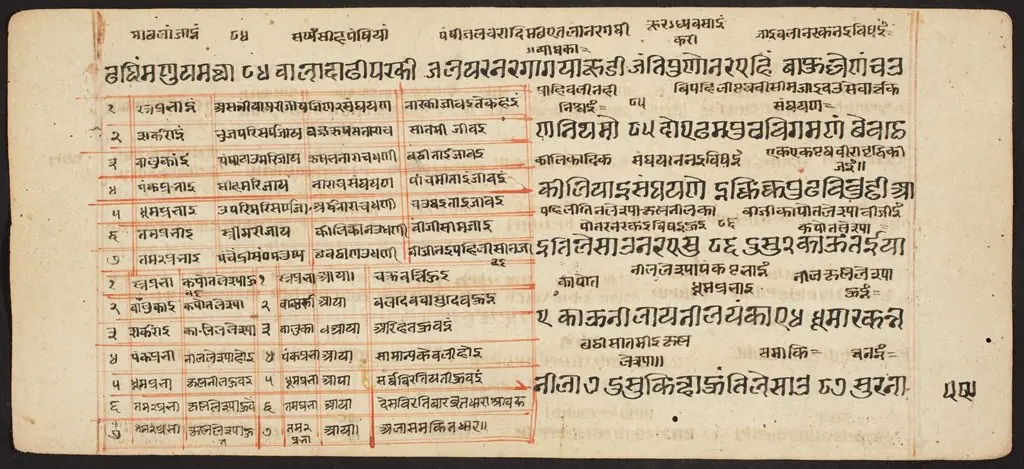
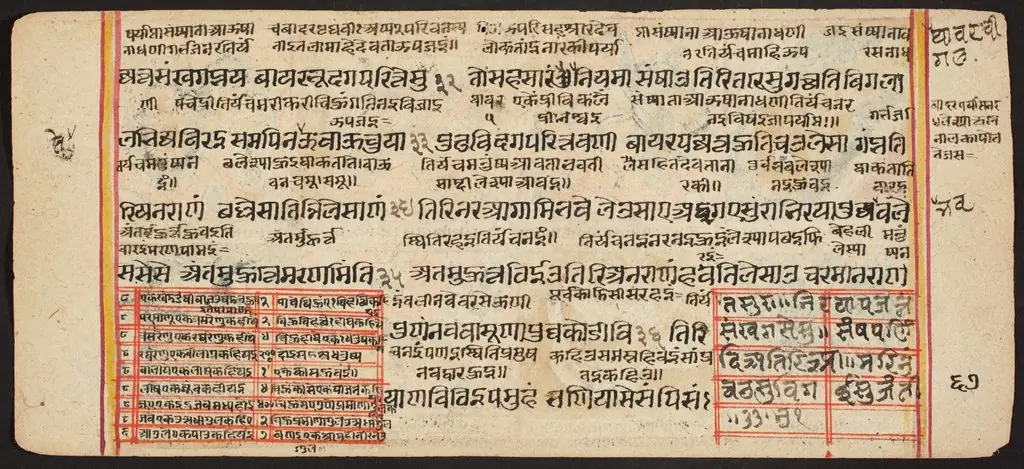
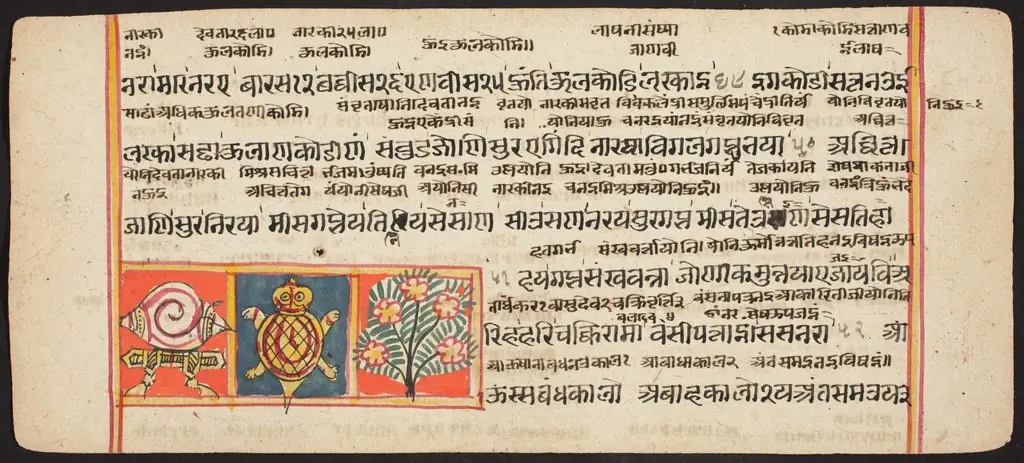
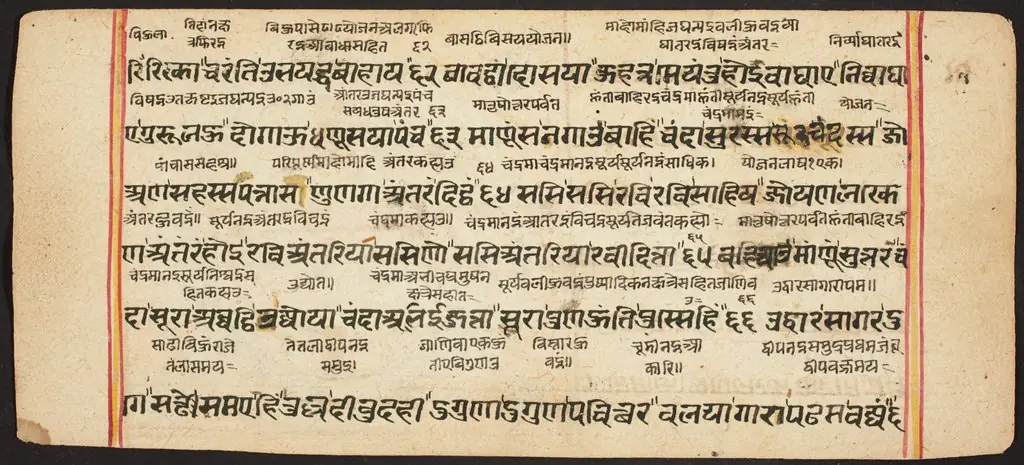
Tantric Manuscript "Sangrahani Sutra" is an unspecified painting by Unknown. It is held in the collection of the Detroit Institute of Arts. This manuscript contains the Sangrahani Sutra, a Buddhist text written in an ancient Indic script.
About this work
Overview
Its calligraphic form reflects meticulous handwork, typical of devotional manuscripts produced in monastic settings.
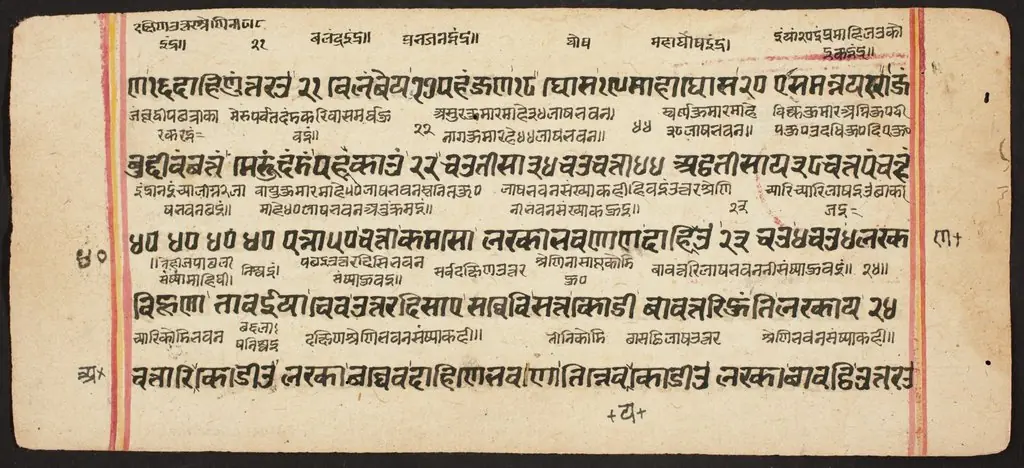
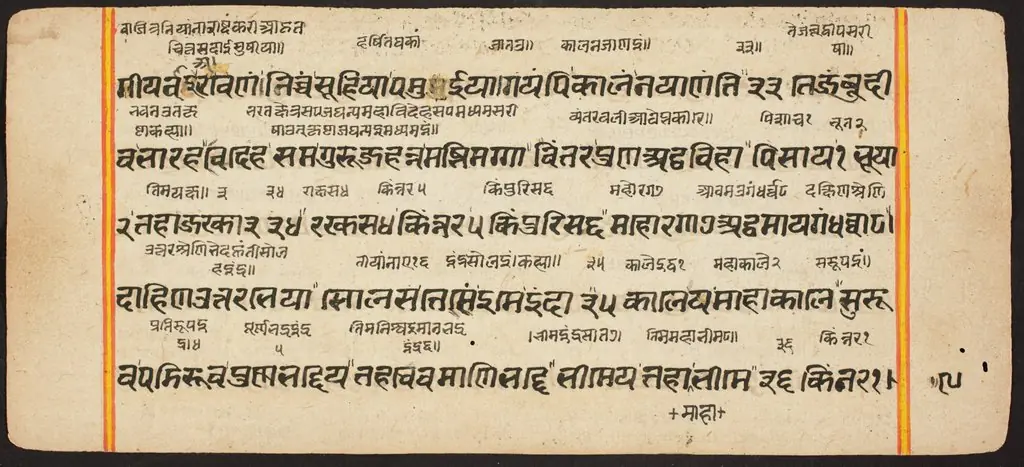
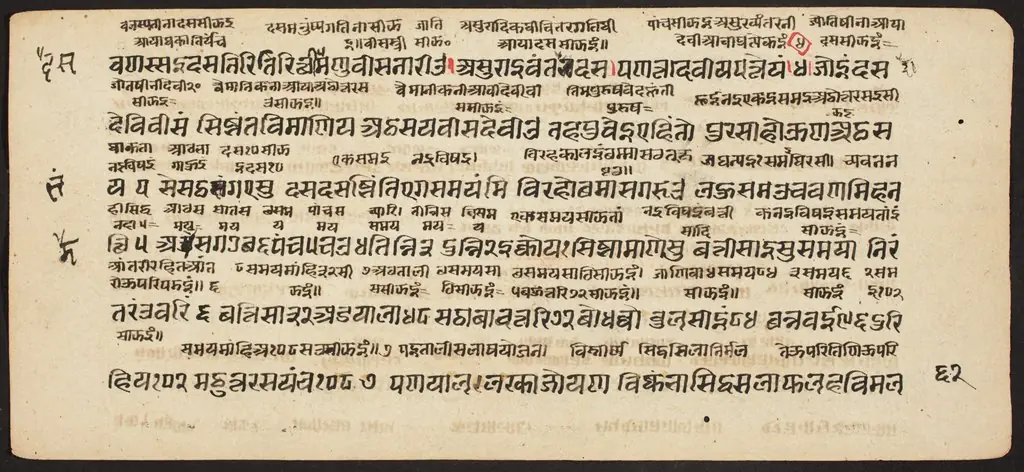
This manuscript contains the Sangrahani Sutra, a Buddhist text written in an ancient Indic script. Executed on light-brown parchment, the script is rendered in black ink with subtle red and yellow marginal lines. Its calligraphic form reflects meticulous handwork, typical of devotional manuscripts produced in monastic settings. The object is a functional religious artifact, designed for ritual use and study rather than display.
Subject & Meaning
The Sangrahani Sutra belongs to the tantric Buddhist tradition, outlining doctrinal principles and meditative practices. Though the script is unreadable to most viewers, its content serves as a guide for spiritual discipline and ritual observance. The decorative script itself functions as a form of visual devotion, where the act of writing and handling the text is considered spiritually significant.
Technique & Style
The script exhibits a highly stylized, flowing hand with intricate flourishes and consistent letterforms, suggesting training under a master scribe. Marginal lines in red and yellow may denote structural divisions or liturgical cues. Pigments and inks were likely derived from natural sources, applied with fine brushes or reed pens. The surface shows no illustrations, emphasizing textual purity over imagery.
History & Provenance
The manuscript likely originated in a monastic center in eastern India or Nepal between the 10th and 13th centuries. It entered the collection of the Detroit Institute of Arts through documented acquisition, though its earlier provenance remains undocumented. Its preservation suggests careful handling within religious or scholarly circles before entering modern institutional care.
Context
Tantric Buddhist manuscripts like this were produced in scriptoria attached to temples or monasteries, often by monks trained in both doctrine and calligraphy. They were used in ritual recitation, meditation, and as objects of veneration. The absence of figural imagery aligns with certain tantric traditions that prioritize sacred sound and script over iconography.
Legacy
This manuscript represents a continuity of textual transmission in esoteric Buddhist practice. Its survival offers insight into the material culture of medieval monasticism. Today, it serves as a primary reference for scholars studying the evolution of Indic scripts and the role of writing in religious devotion.
Artist & collection

 Domestic Scene
 Giacomo and Cardinal Marco, investing Andrea, Abbot of San Zeno, with his Benefice
 The Nymph of Fontainebleau
 Portrait of a Woman
 Madonna and Child with Saints in the Enclosed Garden
 Venus and Minerva
 Family Group of Four on Sofa
 Wall painting from Room H of the Villa of P. Fannius Synistor at Boscoreale
 Tantric Manuscript "Sangrahani Sutra"
 Tantric Manuscript "Sangrahani Sutra"
 Tantric Manuscript "Sangrahani Sutra"
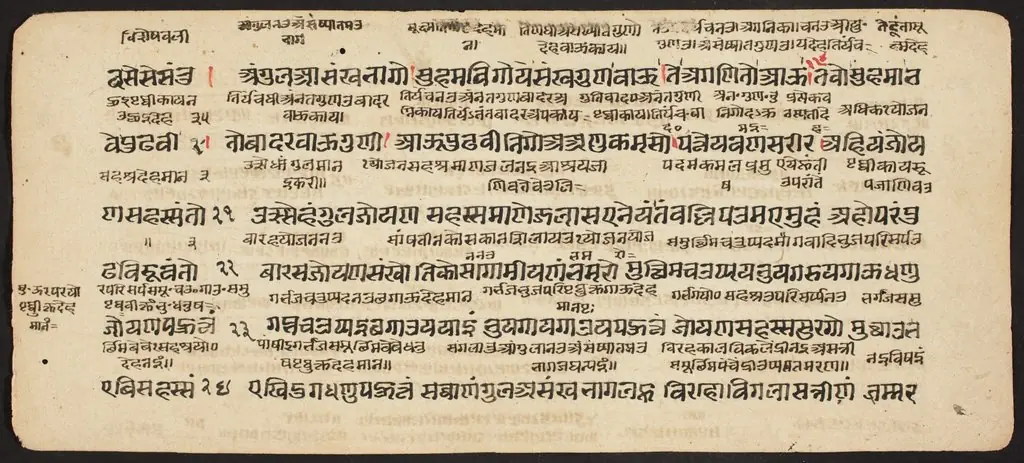 Tantric Manuscript "Sangrahani Sutra"
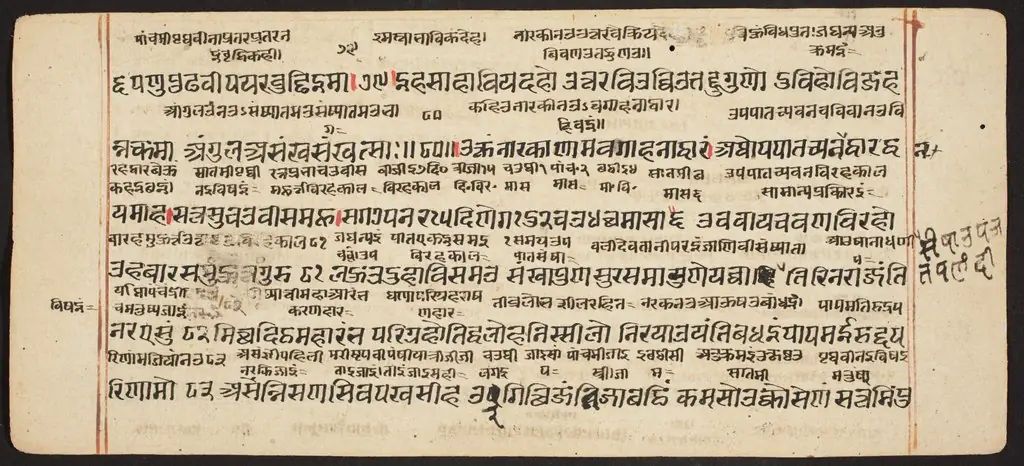 Tantric Manuscript "Sangrahani Sutra"
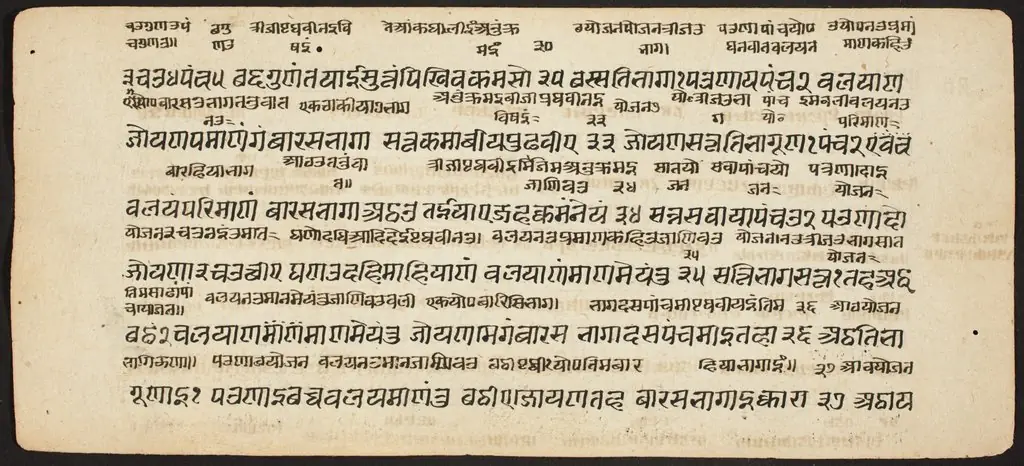 Tantric Manuscript "Sangrahani Sutra"
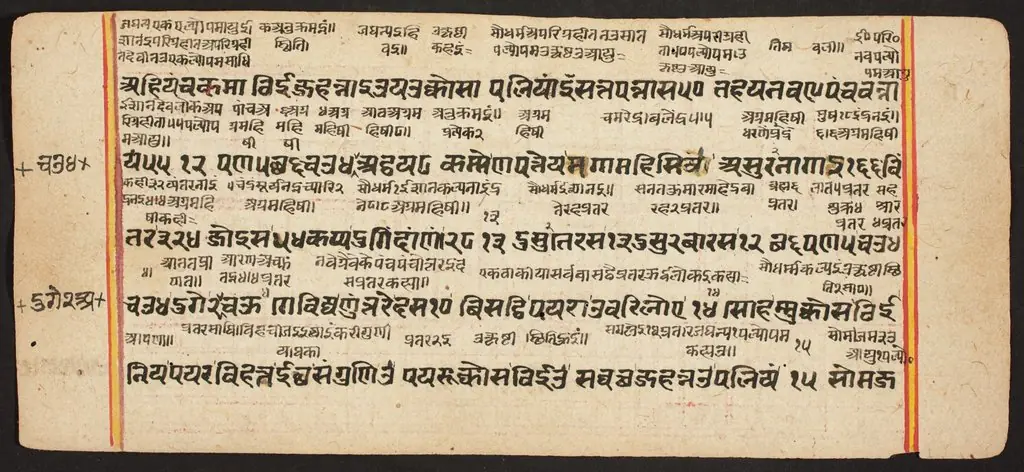 Tantric Manuscript "Sangrahani Sutra"
 Tantric Manuscript "Sangrahani Sutra"
 Tantric Manuscript "Sangrahani Sutra"
 Tantric Manuscript "Sangrahani Sutra"
 Tantric Manuscript "Sangrahani Sutra"
 Tantric Manuscript "Sangrahani Sutra"