Artwork
Helena Fourment (1614-73). The artist's second wife
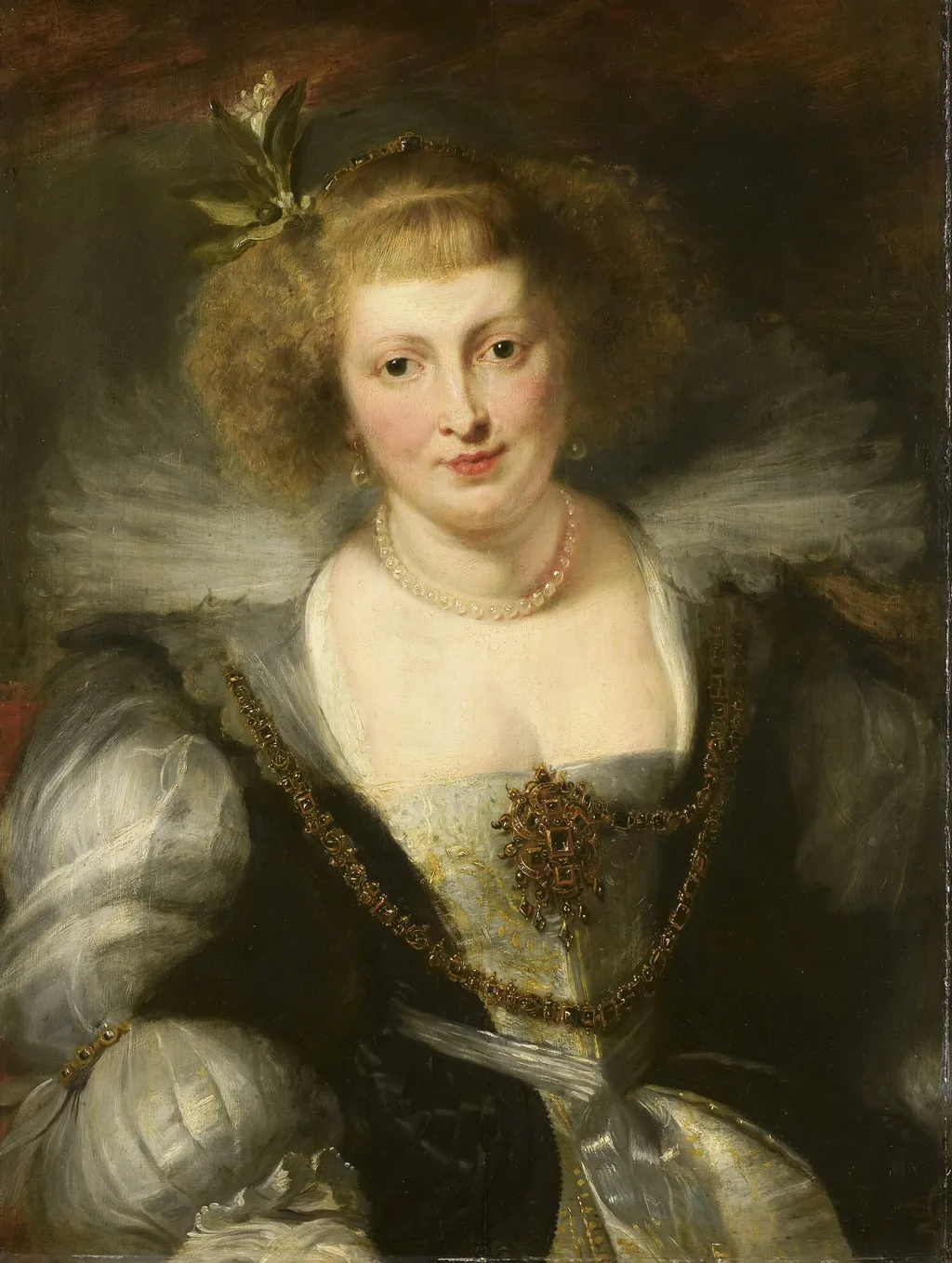
Helena Fourment (1614-73). The artist's second wife is an oil painting. It dates from 1635 and is held in the collection of the Rijksmuseum. The oil painting depicts Helena Fourment, the second spouse of the Flemish Baroque painter, seated in a white gown against a dark backdrop.
About this work
Overview
The oil painting depicts Helena Fourment, the second spouse of the Flemish Baroque painter, seated in a white gown against a dark backdrop. Her posture is relaxed, hands resting on a draped fabric, while a pearl necklace and an elaborate brooch accent her chest. The composition emphasizes her illuminated face and hands, creating a clear focal point within the surrounding shadows.
Subject & Meaning
Helena Fourment, who married the artist in 1630, appears here as a personal and intimate portrait, reflecting both affection and status. The inclusion of luxurious accessories—pearls, a richly detailed brooch, and a feathered hairpiece—signals her wealth and the fashionable attire of the period, while the serene expression suggests domestic tranquility.
Technique & Style
The work employs chiaroscuro, a dramatic contrast of light and dark, to model the figure’s form. Soft illumination catches the sitter’s face and hands, while the surrounding gloom recedes, enhancing three‑dimensionality. The brushwork combines smooth rendering of skin with textured, ruffled sleeves, characteristic of the artist’s mature Baroque approach.
History & Provenance
Created in the mid‑1630s, the portrait was likely intended for private display within the artist’s household. It remained in the family’s collection for several generations before entering public ownership in the 19th century, where it has been exhibited as a representative example of the painter’s domestic portraiture.
Context
During the 1630s the painter produced several intimate portraits of his wife, marking a shift from grand mythological commissions to more personal subjects. This period coincides with the artist’s later years, when his style softened and his palette grew more restrained, reflecting a mature, introspective phase.
Legacy
The portrait contributes to the broader understanding of 17th‑century Flemish portraiture, illustrating how personal relationships influenced artistic output. It also serves as a visual record of contemporary fashion and domestic ideals, informing scholars about the intersection of private life and artistic practice in the Baroque era.
Artist & collection