Artwork
Babar(?)
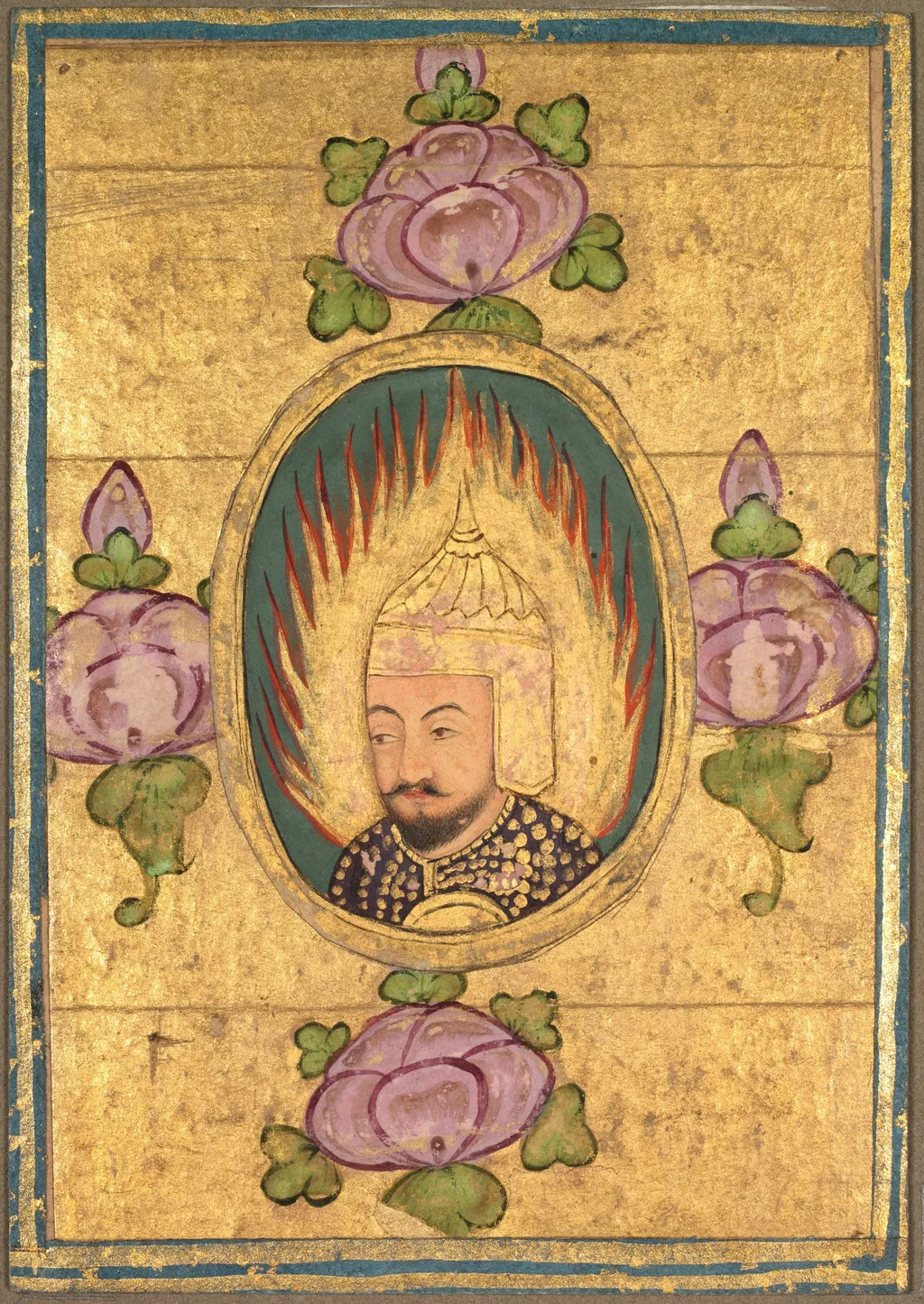
Babar(?) is an unspecified painting. It dates from 1749 and is held in the collection of the Cleveland Museum of Art. The work presents a portrait of a bearded man whose visage is enclosed within a golden circular frame.
About this work
Overview
The work presents a portrait of a bearded man whose visage is enclosed within a golden circular frame. A vivid red radiance emanates from behind the head, while the surrounding field is filled with pink blossoms and green foliage at the corners, set against a yellow‑gold background edged with a thin blue line.
Subject & Meaning
The figure wears a patterned turban and robe, suggesting a cultural identity linked to South‑Asian or Middle‑Eastern dress. The halo‑like red glow and ornamental framing convey a sense of reverence or elevated status, implying the portrait was intended to honor a distinguished individual.
Technique & Style
The composition relies on strong color contrasts: the deep reds of the aura against the warm gold and cool blue border, and the pink‑green botanical motifs. The use of a circular gold medallion to contain the face reflects a decorative approach common in courtly portraiture, while the flat decorative background emphasizes the figure rather than spatial depth.
Context
The painting’s decorative elements and the subject’s attire place it within a tradition of portraiture that blends portraiture with ornamental design, a practice seen in various Indian, Persian, and Ottoman artworks of the 18th and 19th centuries. The combination of floral motifs and a gilded frame aligns with aesthetic conventions of elite portrait commissions from that period.
Artist & collection
