Artwork
The Raising of Lazarus
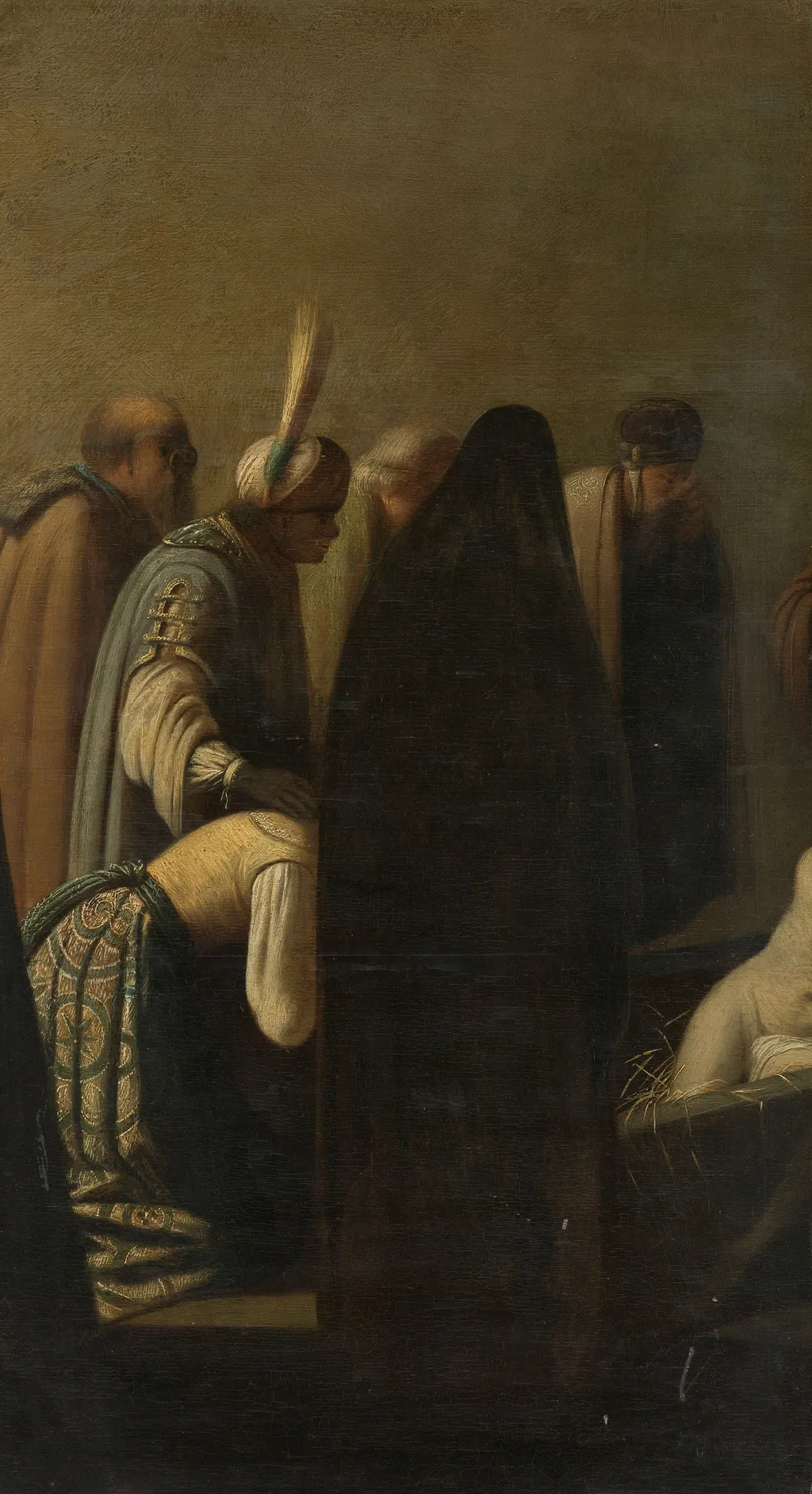
The Raising of Lazarus is an oil painting. It dates from 1630 and is held in the collection of the Rijksmuseum.
About this work
Overview
The palette is dominated by deep browns and subdued golds, with a gentle light falling on the kneeling man’s face and hands.
The work, titled The Raising of Lazarus, is an oil painting that presents a dimly illuminated interior. Four figures occupy the composition: a man in a white turban and richly decorated robe kneels beside a bed, a cloaked figure stands nearby, and a third individual wearing a feathered hat observes from the side. The palette is dominated by deep browns and subdued golds, with a gentle light falling on the kneeling man’s face and hands.
Subject & Meaning
The scene captures the pivotal moment of contact as the kneeling figure places a hand on the sleeping form, suggesting the biblical miracle of Lazarus’s resurrection. The attentive onlookers and the solemn posture of the participants convey a sense of reverence and anticipation, inviting viewers to contemplate the transition from death toward the possibility of life.
Technique & Style
The artist employs chiaroscuro, contrasting strong shadows with a focused glow that highlights the central figure’s hand and face. This manipulation of light creates a three‑dimensional effect and intensifies the intimacy of the encounter. The muted color scheme and careful modeling of fabrics reinforce the somber atmosphere while the soft illumination draws the eye to the act of touching.
Context
Rendered in oil, the painting aligns with a tradition of religious narrative works that use dramatic lighting to underscore spiritual themes. The inclusion of contemporary dress elements, such as the feathered hat, situates the biblical episode within a period setting, reflecting a common practice of adapting sacred stories to the visual language of the artist’s own time.
Artist & collection
