Artwork
The Bucintoro at the Molo on Ascension Day
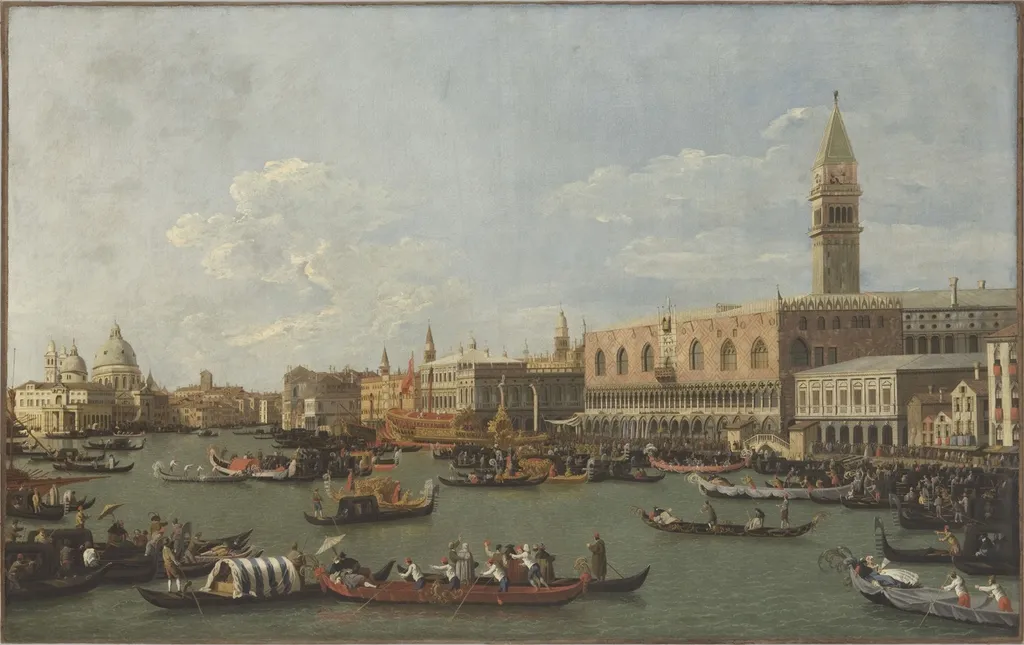
The Bucintoro at the Molo on Ascension Day is an oil painting by the Rococo painting artist Unknown. It dates from 1730 and is held in the collection of the Philadelphia Museum of Art.
About this work
Overview
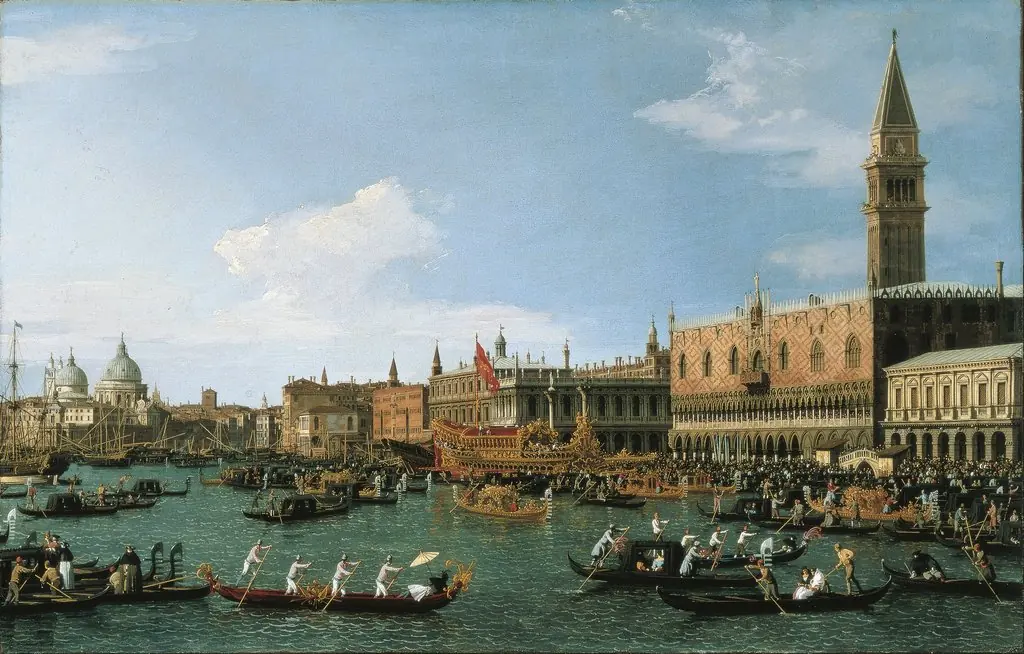
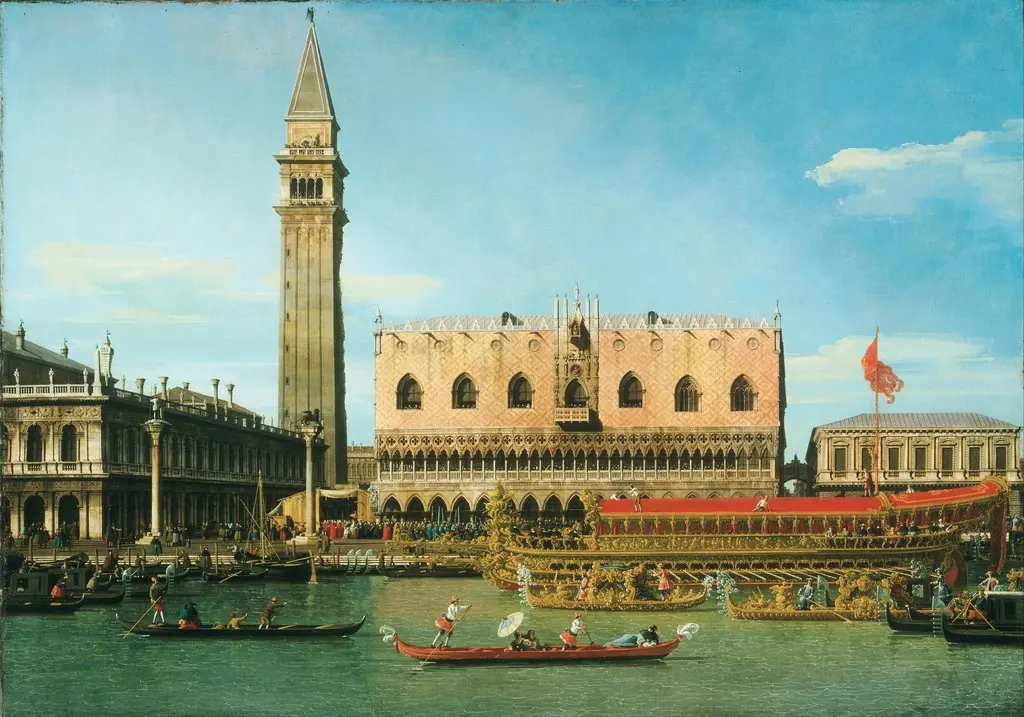
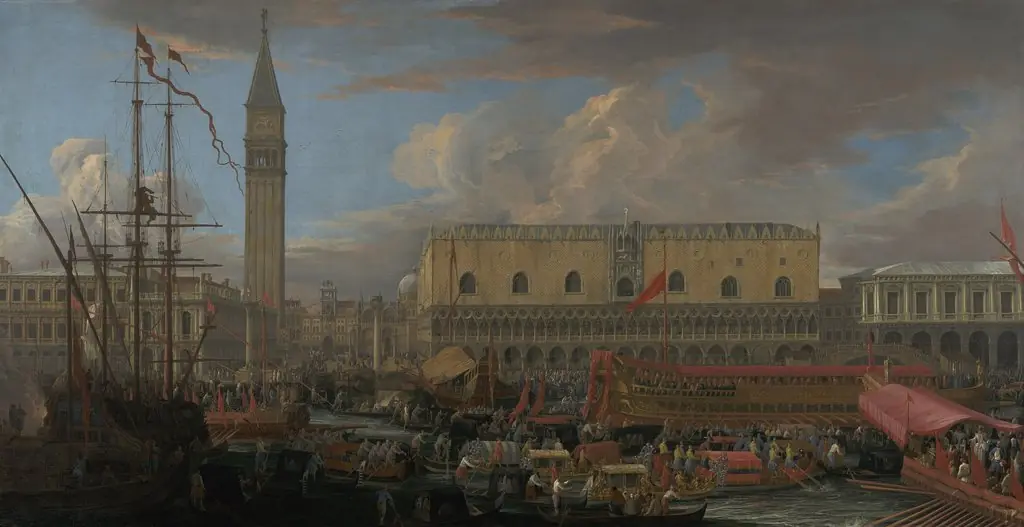
A richly adorned state barge dominates the centre of the scene, surrounded by numerous smaller vessels whose occupants wave and point.
The oil painting titled *The Bucintoro at the Molo on Ascension Day* captures a bustling Venetian waterway during a ceremonial event. A richly adorned state barge dominates the centre of the scene, surrounded by numerous smaller vessels whose occupants wave and point. The composition is set against a square lined with tall, arched buildings and a clock tower, under a sky marked by scattered clouds.
Subject & Meaning
The central vessel is the Bucintoro, the ceremonial barge of the Doge of Venice, shown in the midst of the traditional Marriage of the Sea rite. The gathering of spectators on the water and the surrounding architecture emphasize the public nature of the ritual, which symbolically linked the Republic to the sea and affirmed its maritime dominance.
Technique & Style
Executed in oil on canvas, the work employs a clear, narrative style typical of 18th‑century Venetian painting. Precise rendering of architectural details—arched windows, domes, and the clock tower—contrasts with the looser handling of the crowd and water, creating depth while maintaining a lively, celebratory atmosphere.
History & Provenance
The painting records an Ascension Day celebration, a specific instance of the annual Marriage of the Sea ceremony. While the artist’s identity is not provided, the work likely originated in a Venetian workshop that documented state occasions for official or private patronage.
Context
The Marriage of the Sea ceremony, performed each year when the Doge cast a ring into the Adriatic, was a cornerstone of Venetian civic ritual. The depiction of the Bucintoro at the Molo—a principal dock—situates the event within the Republic’s ceremonial geography, linking the city’s architecture to its maritime identity.
Artist & collection

 Domestic Scene
 Giacomo and Cardinal Marco, investing Andrea, Abbot of San Zeno, with his Benefice
 The Nymph of Fontainebleau
 Portrait of a Woman
 Madonna and Child with Saints in the Enclosed Garden
 Venus and Minerva
 Family Group of Four on Sofa
 Wall painting from Room H of the Villa of P. Fannius Synistor at Boscoreale