Artwork
Portret van een Indische prins
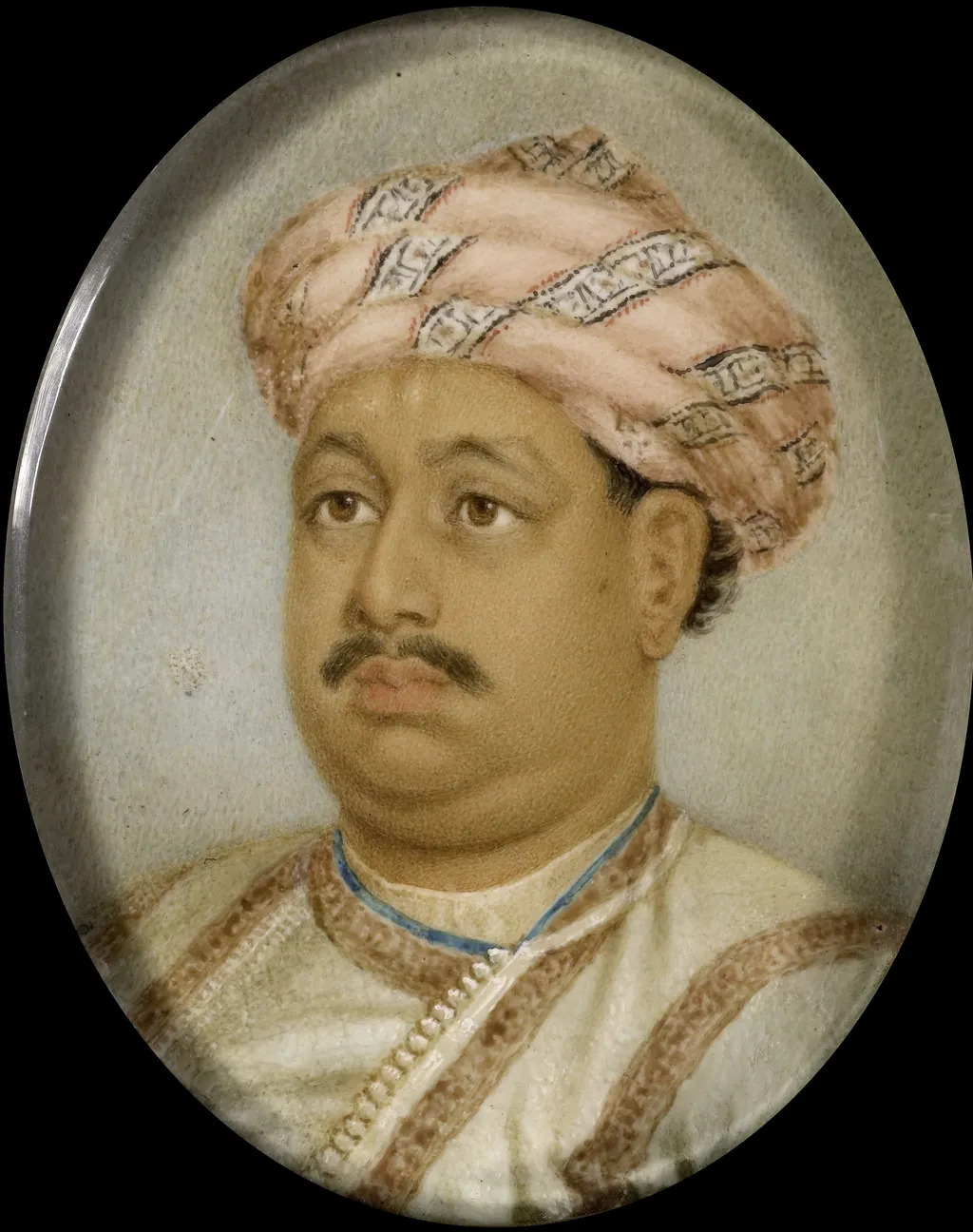
Portret van een Indische prins is an ivory painting. It dates from 1750 and is held in the collection of the Rijksmuseum. The work is a portrait executed on a sheet of ivory, depicting a dark‑skinned man with a moustache.
About this work
Overview
The work is a portrait executed on a sheet of ivory, depicting a dark‑skinned man with a moustache. He is dressed in a turban featuring white and brown patterns and a white garment highlighted with brown and blue details. The combination of the subject’s attire and the ivory support points to a cross‑cultural visual language.
Subject & Meaning
The figure appears to be an Indian prince, suggested by the elaborate headgear and richly coloured clothing. The portrait emphasizes status through the ornate turban and the fine detailing of the garment, while the direct gaze and composed posture convey a dignified presence typical of courtly representations.
Technique & Style
The artist employed fine brushwork to render the ivory’s smooth surface, allowing delicate tonal variations that model the facial features and fabric folds. The use of ivory as a painting ground creates a luminous base, enhancing the contrast between the light garments and the darker skin tones.
History & Provenance
The piece is catalogued in the collection of the Rijksmuseum, where it is listed under the title “Portret van een Indische prins.” Its acquisition details and earlier ownership are not specified in the available documentation.
Context
Portraits on ivory were relatively uncommon in European collections, often associated with trade routes that brought exotic materials to the continent. The work reflects the broader 18th‑century fascination with Oriental subjects and the incorporation of non‑European media into fine art practice.
Artist & collection
