Artwork
Portable Triptych Icon: The Crucifixion
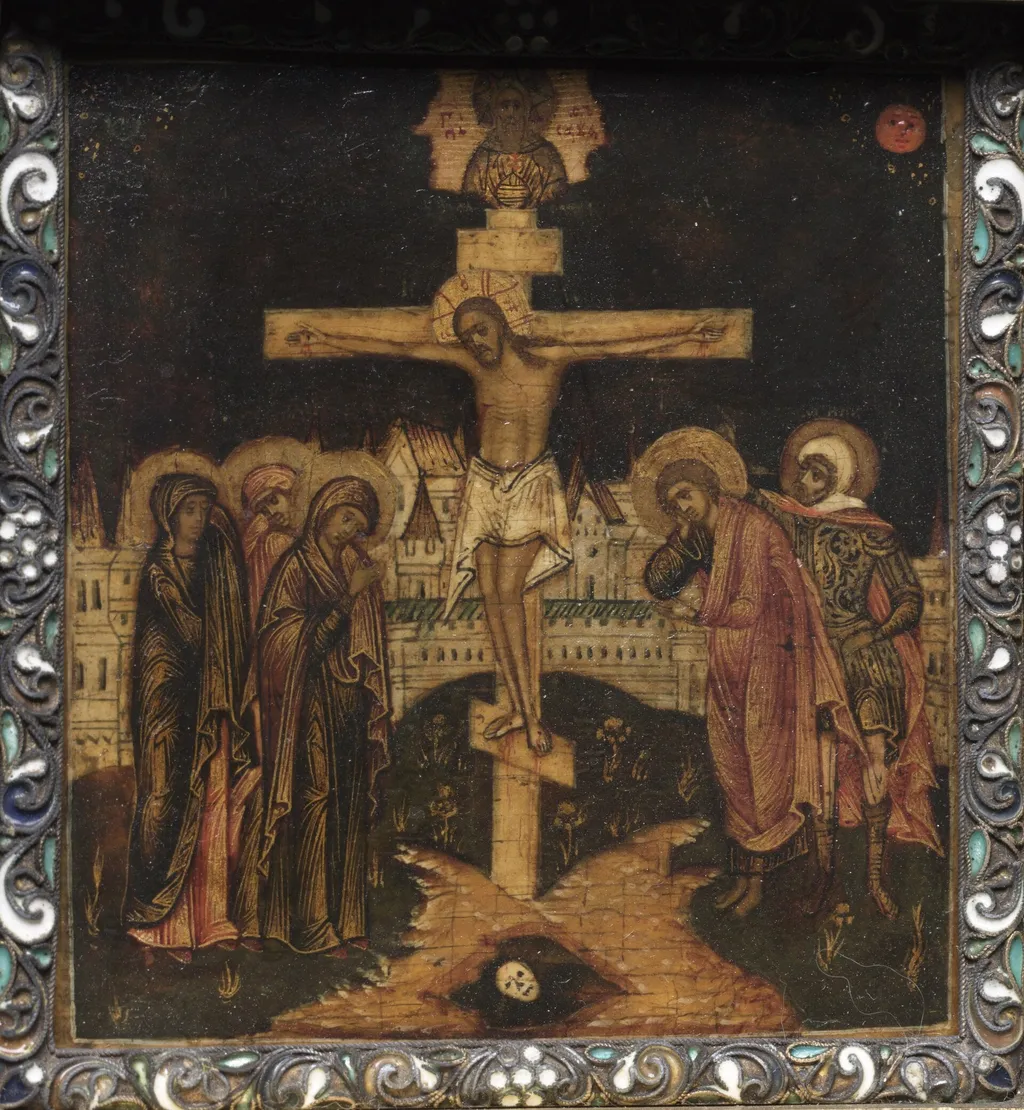
Portable Triptych Icon: The Crucifixion is an unspecified painting. It dates from 1649 and is held in the collection of the Cleveland Museum of Art.
About this work
Overview
The artwork's compact size and triptych format suggest its function as a devotional object, likely intended for personal contemplation or travel.
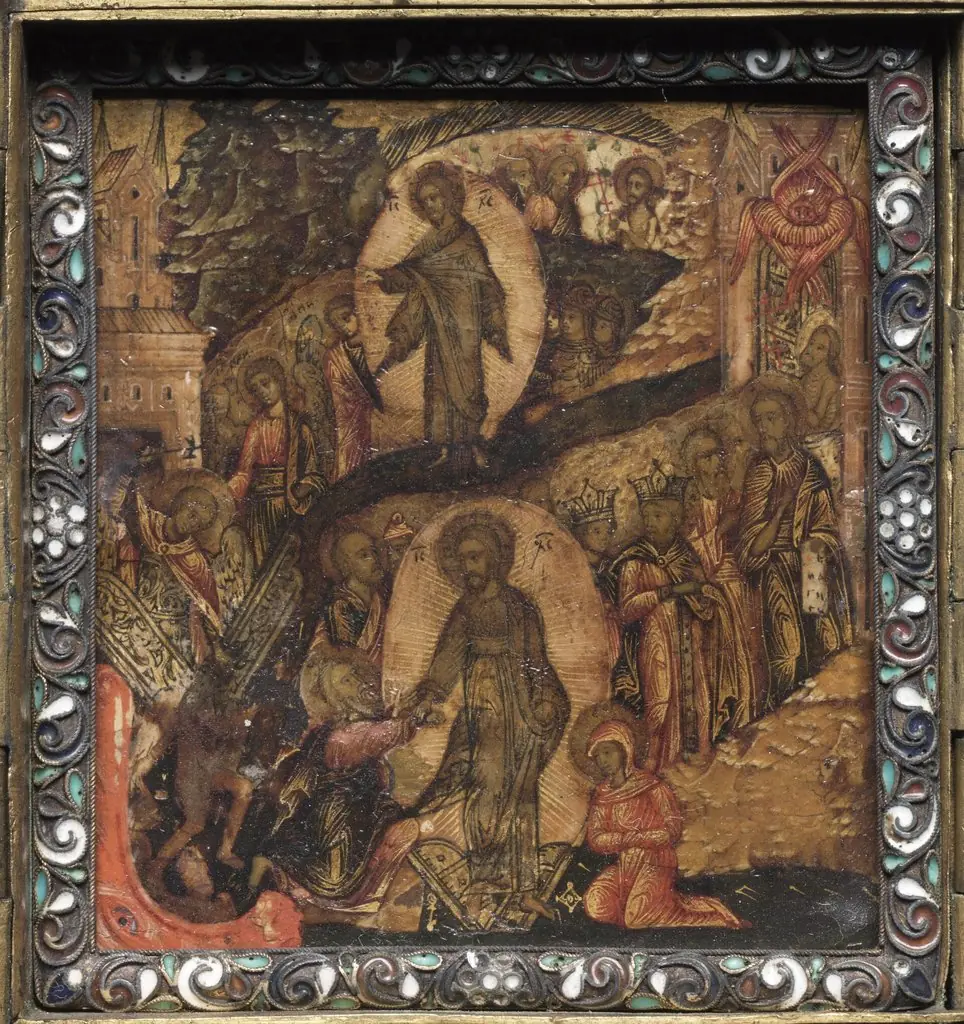
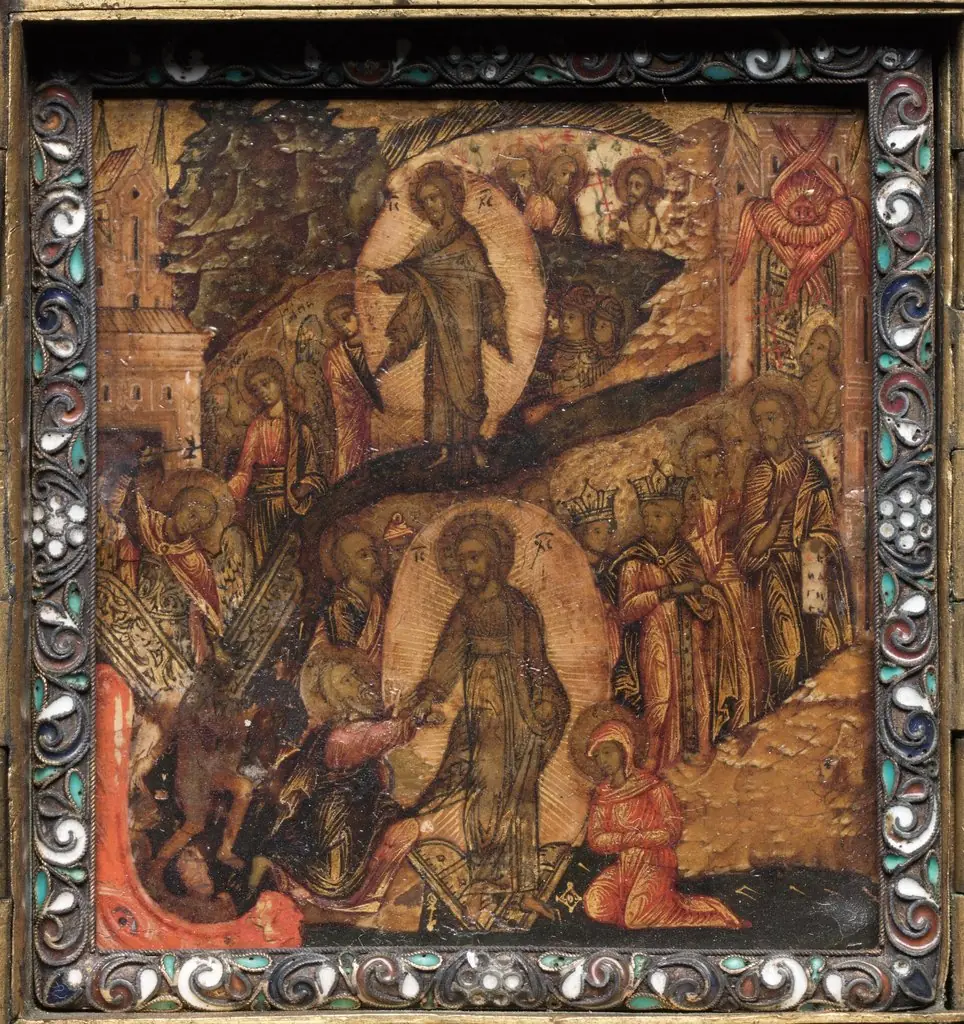
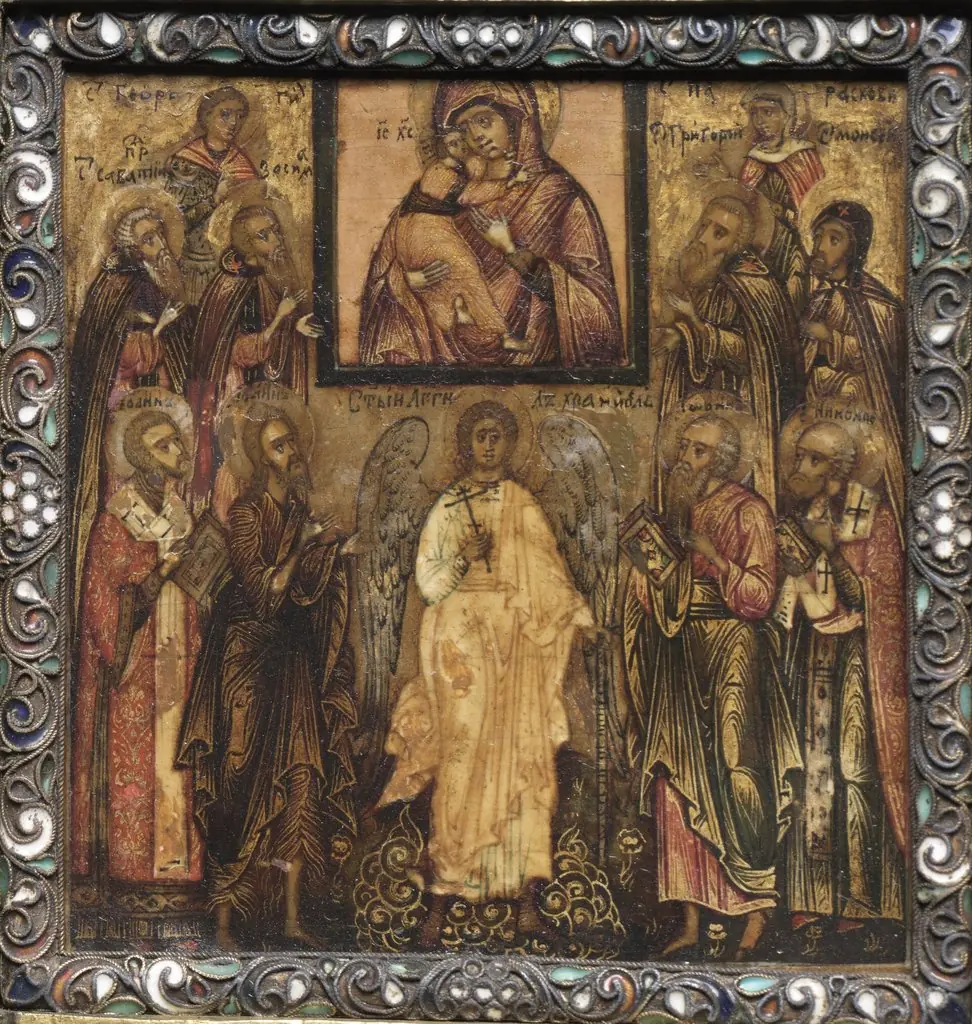
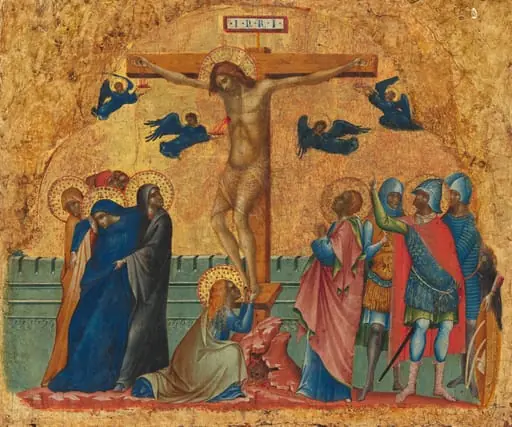
This small painted panel, titled Portable Triptych Icon: The Crucifixion, depicts a central scene from Christian theology. It features a figure affixed to a cross, flanked by three standing individuals. The artwork's compact size and triptych format suggest its function as a devotional object, likely intended for personal contemplation or travel. The composition emphasizes the solemnity of the event through its focused arrangement of figures.
Subject & Meaning
The icon portrays the crucifixion of Christ, positioned centrally with his head inclined and arms outstretched. Three figures stand nearby, observing the event. Behind the cross, a stylized cityscape with buildings and a defensive wall suggests the setting of Jerusalem. The somber palette of earthy golds, reds, and browns for the figures' robes, combined with their softly illuminated faces, conveys a sense of gravity and spiritual intensity surrounding the scene.
Technique & Style
The artist employed a dark, unadorned background, which serves to sharply delineate the figures, making them appear almost as distinct cutouts against the deep space. This use of strong contrasts between light and shadow, known as chiaroscuro, enhances the dramatic impact and three-dimensionality of the forms. The panel's frame is further adorned with intricate, repetitive patterns, suggesting a metallic or carved decorative border that encloses the sacred image.
Artist & collection