Artwork
Kalpa Sutra
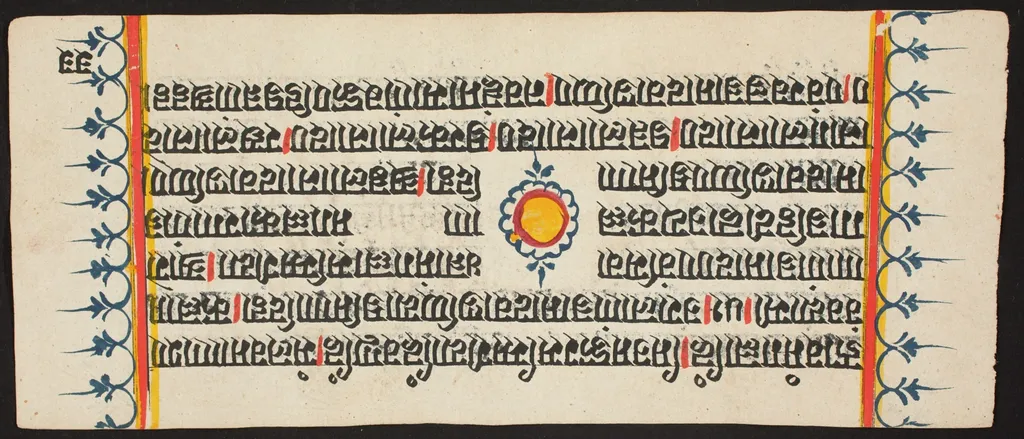
Kalpa Sutra is an unspecified painting by Unknown. It is held in the collection of the Detroit Institute of Arts.
About this work
Overview
Its design reflects the Jain tradition of elevating religious scripture through visual refinement, where form and content are mutually reinforcing.
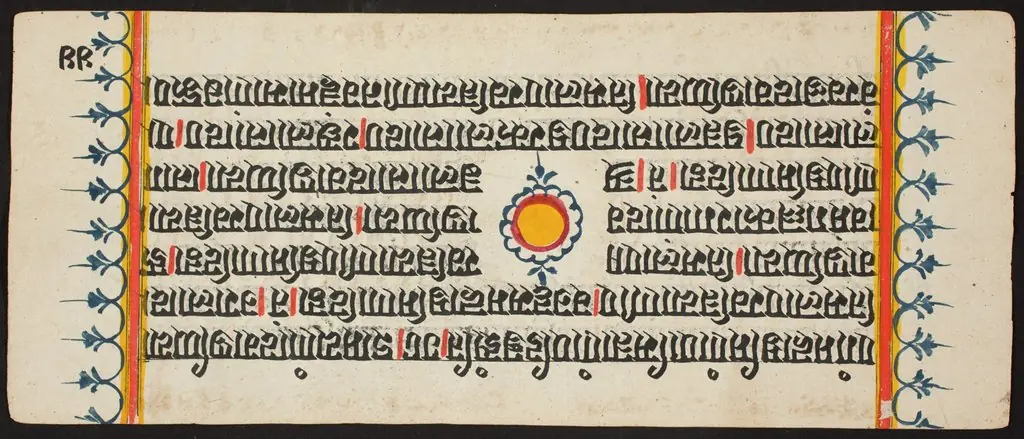
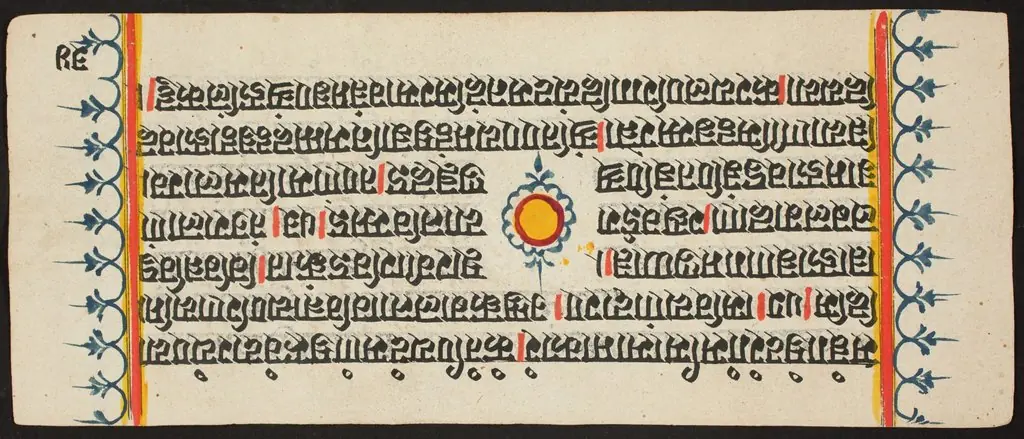
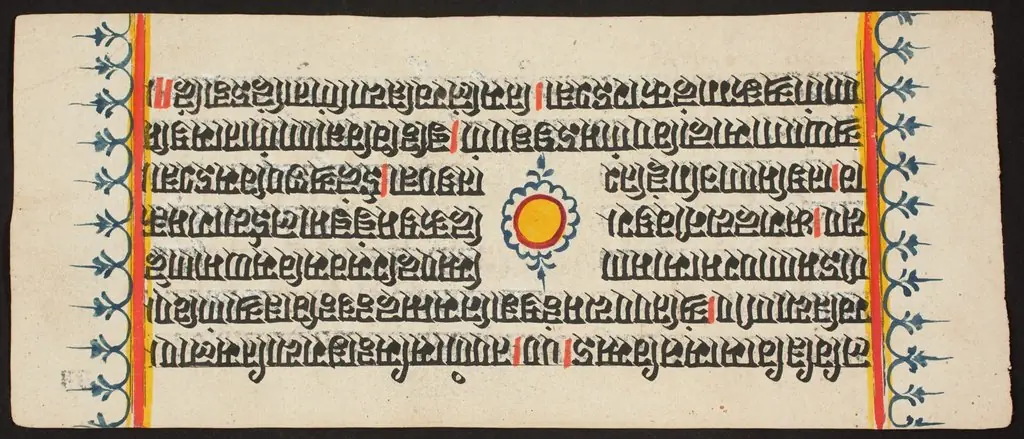
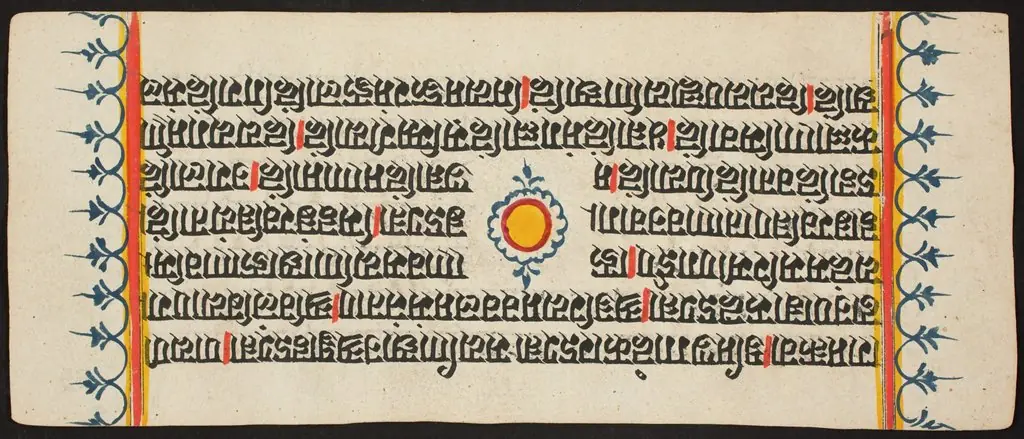
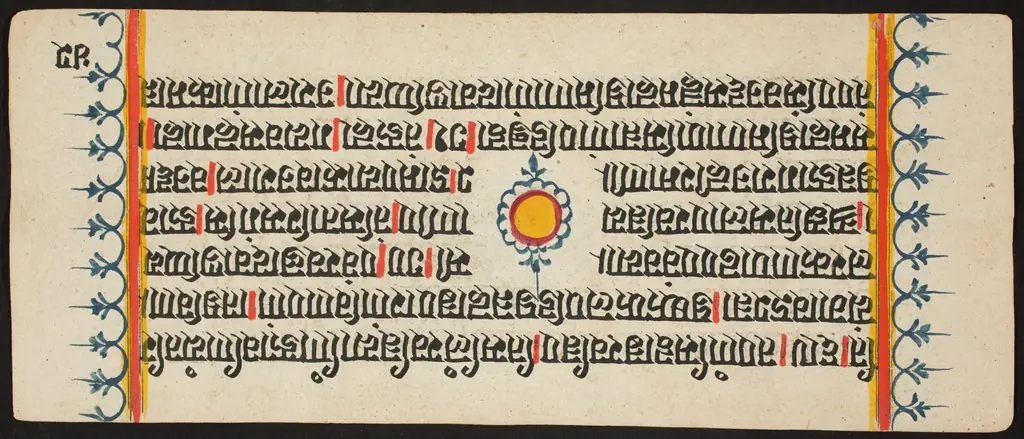
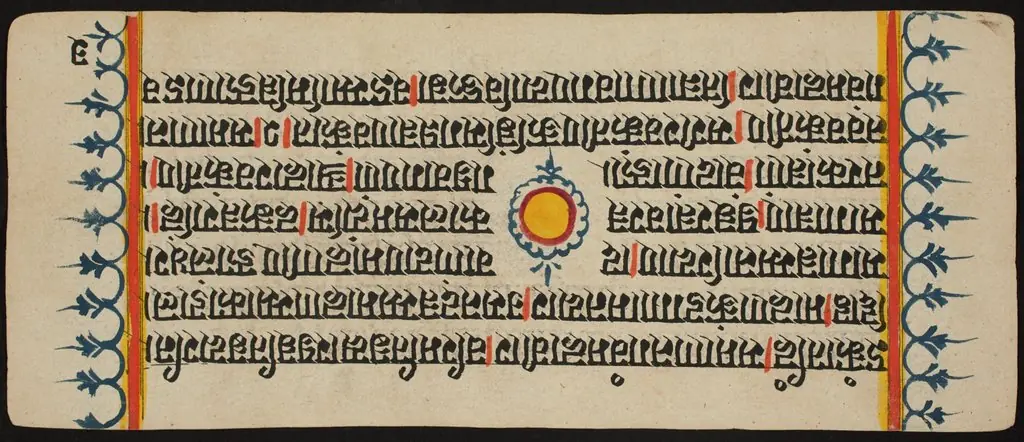
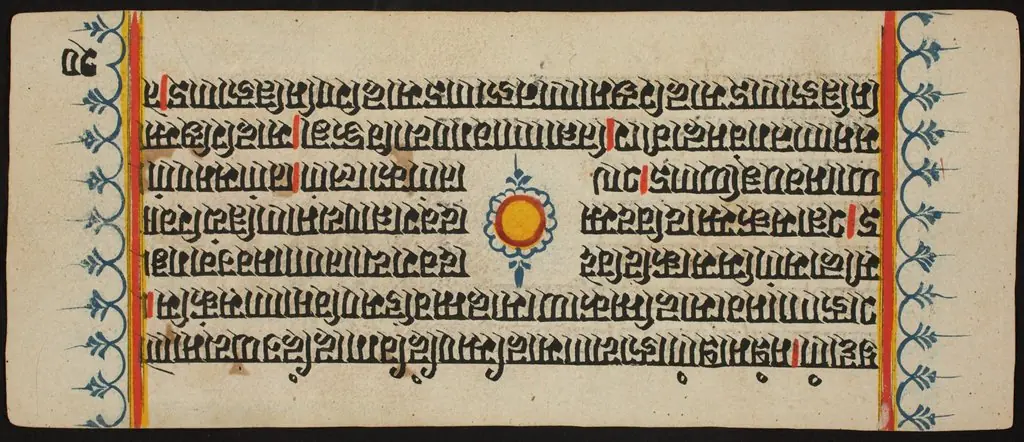
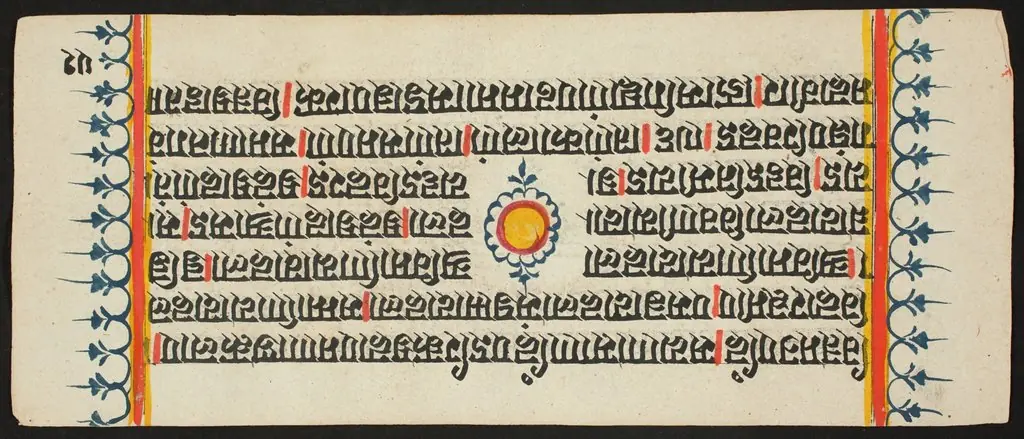
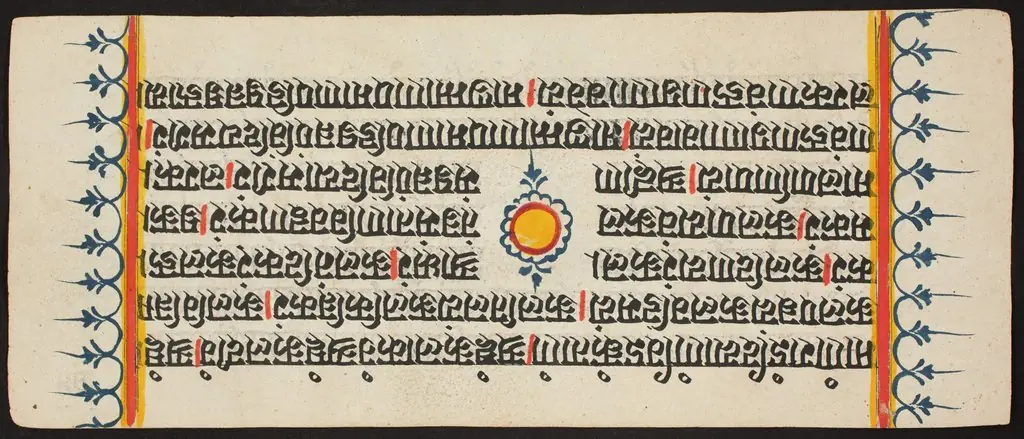
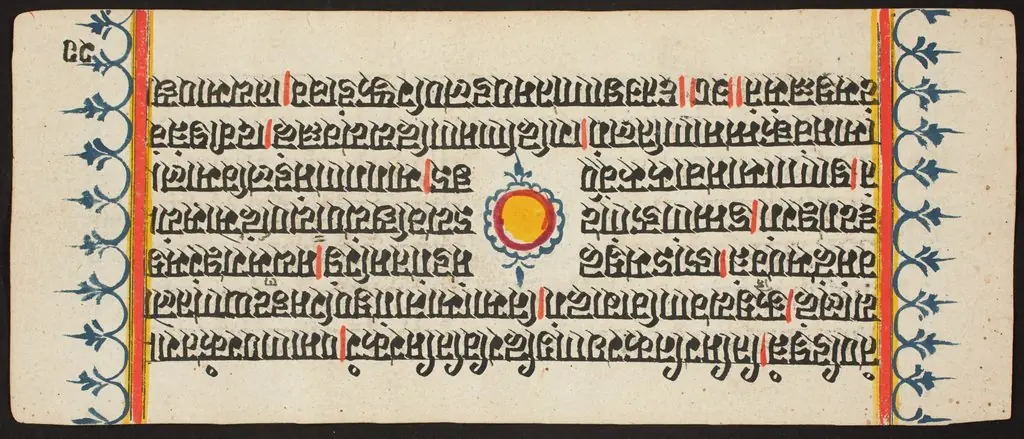
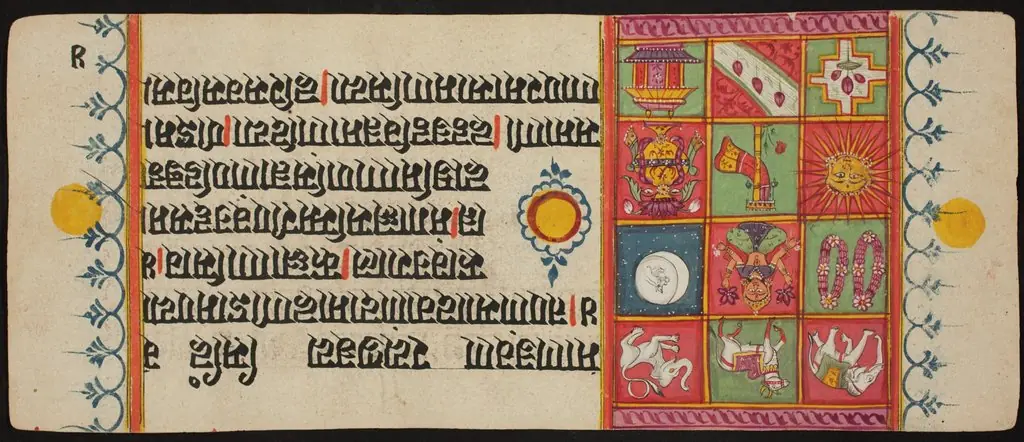
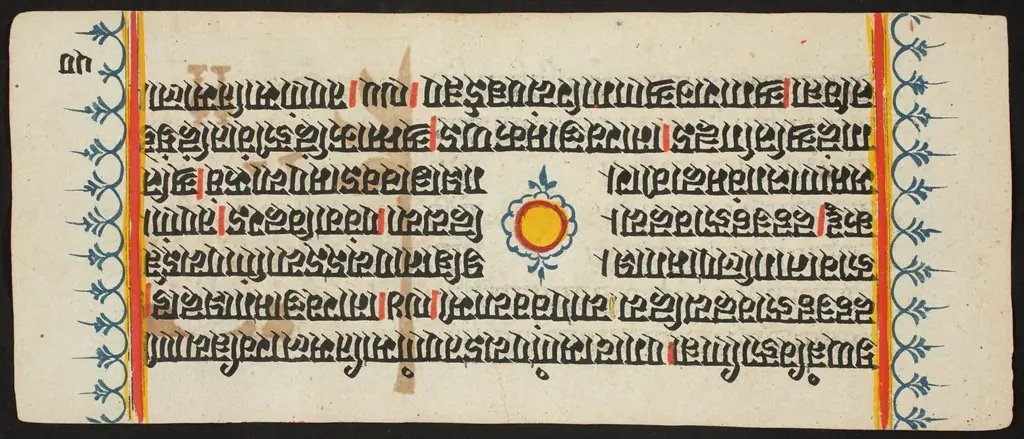
This painted page originates from a manuscript of the Kalpa Sutra, a sacred Jain text. Executed in black ink with meticulous calligraphy, it forms part of a larger codex produced for ritual or devotional use. The page is framed by vividly colored borders—red, yellow, and blue—interspersed with fine geometric and floral motifs. Its design reflects the Jain tradition of elevating religious scripture through visual refinement, where form and content are mutually reinforcing.
Subject & Meaning
The Kalpa Sutra contains biographies of Jain Tirthankaras and guidelines for monastic conduct. This page preserves a segment of its liturgical text, intended for recitation during religious observances. The careful script and ornamental borders are not merely decorative; they signify reverence for the sacred word. The visual harmony mirrors Jain principles of order, discipline, and spiritual purity, transforming the page into an object of contemplation.
Technique & Style
The text is rendered in a flowing, highly stylized script typical of western Indian manuscript traditions, with each character shaped to maintain rhythmic balance. Pigments for the borders—mineral-based reds, yellows, and blues—are applied in flat, saturated bands, framed by fine linear patterns. Gold leaf may have been used sparingly for highlights. The precision of the brushwork and the restraint in ornamentation reflect a disciplined aesthetic rooted in monastic artistic practice.
History & Provenance
This page likely dates to the 15th or 16th century, produced in a Jain scriptorium in Gujarat or Rajasthan. Manuscripts like this were commissioned by wealthy lay patrons or monastic communities for temple libraries. Its survival suggests careful preservation, possibly within a Jain temple or private collection. The absence of later annotations indicates it was not heavily used, hinting at ceremonial rather than daily function.
Context
In medieval Jain communities, sacred texts were treated as embodiments of spiritual authority. The production of illustrated manuscripts was a devotional act, often undertaken by monks or specialized artisans under religious supervision. The Kalpa Sutra, recited annually during Paryushana, required especially refined copies. This page exemplifies how textual transmission was intertwined with visual culture, reinforcing doctrinal authority through beauty.
Legacy
Manuscripts such as this page preserve not only religious teachings but also the artistic conventions of their time. They influenced later Jain painting traditions and remain key sources for understanding pre-modern Indian book culture. Today, surviving folios are studied for their calligraphic precision and iconographic detail, offering insight into the material life of Jain religious practice across centuries.
Artist & collection

 Domestic Scene
 Giacomo and Cardinal Marco, investing Andrea, Abbot of San Zeno, with his Benefice
 The Nymph of Fontainebleau
 Portrait of a Woman
 Madonna and Child with Saints in the Enclosed Garden
 Venus and Minerva
 Family Group of Four on Sofa
 Wall painting from Room H of the Villa of P. Fannius Synistor at Boscoreale