Artwork
The Seven Worthies of the Bamboo Grove
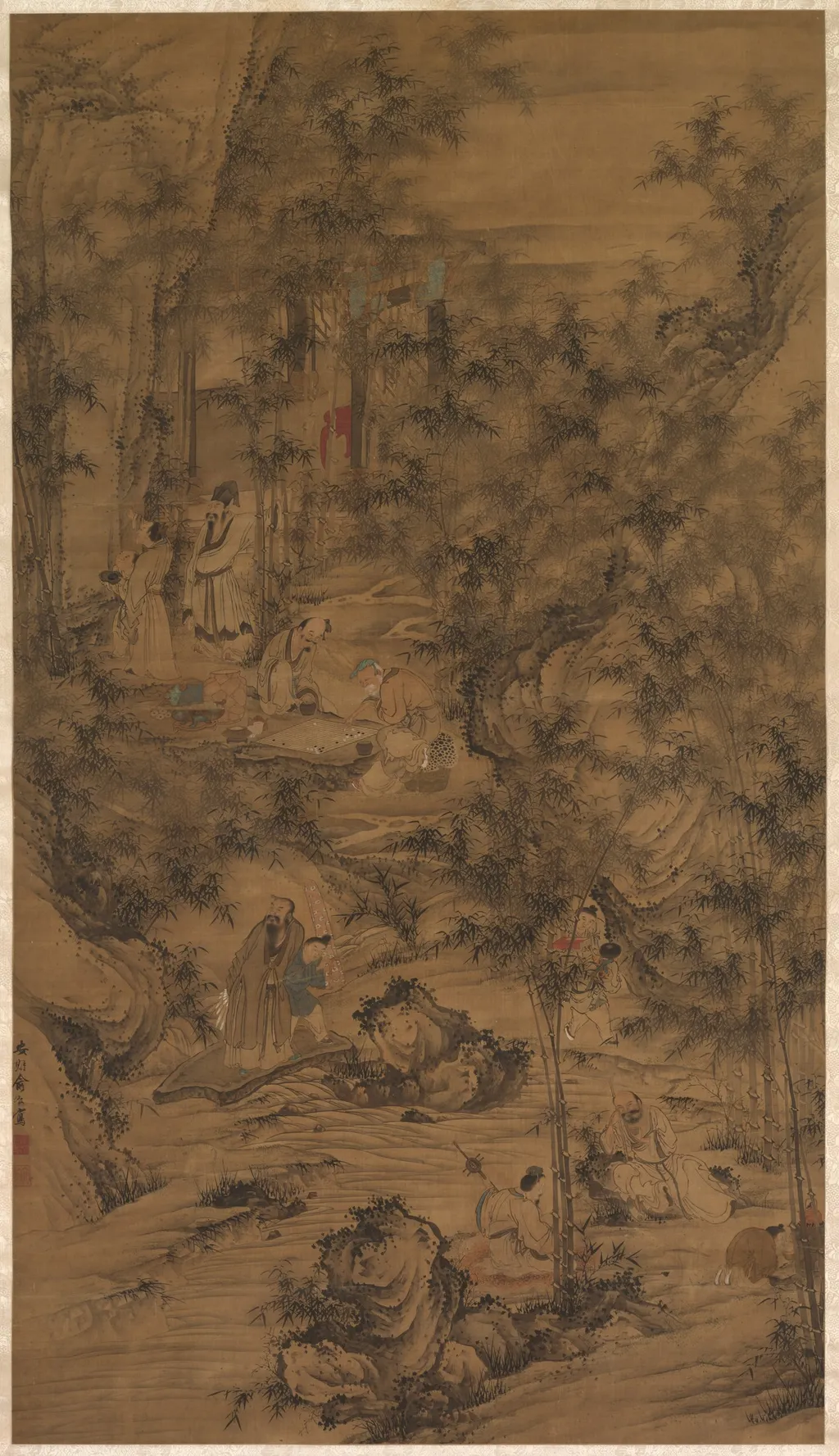
The Seven Worthies of the Bamboo Grove is an unspecified painting. It dates from 1789 and is held in the collection of the Cleveland Museum of Art.
About this work
Overview
The figures, dressed in traditional robes, are arranged around a low table laden with food and drink, conveying a peaceful communal scene.
The work titled “The Seven Worthies of the Bamboo Grove” depicts a serene gathering of seven figures within a lush bamboo forest. The composition includes natural elements such as trees, rocks, and grass, alongside a modest structure partially concealed by foliage. The figures, dressed in traditional robes, are arranged around a low table laden with food and drink, conveying a peaceful communal scene.
Subject & Meaning
The painting presents a group of seven individuals, traditionally identified as the “Seven Worthies,” engaged in a shared meal within a bamboo grove. Their varied postures—sitting, standing, kneeling—suggest a harmonious interaction that emphasizes fellowship, contemplation, and the ideal of scholarly or moral virtue associated with such gatherings in classical Chinese culture.
Technique & Style
Rendered in ink and color on paper, the artist employs delicate brushwork to delineate the bamboo stalks and foliage, while broader strokes define the rocks and distant architecture. The figures are outlined with fine lines, and subtle washes of pigment create a sense of depth and atmospheric tranquility, characteristic of literati painting traditions.
Context
The subject matter reflects a recurring motif in East Asian art that celebrates reclusion and intellectual camaraderie among scholars. By situating the worthies in a secluded bamboo setting, the composition aligns with the cultural ideal of retreat from worldly affairs to pursue moral and artistic refinement.
Artist & collection
