Artwork
Frederick II the Great (1713-86), king of Prussia
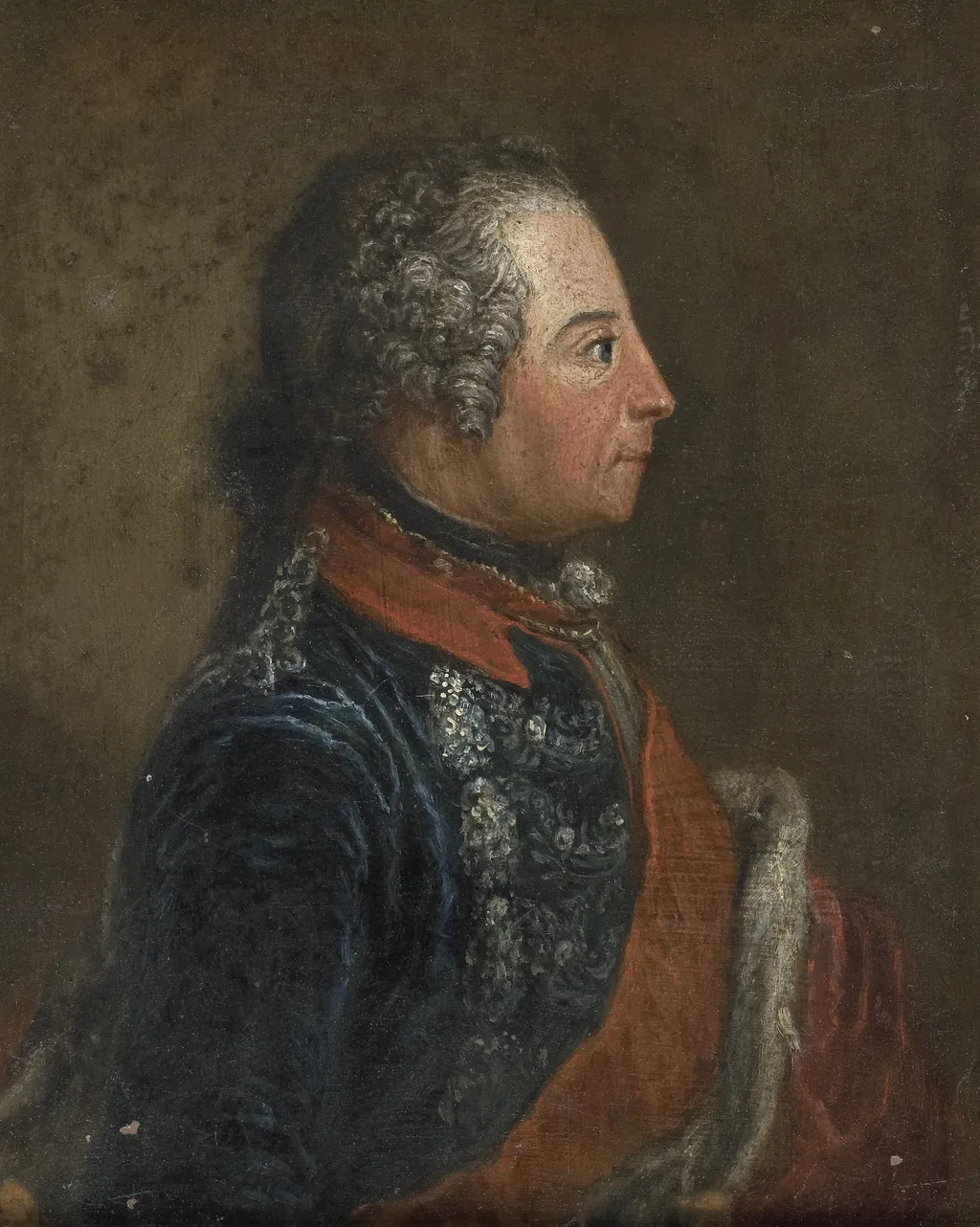
Frederick II the Great (1713-86), king of Prussia is an oil painting. It dates from 1750 and is held in the collection of the Rijksmuseum. The work is a copper portrait of Frederick II, King of Prussia (1713‑1886), rendered in profile and looking toward the viewer’s right.
About this work
Overview
The work is a copper portrait of Frederick II, King of Prussia (1713‑1886), rendered in profile and looking toward the viewer’s right. The figure is dressed in a dark blue coat with elaborate silver embroidery, a red collar, and a red sash over the left shoulder, his curly gray hair visible. The composition emphasizes the monarch’s dignified presence through formal attire and a restrained pose.
Subject & Meaning
Frederick II, known for his military reforms and patronage of the arts, is presented in a conventional regal manner that underscores his authority and cultivated image. The profile view, a common device for sovereigns, conveys a sense of timelessness and continuity, while the rich detailing of his garments signals his status and the prestige of the Prussian court.
Technique & Style
Executed on copper, the portrait benefits from the metal’s smooth surface, allowing fine brushwork and precise rendering of textures such as the embroidered coat and hair. The artist employs chiaroscuro, contrasting illuminated areas of the face and clothing with deep shadows, thereby modelling the figure and imparting a three‑dimensional quality within the limited palette.
History & Provenance
The painting’s medium and subject suggest it was likely commissioned during Frederick II’s reign or shortly thereafter, a period when copper portraits were favored for their durability and luminous finish. While specific details of the artist and original ownership are not recorded here, the work has been preserved as a representation of Prussian royal portraiture.
Context
Created in the mid‑18th century, the portrait aligns with the Enlightenment era’s emphasis on rationality and order, reflected in the clear, controlled composition. The use of luxurious fabrics and ornamental embroidery mirrors contemporary court fashion, while the restrained background focuses attention on the monarch’s visage, a hallmark of state portraiture of the time.
Artist & collection