Artwork
Don Manuel Romero de Terreros y Villar-Villamil
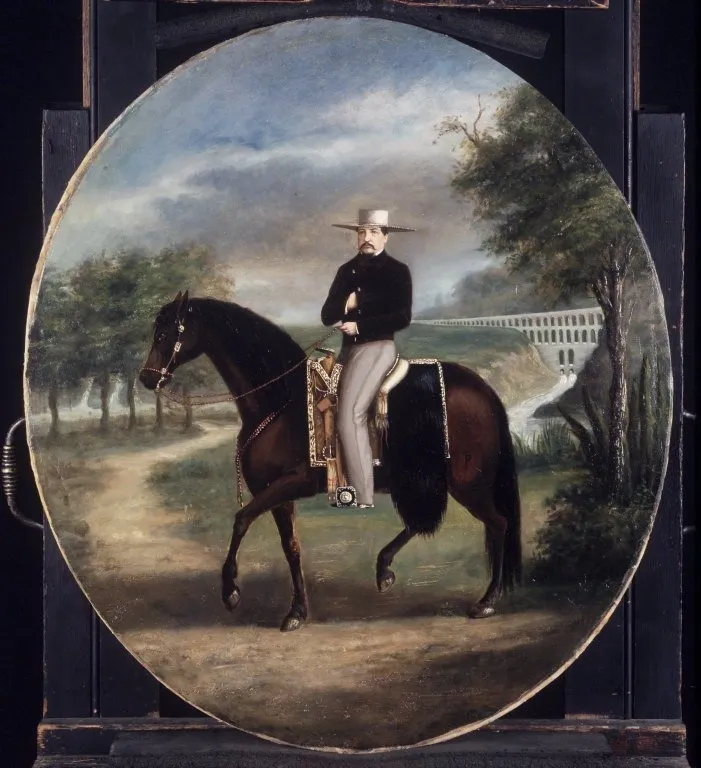
Don Manuel Romero de Terreros y Villar-Villamil is an unspecified painting by the Realist artist Unknown. It dates from 1865 and is held in the collection of the Brooklyn Museum.
About this work
Overview
His poised posture and formal attire suggest a figure of social standing, captured in a moment of quiet transit rather than formal ceremony.
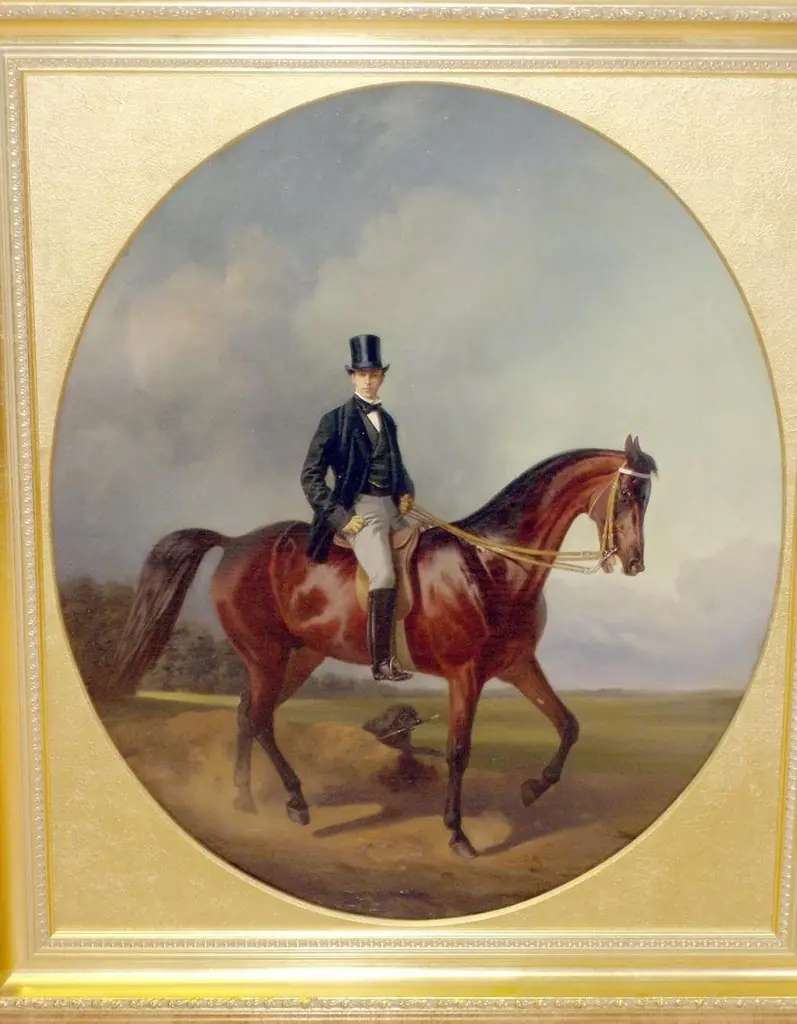
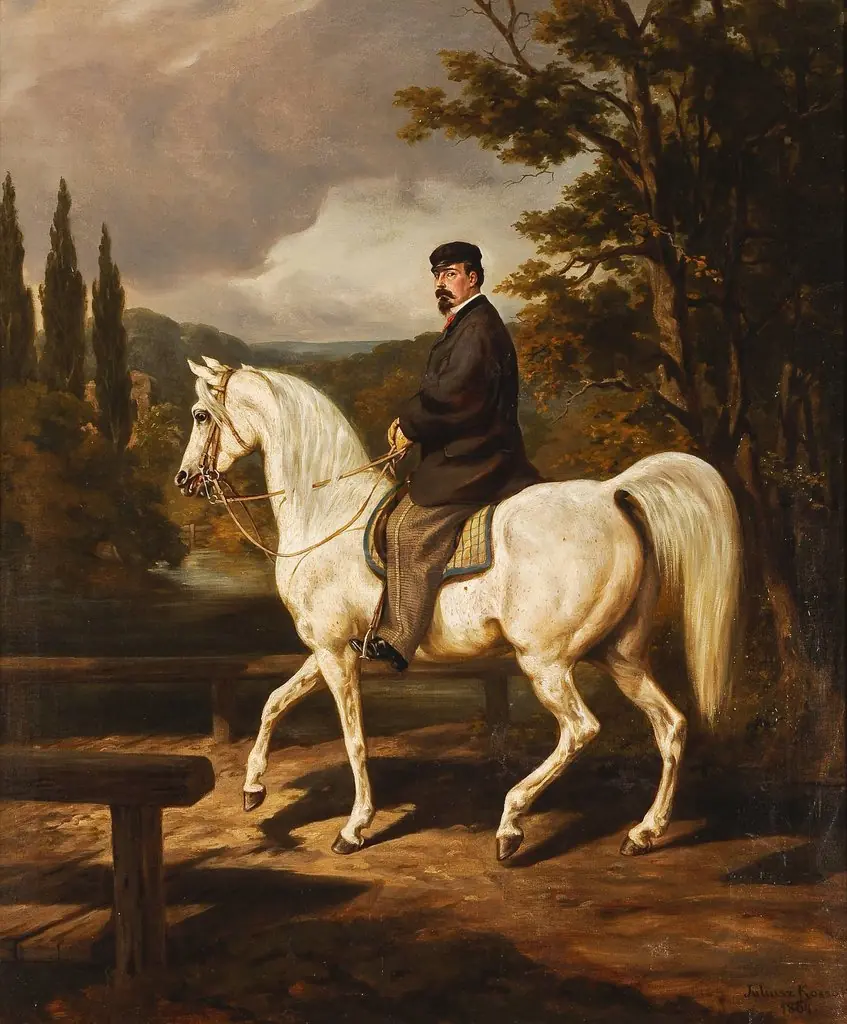
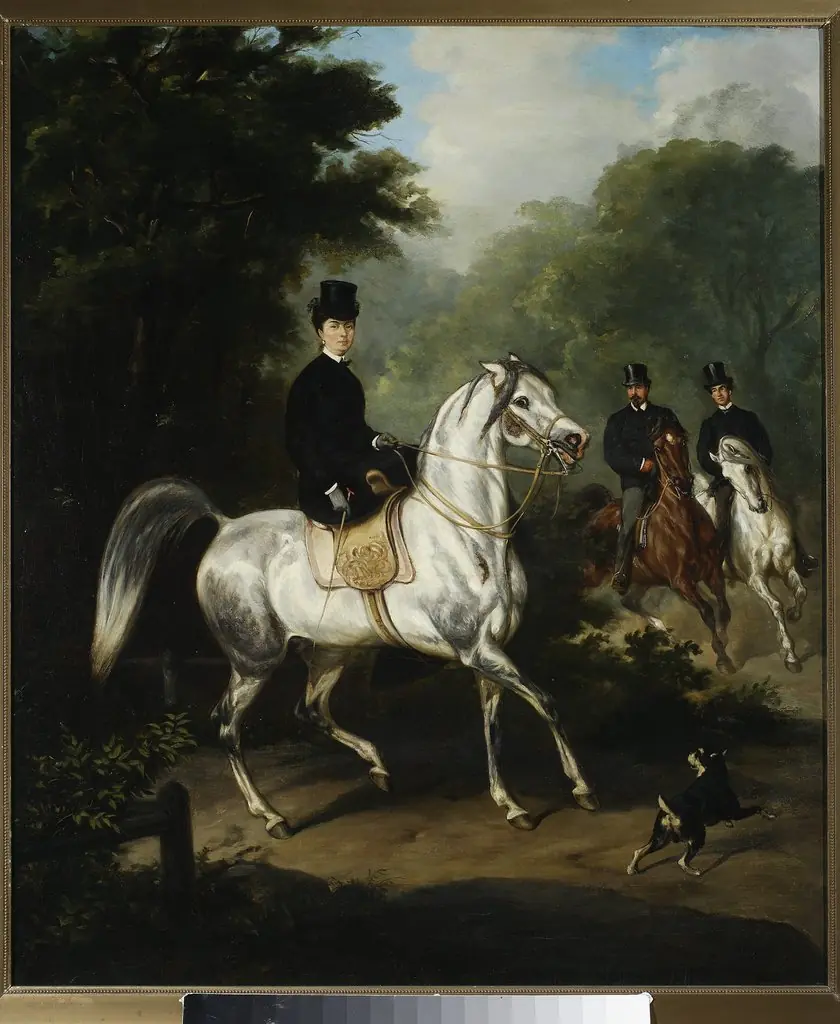
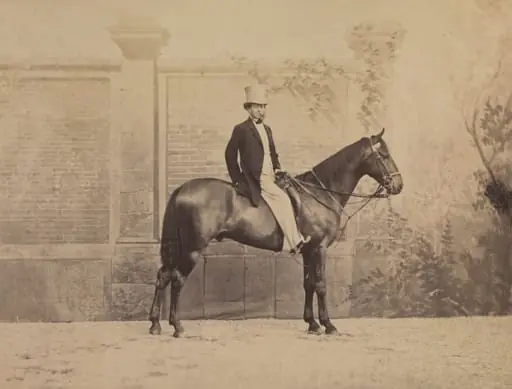
This portrait depicts Don Manuel Romero de Terreros y Villar-Villamil mounted on a horse, traveling along a rural path. The composition centers on the figure, framed by a natural landscape of trees, a distant bridge, and a soft, overcast sky. His poised posture and formal attire suggest a figure of social standing, captured in a moment of quiet transit rather than formal ceremony. The painting reflects 19th-century conventions of equestrian portraiture, blending personal identity with environmental context.
Subject & Meaning
Don Manuel, identified by his full name, appears as a man of privilege, dressed in a black jacket and white hat—attire commonly associated with elite or military circles in Latin America during the 1800s. His crossed arms convey composure and authority, while the solitary ride implies introspection or duty. The setting, neither urban nor overtly pastoral, positions him as a landowner or official navigating his domain, reinforcing social status through controlled, dignified presence.
Technique & Style
The artist employs a restrained palette and careful modeling to define form, with subtle contrasts between light and shadow enhancing the volume of the figure and horse. Brushwork is precise yet unobtrusive, favoring clarity over flourish. The background is rendered with softer focus, directing attention to the rider. The use of chiaroscuro, though muted, adds depth and gravitas, aligning the work with academic traditions of portraiture prevalent in the period.
History & Provenance
The painting likely originated in Mexico or another Spanish-speaking region during the mid- to late 19th century, commissioned by or for the subject’s family. Its survival suggests it remained within private collections, possibly passed through generations. No public record of exhibition or institutional ownership is widely documented, indicating a history rooted in domestic rather than public display.
Context
Equestrian portraits were common among the landed elite in post-independence Latin America, serving as symbols of authority and continuity amid political change. This work aligns with regional trends that blended European academic styles with local identities. The inclusion of a natural landscape, rather than a formal backdrop, reflects a growing preference for authenticity and connection to place among the upper classes during this era.
Legacy
While not widely reproduced or studied in major art historical narratives, the painting remains a tangible artifact of 19th-century social hierarchy and visual culture in Latin America. It offers insight into how personal identity was constructed through dress, posture, and environment. Its quiet dignity preserves a specific moment in the lives of a regional elite, contributing to broader understandings of colonial and postcolonial portraiture.
Artist & collection

 Domestic Scene
 Giacomo and Cardinal Marco, investing Andrea, Abbot of San Zeno, with his Benefice
 The Nymph of Fontainebleau
 Portrait of a Woman
 Madonna and Child with Saints in the Enclosed Garden
 Venus and Minerva
 Family Group of Four on Sofa
 Wall painting from Room H of the Villa of P. Fannius Synistor at Boscoreale