Artwork
Kakubha Ragini
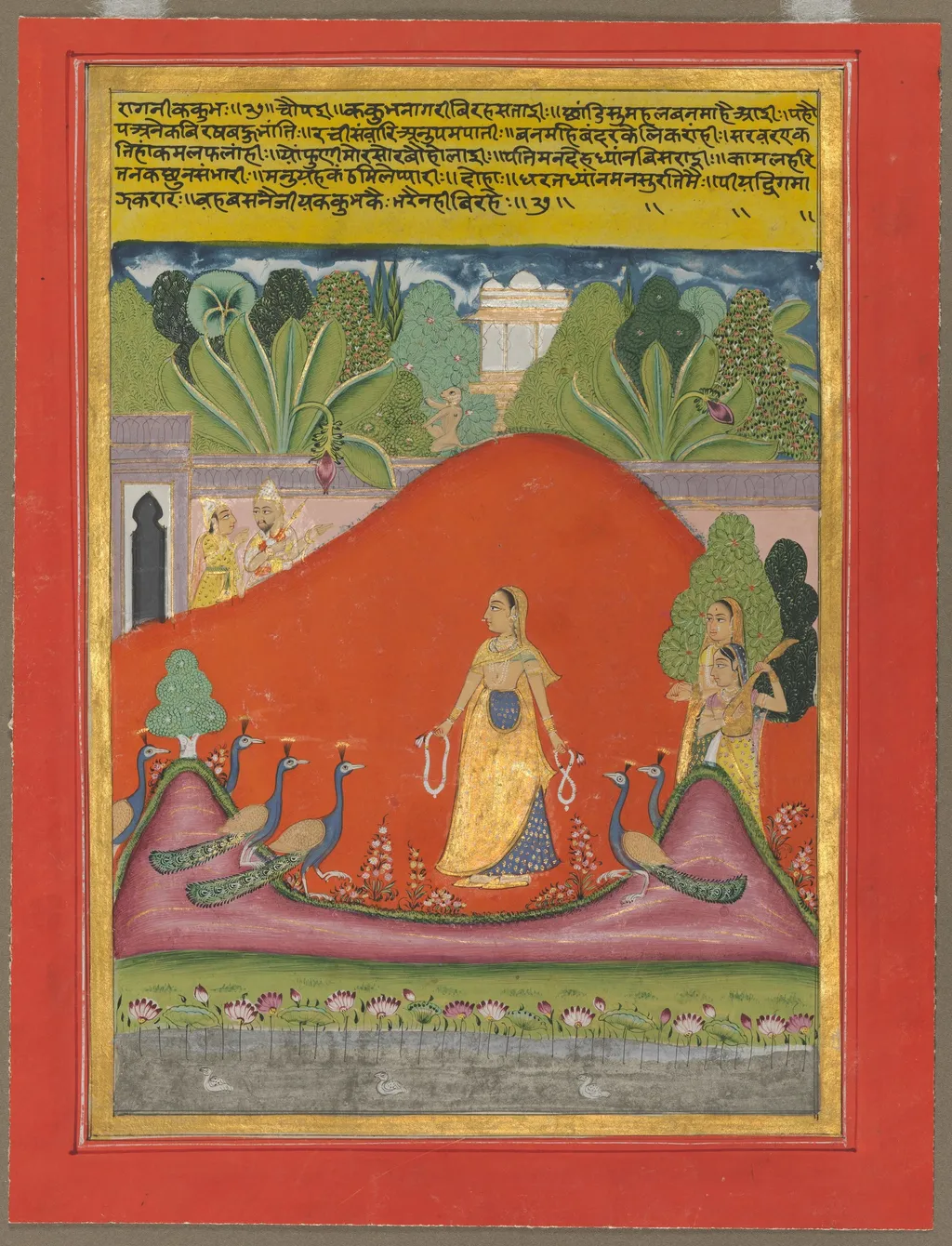
Kakubha Ragini is an unspecified painting. It dates from 1750 and is held in the collection of the Cleveland Museum of Art.
About this work
Overview
The work titled Kakubha Ragini portrays a female figure clad in a bright yellow sari, positioned on an elevated landscape. She is surrounded by several peacocks and accompanied by two additional women, one of whom supports a tree. A domed structure rises in the distance amid a richly vegetated backdrop, creating a layered composition of figures, fauna, and architecture.
Subject & Meaning
Central to the scene is the woman holding a white object, whose precise nature remains ambiguous, suggesting a ritual or ceremonial role. The presence of peacocks, traditional symbols of beauty and pride in Indian culture, reinforces themes of fertility and auspiciousness. The accompanying women and the tree they bear may allude to communal or mythological narratives embedded in the visual field.
Technique & Style
The painting employs a vivid palette of reds, greens, blues, and yellows, with particular attention to the intricate patterns of the sari and the feathered detail of the peacocks. Layered foliage and architectural elements generate depth, while the careful rendering of textures—fabric, plumage, and foliage—demonstrates a refined handling of line and color typical of Indian decorative painting traditions.
Context
Kakubha Ragini exemplifies a strand of Indian art that blends figurative representation with ornamental richness, reflecting regional aesthetic preferences for elaborate costume and natural motifs. The inclusion of a domed building situates the scene within an architectural context that may reference local religious or secular structures, situating the work within a broader cultural and visual tradition.
Artist & collection
