Artwork
Portrait of a Boy, thought to be Giovanni de' Medici (1543-1562)
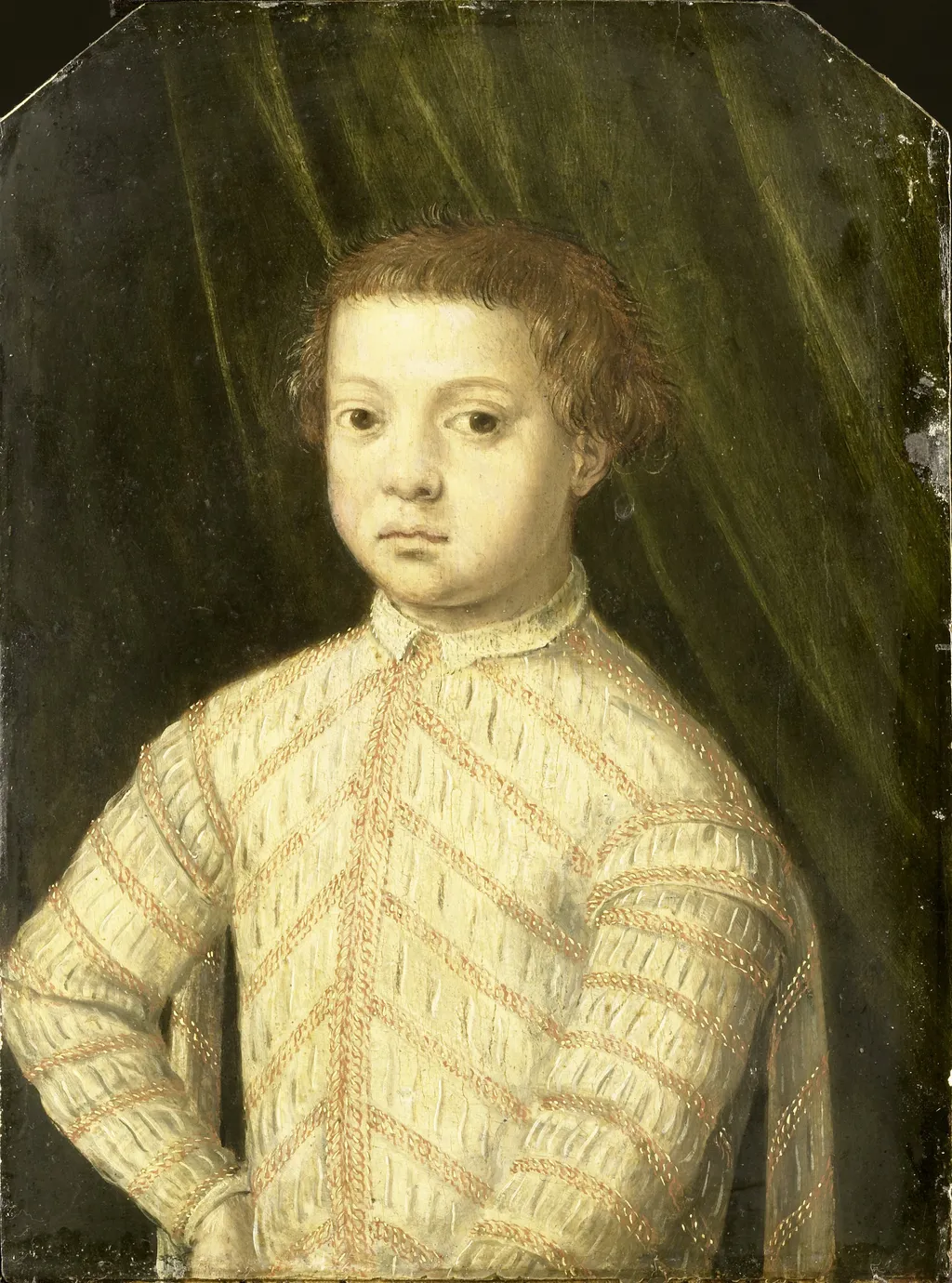
Portrait of a Boy, thought to be Giovanni de' Medici (1543-1562) is an oil painting. It dates from 1550 and is held in the collection of the Rijksmuseum. The work is an oil painting portraying a youthful male figure, identified as Giovanni de' Medici, who lived from 1543 to 1562.
About this work
Overview
The work is an oil painting portraying a youthful male figure, identified as Giovanni de' Medici, who lived from 1543 to 1562. The sitter is rendered with short, curly brown hair, a white shirt featuring red diagonal stitching, and crossed arms, set before a dark green drapery. The composition presents a neutral expression and a direct gaze.
Subject & Meaning
The portrait captures a member of the Medici family during his early years, emphasizing status through refined clothing details and a composed demeanor. The straightforward pose and steady eye suggest a conventional representation of lineage and personal virtue common in mid‑sixteenth‑century aristocratic portraiture.
Technique & Style
The artist employs chiaroscuro to model the figure, creating a three‑dimensional effect against the dark background. Impasto adds tactile surface to the flesh and fabric, while layered glazing produces a luminous quality in the skin tones and the red stitching on the shirt.
History & Provenance
Attributed to the period of Giovanni de' Medi's childhood, the painting has been catalogued as a portrait of the young Medici. Its provenance traces through private collections before entering a public institution, where it is displayed as part of the museum’s Renaissance holdings.
Context
Created in the mid‑16th century, the portrait reflects the Florentine tradition of courtly representation, where young heirs were depicted with dignified restraint. The use of dark drapery and controlled lighting aligns with contemporary practices among Italian portraitists seeking to convey both realism and idealized poise.
Artist & collection
