Artwork
Page from Tales of a Parrot (Tuti-nama): text page
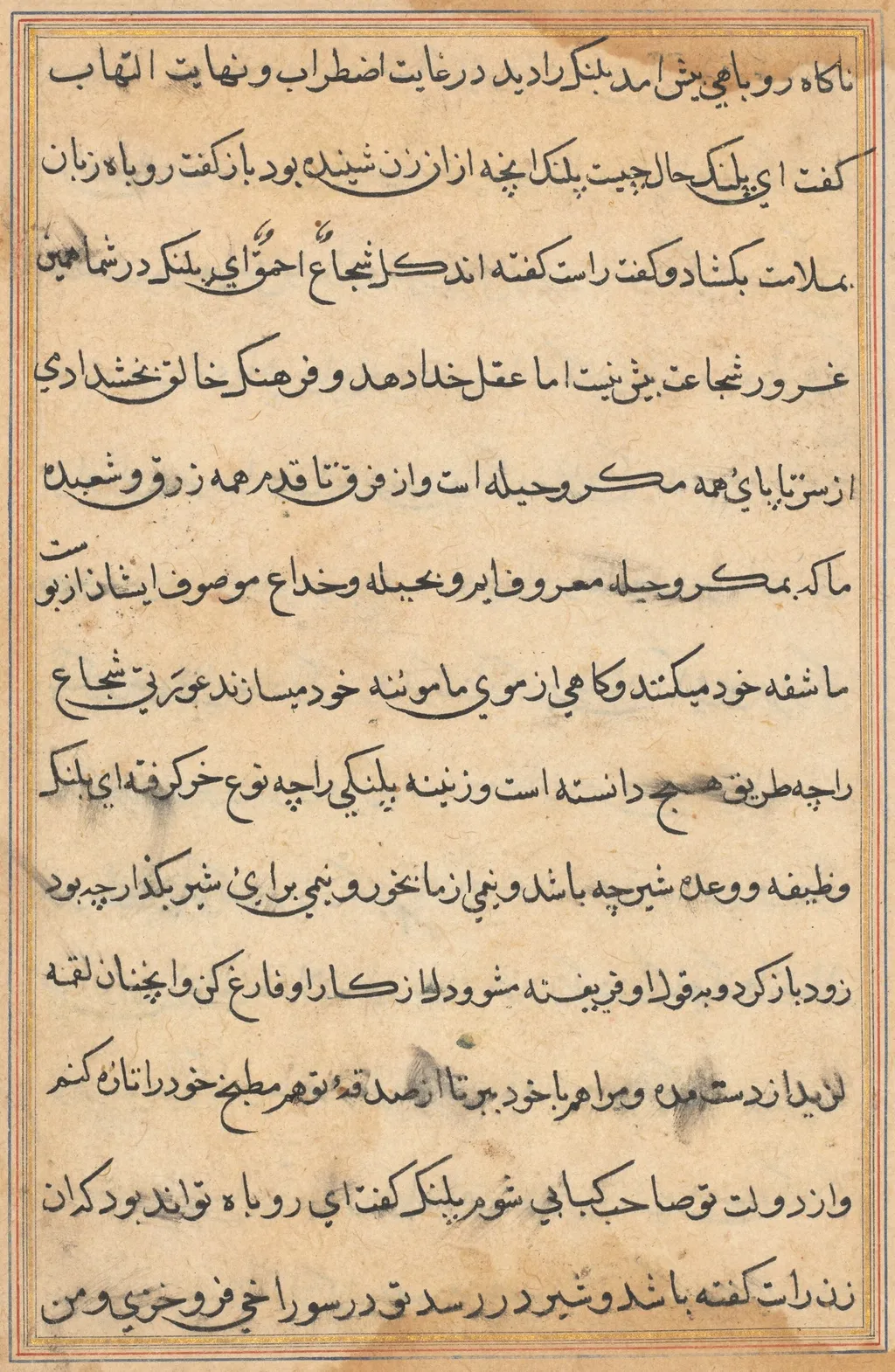
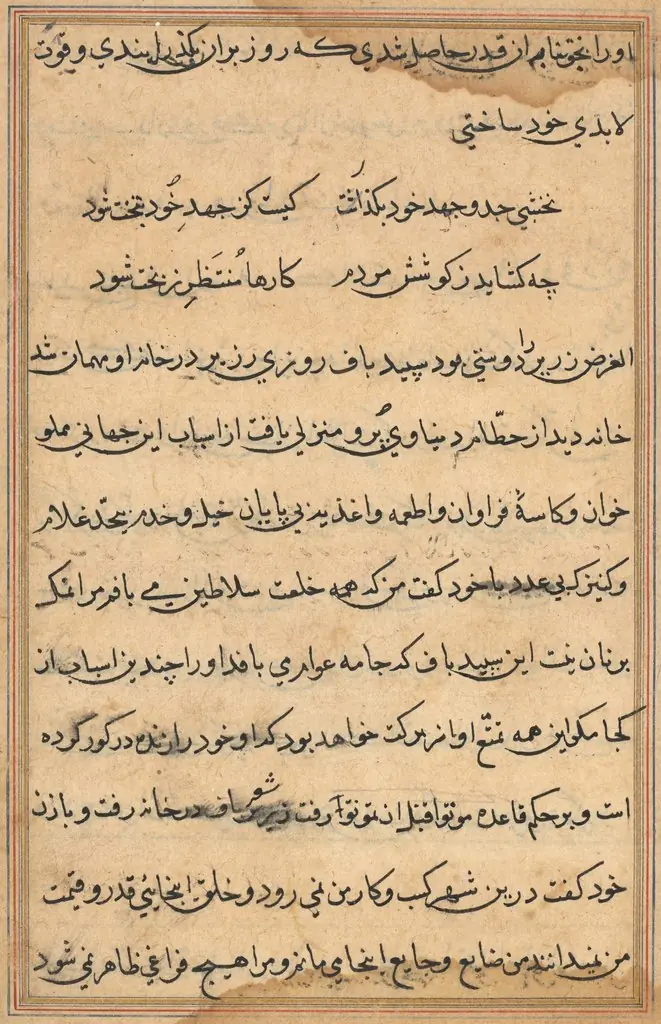
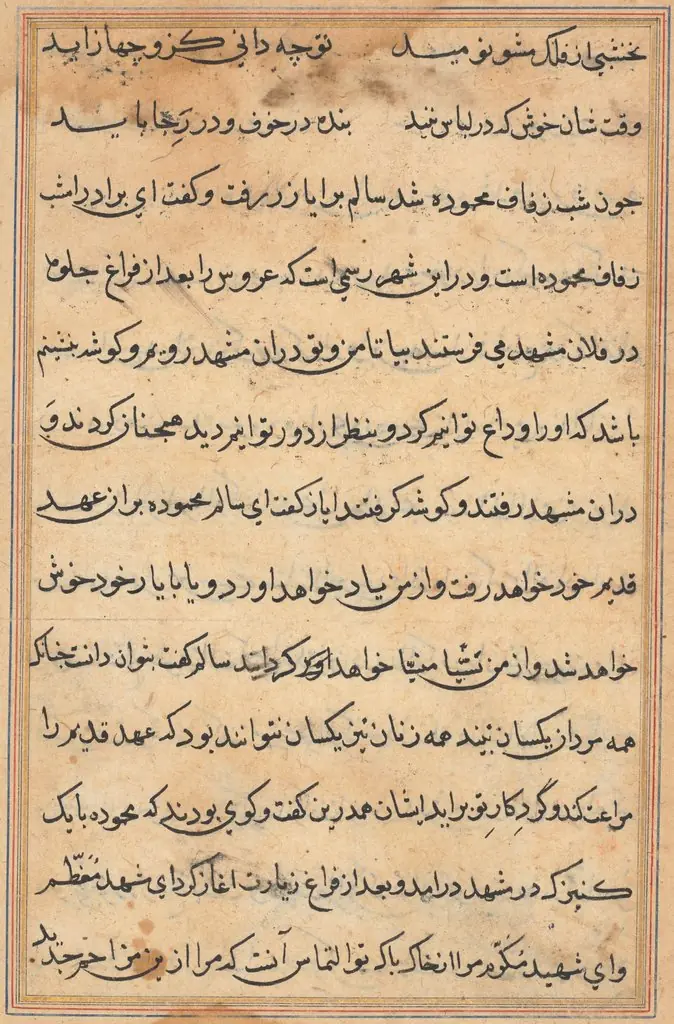
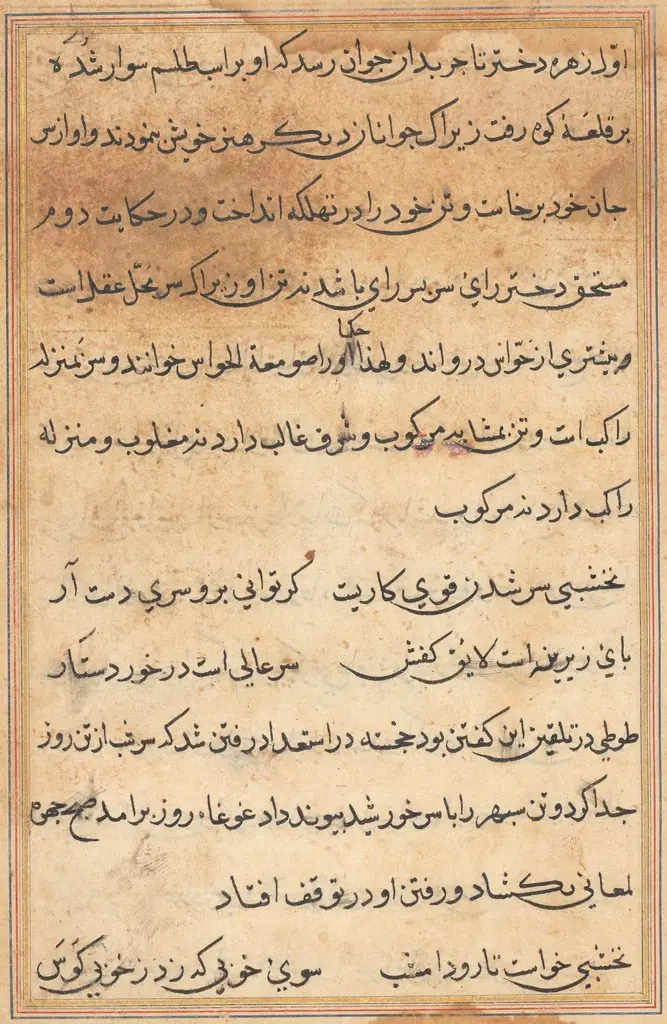
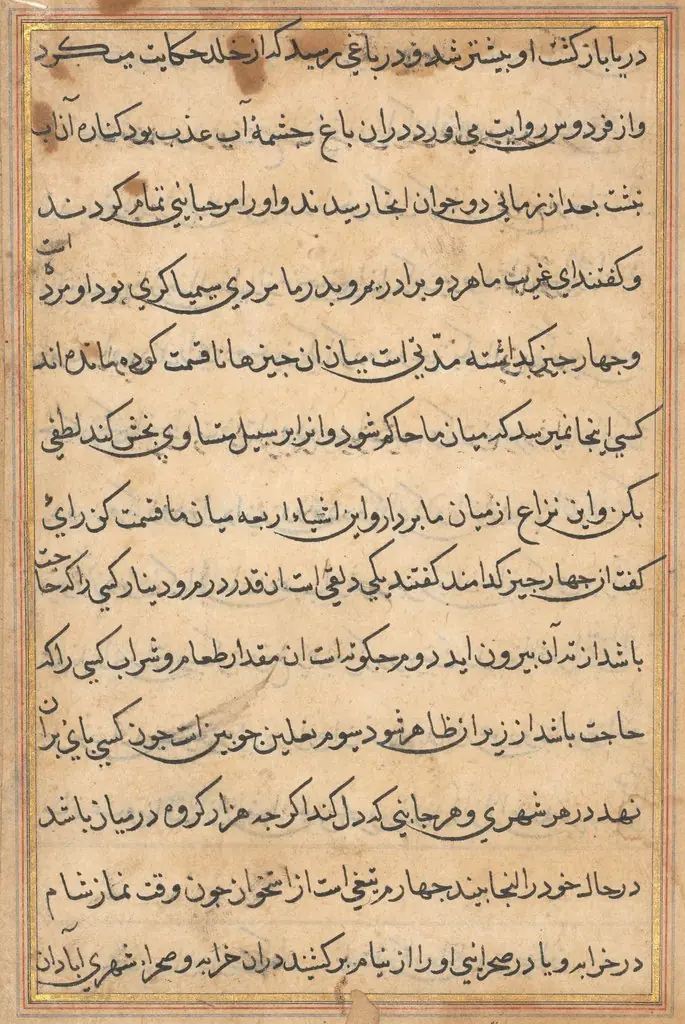
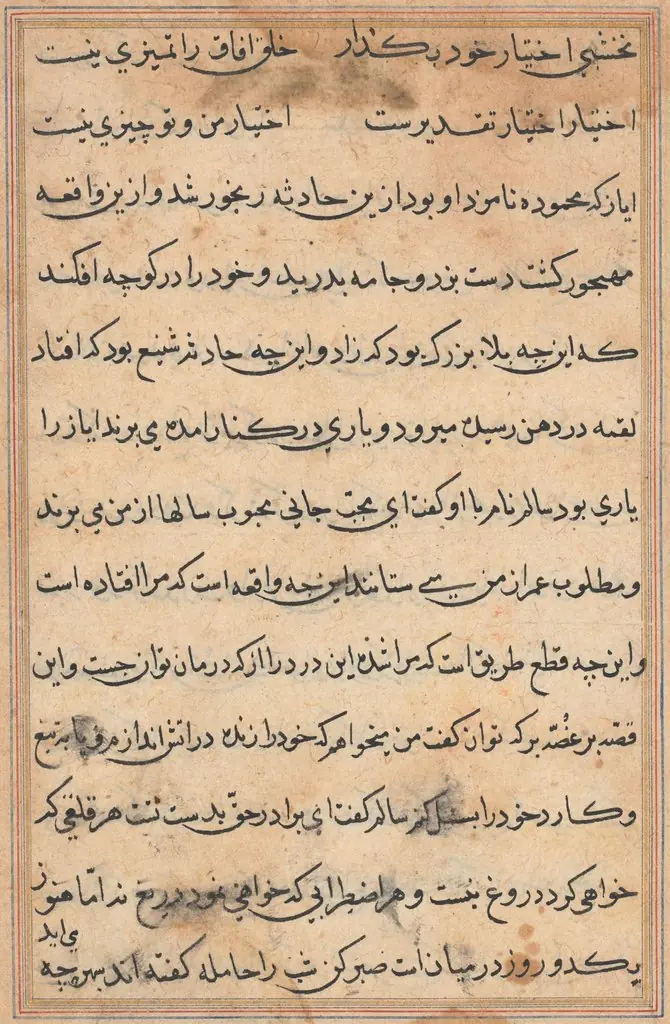
Page from Tales of a Parrot (Tuti-nama): text page is an unspecified painting. It dates from 1560 and is held in the collection of the Cleveland Museum of Art. The object is a single folio from the illustrated manuscript known as the Tales of a Parrot (Tuti‑nama).
About this work
Overview
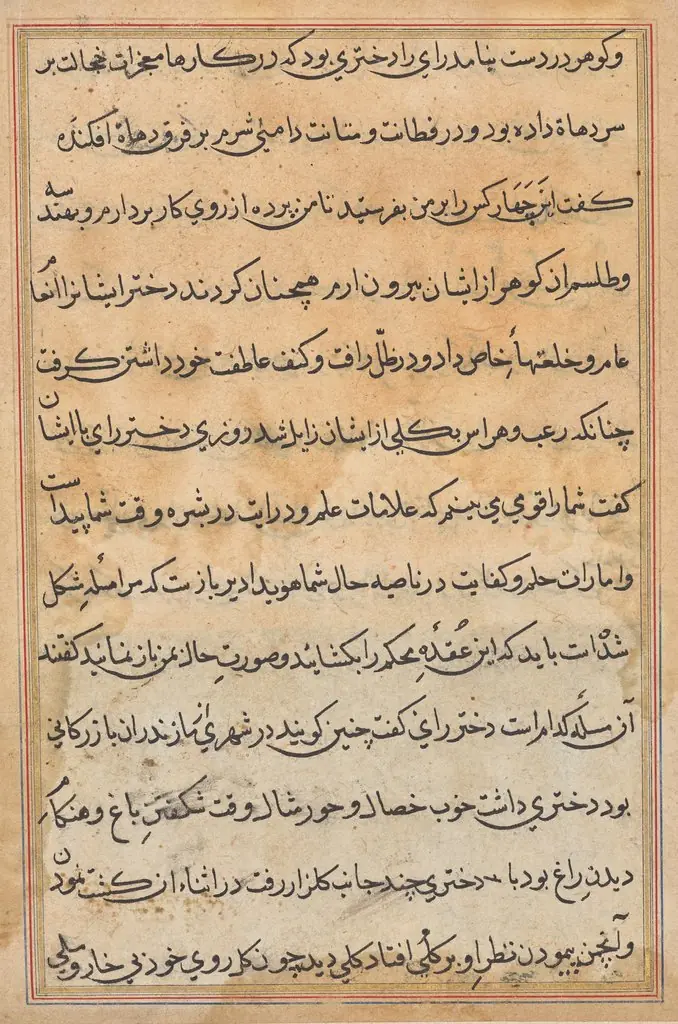
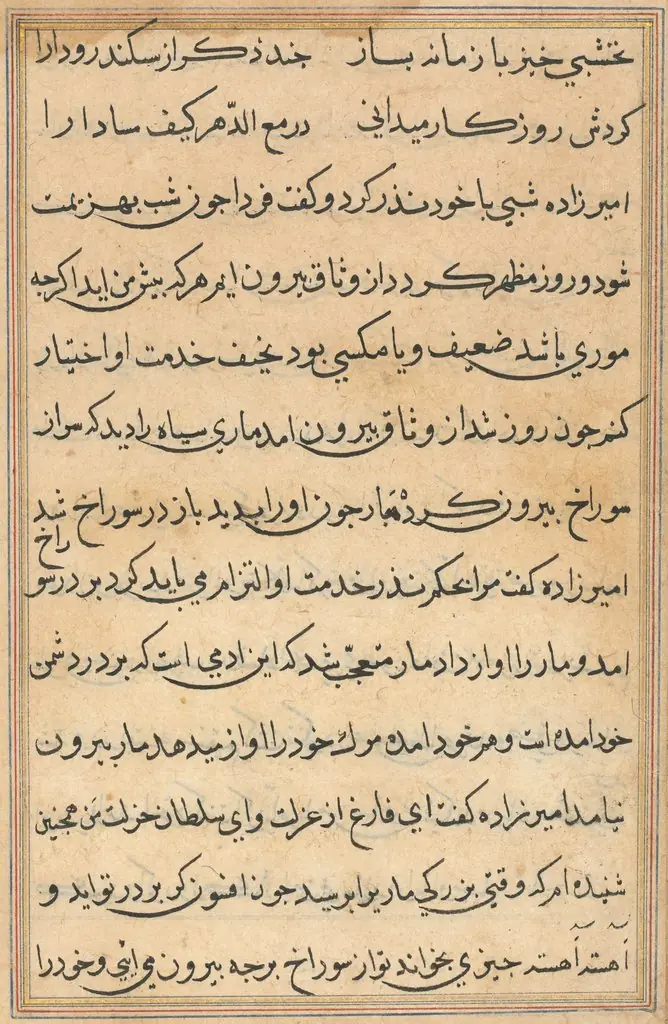
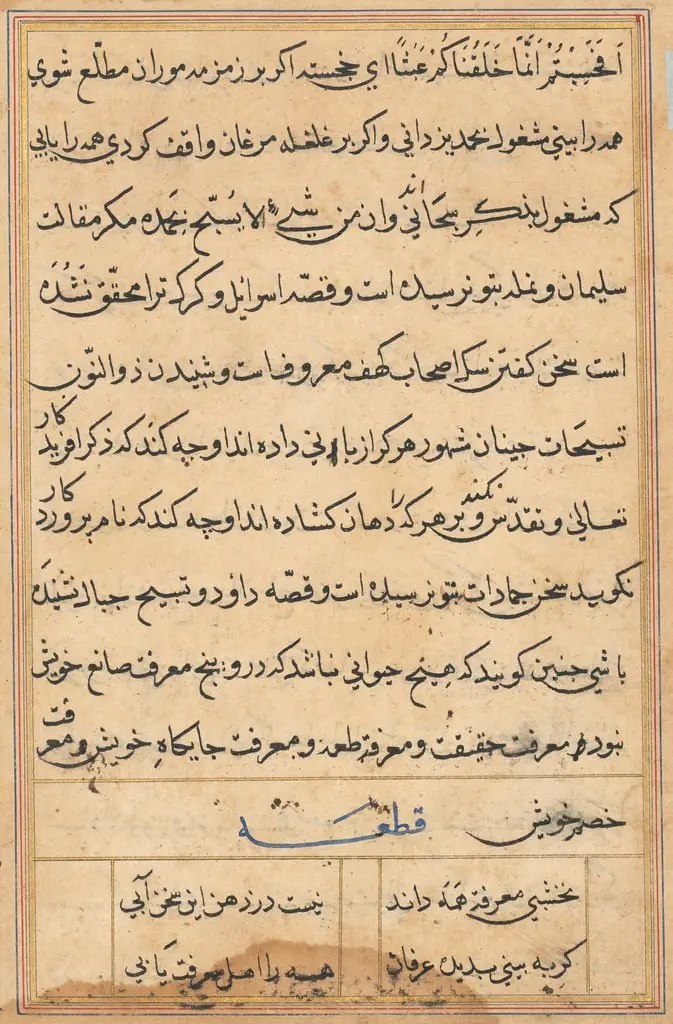
The object is a single folio from the illustrated manuscript known as the Tales of a Parrot (Tuti‑nama). It consists of a rectangular sheet of beige parchment bearing a block of calligraphic text framed by a modest decorative border. The page is part of a larger codex produced for a Mughal patron in the early modern period.
Subject & Meaning
The central element is a passage of narrative prose written in a flowing cursive script that appears to be derived from Persian or Arabic calligraphy. While the exact content of the excerpt is not specified, the Tales of a Parrot is a collection of moral and romantic stories, suggesting the text conveys didactic or entertainment purposes within the courtly tradition.
Technique & Style
The calligraphy is rendered in black ink with a smooth, continuous hand, characteristic of Mughal manuscript practices. Surrounding the text, a thin ornamental frame employs linear motifs in red, blue, and yellow, applied in a restrained palette that emphasizes elegance without overwhelming the script. The overall composition balances textual clarity with modest decorative restraint.
History & Provenance
The folio was created for Prince Salim, later Emperor Jahangir, a son of Akbar who reigned in the late 16th and early 17th centuries. As a royal commission, the manuscript reflects the patronage of the Mughal court, which favored richly illustrated Persianate literature. The page’s survival indicates it was preserved within the imperial collection before entering the present holding.
Context
During the Mughal era, illustrated books such as the Tuti‑nama served both as objects of aesthetic appreciation and as vehicles for cultural transmission. The integration of Persian literary themes with Indian artistic sensibilities exemplifies the syncretic environment of the court, where calligraphic excellence and subtle ornamentation were prized.
Artist & collection

 Page from Tales of a Parrot (Tuti-nama): text page
 Page from Tales of a Parrot (Tuti-nama): text page
 Page from Tales of a Parrot (Tuti-nama): text page
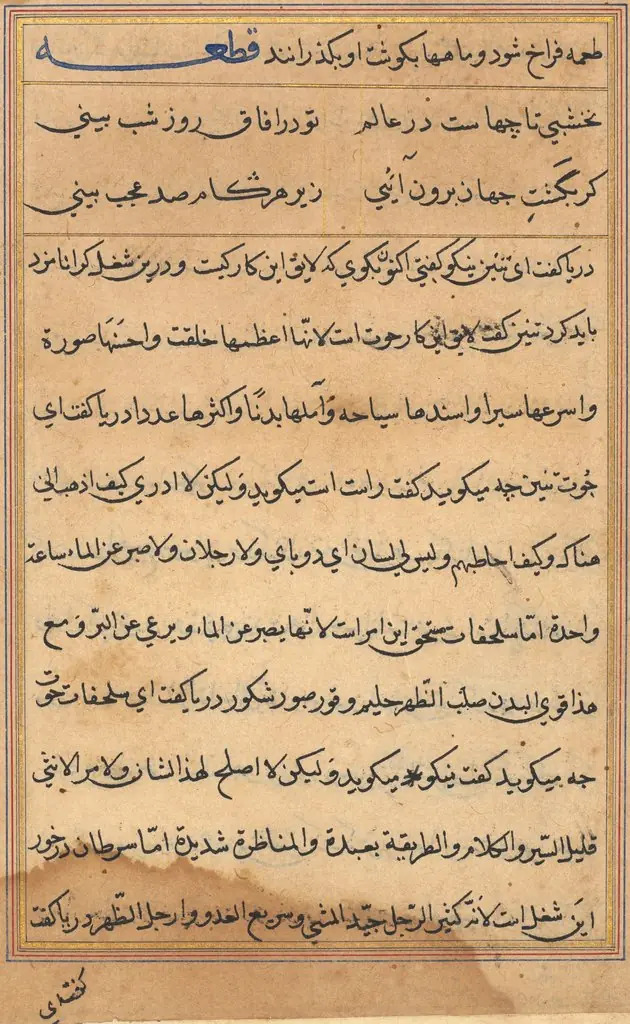 Page from Tales of a Parrot (Tuti-nama): text page
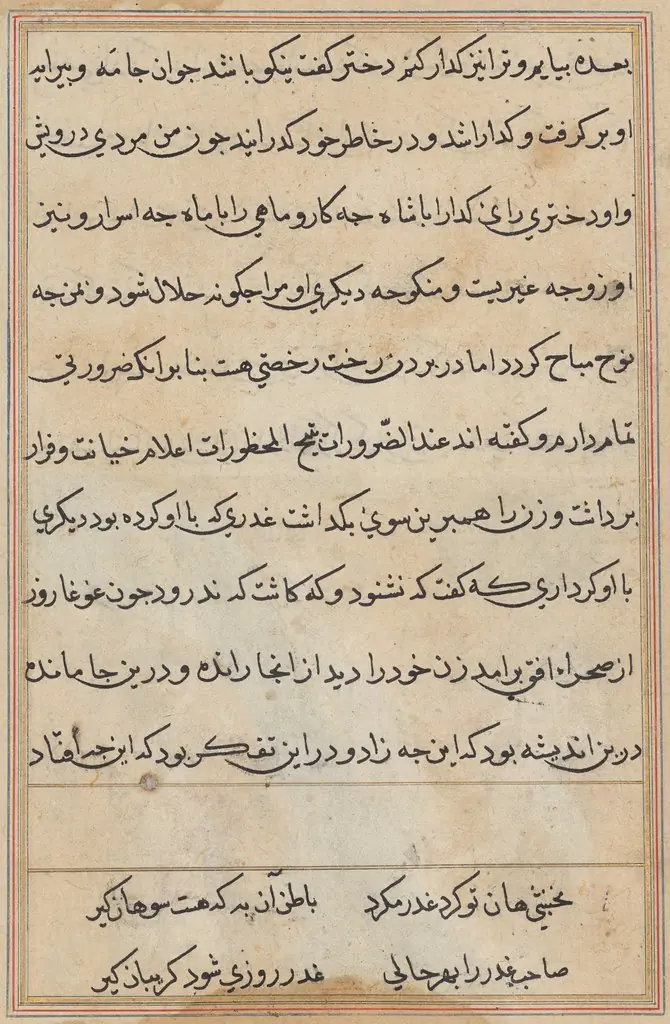 Page from Tales of a Parrot (Tuti-nama): text page
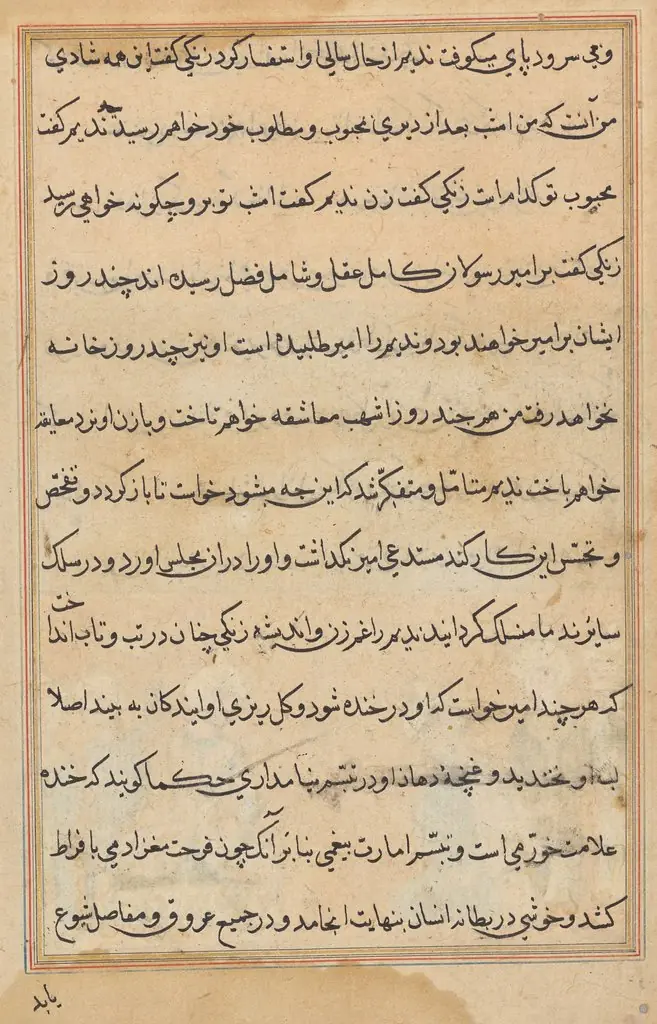 Page from Tales of a Parrot (Tuti-nama): text page
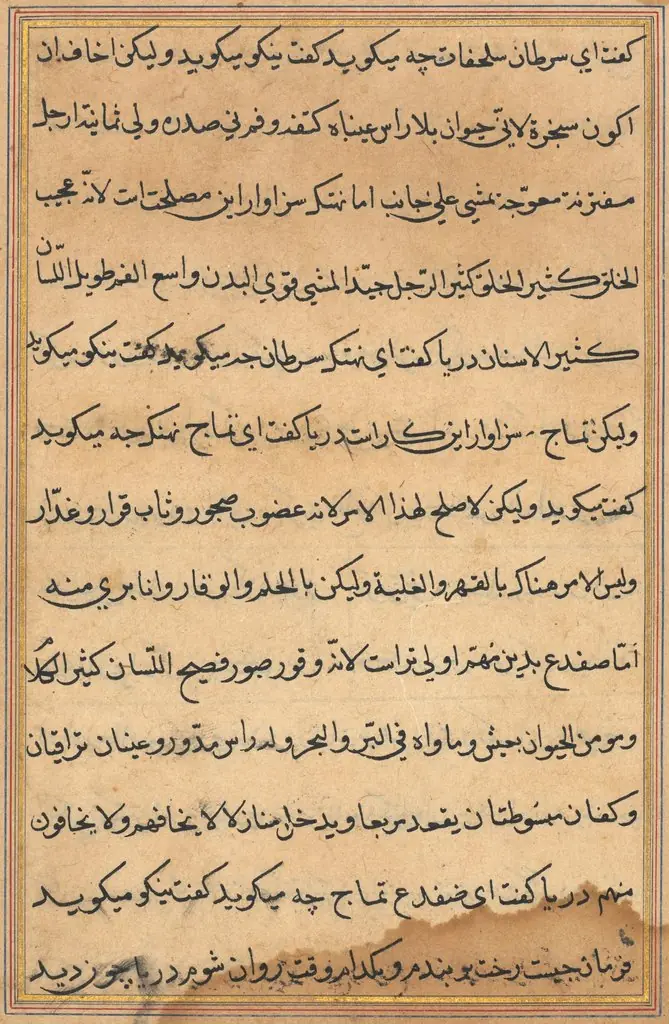 Page from Tales of a Parrot (Tuti-nama): text page
 Page from Tales of a Parrot (Tuti-nama): text page