Artwork
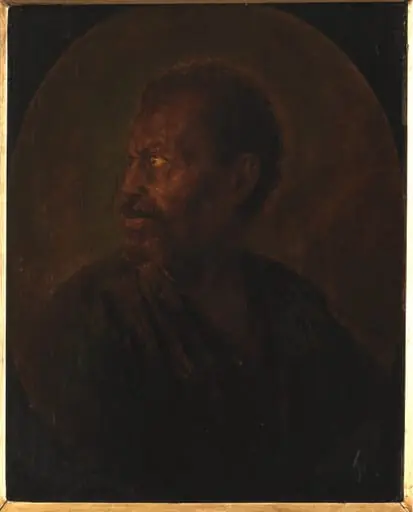
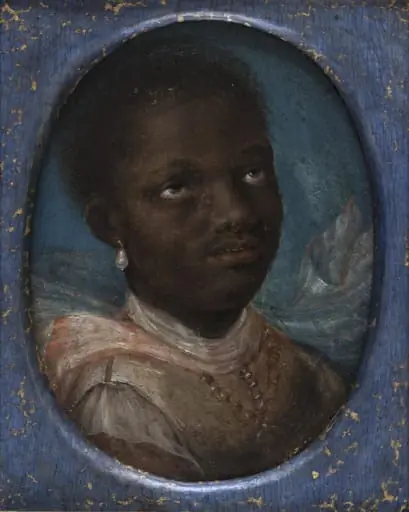
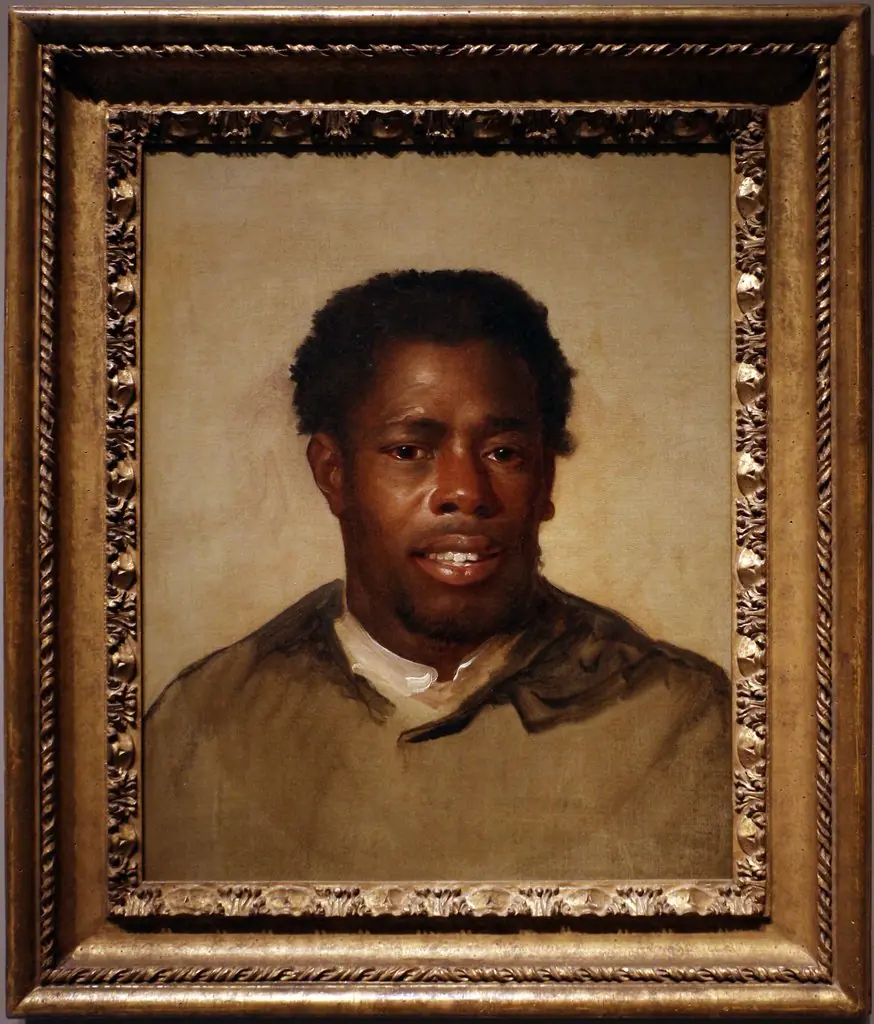
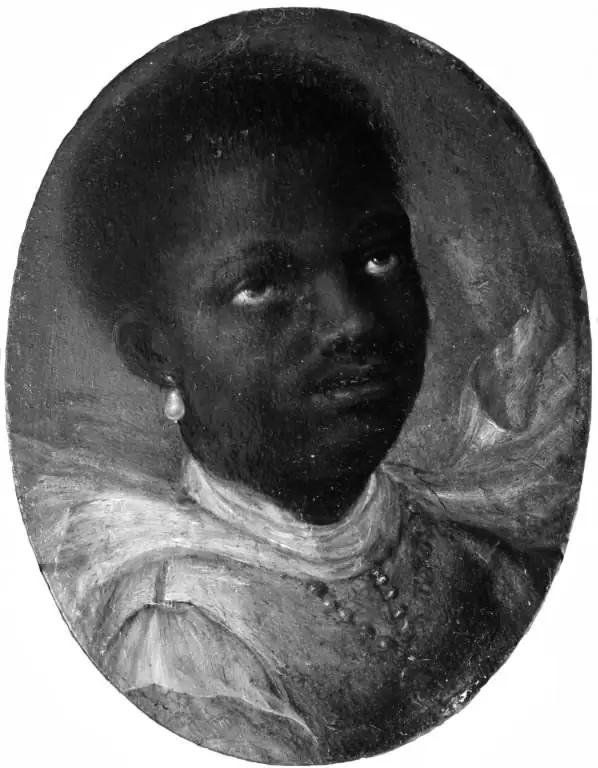
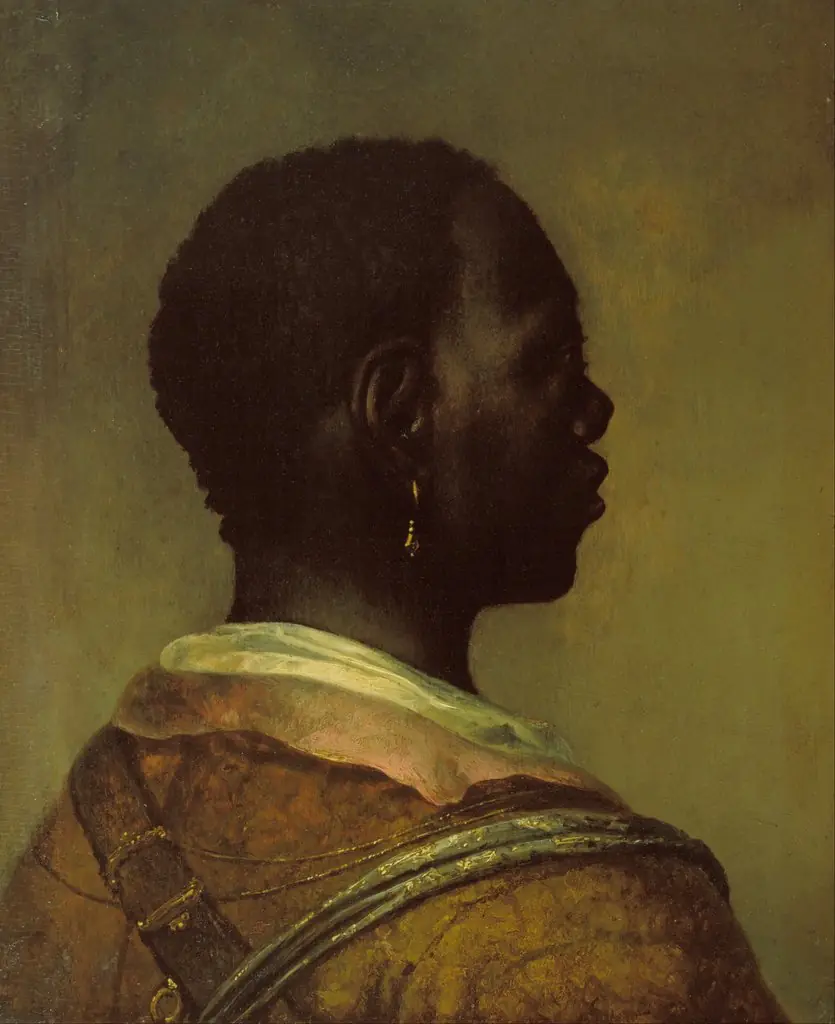
Head of a Black African
Head of a Black African is an oil painting by the Flemish Baroque painting artist Unknown. It dates from 1645 and is held in the collection of the Städel Museum. This oil painting depicts a man’s head and shoulders against a deep, warm brown background.
About this work
Overview
Rendered with focused attention on facial structure and texture, the work emphasizes volume through stark contrasts of light and shadow.
This oil painting depicts a man’s head and shoulders against a deep, warm brown background. Rendered with focused attention on facial structure and texture, the work emphasizes volume through stark contrasts of light and shadow. The subject’s dark skin and tightly curled hair are rendered with care, while his attire—a white collar and dark jacket—anchors him in a specific social context. The composition avoids ornamentation, directing attention to the figure’s presence.
Subject & Meaning
The man’s neutral expression and gaze directed away from the viewer suggest introspection or detachment. His attire, particularly the white collar, implies a position of modest dignity, possibly clerical or domestic service. The absence of identifying symbols or context invites contemplation of identity beyond stereotype, presenting an individual rather than a type. The painting resists overt narrative, instead offering a quiet, unadorned portrait.
Technique & Style
The artist employs chiaroscuro to model the face and shoulders with dramatic lighting, enhancing the three-dimensionality of the form. Shadows deepen the contours of the jaw and neck, while highlights catch the curve of the forehead and the edge of the collar. Brushwork is restrained, favoring smooth transitions over detail, which lends the image a sense of stillness. The technique reflects a tradition of European portraiture adapted to render a Black subject with psychological gravity.
History & Provenance
The painting’s origin and early ownership remain undocumented, though its style aligns with late 18th- or early 19th-century European portraiture. It lacks the grandeur of aristocratic commissions, suggesting it may have been privately commissioned or created as a study. Its survival into modern collections indicates recognition of its technical quality, even if the subject’s identity was not recorded at the time of creation.
Context
Created during a period when European art rarely portrayed Black individuals outside of servile or exoticized roles, this work stands apart by its restraint and dignity. The subject’s attire and lighting suggest an attempt at realism rather than caricature. While the artist’s intent is unclear, the painting reflects a moment when some painters began to depict Black subjects with greater individuality, even amid prevailing social hierarchies.
Legacy
The painting contributes to a small but significant corpus of early portraiture that presents Black subjects with psychological depth and formal seriousness. It challenges assumptions about representation in historical art, offering a counterpoint to more common stereotypes. Its continued presence in collections underscores its value as a quiet but enduring record of human presence in an era of limited visibility.
Artist & collection

 Domestic Scene
 Giacomo and Cardinal Marco, investing Andrea, Abbot of San Zeno, with his Benefice
 The Nymph of Fontainebleau
 Portrait of a Woman
 Madonna and Child with Saints in the Enclosed Garden
 Venus and Minerva
 Family Group of Four on Sofa
 Wall painting from Room H of the Villa of P. Fannius Synistor at Boscoreale