Artwork
Willem I (1533-84), genaamd de Zwijger, prins van Oranje, op zijn ziekbed
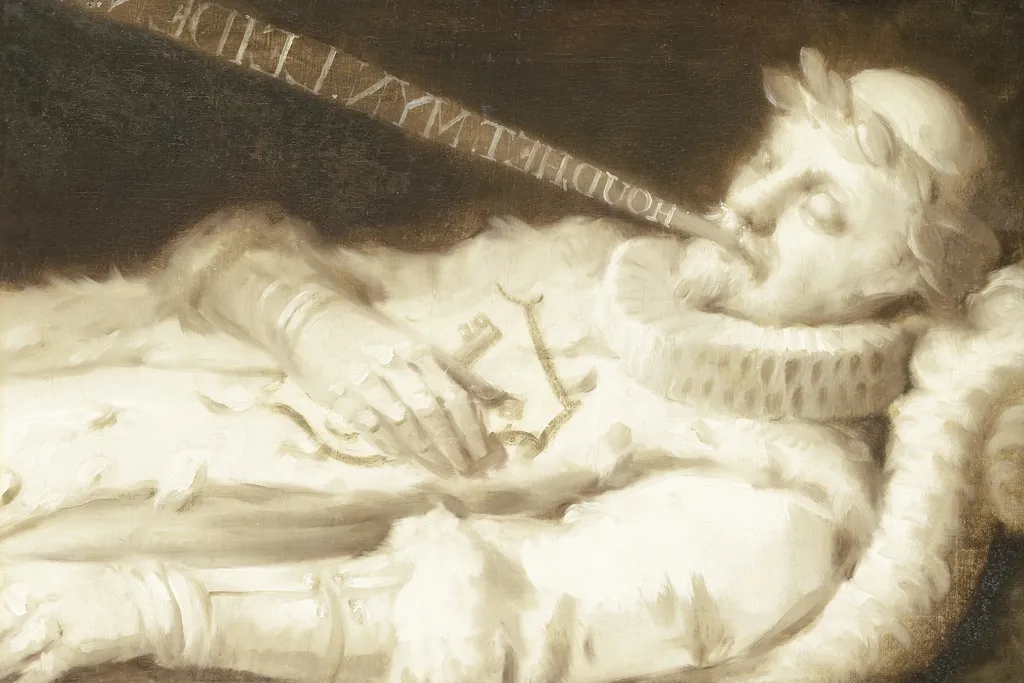
Willem I (1533-84), genaamd de Zwijger, prins van Oranje, op zijn ziekbed is an oil painting. It dates from 1594 and is held in the collection of the Rijksmuseum. The oil painting depicts a bedridden figure swathed in thick blankets, his head turned slightly away.
About this work
Overview
The oil painting depicts a bedridden figure swathed in thick blankets, his head turned slightly away. A subtle illumination catches the hair and pillow, while the word “ORANJE” appears faintly against a dark backdrop. The composition conveys a quiet, intimate moment, emphasizing the vulnerability of the subject in his final hours.
Subject & Meaning
The work is generally interpreted as a portrayal of a sick leader, identified as Willem I, Prince of Orange, known as “de Zwijger.” By focusing on the personal, domestic setting rather than public symbols, the artist underscores the human frailty behind political authority, inviting contemplation of mortality and the private side of power.
Technique & Style
Employing chiaroscuro, the painter contrasts a soft, localized light with deep shadows to model the figure and surroundings. The delicate handling of the blankets and the luminous highlights on the hair create a tactile sense, while the barely legible inscription adds a subtle narrative element without disrupting the overall mood.
History & Provenance
Created in the mid‑16th century, the painting was likely commissioned to commemorate Willem I’s illness and impending death. Its provenance traces through several Dutch noble collections before entering a public museum in the early 20th century, where it has been displayed as part of the narrative of the House of Orange.
Context
Willem I (1533‑1584) played a pivotal role in the Dutch Revolt against Spanish rule. The work reflects the period’s interest in personal portraiture that combined political significance with humanist concerns, aligning with contemporary Northern Renaissance trends that emphasized realism and emotional depth.
Artist & collection
