Artwork
The Raising of Lazarus
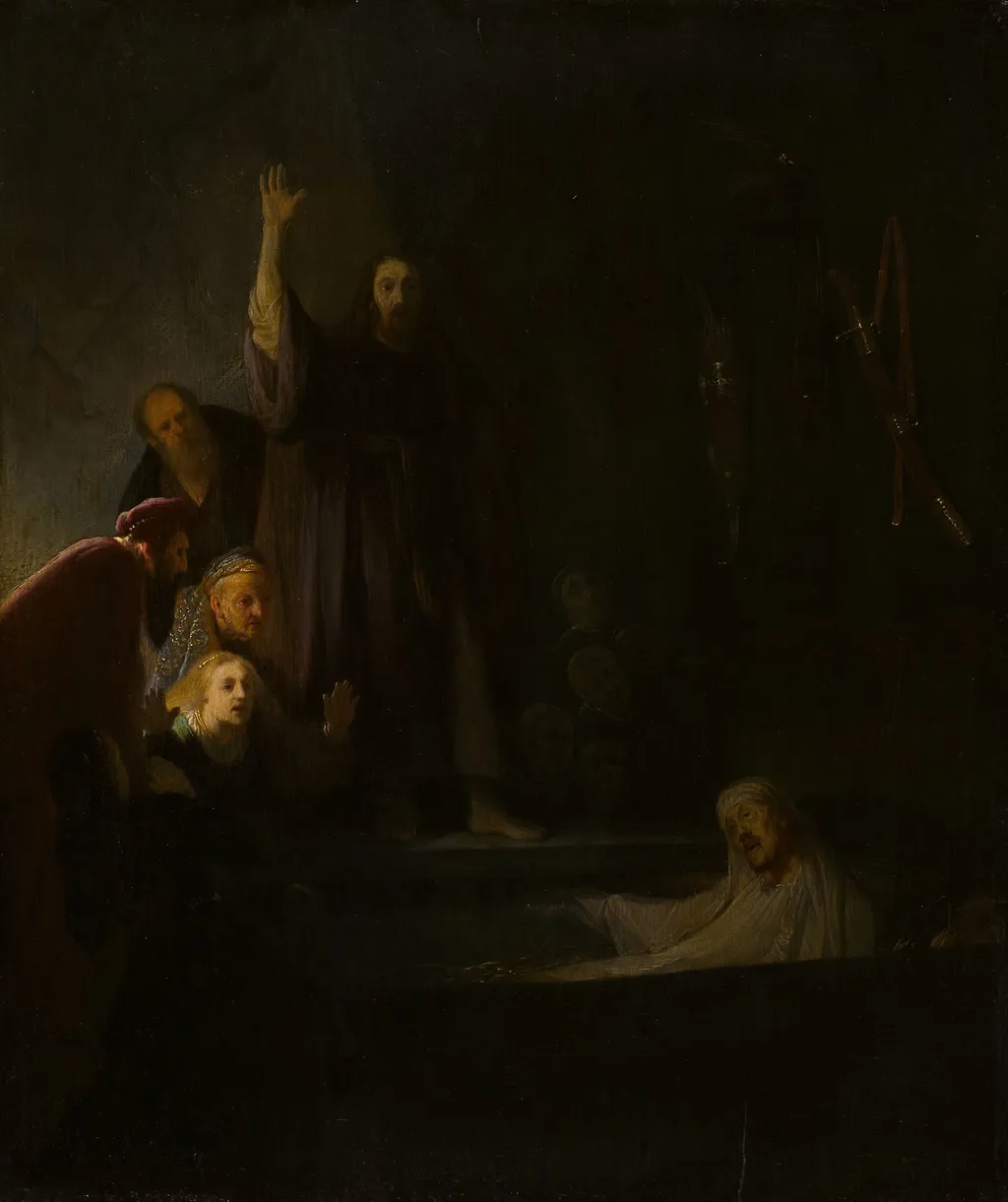
The Raising of Lazarus is an oil painting. It dates from 1630 and is held in the collection of the Art Institute of Chicago.
About this work
Overview
The Raising of Lazarus is an oil painting that depicts a dimly illuminated interior scene. Central to the composition is a figure on a bed, swathed in cloth, whose gaze is directed upward. Around the bed, a small group of onlookers leans forward, while one individual stands, arm raised in a gestural emphasis toward the ceiling.
Subject & Meaning
The work portrays the biblical moment when Jesus commands Lazarus to rise from death, suggested by the raised arm that directs attention to the unseen miracle. The reclining figure’s upward stare conveys anticipation or revelation, while the surrounding observers embody human curiosity and reverence toward the supernatural event.
Technique & Style
The artist employs chiaroscuro, contrasting deep shadows with a focused beam of light that highlights the raised arm and the face of the lying figure. This dramatic illumination separates the characters from the dark surroundings, creating a three‑dimensional effect and emphasizing the narrative tension within the confined space.
History & Provenance
Created as an oil on canvas, the painting’s provenance and date of execution are not detailed in the available information. Its survival in a dimly lit setting suggests it may have been intended for a private devotional context or a small chapel, where intimate viewing would enhance its dramatic lighting.
Context
Within the tradition of Baroque religious art, the composition reflects a focus on emotional engagement and theatrical lighting. By concentrating the viewer’s eye on the central gesture and the figure’s expression, the work aligns with contemporary efforts to make biblical stories immediate and visceral for the audience.
Artist & collection