Artwork
Taima Mandala
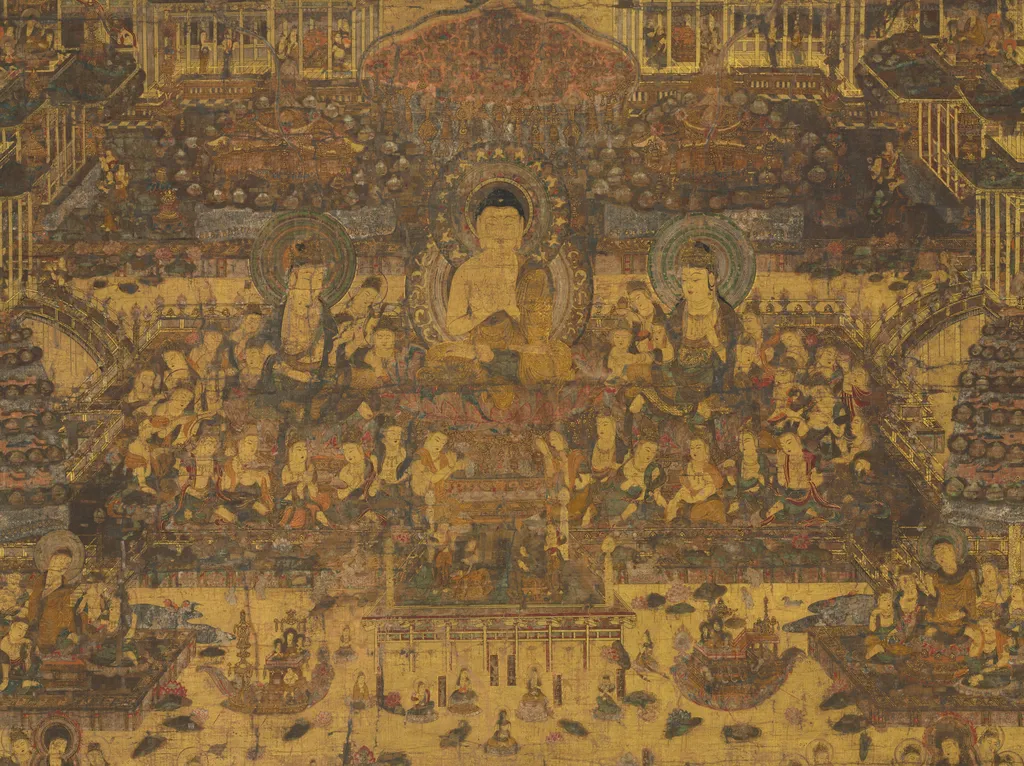
Taima Mandala is an unspecified painting. It dates from 1349 and is held in the collection of the Cleveland Museum of Art.
About this work
Overview
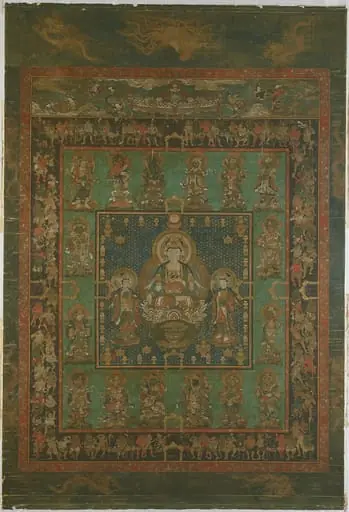
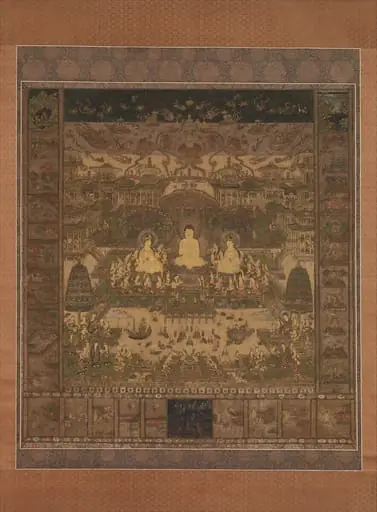
Central to the image are three seated figures surrounded by a multitude of smaller attendants in robes and hats.
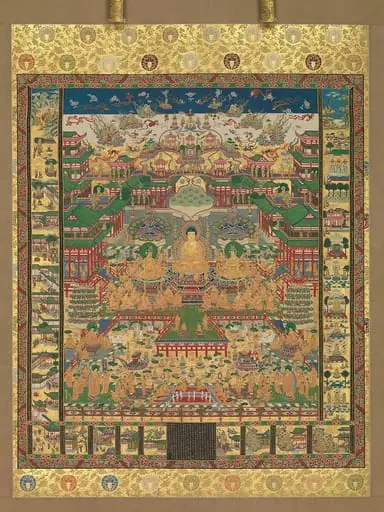
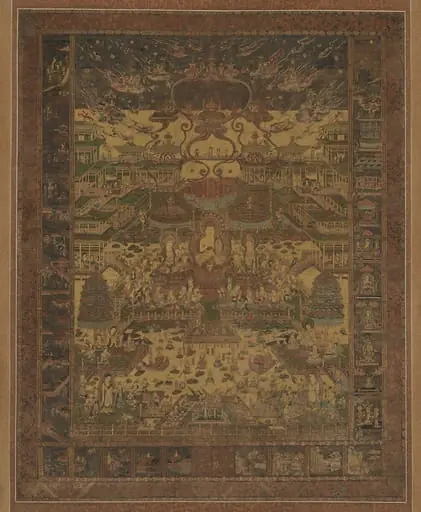
The Taima Mandala is a large-scale painted scroll that presents a densely populated sacred landscape. A golden ground dominates the composition, punctuated by earthy browns and occasional red and green accents. Central to the image are three seated figures surrounded by a multitude of smaller attendants in robes and hats. Below, architectural forms, trees and vessels populate the lower register, while the upper area is filled with additional figures and intricate decorative motifs.
Subject & Meaning
The central trio, each encircled by luminous halos, represent principal Buddhist deities, likely the Amida Buddha flanked by attendant bodhisattvas. Their elevated position and radiant aureoles indicate their spiritual preeminence. The surrounding multitude of figures—pilgrims, monks, and celestial beings—illustrates a bustling devotional realm, conveying the mandala’s function as a visual guide to the cosmos and a focus for meditation.
Technique & Style
Executed with mineral pigments on paper, the work employs a flat application of color that emphasizes pattern over modeling. Gold leaf or powdered gold creates the shimmering background, enhancing the sense of a transcendent space. Figures are rendered in a stylized manner, with elongated robes and simplified facial features, reflecting the Japanese Heian-period aesthetic that favors decorative detail and symbolic representation over naturalistic illusion.
History & Provenance
The scroll originates from the Japanese temple town of Taima, where it was likely commissioned for religious use in the 8th or 9th century. It remained in the temple’s collection for centuries before entering the holdings of the Cleveland Museum of Art in the early 20th century, where it is now displayed as part of the museum’s Asian art department.
Context
Mandala paintings such as this served as visual scriptures in Pure Land Buddhism, aiding practitioners in visualizing the Western Paradise of Amida. The Taima Mandala reflects the syncretic blend of Indian Buddhist iconography with Japanese artistic conventions, illustrating how continental religious ideas were adapted to local visual culture during Japan’s formative Buddhist period.
Artist & collection