Artwork
An Ambassador's Audience with the Grand Vizier in his Yali on the Bosporus (Ambassador Cornelis Calkoen, 12 August 1727)
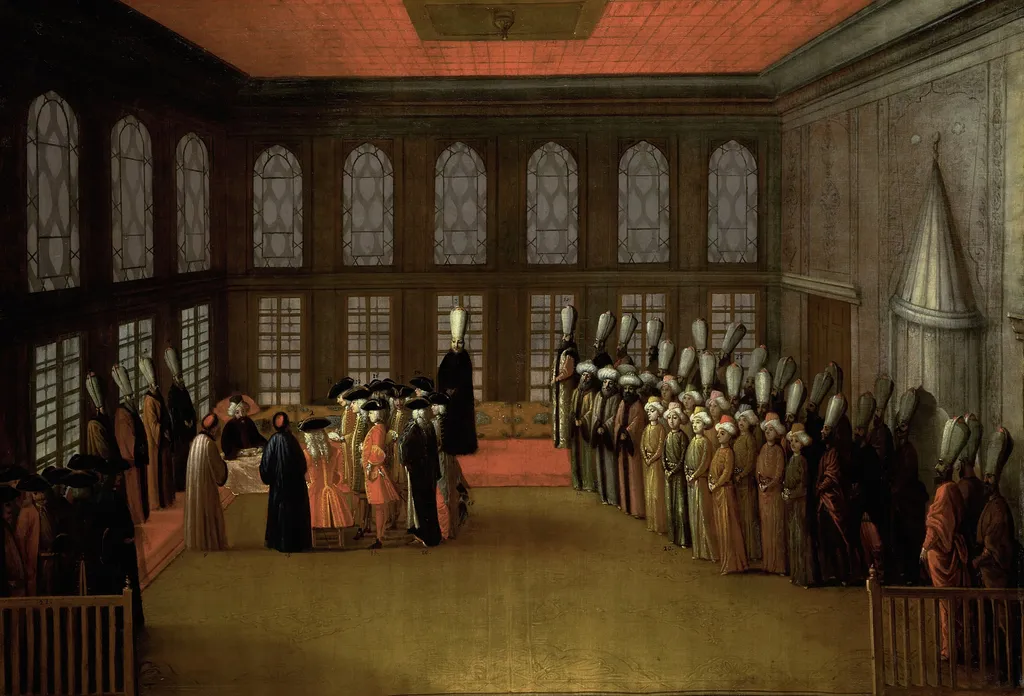
An Ambassador's Audience with the Grand Vizier in his Yali on the Bosporus (Ambassador Cornelis Calkoen, 12 August 1727) is an oil painting by the Rococo painting artist Unknown. It dates from 1750 and is held in the collection of the Rijksmuseum.
About this work
Overview
The oil painting depicts a formal gathering on a balcony overlooking the Bosporus, where an ambassador is received by the Ottoman grand vizier.
The oil painting depicts a formal gathering on a balcony overlooking the Bosporus, where an ambassador is received by the Ottoman grand vizier. A multitude of figures in elaborate 18th‑century attire fill the scene, with several men in feathered headgear standing in orderly rows. A seated woman in a vivid orange dress occupies the central foreground, while the dark‑toned walls, arched windows, and polished wooden floor frame the interior. Beyond the balcony a glimpse of water and a white tower can be seen.
Subject & Meaning
The composition records an audience granted to Dutch envoy Cornelis Calkoen on 12 August 1727, illustrating diplomatic protocol between the Dutch Republic and the Ottoman Empire. The seated woman, likely a high‑ranking official or consort, commands attention as the sole figure not standing, underscoring her status within the court. The presence of feathered hats and formal dress signals official rank, while the architectural setting emphasizes the grandeur of the vizier’s residence.
Technique & Style
Executed in oil, the work employs strong chiaroscuro to model figures against the dim interior, creating depth through contrasts of light and shadow. The artist renders textures—feathers, silk, polished wood—with meticulous brushwork, while the limited color palette of dark walls and bright orange attire draws the eye to the central figure. Linear perspective is suggested by the receding arches and the distant view of the Bosporus, lending spatial coherence to the scene.
Context
Created in the early 18th century, the painting reflects the era’s fascination with exotic diplomatic encounters and the visual documentation of state visits. It serves as a visual record of Ottoman court ceremony and Dutch-Ottoman relations during a period of expanding trade and political alliance. The inclusion of specific architectural details, such as the balcony and the distant tower, situates the event within the urban landscape of Istanbul’s waterfront.
Artist & collection

 Domestic Scene
 Giacomo and Cardinal Marco, investing Andrea, Abbot of San Zeno, with his Benefice
 The Nymph of Fontainebleau
 Portrait of a Woman
 Madonna and Child with Saints in the Enclosed Garden
 Venus and Minerva
 Family Group of Four on Sofa
 Wall painting from Room H of the Villa of P. Fannius Synistor at Boscoreale
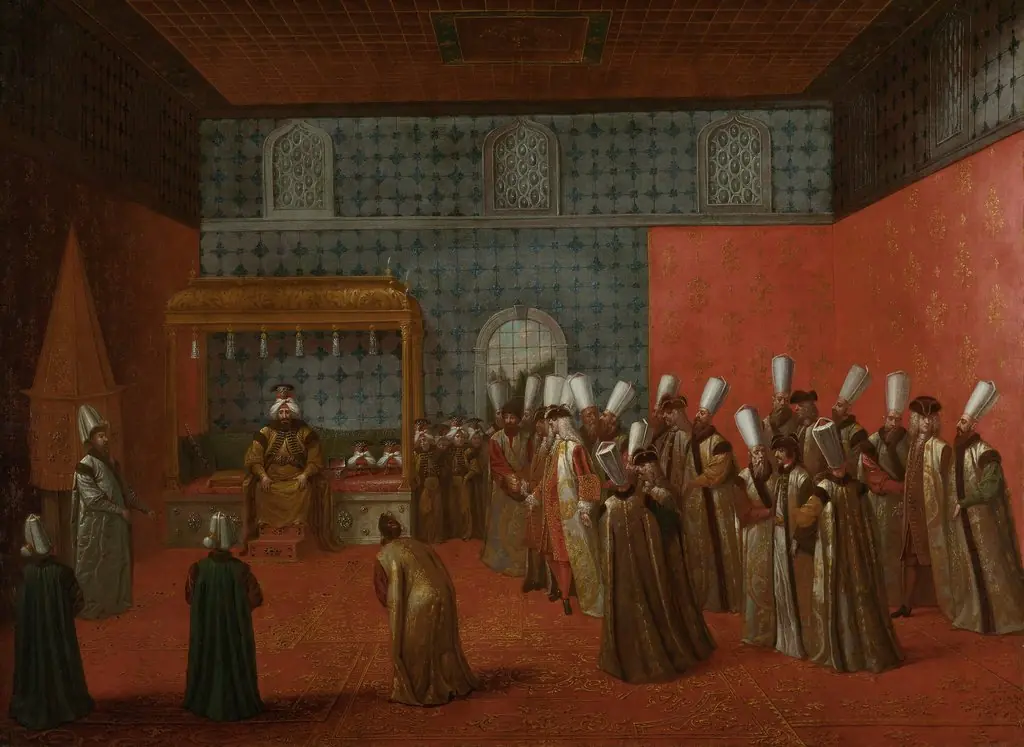 Ambassador Cornelis Calkoen at his Audience with Sultan Ahmed III
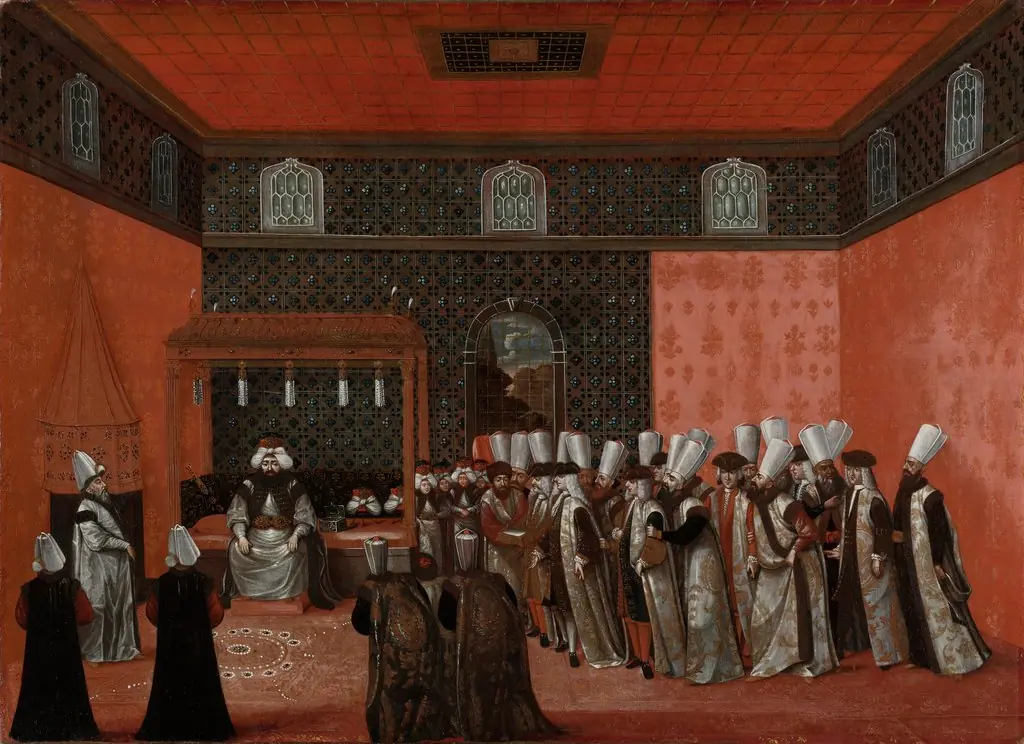 An Ambassador's Audience with Sultan Ahmed III (Ambassador Cornelis Calkoen)
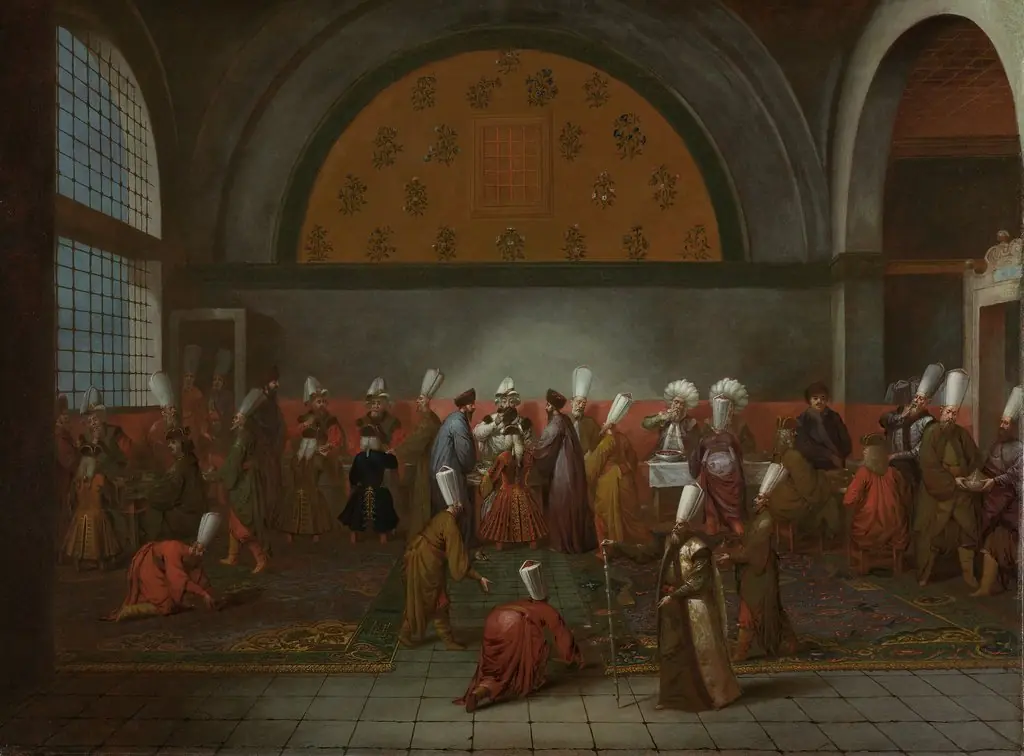 The Meal in Honour of Ambassador Cornelis Calkoen
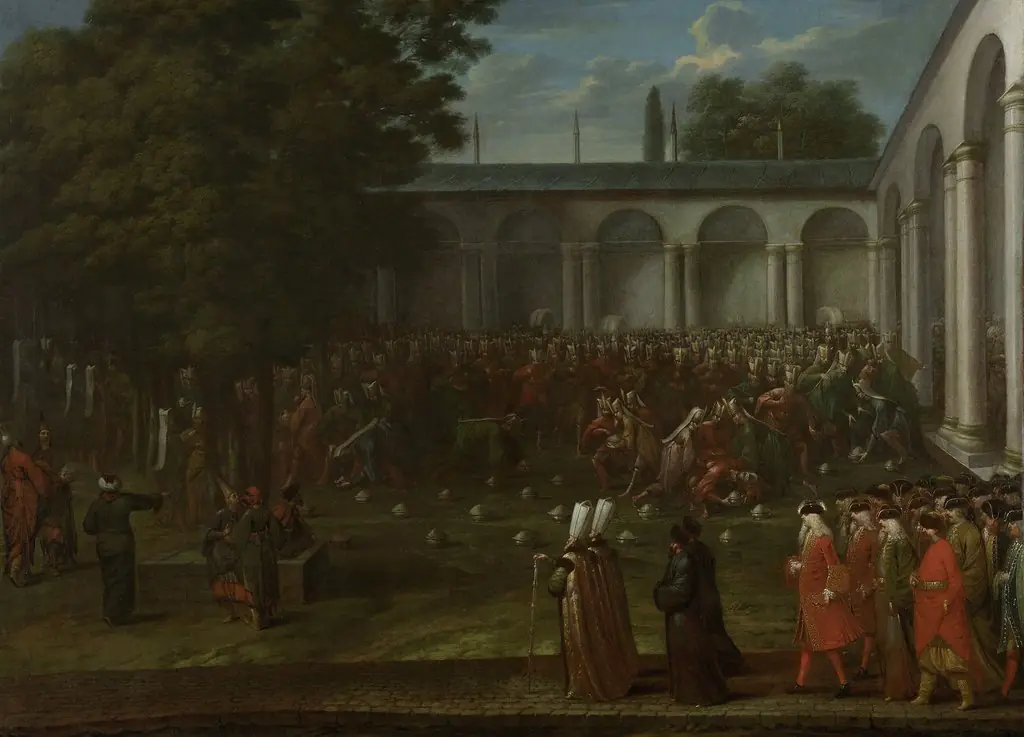 Cornelis Calkoen on his Way to his Audience with Sultan Ahmed III
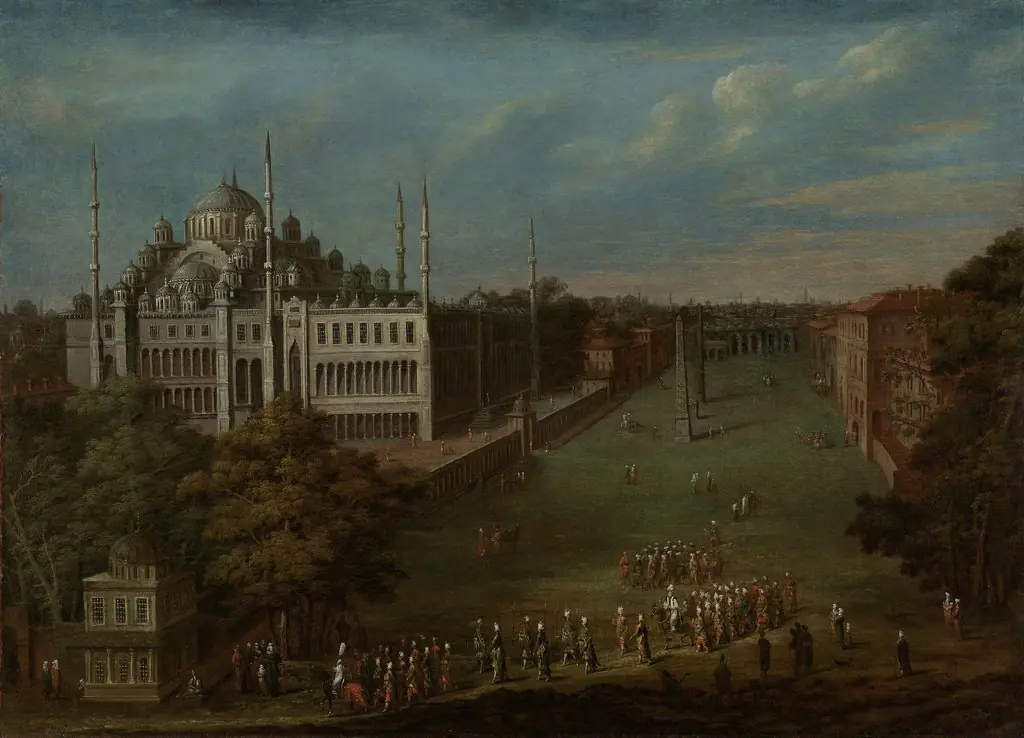 The Grand Vizier Crossing the Atmeydanı (Horse Square)
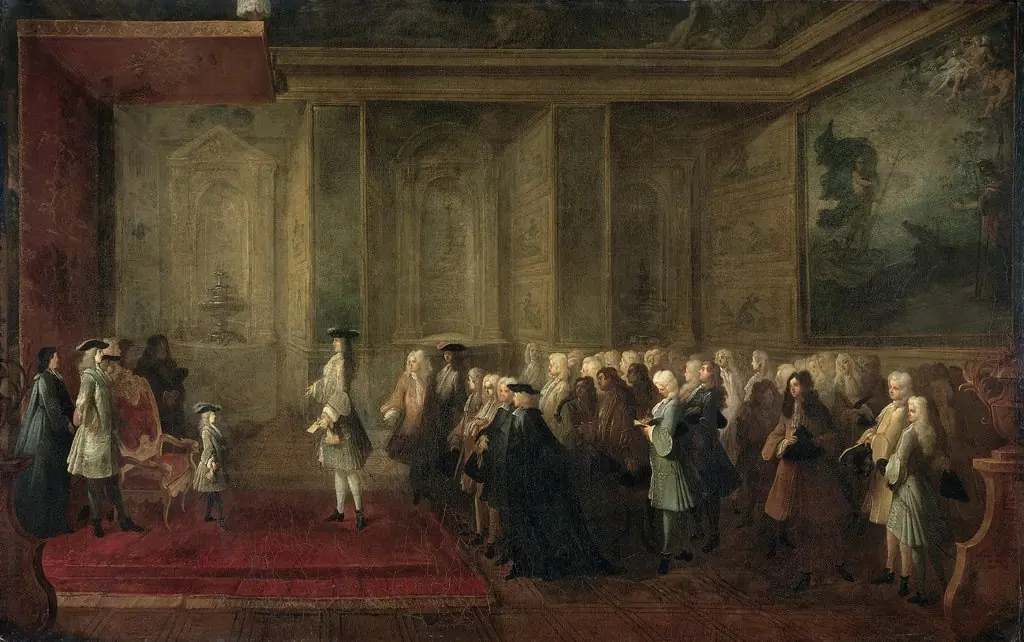 Reception of the Dutch ambassador Cornelis Hop by the French king Louis XV, 24 July 1724