Artwork
Bodhidharma Meditating Facing a Cliff
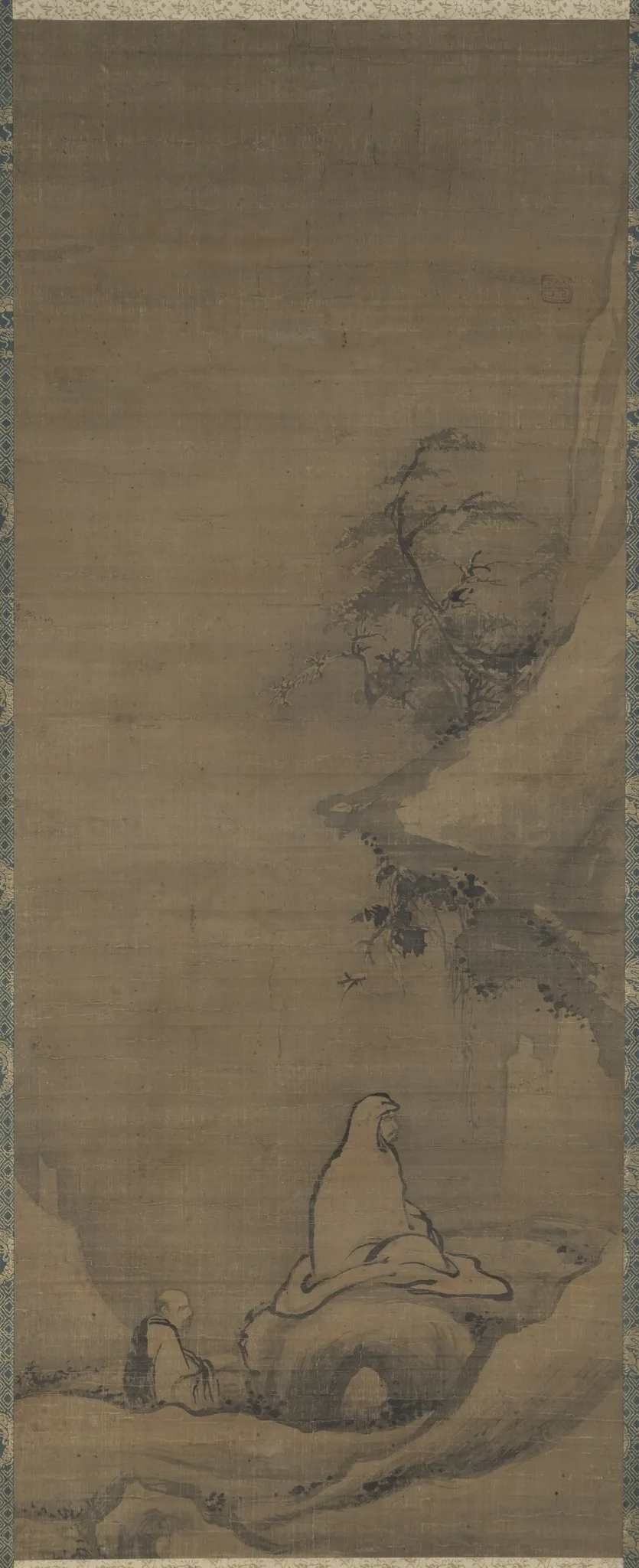
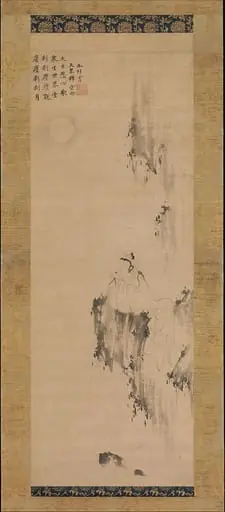
Bodhidharma Meditating Facing a Cliff is an unspecified painting. It dates from 1294 and is held in the collection of the Cleveland Museum of Art. The work depicts a solitary figure seated in the lotus position upon a rocky outcrop, turned toward a sheer cliff.
About this work
Overview
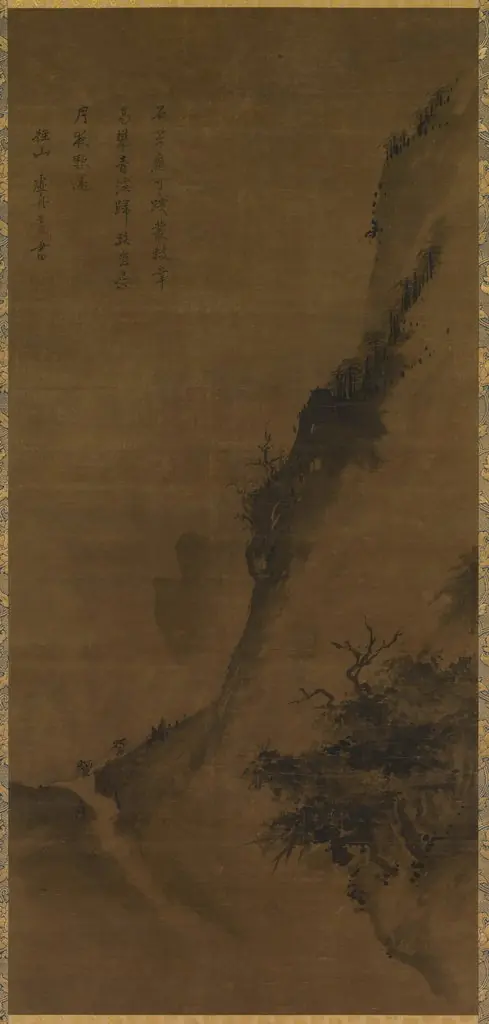
The work depicts a solitary figure seated in the lotus position upon a rocky outcrop, turned toward a sheer cliff. Dressed in unadorned robes, the figure appears withdrawn, eyes lowered, as if in deep meditation. A stark, leafless tree clings to the cliff’s edge, its twisted limbs reaching into a lightly clouded sky, creating a quiet, contemplative atmosphere.
Subject & Meaning
The composition centers on a meditative practitioner, traditionally identified as Bodhidharma, the legendary founder of Chan Buddhism. The solitary pose and the barren landscape evoke themes of withdrawal from worldly distractions, emphasizing inner stillness and the pursuit of enlightenment through disciplined contemplation.
Technique & Style
The painter employs a restrained palette of earth tones—ochres, muted greens, and soft grays—to reinforce the scene’s serenity. Brushwork is loose and gestural, with sketch‑like strokes that suggest form without detailing, lending the image an impression of immediacy and an unfinished, contemplative quality.
Context
Rendered in a period when Chinese ink painting favored monochrome and subtle tonal variations, the piece reflects the aesthetic values of Chan monastic art, where simplicity and spontaneity were prized. The inclusion of a solitary tree against a clouded sky aligns with traditional motifs symbolizing resilience and the transitory nature of existence.
Legacy
Works portraying Bodhidharma in meditation have served as visual aids for monastic instruction, reinforcing doctrinal ideals of detachment and focus. This painting continues to be referenced in scholarly discussions of Chan iconography, illustrating how minimalistic composition can convey profound spiritual concepts.
Artist & collection