Artwork
Adoration of the kings
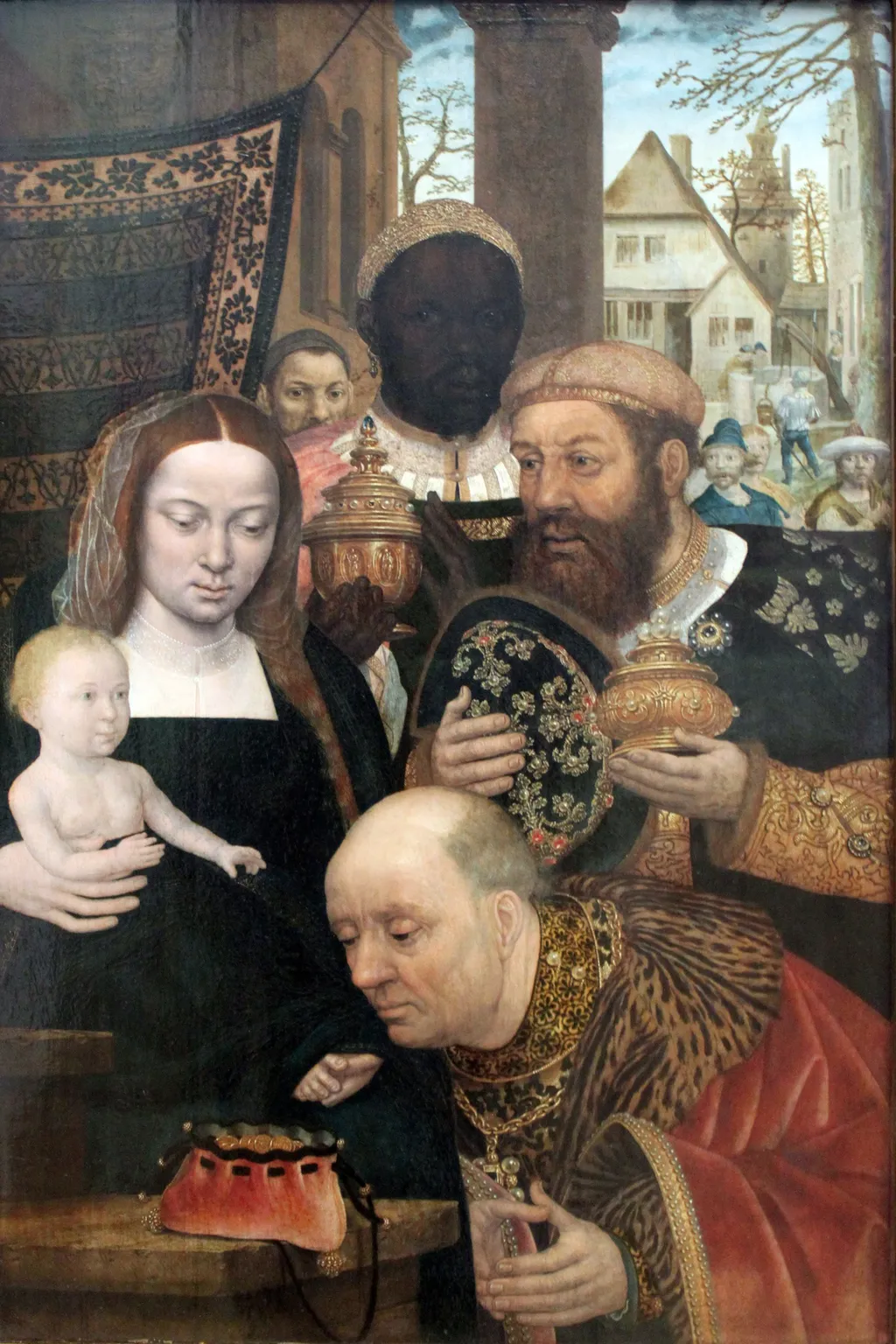
Adoration of the kings is a paint painting. It dates from 1520 and is held in the collection of the Gemäldegalerie Berlin. The work portrays the biblical episode of the Magi’s homage to the infant Jesus.
About this work
Overview
A modestly detailed cityscape and foliage form the backdrop, situating the scene within a recognizable, though idealized, environment.
The work portrays the biblical episode of the Magi’s homage to the infant Jesus. Central to the composition is the Virgin Mary cradling the newborn, while the three wise men—traditionally named Melchior, Caspar and Balthazar—approach from either side, each presenting a distinct offering. A modestly detailed cityscape and foliage form the backdrop, situating the scene within a recognizable, though idealized, environment.
Subject & Meaning
The painting captures the theological theme of recognition and tribute, emphasizing the universal acknowledgment of Christ’s divinity. By gathering the three monarchs from distant lands around the Holy Family, the artist underscores the convergence of earthly power and spiritual humility, a motif recurrent in Christian visual narratives that celebrates the fulfillment of prophecy and the spread of the Gospel beyond Judea.
Technique & Style
Rendered with a naturalistic approach, the piece employs a restrained palette dominated by browns, beiges and muted grays, lending the scene a subdued, contemplative atmosphere. Fine attention to the texture of garments, jewelry and the intricate details of the gifts demonstrates a commitment to realistic representation, while the soft modeling of forms conveys depth without resorting to dramatic chiaroscuro.
Context
The Adoration of the Magi has long served as a popular subject for painters, offering opportunities to display opulent costumes and exotic attributes. This particular rendition aligns with that tradition, focusing on the dignified presence of the three visitors and the intimate interaction between mother and child, reflecting the broader Renaissance and post‑Renaissance interest in combining devotional content with refined portraiture.
Artist & collection
