Artwork
Interior of Antwerp Cathedral
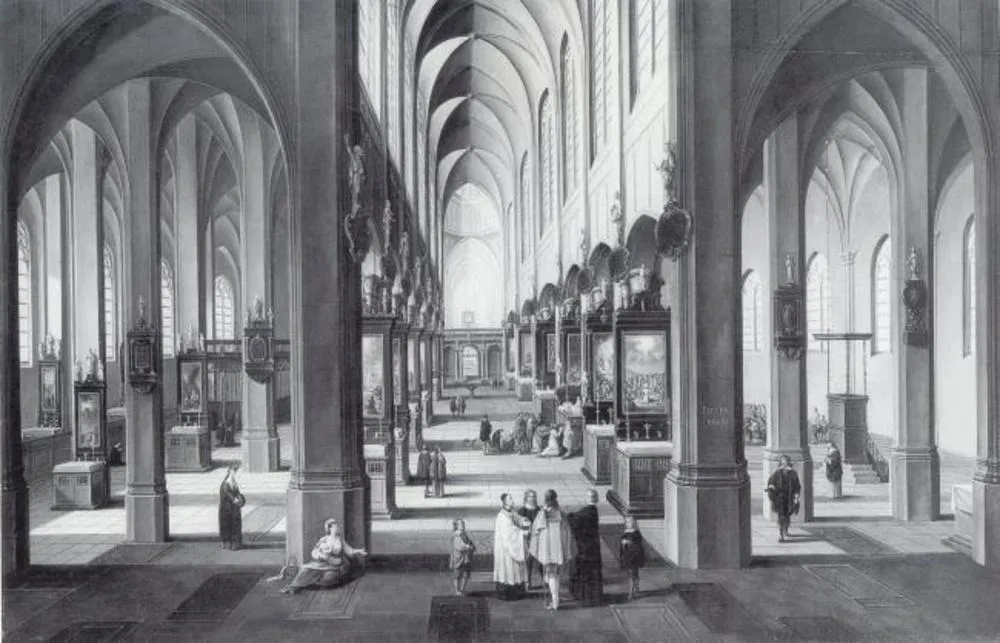
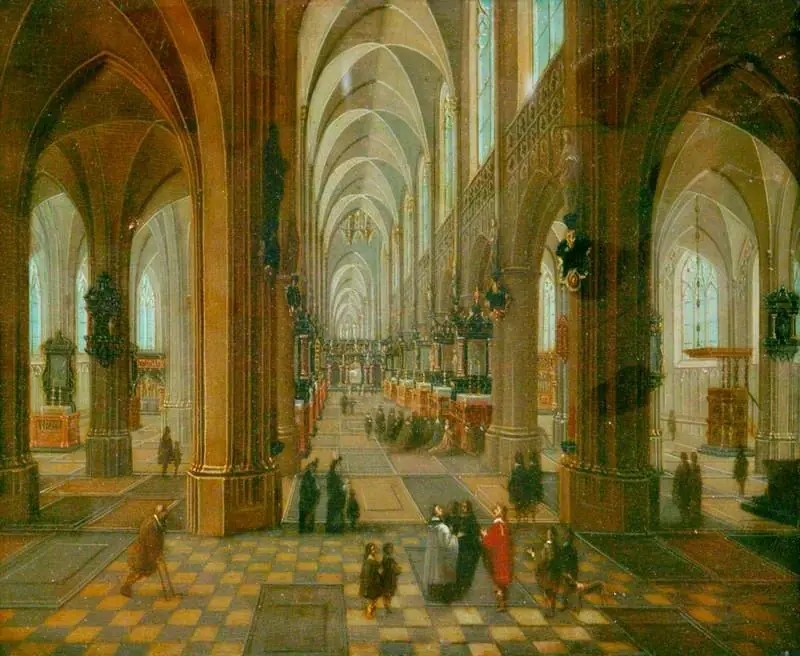
Interior of Antwerp Cathedral is an oil painting by the Dutch Golden Age artist Unknown. It dates from 1661 and is held in the collection of the Städel Museum.
About this work
Overview
The scene is neither crowded nor ceremonial, but quietly observational, inviting the viewer into the spatial rhythm of the sacred interior.
This oil painting captures the interior of Antwerp Cathedral with precise architectural detail and controlled lighting. The composition emphasizes verticality through towering pillars and arched ceilings, while natural light streams through high windows, illuminating the stone floor and scattered figures. The scene is neither crowded nor ceremonial, but quietly observational, inviting the viewer into the spatial rhythm of the sacred interior.
Subject & Meaning
The painting depicts ordinary worshippers moving through the cathedral—some pausing to observe, others conversing—suggesting daily religious life rather than a formal ritual. The absence of overt religious symbols shifts focus to the architecture as a vessel for communal presence. The space itself becomes the subject, reflecting the cathedral’s role as both spiritual sanctuary and social hub.
Technique & Style
The artist employs careful tonal gradations to render the interplay of light and shadow, enhancing depth without dramatic contrast. Details in stone carvings, fabric folds, and stained glass are rendered with meticulous clarity, suggesting a preference for observational realism over theatrical effect. The lighting is even and diffuse, avoiding the stark chiaroscuro typical of some contemporaries.
History & Provenance
Created in the early 17th century, the work likely originated in Antwerp, a center of artistic production during the Counter-Reformation. It may have been commissioned by a local patron or church official interested in documenting the cathedral’s grandeur. Its survival suggests it was valued for its accuracy rather than its devotional intensity.
Context
During this period, Northern European artists increasingly turned to secular and architectural subjects within religious spaces. This painting aligns with a growing trend of documenting real interiors with topographical fidelity, reflecting both civic pride and the influence of emerging scientific observation in art.
Legacy
The painting contributes to a tradition of architectural interiors that prioritize spatial authenticity over narrative drama. Its quiet realism influenced later genre painters and topographical artists who sought to record sacred and civic buildings with impartial detail, preserving the character of early modern ecclesiastical spaces.
Artist & collection

 Domestic Scene
 Giacomo and Cardinal Marco, investing Andrea, Abbot of San Zeno, with his Benefice
 The Nymph of Fontainebleau
 Portrait of a Woman
 Madonna and Child with Saints in the Enclosed Garden
 Venus and Minerva
 Family Group of Four on Sofa
 Wall painting from Room H of the Villa of P. Fannius Synistor at Boscoreale
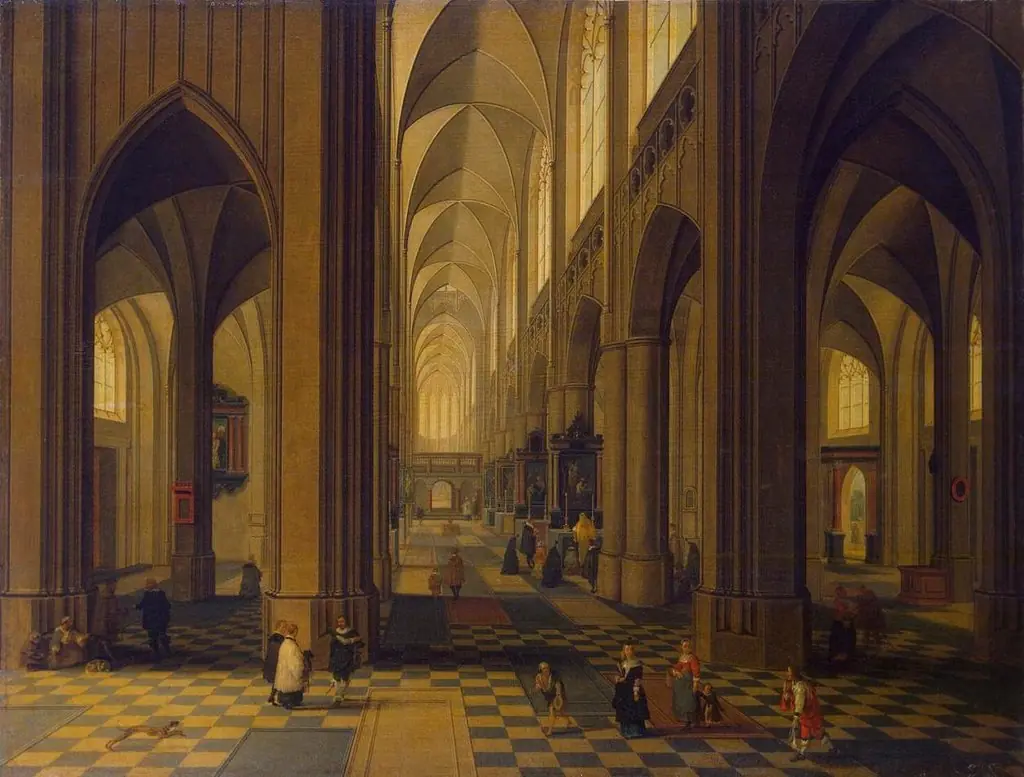 Interior of the Antwerp Cathedral
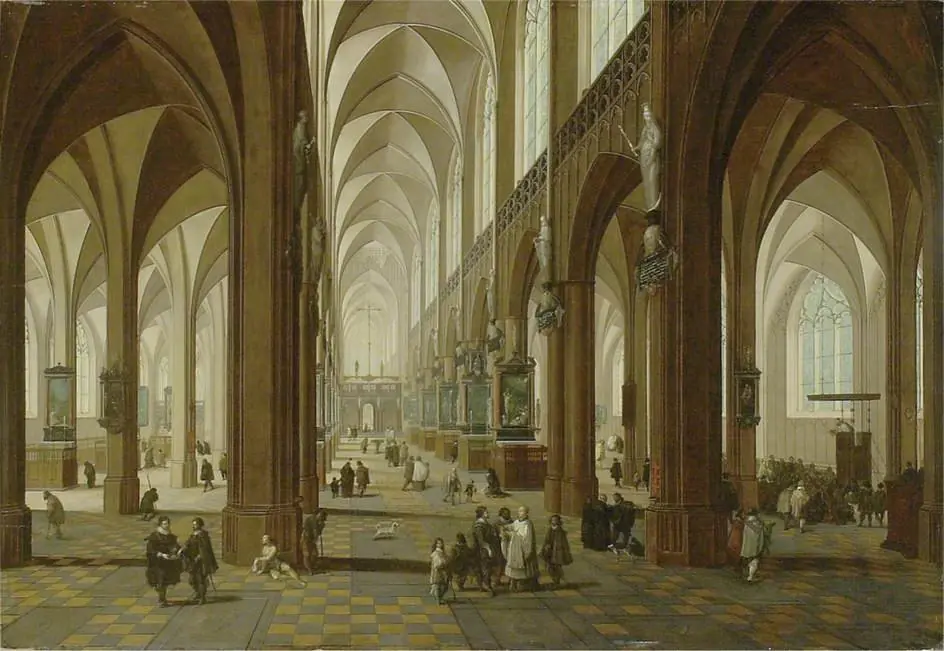 Interior of Antwerp Cathedral
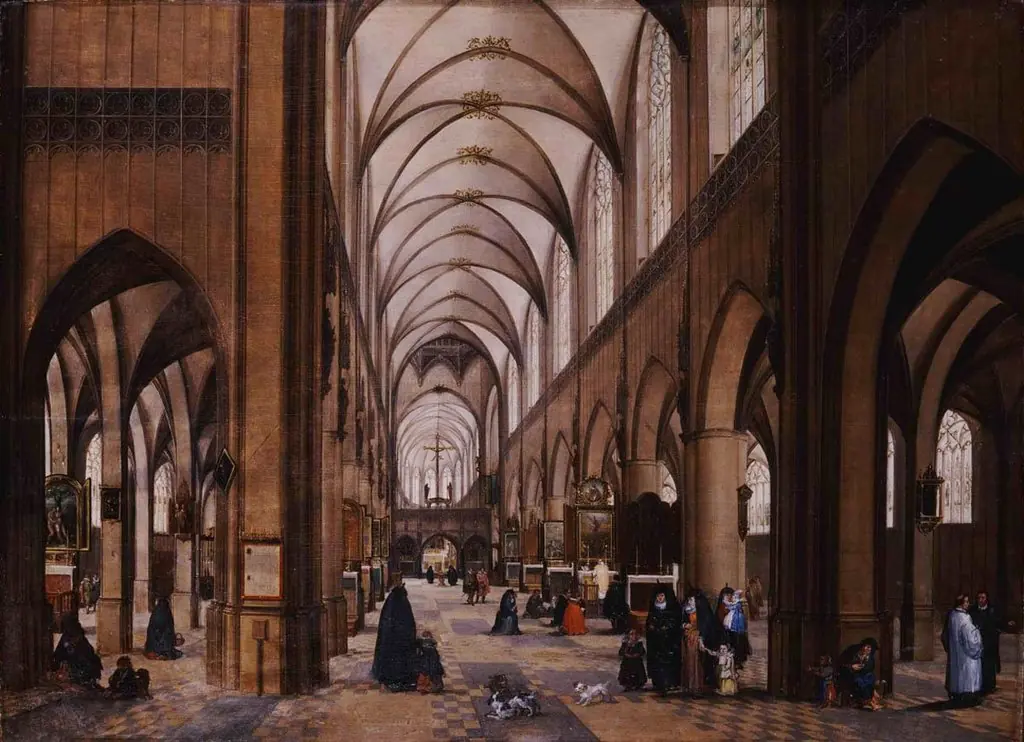 Interior of the Antwerp Cathedral
 Interior of Antwerp Cathedral
 Interior of the Saint Paul's church of Antwerp
 Interior of a church in Flanders
 Interior of St Charles Borromeo Church in Antwerp
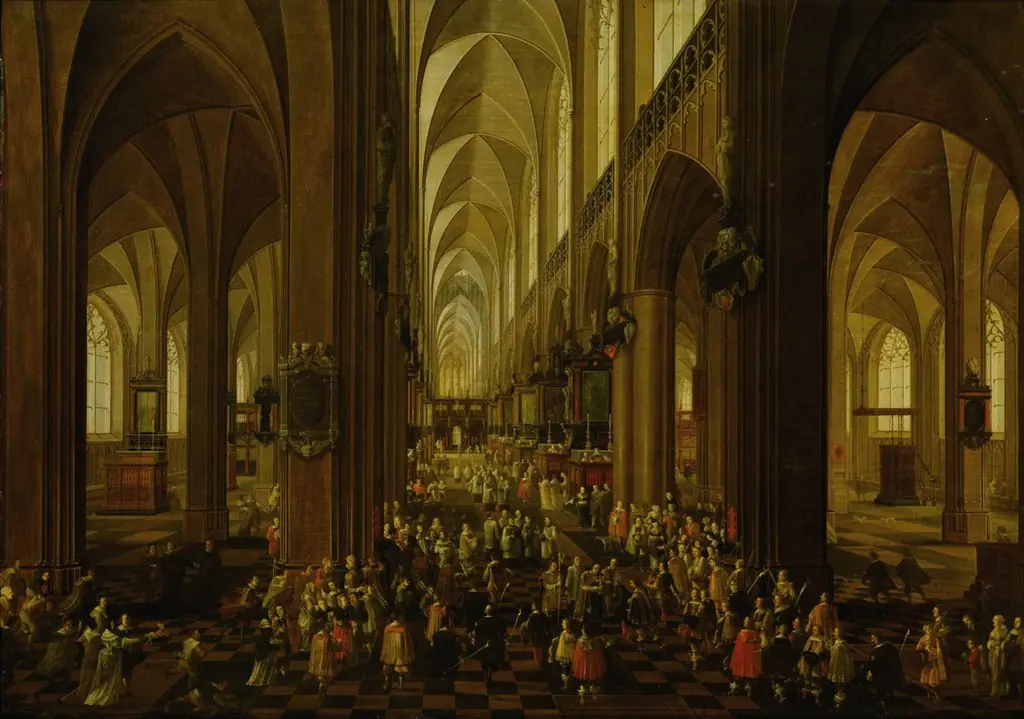 Interior of the Cathedral of Our Lady of Antwerp (Archduke Leopold Wilhelm received by the clergy)
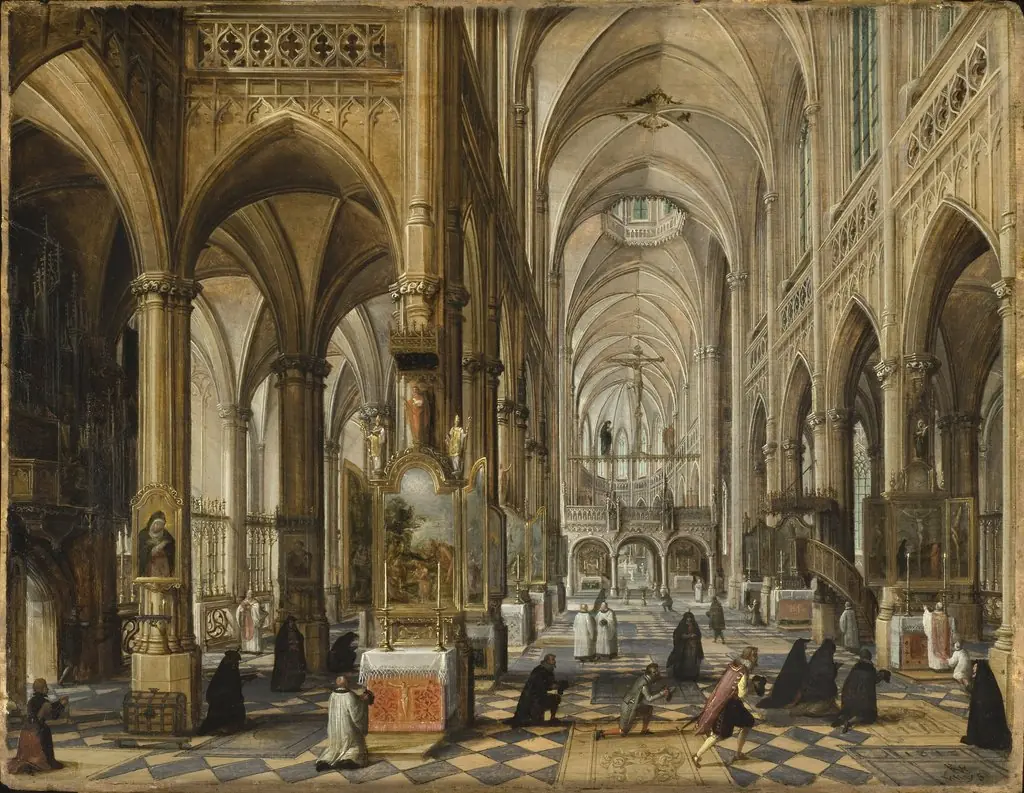 Interior of a Gothic Cathedral