Artwork
Page from Tales of a Parrot (Tuti-nama): text page
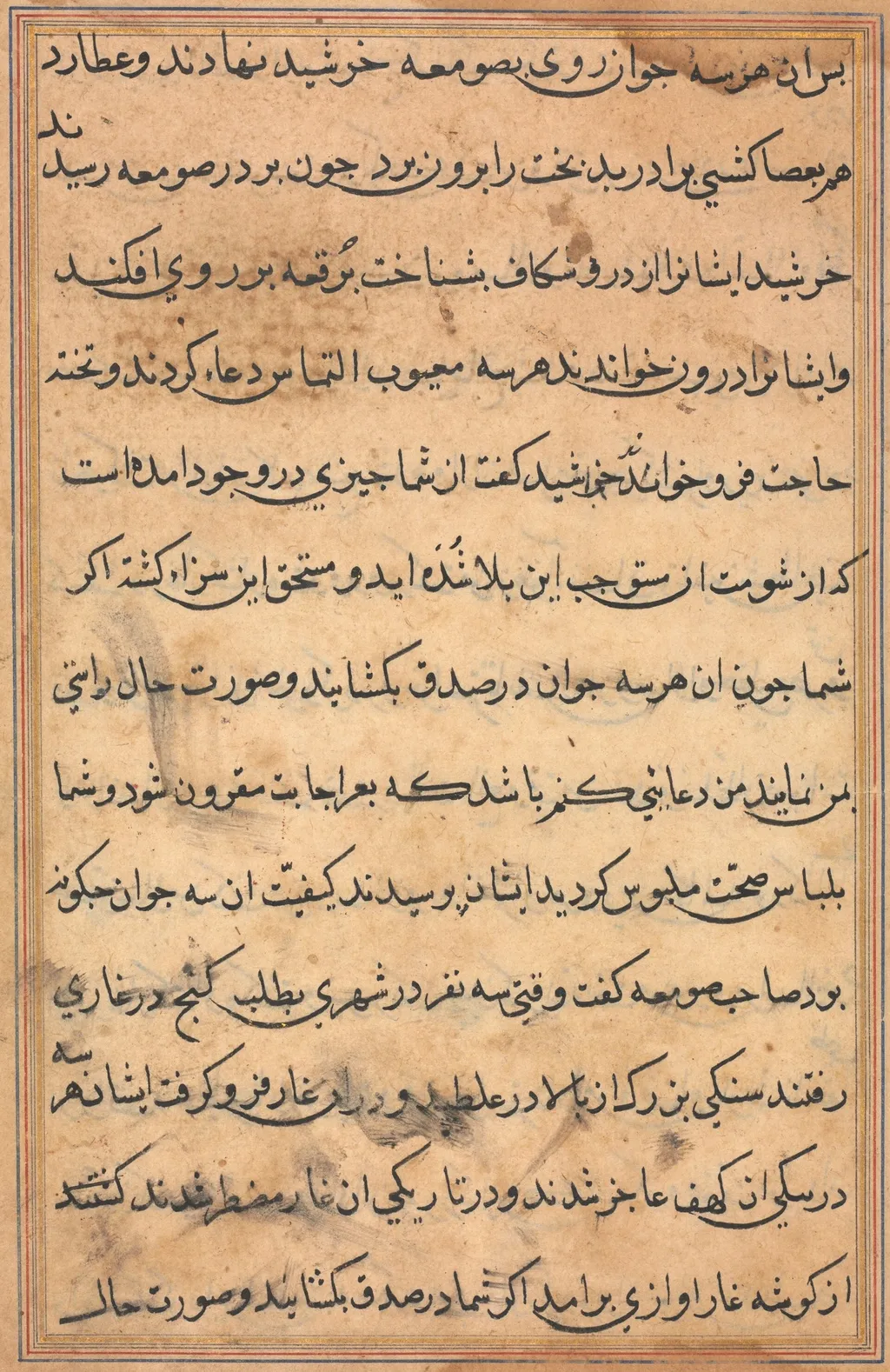
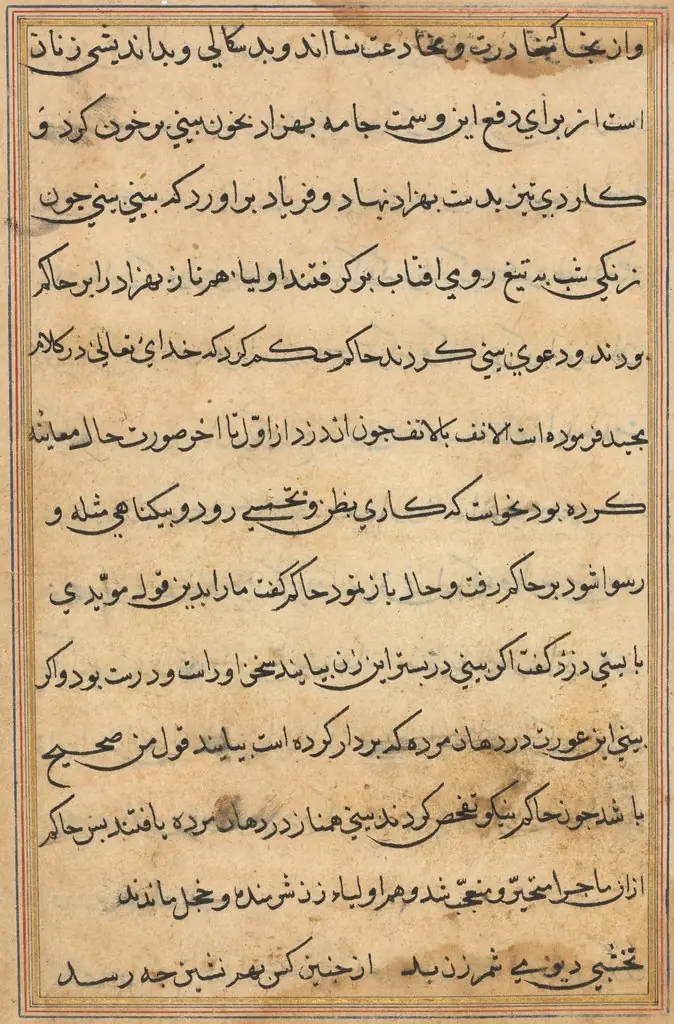
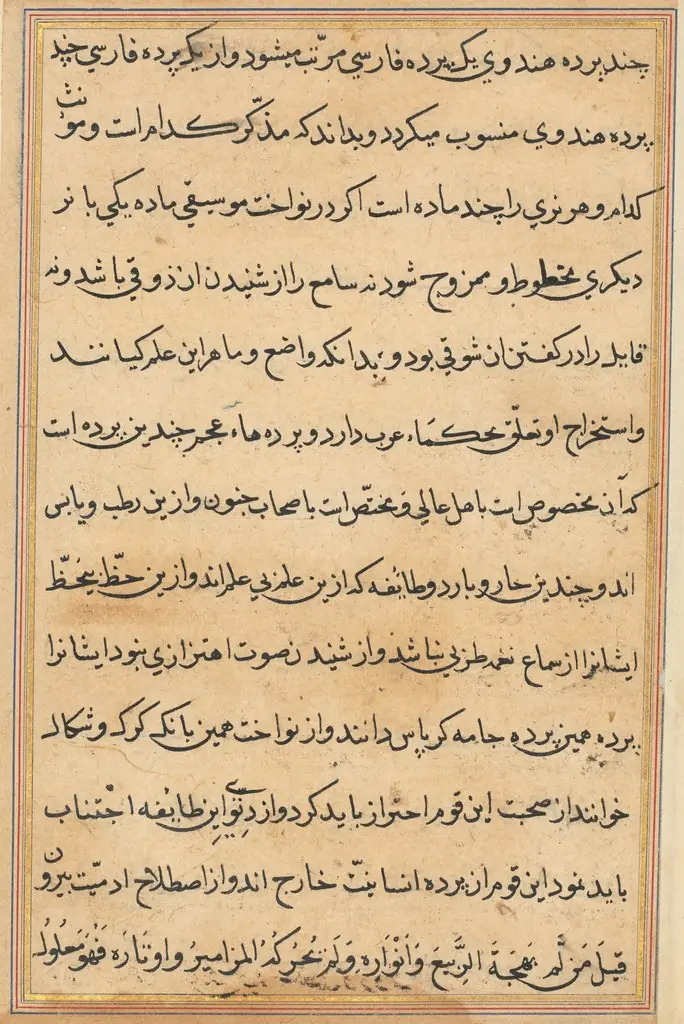
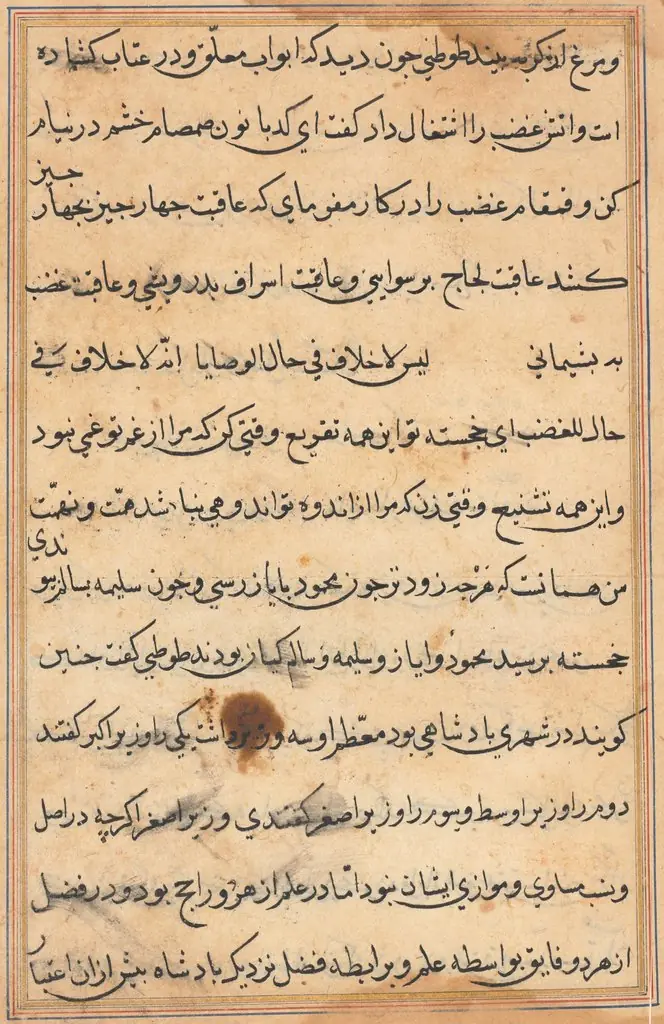
Page from Tales of a Parrot (Tuti-nama): text page is an unspecified painting. It dates from 1560 and is held in the collection of the Cleveland Museum of Art. The work presents an enlarged view of a single leaf from an illuminated manuscript, rendered as a painted reproduction.
About this work
Overview
The work presents an enlarged view of a single leaf from an illuminated manuscript, rendered as a painted reproduction. Black ink lettering occupies the central field, set against a light brown paper ground that shows age-related discoloration and occasional stains. A delicate ornamental border frames the page, emphasizing its function as a document of historical significance.
Subject & Meaning
The depicted page appears to belong to a narrative collection known as the Tales of a Parrot (Tuti‑nama). While the exact content of the script is not decipherable here, the elaborate calligraphy and decorative motifs suggest a literary or poetic text, likely intended for a cultured audience familiar with such storytelling traditions.
Technique & Style
The artist employed a realistic painting technique to simulate the texture of aged paper, using thin washes of brown to convey the substrate and precise brushwork for the inked script. The ornamental border is rendered with fine linear strokes, echoing the intricate pen work typical of manuscript illumination.
History & Provenance
The piece is a modern representation of a historical manuscript page; specific details about its creation date, original owner, or acquisition are not provided. Its inclusion in a collection of manuscript studies indicates an interest in preserving the visual character of early book culture.
Context
Manuscript illumination flourished in regions where the Tuti‑nama was circulated, integrating text and decoration to enhance readability and aesthetic appeal. This painted page reflects that tradition, offering insight into the visual conventions of literary production in the period from which the original manuscript derives.
Artist & collection

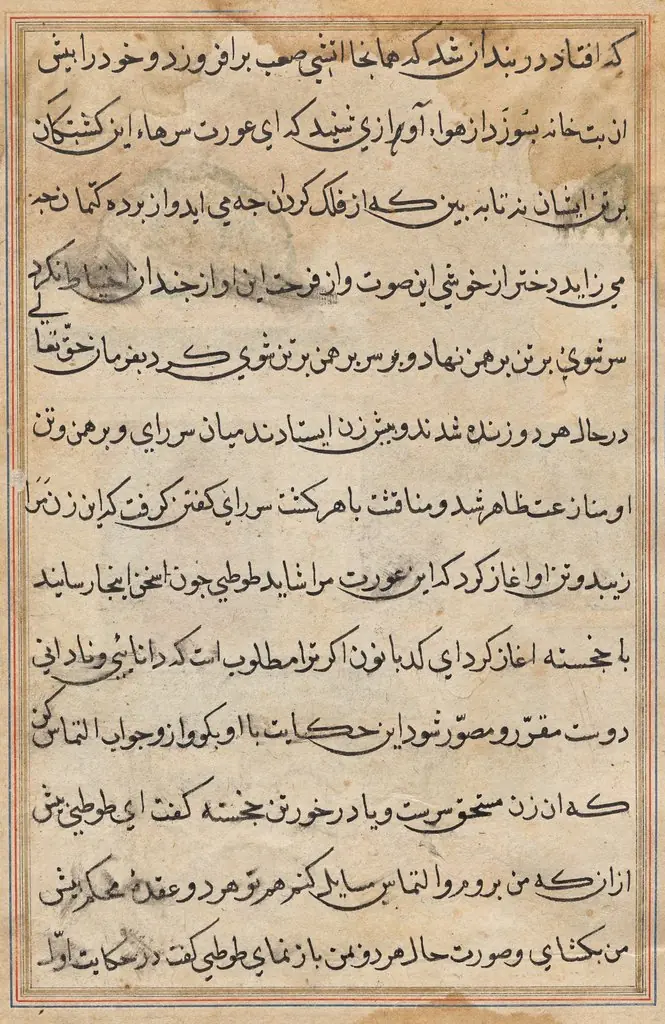 Page from Tales of a Parrot (Tuti-nama): text page
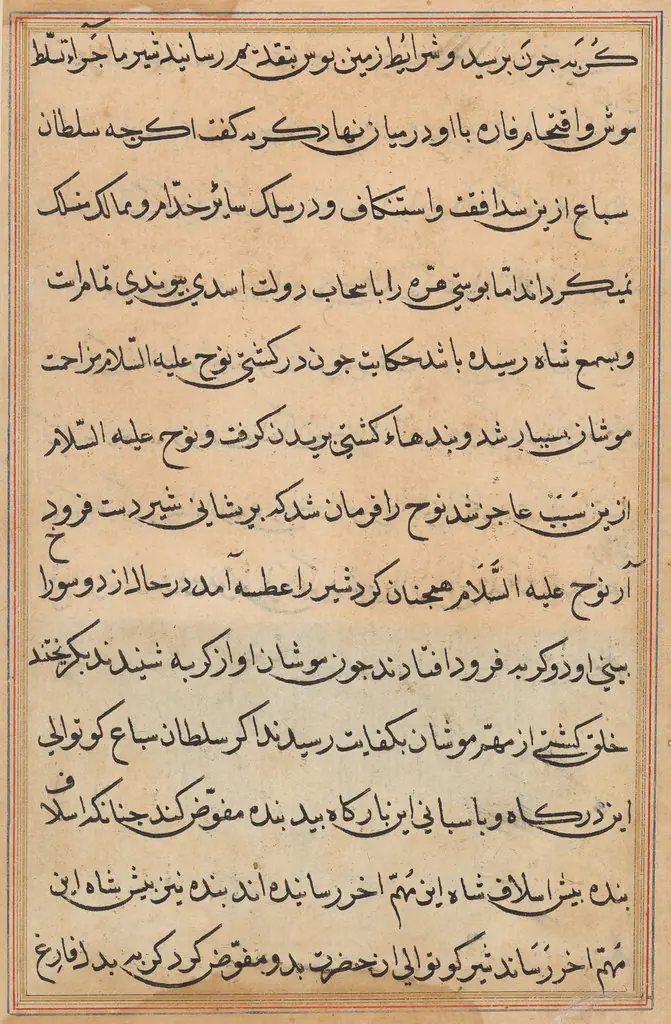 Page from Tales of a Parrot (Tuti-nama): text page
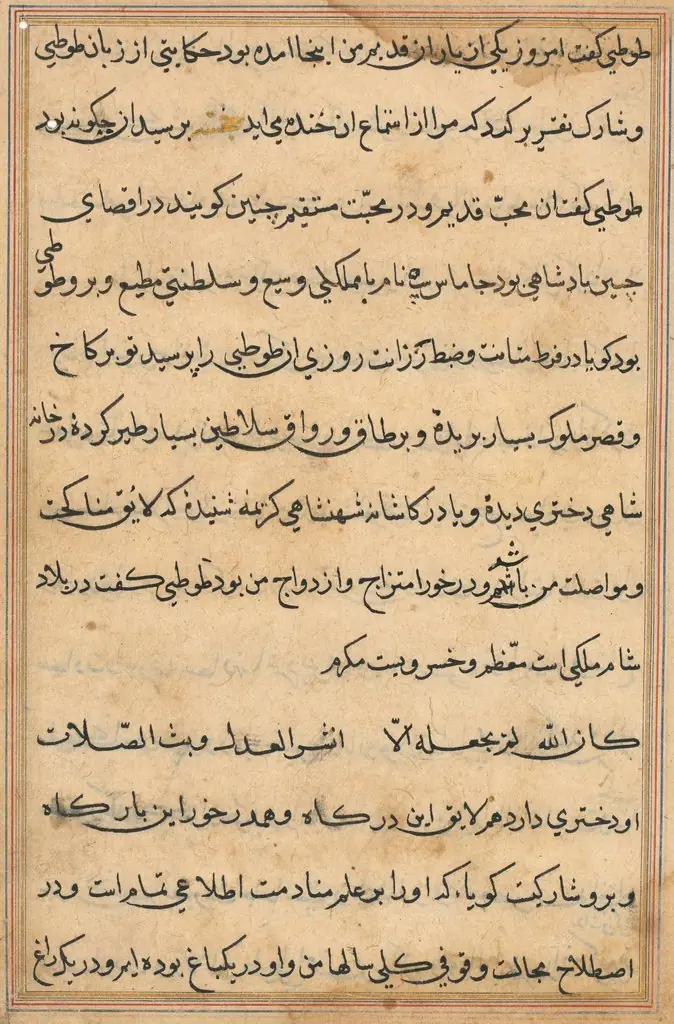 Page from Tales of a Parrot (Tuti-nama): text page
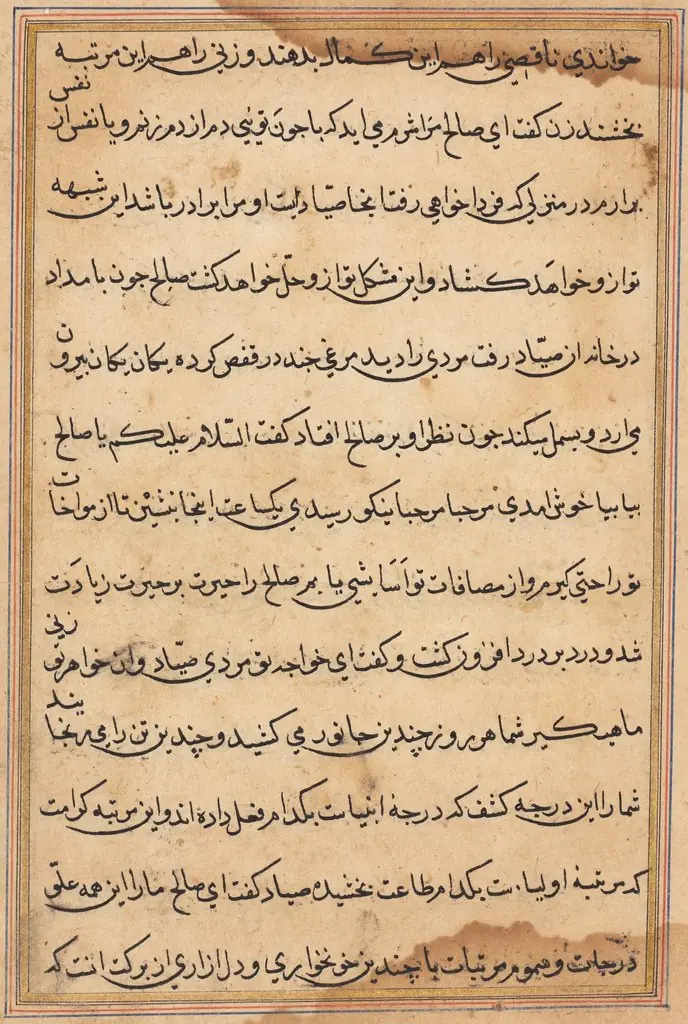 Page from Tales of a Parrot (Tuti-nama): text page
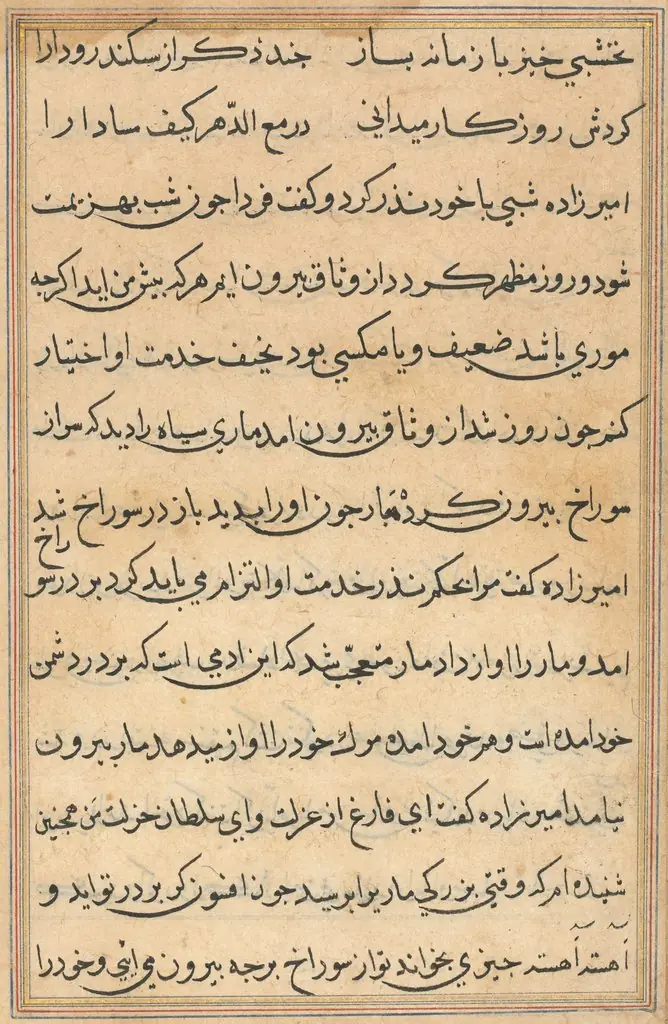 Page from Tales of a Parrot (Tuti-nama): text page
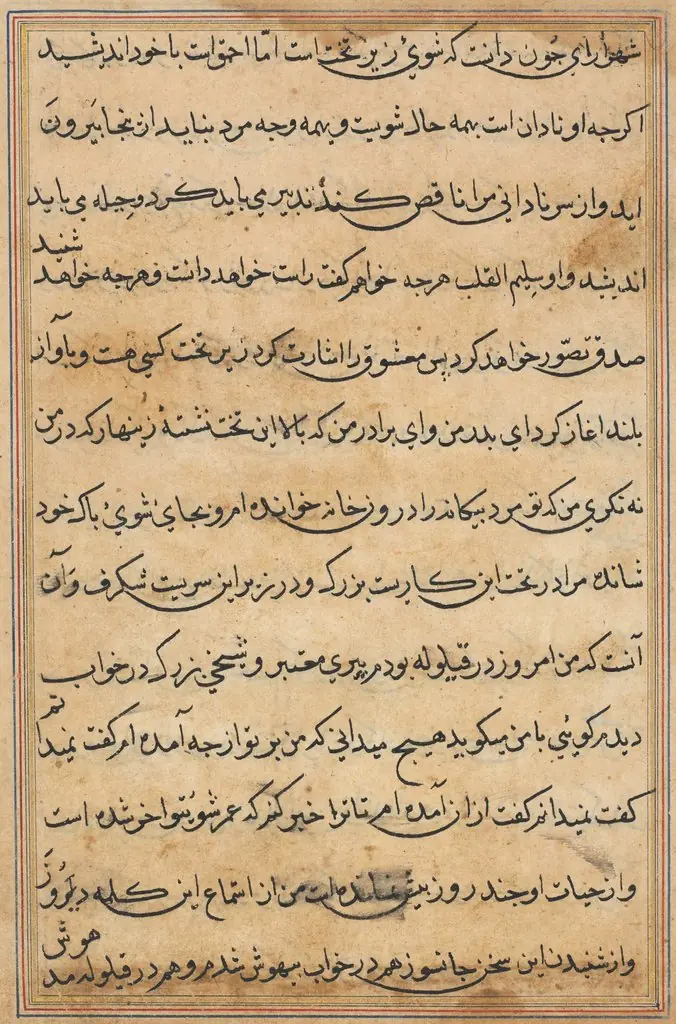 Page from Tales of a Parrot (Tuti-nama): text page
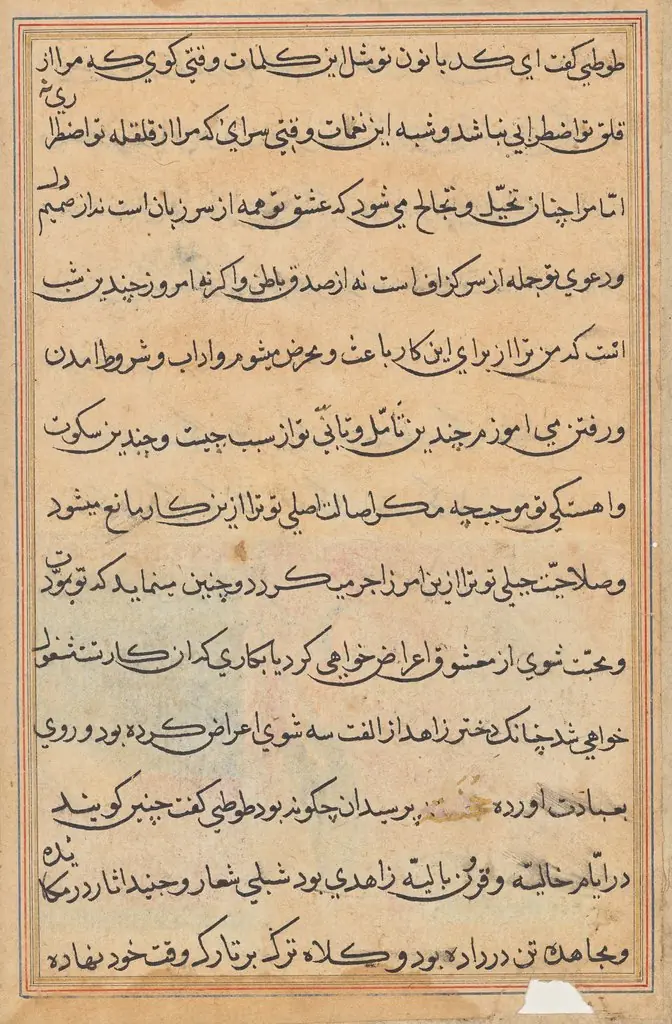 Page from Tales of a Parrot (Tuti-nama): text page
 Page from Tales of a Parrot (Tuti-nama): text page
 Page from Tales of a Parrot (Tuti-nama): text page
 Page from Tales of a Parrot (Tuti-nama): text page