Artwork
God Shiva in His Ferocious Aspect as Mahakala Dancing
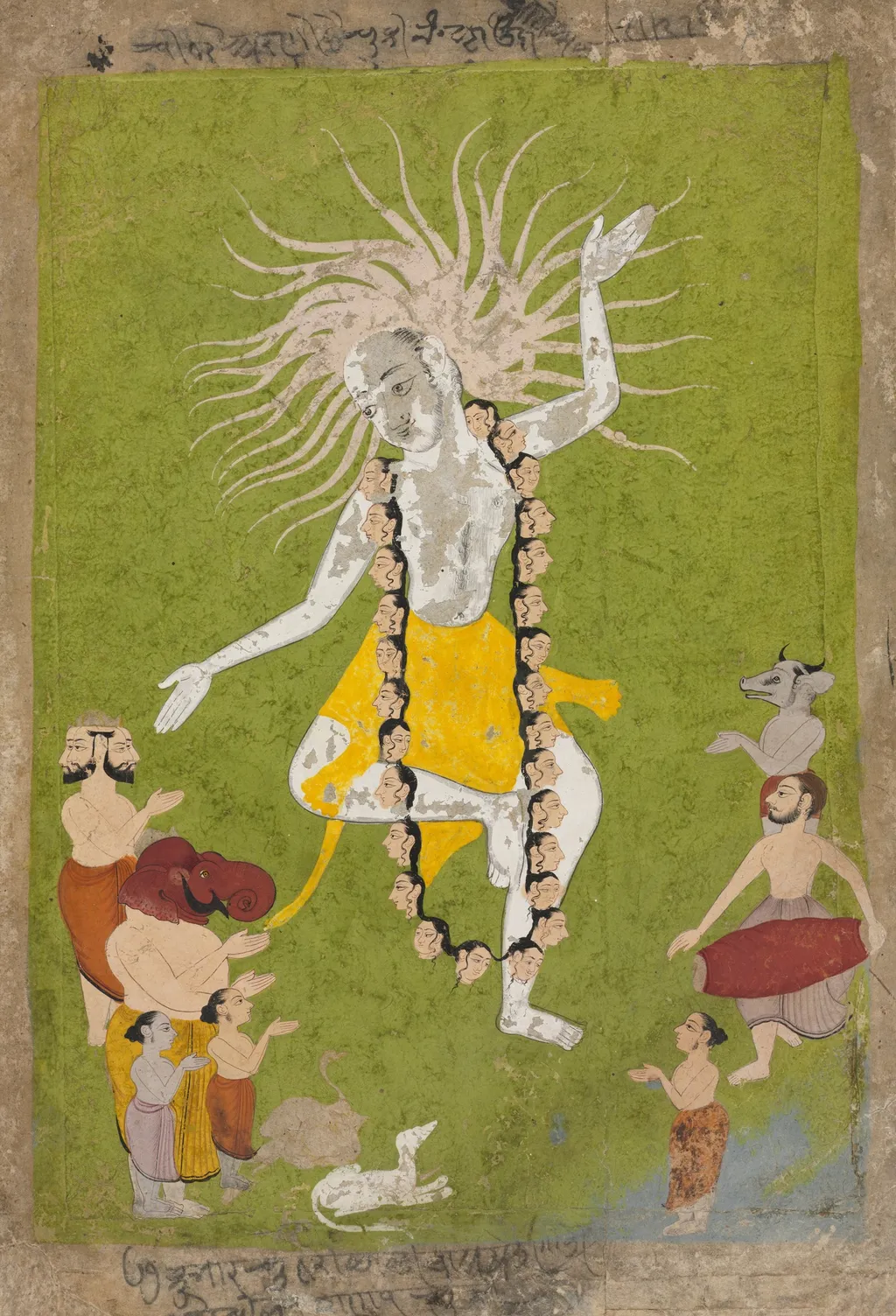
God Shiva in His Ferocious Aspect as Mahakala Dancing is an unspecified painting. It dates from 1705 and is held in the collection of the Cleveland Museum of Art.
About this work
Overview
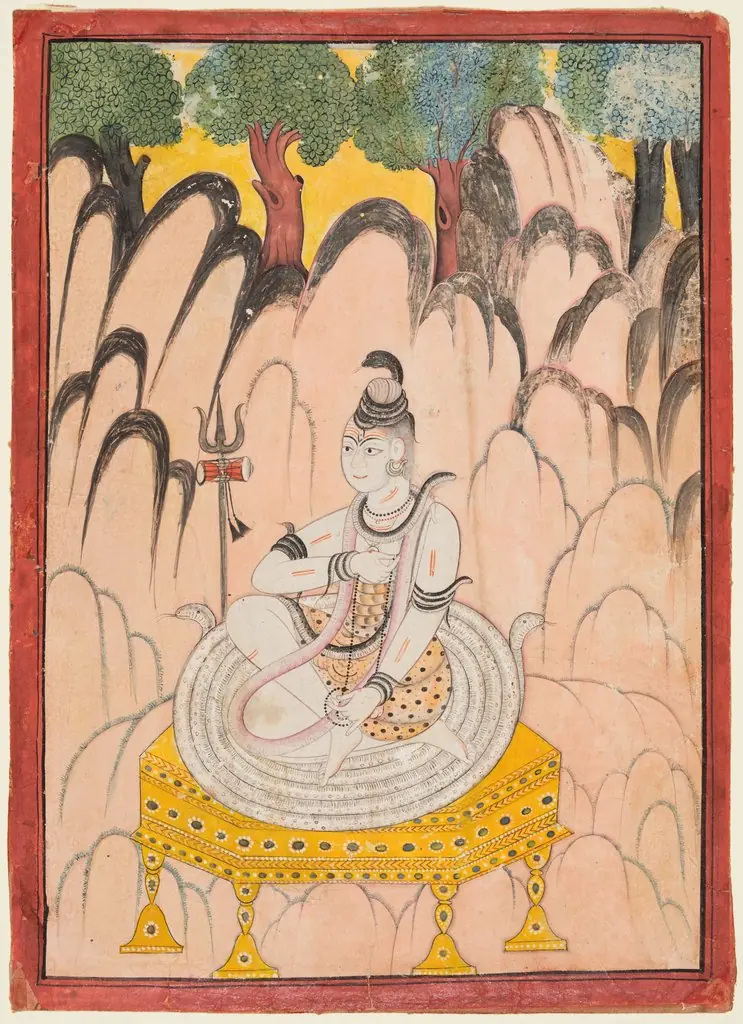
The work entitled *God Shiva in His Ferocious Aspect as Mahakala Dancing* is a painted composition that presents a monumental, multi‑armed deity in motion against a verdant backdrop. The figure is adorned with a vivid yellow skirt and a flowing white headdress, while numerous faces cover its torso, a visual convention associated with the deity’s mythic narratives. Smaller human and animal figures, including an elephant and a cow, are positioned around the central dancer, appearing to observe or reach toward the divine presence.
Subject & Meaning
The surrounding spectators, both mortal and animal, reflect the universal impact of Shiva’s power across all realms of existence.
The painting depicts Shiva in his Mahakala form, a fierce manifestation that emphasizes destruction and transformation. The multiple arms and faces symbolize the god’s omnipotence and ability to perceive all directions, while the dynamic dance conveys the cyclical nature of creation and dissolution. The surrounding spectators, both mortal and animal, reflect the universal impact of Shiva’s power across all realms of existence.
Technique & Style
Executed in paint, the image combines bold coloration—particularly the striking yellow garment and white headdress—with intricate detailing of the deity’s numerous limbs and facial masks. The composition balances a dense central figure against a relatively simple green field, allowing the complex iconography to dominate the visual field while maintaining a clear spatial hierarchy.
History & Provenance
The painting is part of the collection of the Cleveland Museum of Art. Its acquisition details, date of creation, and earlier ownership are not specified in the available information, but the museum’s stewardship places the work within a public institution where it can be studied alongside other examples of Hindu religious art.
Artist & collection