Artwork
The beheading of John the Baptist
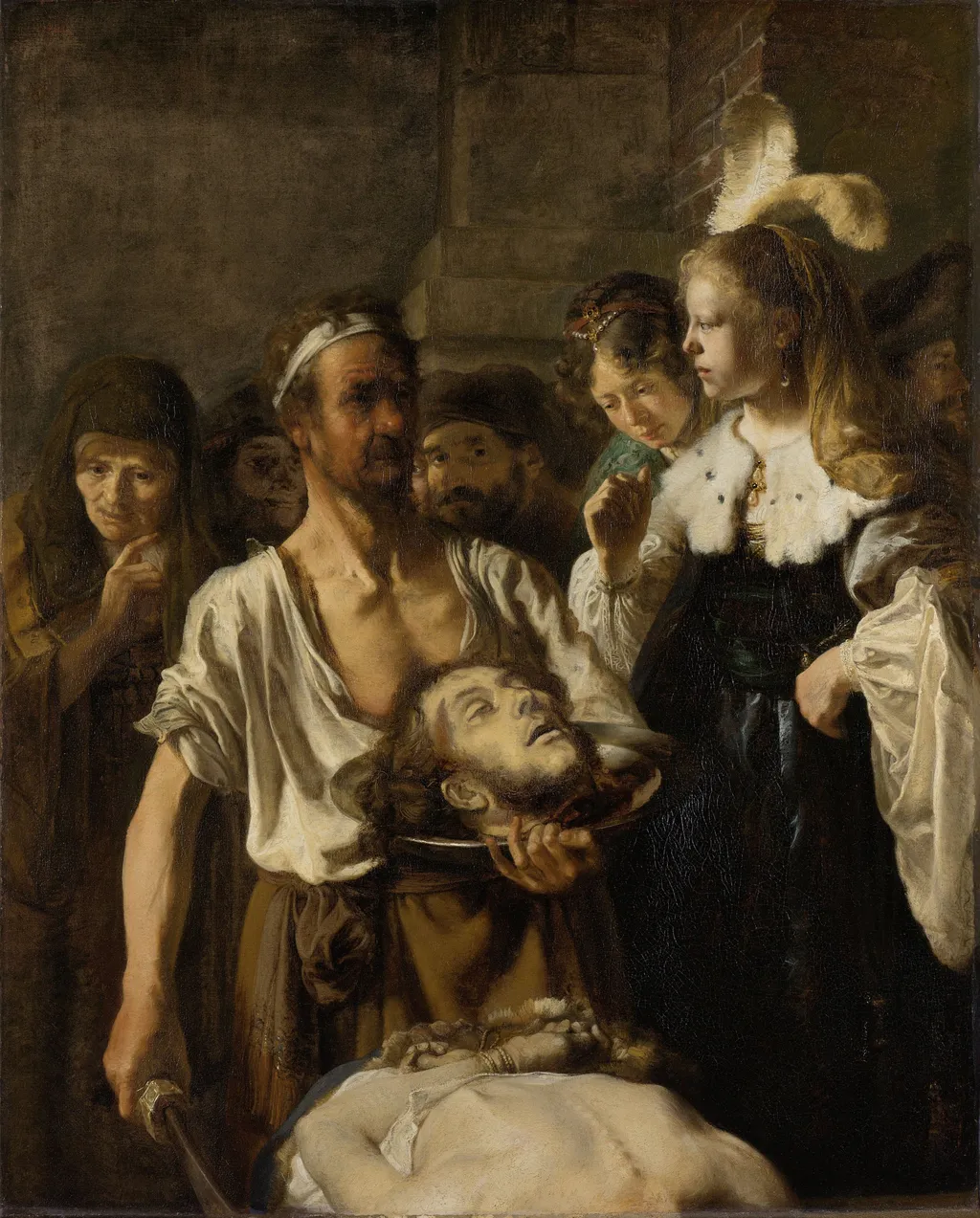
The beheading of John the Baptist is an oil painting. It dates from 1640 and is held in the collection of the Rijksmuseum.
About this work
Overview
The oil painting titled The Beheading of John the Baptist captures a tense episode from the biblical narrative. A group of figures surrounds a prone man, while another figure holds a severed head aloft. The composition is dominated by a low-key lighting scheme that accentuates the solemn expressions and the stark gestures of the participants.
Subject & Meaning
The work depicts the moment after John the Baptist’s execution, focusing on the psychological weight of the act. The figure bearing the head appears absorbed in a mixture of grief and concentration, suggesting a contemplation of guilt or duty. The surrounding onlookers, rendered with serious faces, convey the collective shock and moral gravity of the scene.
Technique & Style
Employing chiaroscuro, the artist contrasts deep shadows with sharply illuminated forms, heightening the drama of the tableau. The handling of oil paint allows for smooth transitions between light and dark, while the crisp modeling of faces and clothing emphasizes the intensity of the narrative. The overall effect is a tightly controlled, atmospheric rendering.
Context
The painting belongs to a tradition of religious art that dramatizes martyrdom, a theme popular in Baroque and later periods. By focusing on the aftermath rather than the act itself, the work aligns with a contemplative approach to sacred subjects, inviting viewers to reflect on the consequences of violence and sacrifice.
Legacy
While specific details of the painting’s provenance are scarce, its use of strong chiaroscuro and its emotive portrayal of a biblical episode have influenced subsequent depictions of martyrdom in Western art. The composition continues to be studied for its psychological depth and its skillful manipulation of light to convey narrative tension.
Artist & collection