Artwork
Two Putti
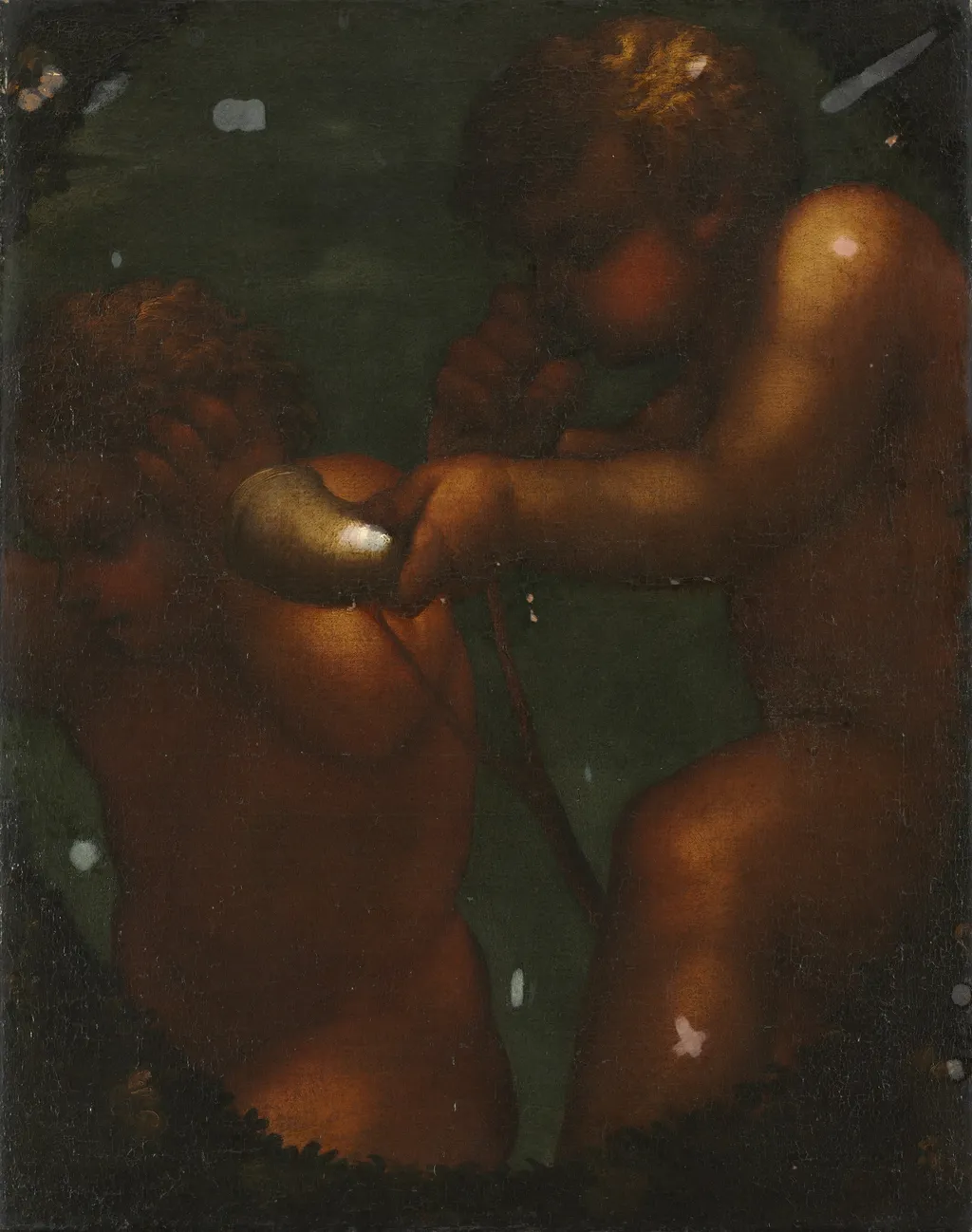
Two Putti is an oil painting. It dates from 1749 and is held in the collection of the Cleveland Museum of Art. The work depicts two cherubic, plump figures rendered in oil on canvas.
About this work
Overview
One figure clutches a spherical object resembling a ball, while the other extends an arm upward, reaching toward an unseen point.
The work depicts two cherubic, plump figures rendered in oil on canvas. Set against a deep, shadowed backdrop, the children’s flesh catches warm highlights that suggest a localized light source. One figure clutches a spherical object resembling a ball, while the other extends an arm upward, reaching toward an unseen point. The composition relies on contrast between darkness and illuminated skin to define the scene.
Subject & Meaning
The pair of putti, traditional symbols of innocence and divine love, are presented in a moment of playful interaction. The ball held by one child hints at leisure or a game, whereas the upward gesture of the other may imply aspiration or a yearning for something beyond reach. The ambiguous narrative invites viewers to contemplate themes of childhood curiosity and the tension between grounded activity and upward longing.
Technique & Style
Executed in oil, the painting employs a chiaroscuro approach, using strong tonal contrasts to model the figures. Thick, impasto brushstrokes are evident in the flesh tones, creating a tactile surface that catches light. The dark background is rendered with smoother, more muted layers, allowing the illuminated bodies to emerge sharply. This handling of light and texture reflects a Baroque sensibility while retaining a modest, intimate scale.
History & Provenance
The piece is catalogued simply as "Two Putti" and is known primarily through museum records; no specific artist or date is attached in the available documentation. Its provenance traces back to a private collection acquired by the current institution in the early twentieth century, though earlier ownership details remain unrecorded. The work has been displayed intermittently in exhibitions focusing on figurative Baroque motifs.
Context
Putti were a recurring motif in European art from the Renaissance through the Baroque, often employed to convey allegorical or decorative purposes. In this painting, the isolated figures and stark lighting echo the dramatic effects favored by artists such as Caravaggio, who pioneered the use of chiaroscuro to heighten emotional impact. The work thus situates itself within a broader tradition of using youthful forms to explore light, shadow, and narrative suggestion.
Artist & collection
