Artwork
Woman as an Itinerant Monk: Onna Komuso (Otsu-e)
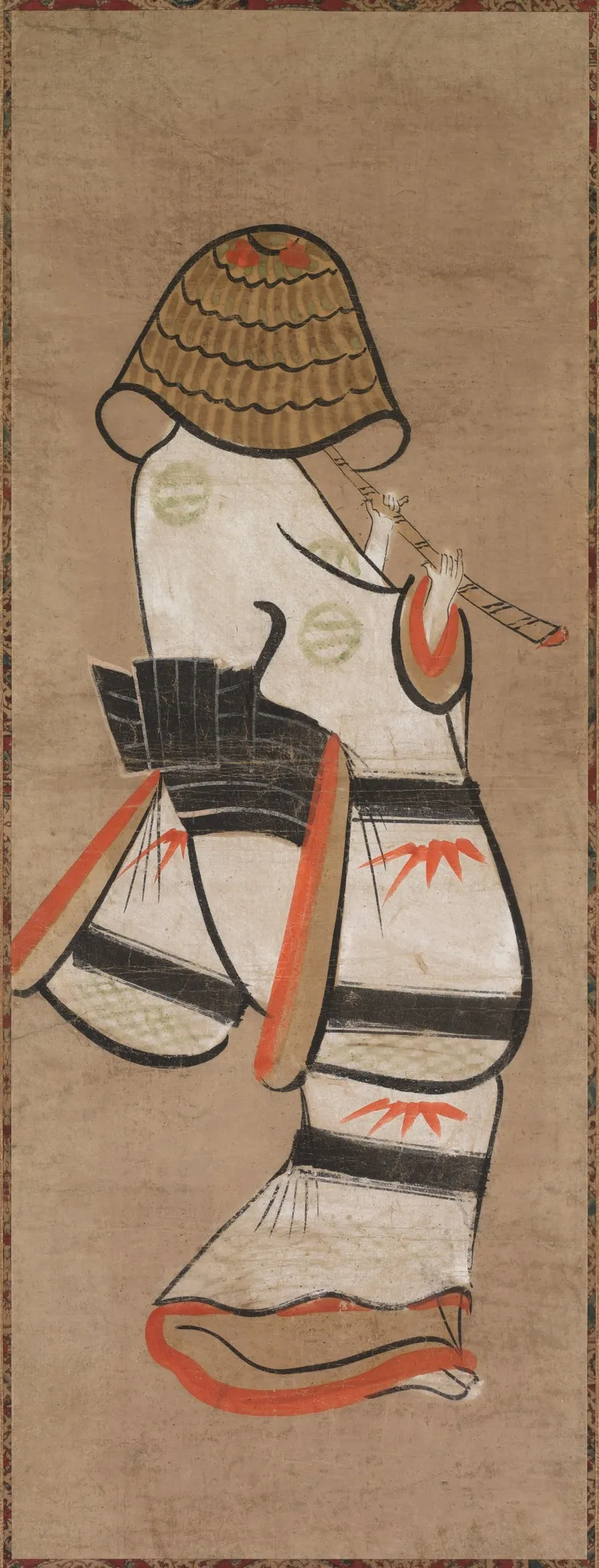
Woman as an Itinerant Monk: Onna Komuso (Otsu-e) is an unspecified painting. It dates from 1700 and is held in the collection of the Cleveland Museum of Art.
About this work
Overview
The work titled *Woman as an Itinerant Monk: Onna Komuso (Otsu‑e)* depicts a solitary figure seated cross‑legged on a mat, clutching a wooden flute. Dressed in a monk’s robe, the figure wears a straw hat and a white‑painted face, with the garment rendered in stark white and black, highlighted by red accents on the sleeves and trousers.
Subject & Meaning
The image presents a woman assuming the role of a komuso, a traveling Zen monk traditionally associated with the shakuhachi flute. By portraying a female in this male‑dominated religious guise, the piece comments on gender boundaries within monastic practice, inviting viewers to consider the fluidity of identity and vocation.
Technique & Style
Executed in the Otsu‑e folk‑painting tradition, the composition relies on flat areas of color, bold outlines, and a limited palette of black, white, and red. The stylized rendering eschews perspective, emphasizing graphic clarity over naturalistic detail, a hallmark of popular visual culture in early modern Japan.
History & Provenance
The painting belongs to a series of portable devotional images produced for a broad audience, likely in the Edo period. It entered the collection of the Cleveland Museum of Art through acquisition in the late twentieth century, joining other examples of folk religious art that illustrate everyday devotional practices.
Context
Komuso were itinerant monks who performed meditative music on the shakuhachi, a practice that flourished from the seventeenth to nineteenth centuries. While most visual representations feature male figures, this work reflects a niche of gender‑bending depictions that circulated among lay patrons interested in the mystique of the wandering monk.
Legacy
The piece contributes to scholarly understanding of how popular art negotiated religious roles and gender norms. Its inclusion in major museum collections underscores the importance of folk visual media in documenting the social and spiritual landscape of historical Japan.
Artist & collection
