Artwork
Merchant with a Slave
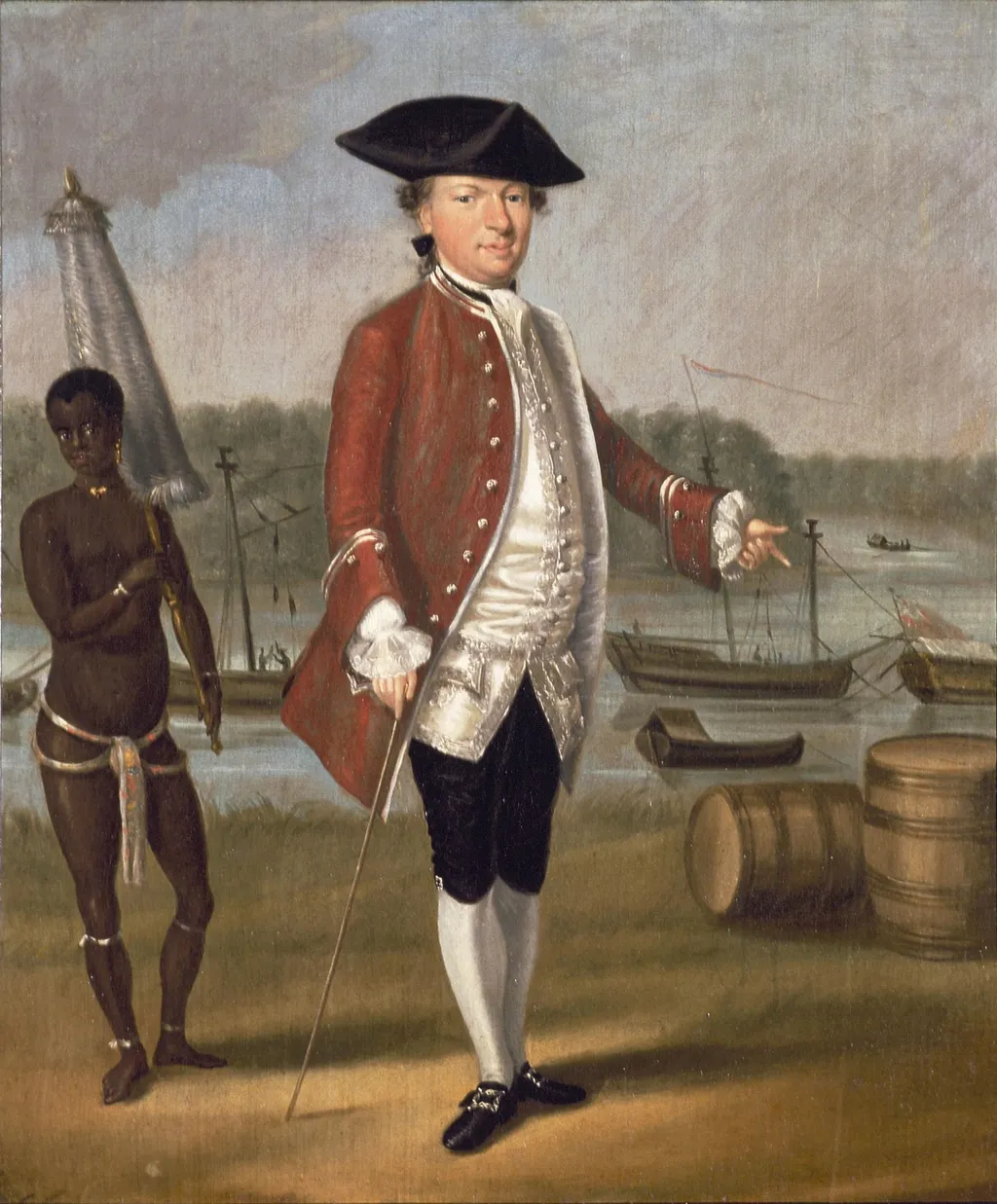
Merchant with a Slave is an oil painting. It dates from 1775 and is held in the collection of the Rijksmuseum.
About this work
Overview
The canvas presents a river scene where a European‑dressed figure in a red coat and black hat stands on the left, gesturing with his left hand while holding a cane in his right. To his right, a Black man in a simple loincloth and a white cloth around his waist is positioned. Boats drift in the background beneath a line of trees, establishing a bustling waterfront setting.
Subject & Meaning
The clothed figure is interpreted as a merchant, suggested by his refined attire and the presence of trading vessels. The accompanying Black figure, minimally dressed, is identified as a slave, reflecting the hierarchical social relations and the commodification of human labor that were prevalent in the period’s colonial economies.
Technique & Style
Executed in oil on canvas, the work employs a clear, narrative composition typical of 17th‑century Dutch genre painting. The artist uses contrasting colours—bright red against darker tones—to draw attention to the merchant, while the softer rendering of the river and foliage creates depth and situates the figures within a realistic environment.
History & Provenance
The painting is part of the collection of the Rijksmuseum in Amsterdam. Its acquisition history traces back to the museum’s efforts to assemble works that illustrate Dutch trade and its global connections during the early modern era.
Context
Created during a time when the Dutch Republic was a major maritime power, the scene reflects the economic importance of river trade and the intertwined presence of commerce and slavery. The depiction aligns with contemporary visual records that documented the everyday realities of mercantile activity and the human cost underlying it.
Artist & collection
