Artwork
Kalpa Sutra
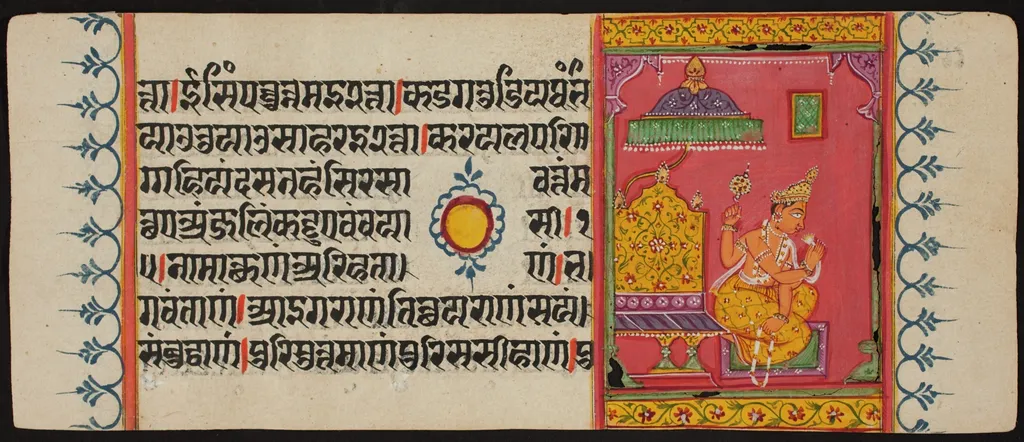
Kalpa Sutra is an unspecified painting by Unknown. It is held in the collection of the Detroit Institute of Arts.
About this work
Overview
The work originates from western India, likely the 15th century, and is part of the Detroit Institute of Arts' collection of South Asian religious manuscripts.
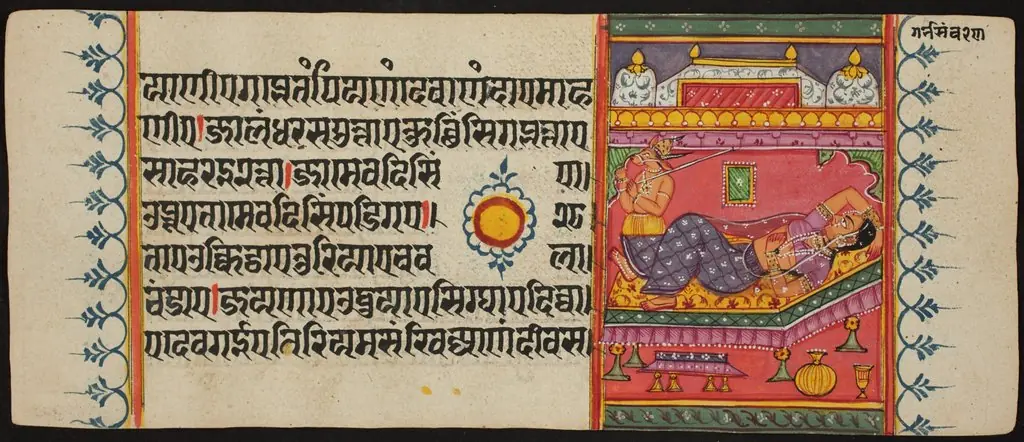
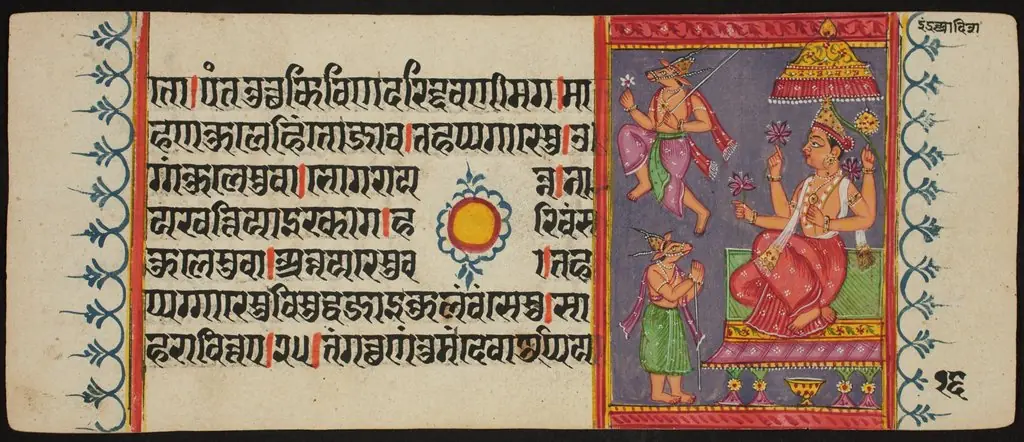
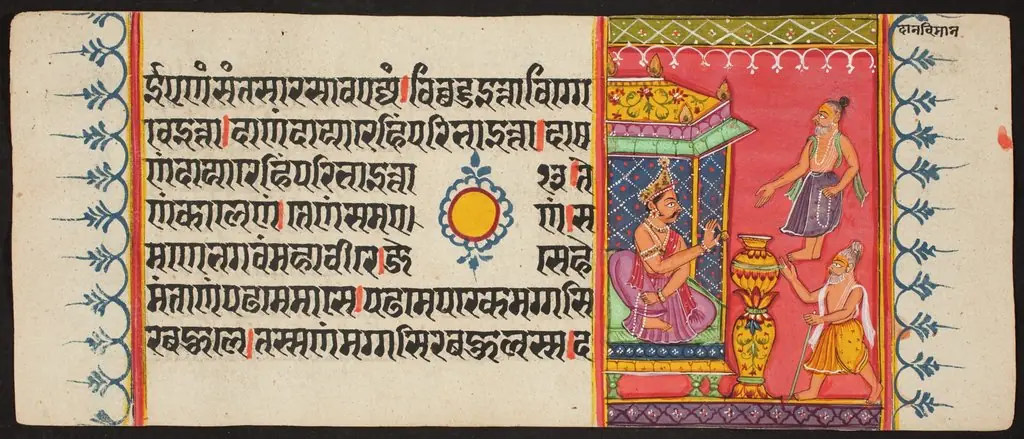
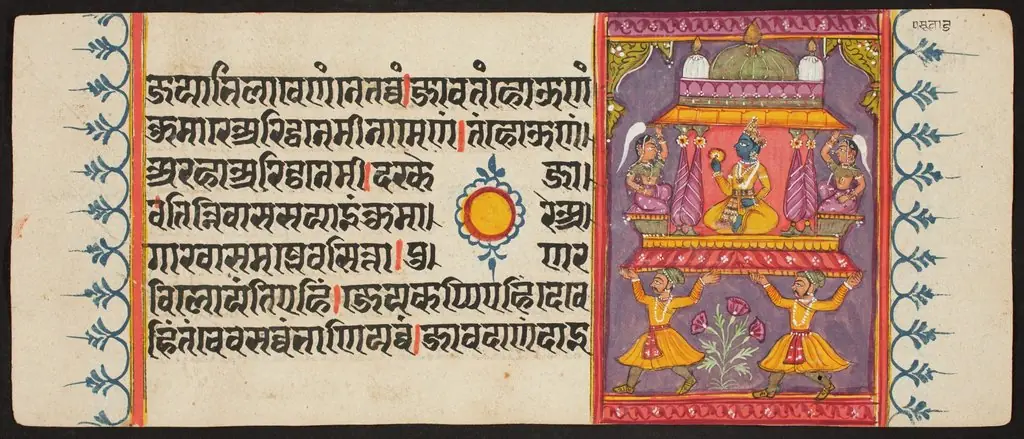
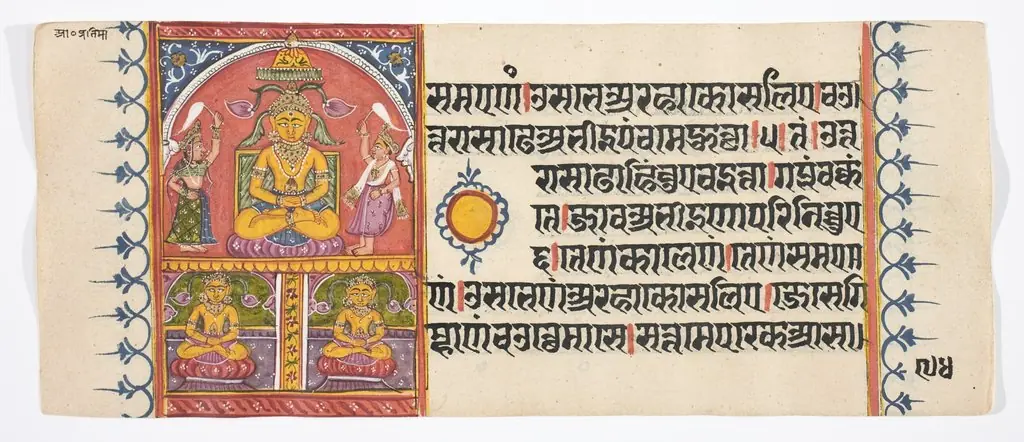
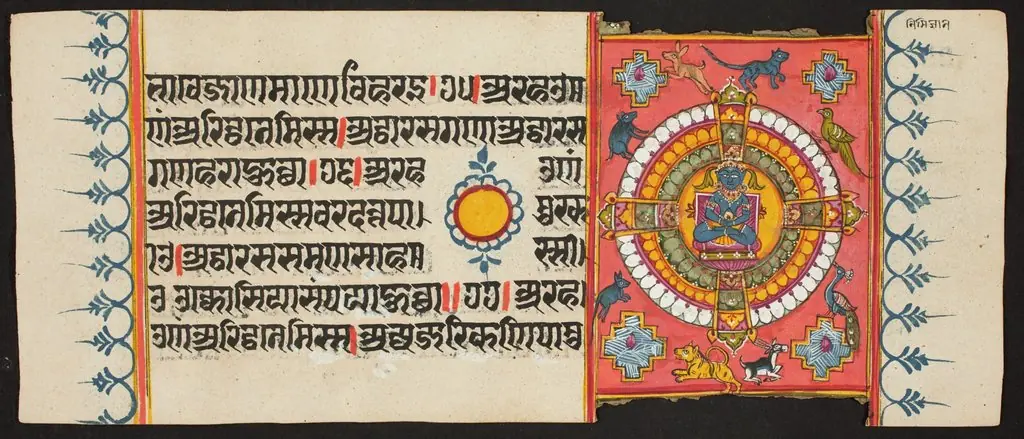
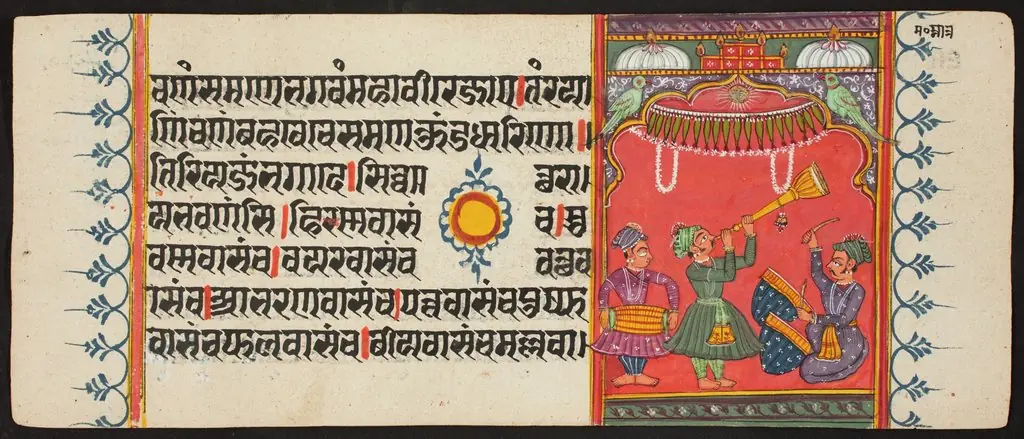
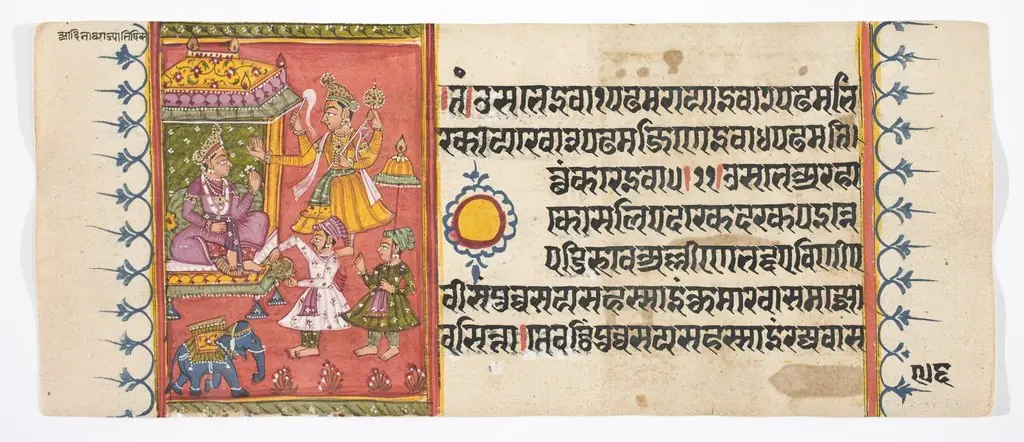
This painting is a folio from a handwritten manuscript of the Kalpa Sutra, a sacred Jain text. Executed in a richly detailed miniature style, it depicts a Jain Tirthankara seated on an ornate throne. The work originates from western India, likely the 15th century, and is part of the Detroit Institute of Arts' collection of South Asian religious manuscripts. Its preservation reflects the enduring tradition of devotional illustration in Jain communities.
Subject & Meaning
The central figure represents a Tirthankara, a spiritual teacher revered in Jainism. Seated in meditation, the figure holds a flower—symbolizing purity and detachment from worldly desires. The crown and jewelry signify spiritual authority rather than worldly power, consistent with Jain ideals of renunciation. The throne’s elaborate carvings allude to cosmic order, reinforcing the figure’s role as a guide to liberation.
Technique & Style
The painting employs mineral pigments on paper, applied with fine brushes to achieve intricate detail. Gold leaf accents highlight the throne’s patterns and the figure’s adornments, while the warm, earth-toned background creates a serene, grounded atmosphere. The composition centers the figure with symmetrical balance, emphasizing stillness and spiritual presence. Details in fabric folds and jewelry reflect a tradition of meticulous craftsmanship passed through generations of Jain artists.
History & Provenance
This folio likely belonged to a larger manuscript produced in a Jain monastic center in Gujarat or Rajasthan. Such manuscripts were commissioned by wealthy patrons for ritual use and study. The painting entered the Detroit Institute of Arts’ collection in the 20th century, acquired through scholarly channels. Its survival is notable, as many such manuscripts were lost to time, war, or decay.
Context
Created during a period of flourishing Jain manuscript culture, this work reflects the community’s emphasis on nonviolence, asceticism, and textual preservation. Unlike larger temple art, these portable manuscripts served as aids for meditation and teaching. The style aligns with regional painting traditions of western India, which blended local aesthetics with religious iconography to support spiritual practice.
Legacy
The painting preserves a visual language central to Jain devotional life, offering insight into how sacred texts were made tangible through art. Its presence in a major Western museum allows broader access to Jain artistic heritage, encouraging cross-cultural understanding. While no longer used in ritual, it remains a testament to the discipline and devotion of its creators and their enduring spiritual tradition.
Artist & collection

 Domestic Scene
 Giacomo and Cardinal Marco, investing Andrea, Abbot of San Zeno, with his Benefice
 The Nymph of Fontainebleau
 Portrait of a Woman
 Madonna and Child with Saints in the Enclosed Garden
 Venus and Minerva
 Family Group of Four on Sofa
 Wall painting from Room H of the Villa of P. Fannius Synistor at Boscoreale