Artwork
Virgin and Child
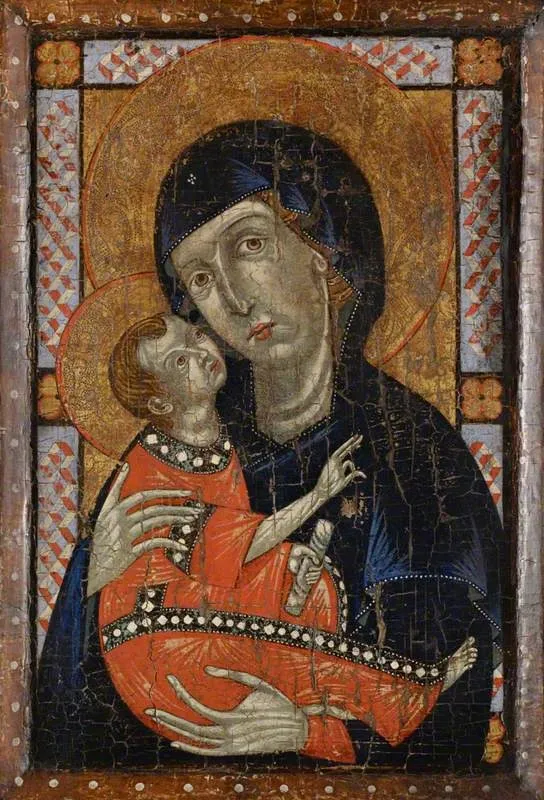
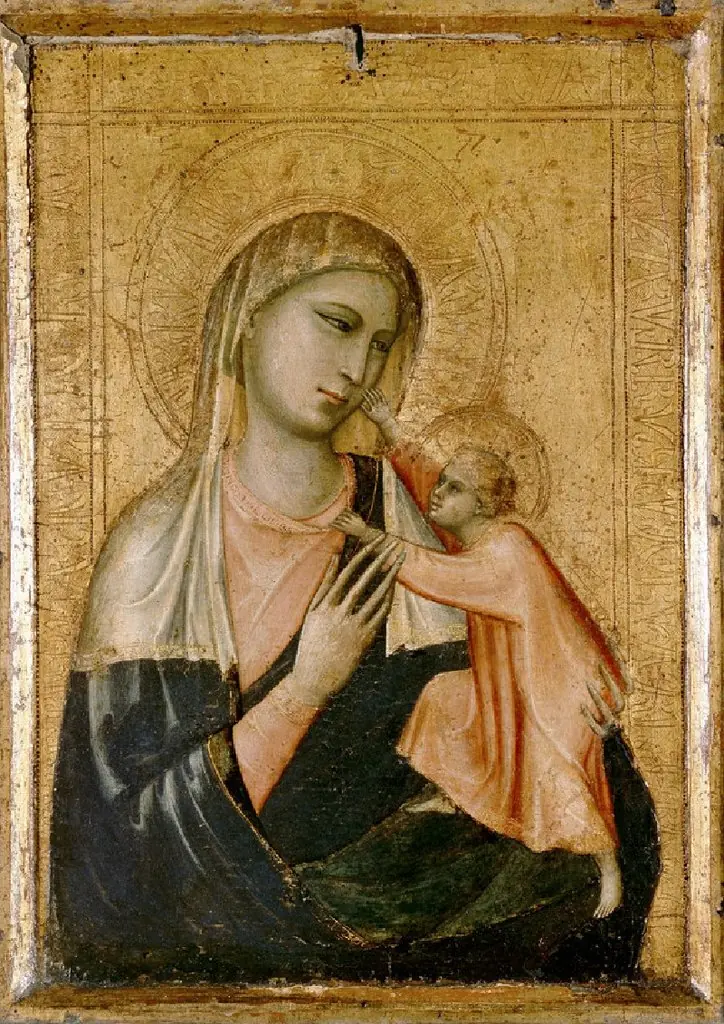
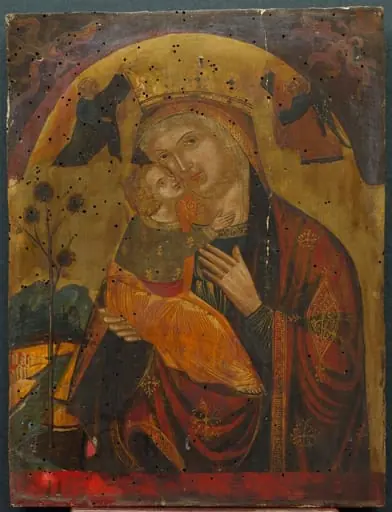
Virgin and Child is a tempera painting by the Byzantine icon painting artist Unknown. It dates from 1250 and is held in the collection of the National Galleries Scotland. The work depicts a seated woman holding an infant, both framed against a gold field.
About this work
Overview
The work depicts a seated woman holding an infant, both framed against a gold field. The mother wears a dark blue mantle over a red undergarment patterned with white dots, while both figures are crowned with subtle halos. The child's hand reaches upward toward the woman's face, creating a quiet, intimate gesture.
Subject & Meaning
The composition identifies the woman as the Virgin Mary and the child as the Christ infant, a conventional devotional image. The direct gaze of the mother and the child's reaching gesture emphasize a personal, tender connection, reinforcing themes of maternal care and divine incarnation.
Technique & Style
Executed in tempera, the paint consists of pigment mixed with a water‑soluble binder, typically egg yolk, resulting in flat, matte color fields without the chiaroscuro of later oil paintings. The gold background and halo outlines are applied in thin layers, giving the piece a luminous, icon‑like quality characteristic of medieval panel painting.
Context
The use of a gold ground and stylized, non‑modelled forms places the work within the tradition of Byzantine‑influenced religious art that persisted in Western Europe during the late medieval period. Such images served both liturgical functions and private devotion, reflecting the era’s emphasis on symbolic representation over naturalistic space.
Artist & collection

 Domestic Scene
 Giacomo and Cardinal Marco, investing Andrea, Abbot of San Zeno, with his Benefice
 The Nymph of Fontainebleau
 Portrait of a Woman
 Madonna and Child with Saints in the Enclosed Garden
 Venus and Minerva
 Family Group of Four on Sofa
 Wall painting from Room H of the Villa of P. Fannius Synistor at Boscoreale
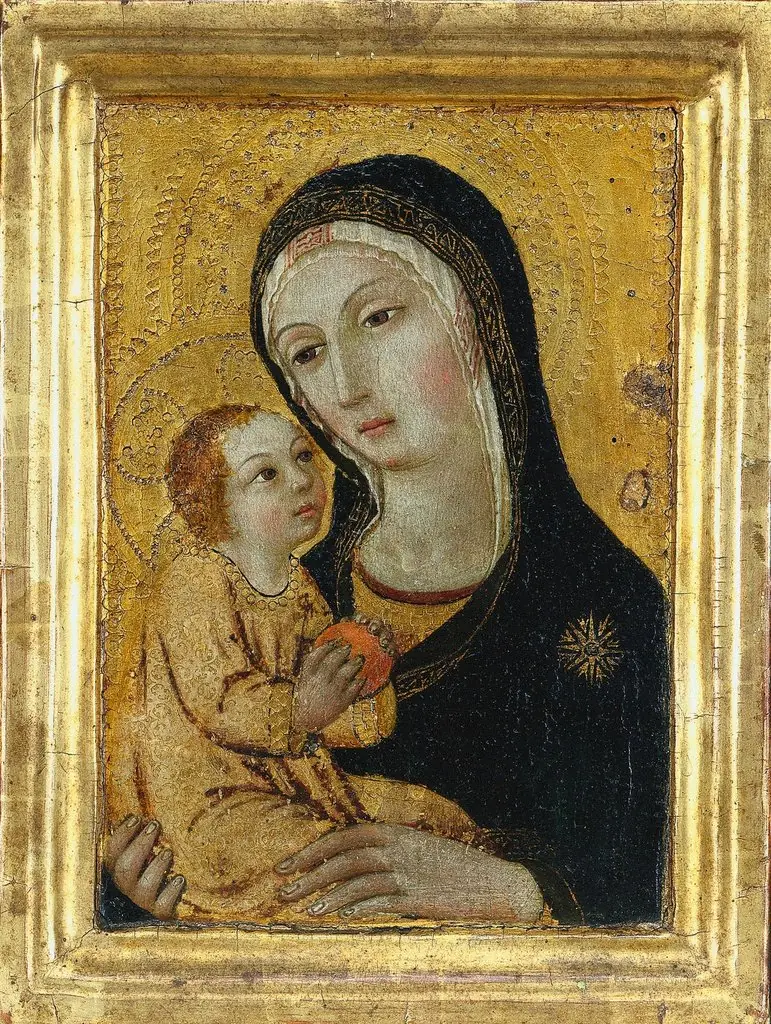 Virgin and Child
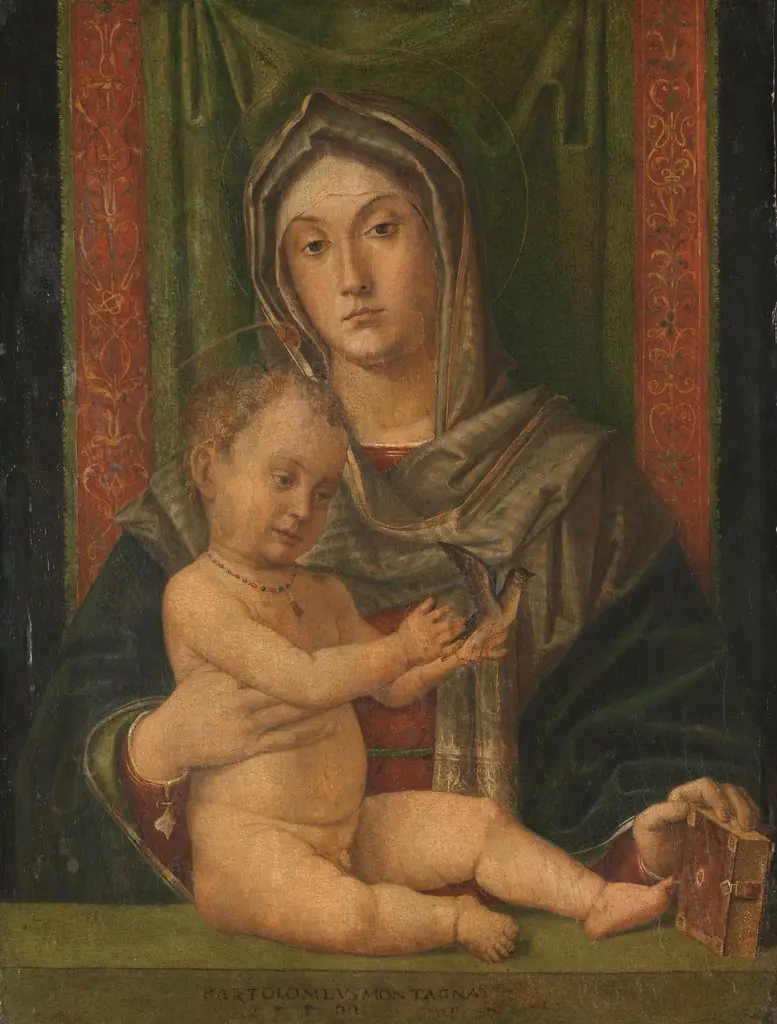 Virgin and Child
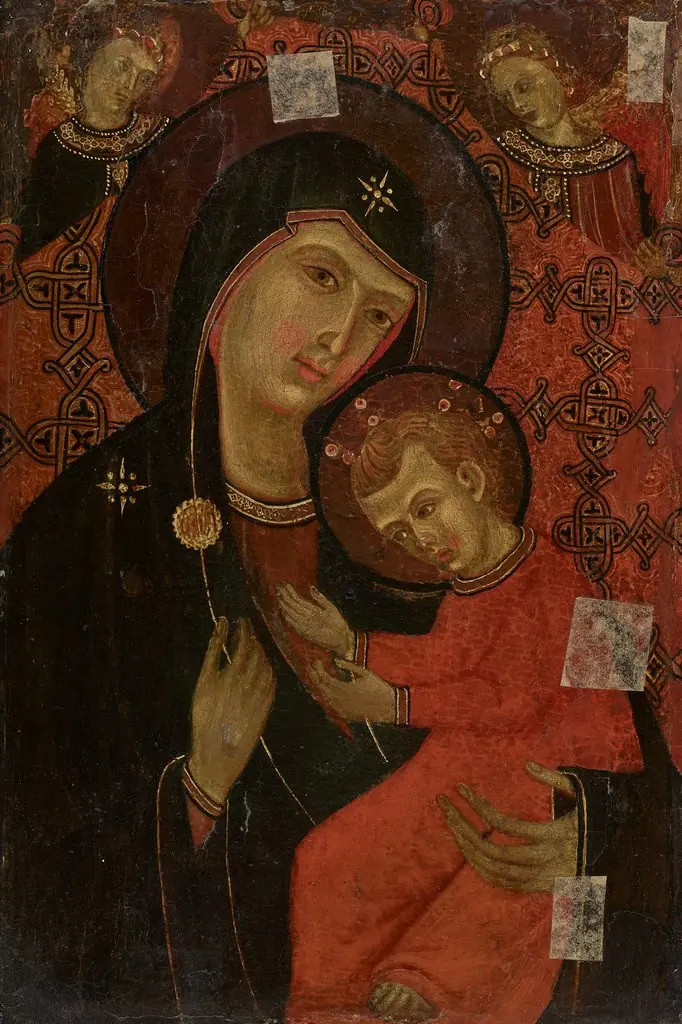 The Virgin and Child
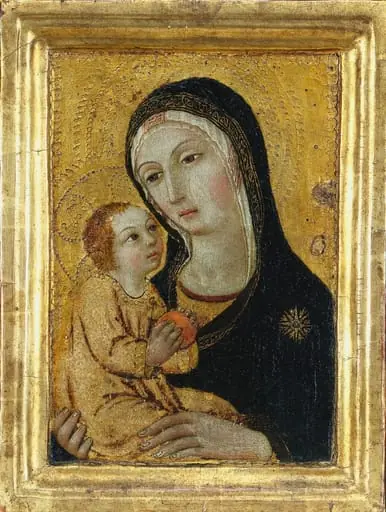 Virgin and Child
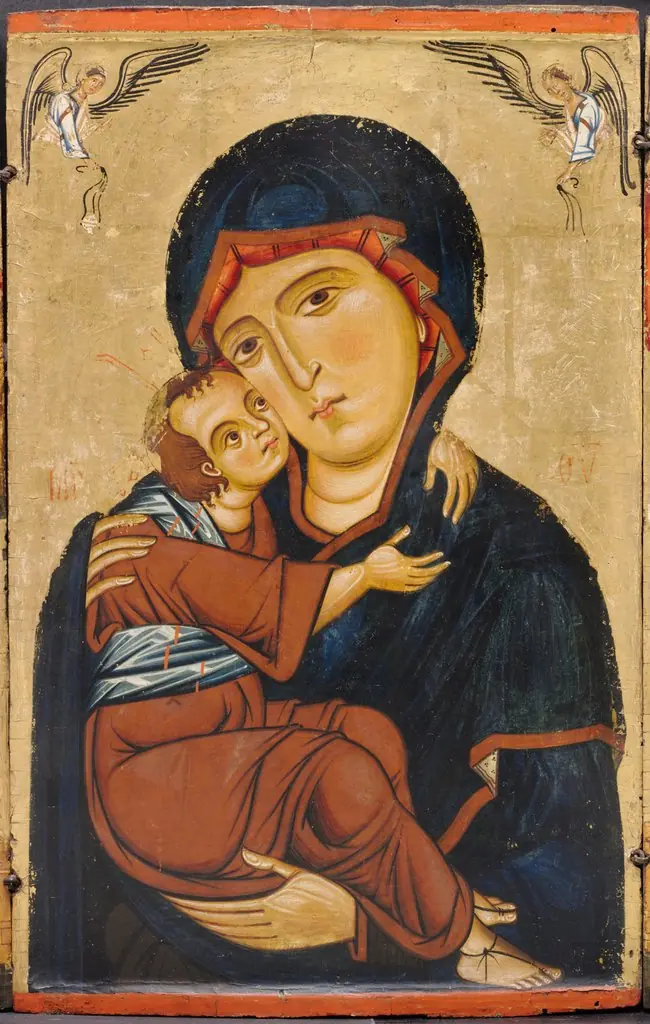 Virgin and Child with Saints
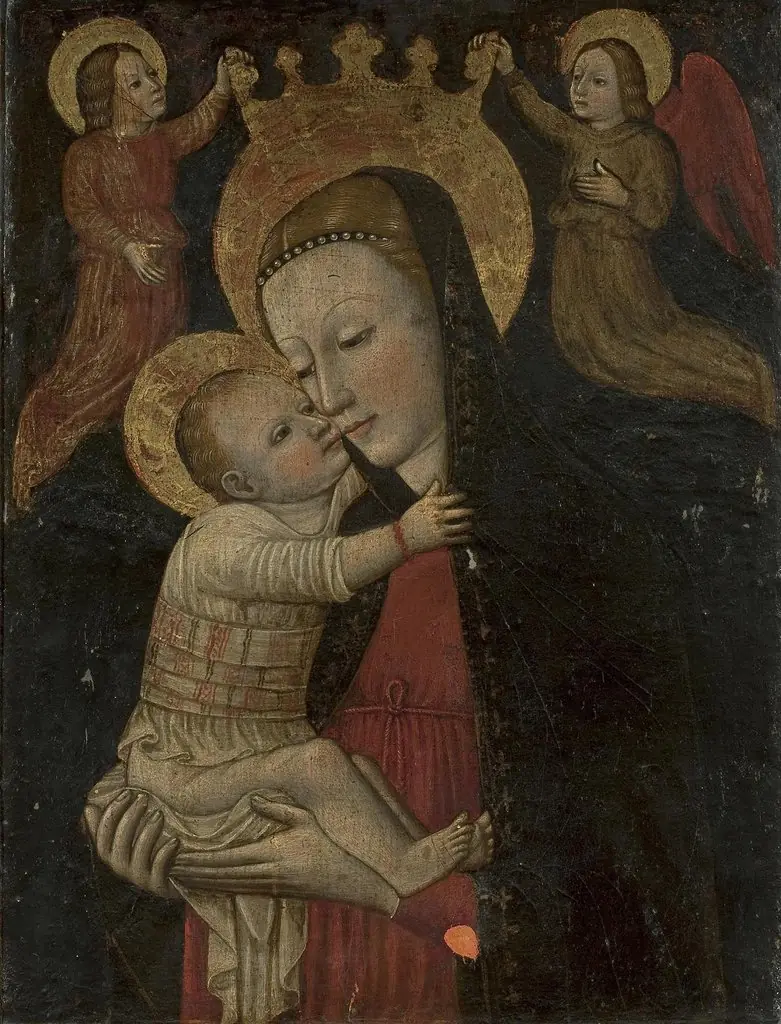 Madonna and Child with Angels
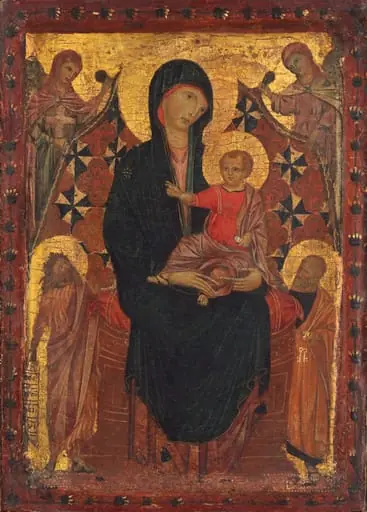 Madonna and Child with Saint John the Baptist, Saint Peter, and Two Angels
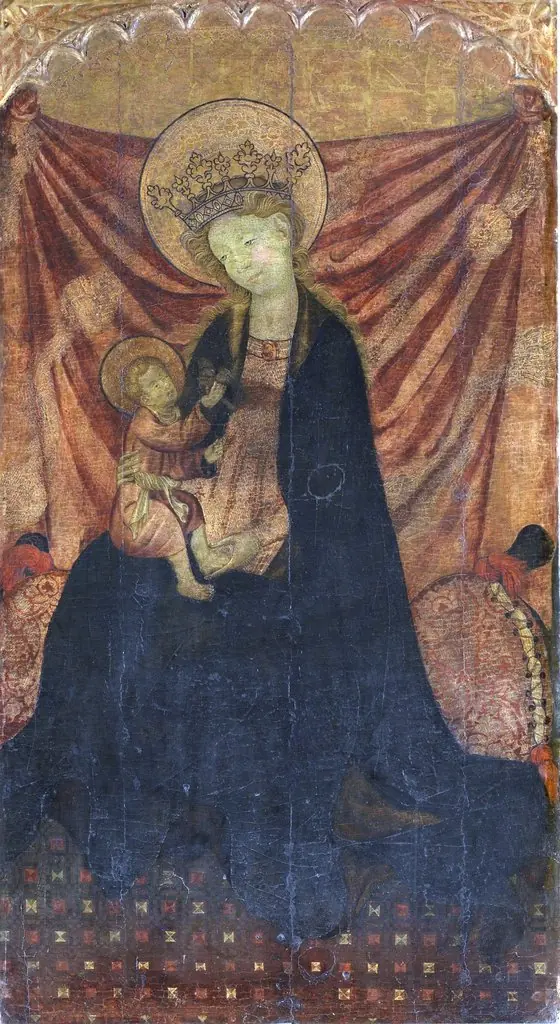 The Virgin and Child
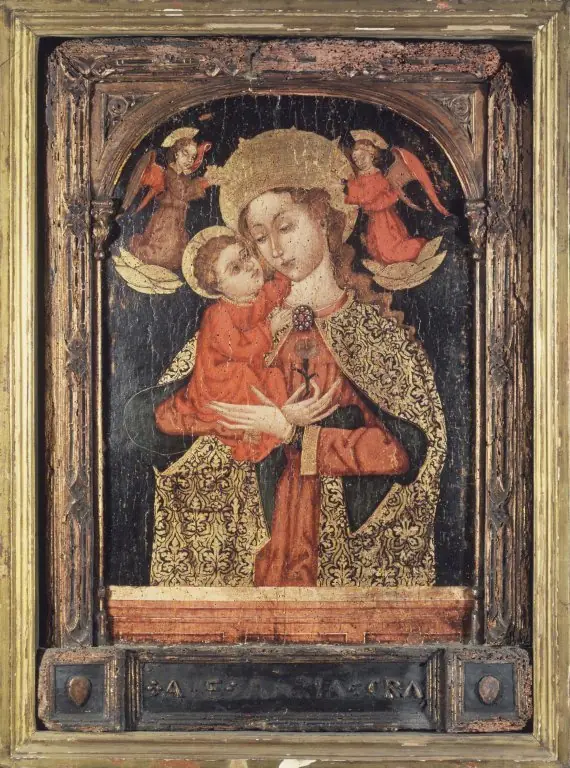 Virgin and Child with Two Angels
 Madonna and Child
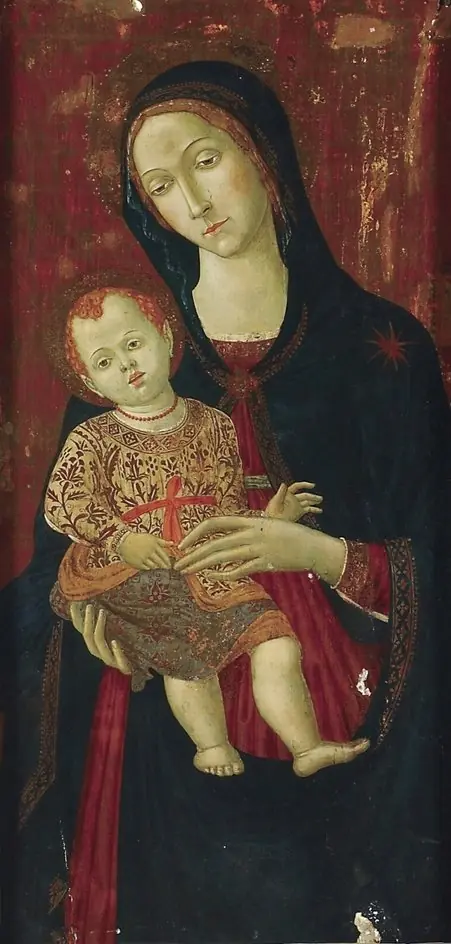 The Virgin and Child
 Virgin and Child