Artwork
Portrait of David Jorisz, Glass Painter in Delft, Fanatic Anabaptist, after 1544 in Basel
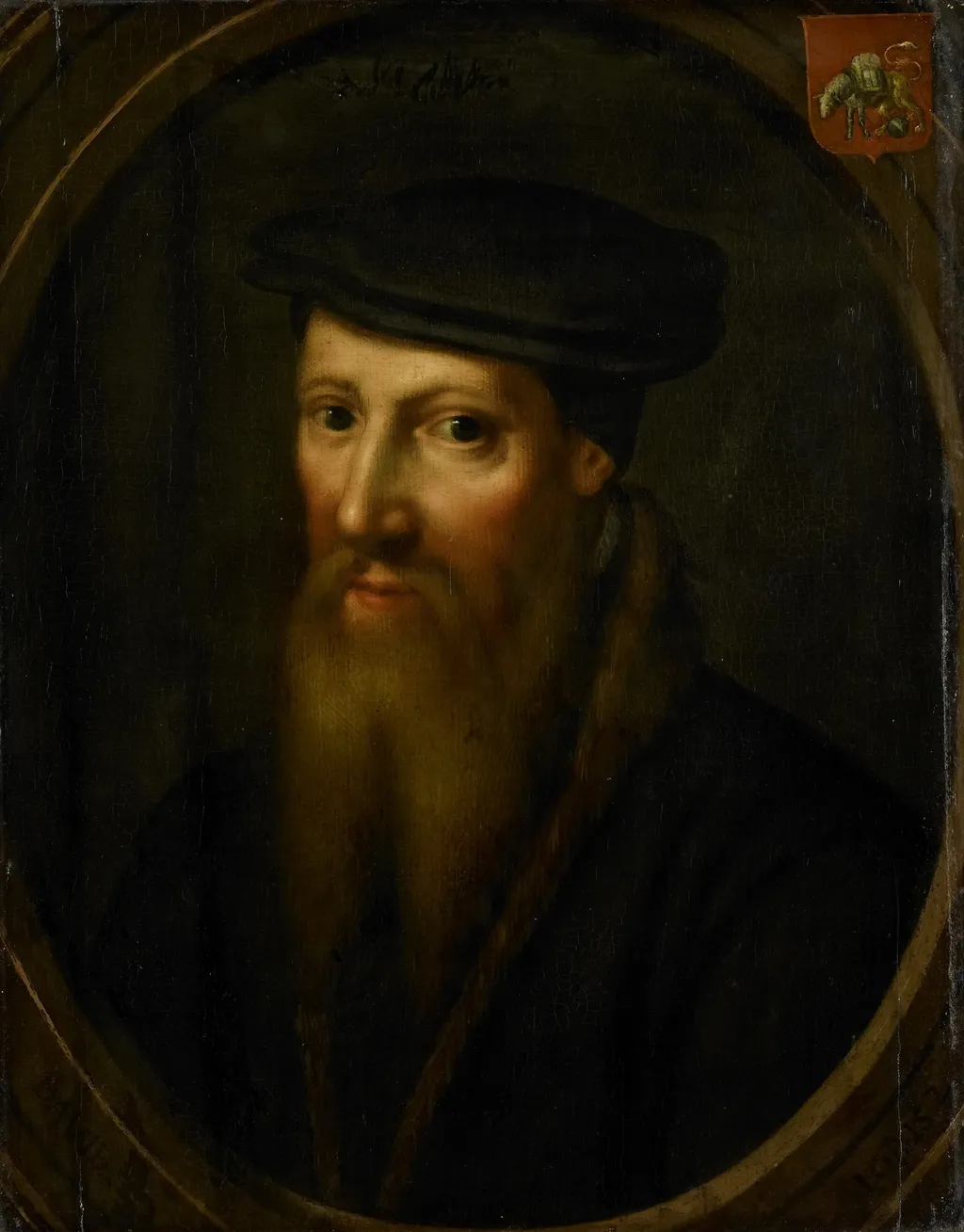
Portrait of David Jorisz, Glass Painter in Delft, Fanatic Anabaptist, after 1544 in Basel is an oil painting. It dates from 1550 and is held in the collection of the Rijksmuseum. The work is an oil portrait depicting a bearded man in a dark robe, set against a deep, shadowed background.
About this work
Overview
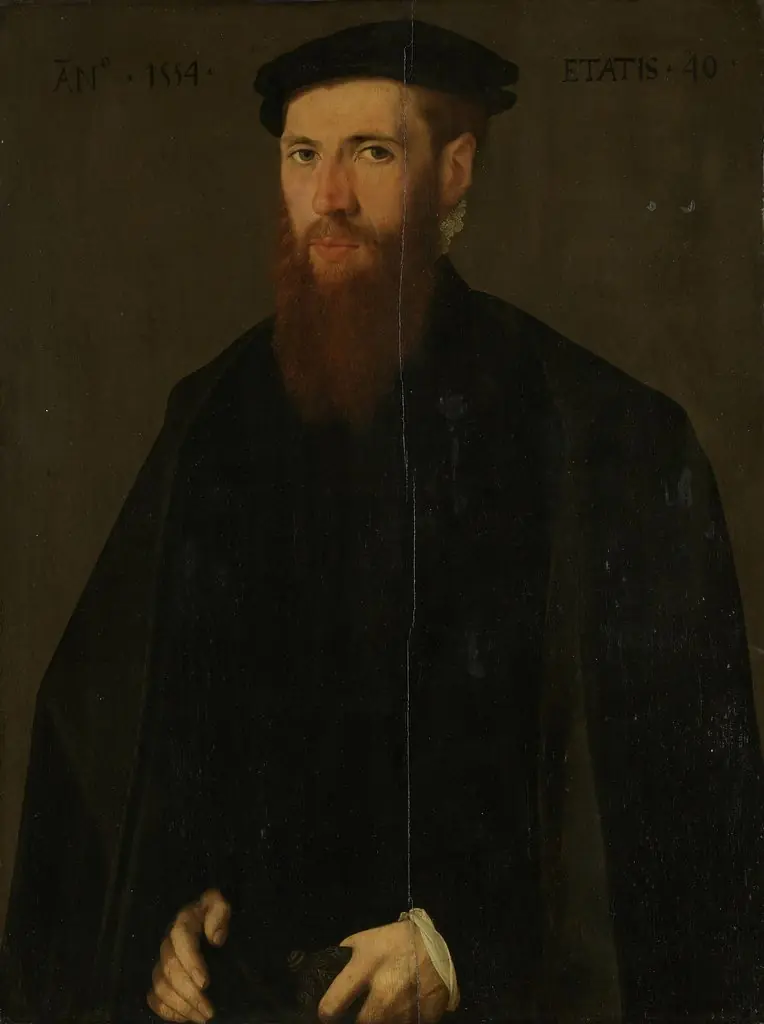
The work is an oil portrait depicting a bearded man in a dark robe, set against a deep, shadowed background. The figure wears a black hat and a loosely draped collar, his gaze directed outward with a solemn expression. The composition emphasizes the sitter’s face through strong contrasts of light and dark, creating a focused, contemplative presence.
Subject & Meaning
The sitter is identified as David Jorisz, a glass painter from Delft known for his involvement in the Anabaptist movement. His attire and serious demeanor reflect the austere values associated with his religious convictions, while the open collar may suggest a modest, unadorned status. The portrait thus serves both as a personal likeness and a visual statement of his faith‑based identity.
Technique & Style
Executed in oil, the painting employs chiaroscuro to model the facial features and folds of the robe, giving a three‑dimensional quality to the figure.
Executed in oil, the painting employs chiaroscuro to model the facial features and folds of the robe, giving a three‑dimensional quality to the figure. The dark, almost tenebrous background isolates the subject, while subtle gradations of tone convey texture in the beard and fabric. The overall style aligns with mid‑16th‑century Northern European portraiture, emphasizing realism and psychological depth.
History & Provenance
Created after 1544, the portrait was likely painted in Basel, a centre for artistic exchange at the time. It entered the collection of the Rijksmuseum in Amsterdam, where it is currently displayed. The museum’s acquisition reflects the work’s relevance to Dutch art history and its connection to the broader religious and artistic currents of the period.
Artist & collection