Artwork
Dirk van Cloon (1684-1735). Gouverneur-generaal (1730-35)
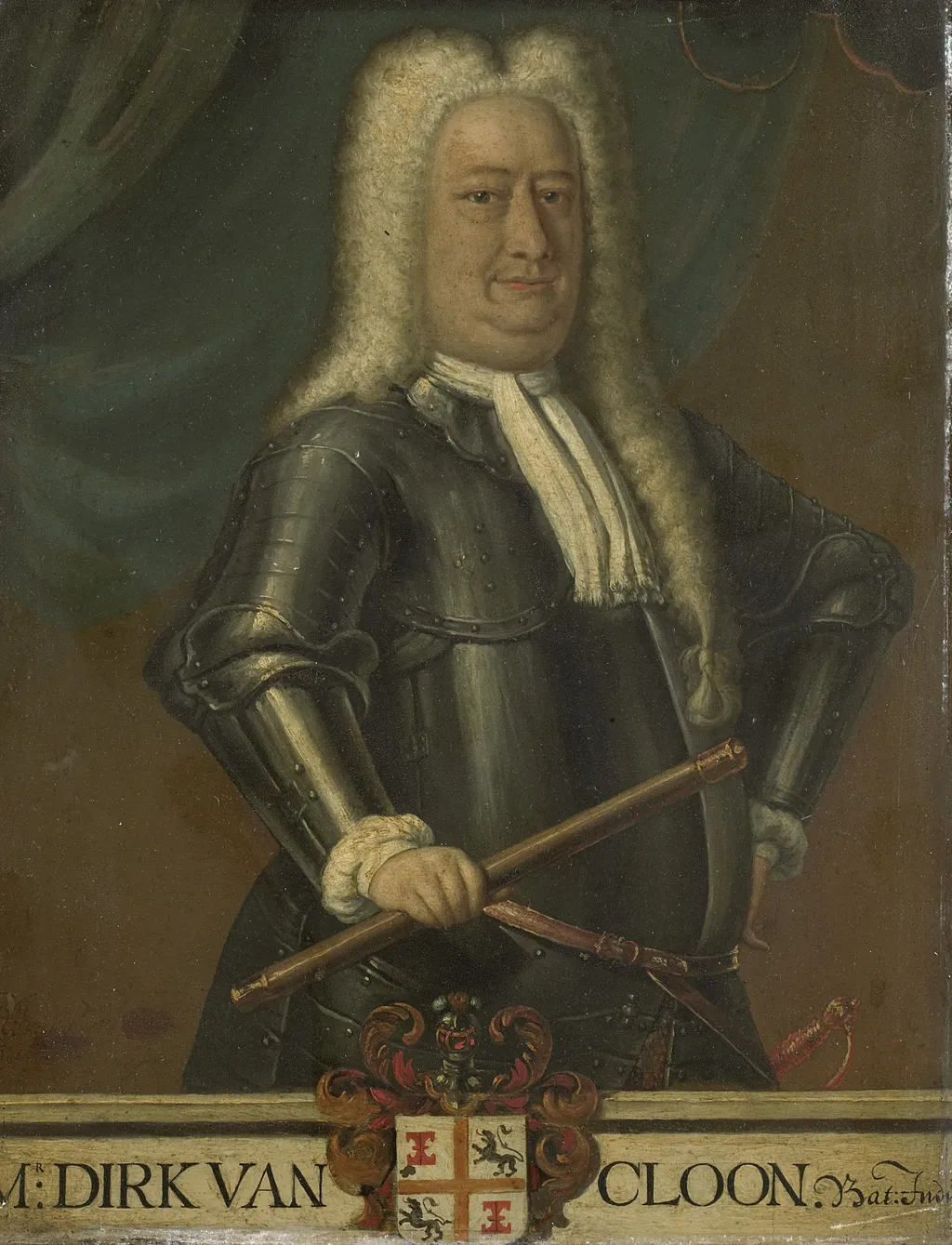
Dirk van Cloon (1684-1735). Gouverneur-generaal (1730-35) is an oil painting. It dates from 1775 and is held in the collection of the Rijksmuseum. This copper painting depicts Dirk van Cloon, who served as Gouverneur-generaal from 1730 to 1735.
About this work
Overview
This copper painting depicts Dirk van Cloon, who served as Gouverneur-generaal from 1730 to 1735. The portrait presents him in formal attire, conveying his official status.
Subject & Meaning
Dirk van Cloon is portrayed in a stance of authority, with a stick in his right hand and his left hand on his hip. The coat of arms at the bottom, featuring a white square with a red cross and a black lion, reinforces his identity and lineage.
Technique & Style
Executed on copper, the painting utilizes a predominantly dark palette, with a lighter background section behind the subject's head to create depth. The level of detail, such as the metal plates on his jacket, suggests meticulous craftsmanship.
History & Provenance
Created during or shortly after van Cloon's tenure as Gouverneur-generaal (1730-1735), the painting's provenance is not detailed here, though the inclusion of his name and coat of arms indicates it was likely intended for official or familial display.
Context
As a portrait of a colonial administrator, the work reflects the Dutch colonial presence during the early 18th century. Van Cloon's role as Gouverneur-generaal would have involved overseeing Dutch East India Company interests.
Legacy
The painting serves as a historical record of Dirk van Cloon's tenure, offering insights into the representation of colonial authority in early 18th-century Dutch art. Its legacy is tied to the historical significance of its subject rather than the work's artistic innovation.
Artist & collection

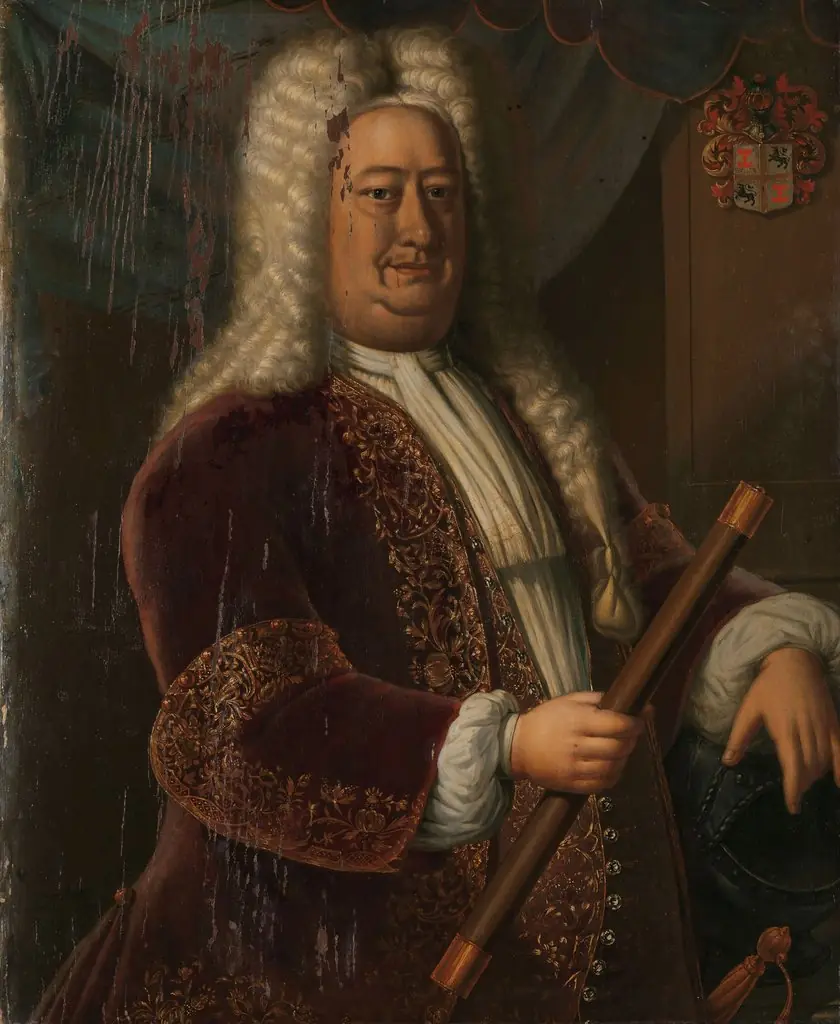 Portrait of Dirk van Cloon, Governor-General of the Dutch East Indies
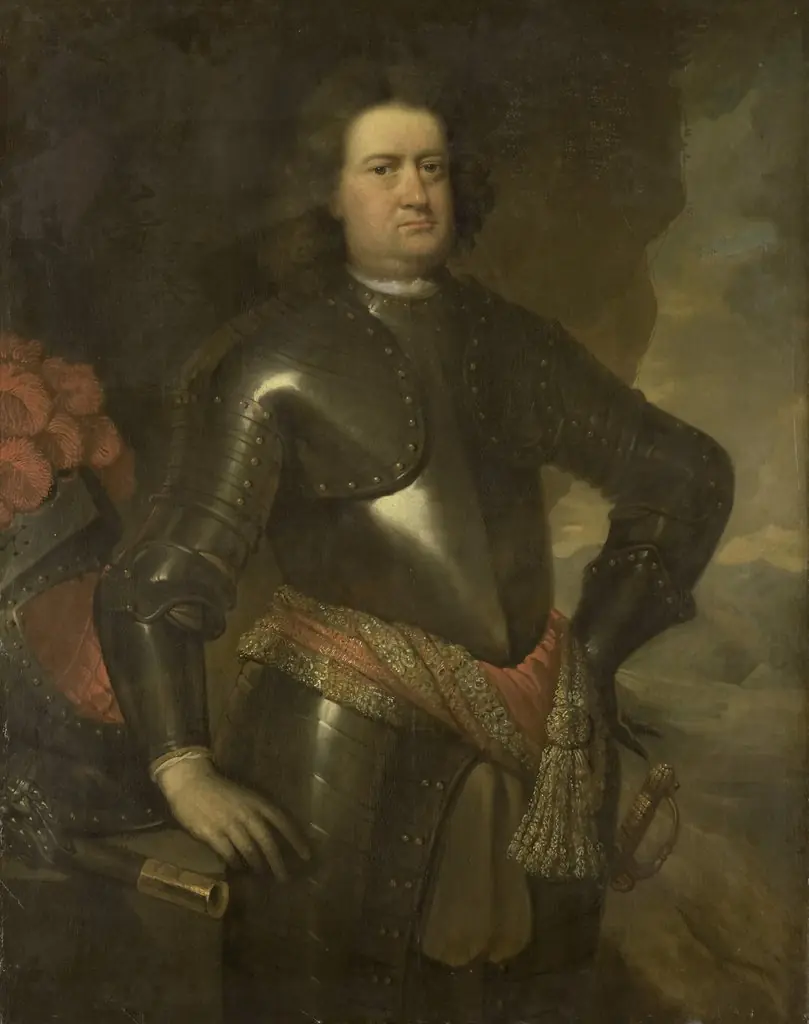 Portrait of an army officer
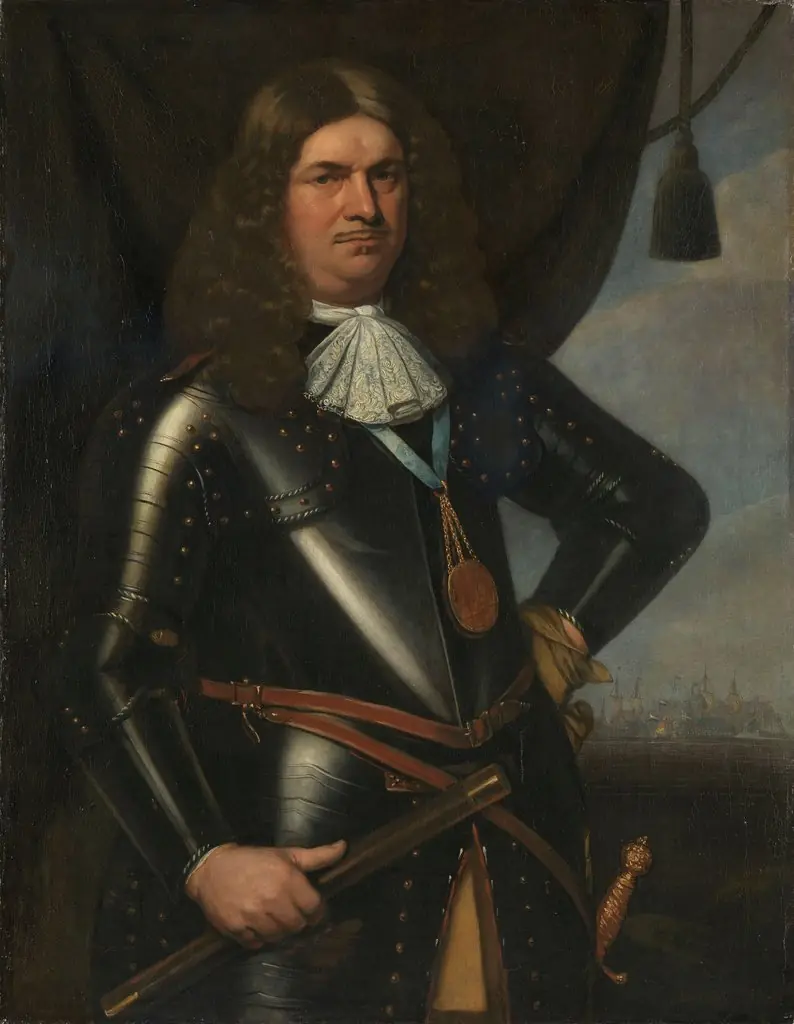 Adriaen Banckert (c 1620-1684), Vice Admiral of Zeeland
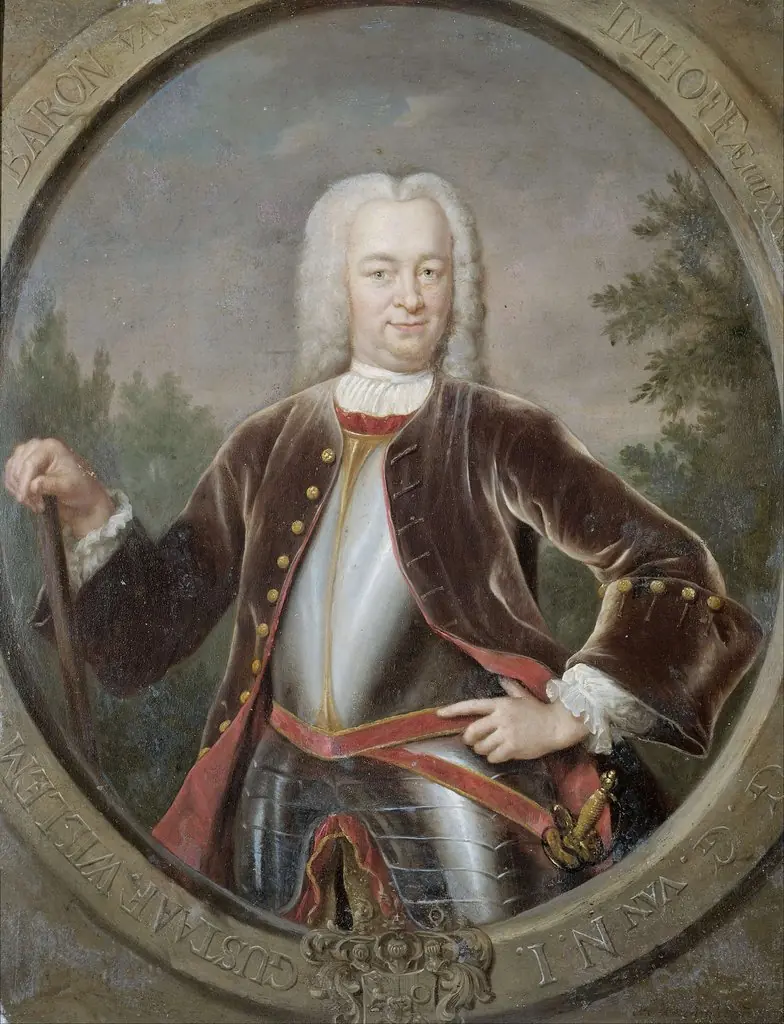 Portrait of Gustaaf Willem, Baron van Imhoff, Governor-General of the Dutch East India Company
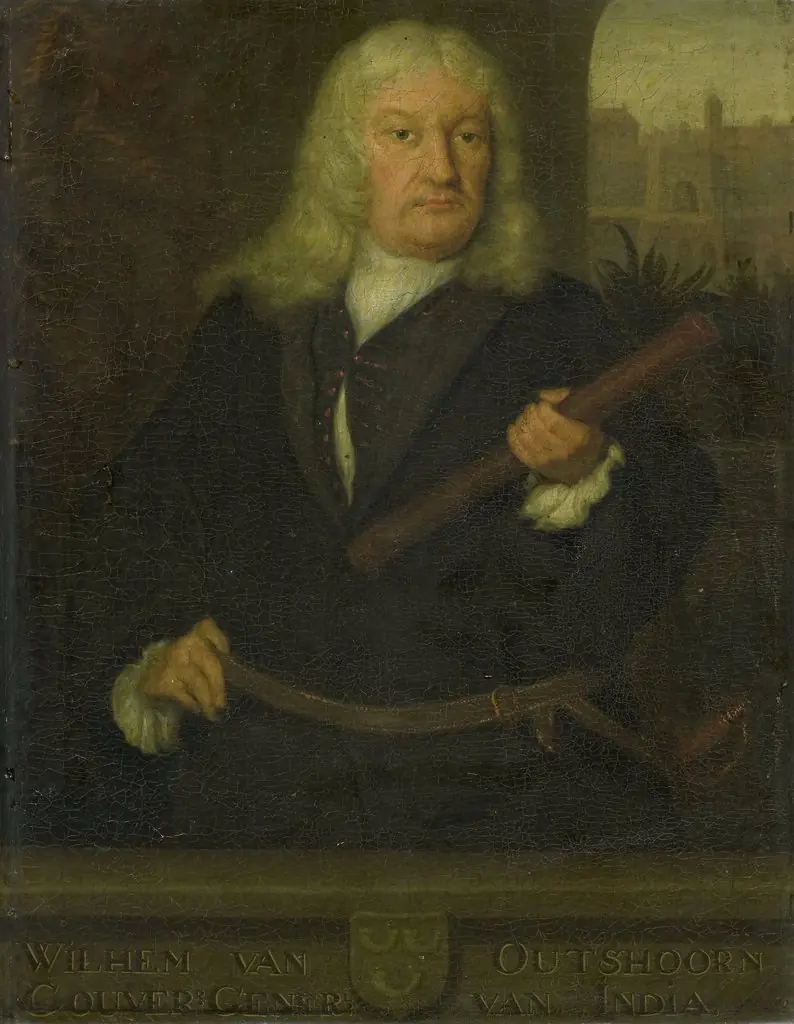 Portrait of Willem van Outhoorn, Governor General of the Dutch East Indies
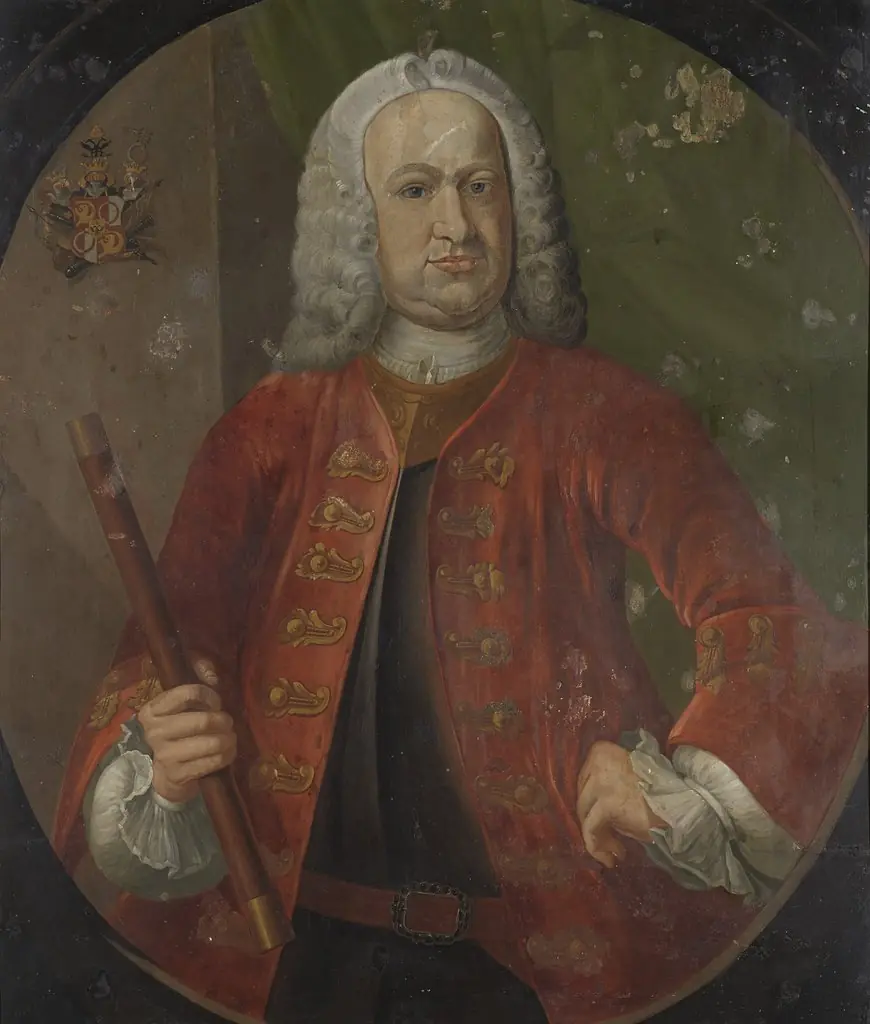 Portrait of Gustaaf Willem, Baron van Imhoff, Governor-General of the Dutch East India Company