Artwork
Two tax collectors (partial copy)
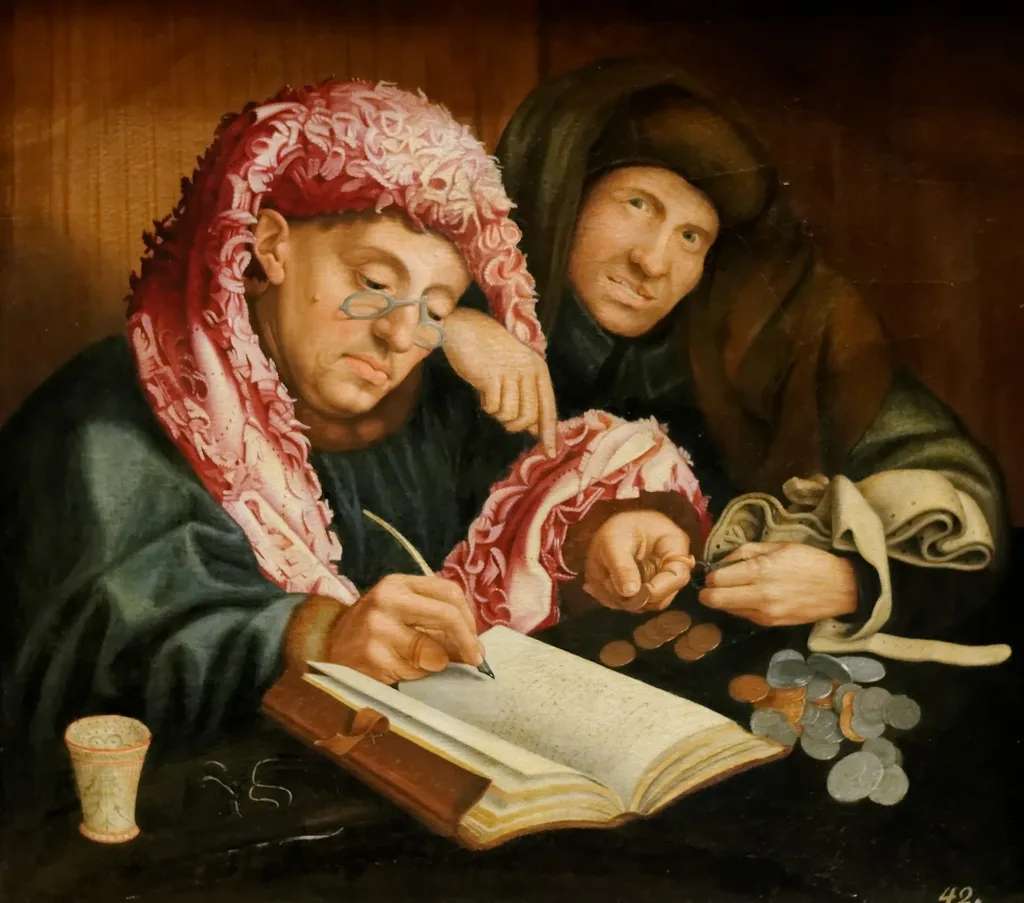
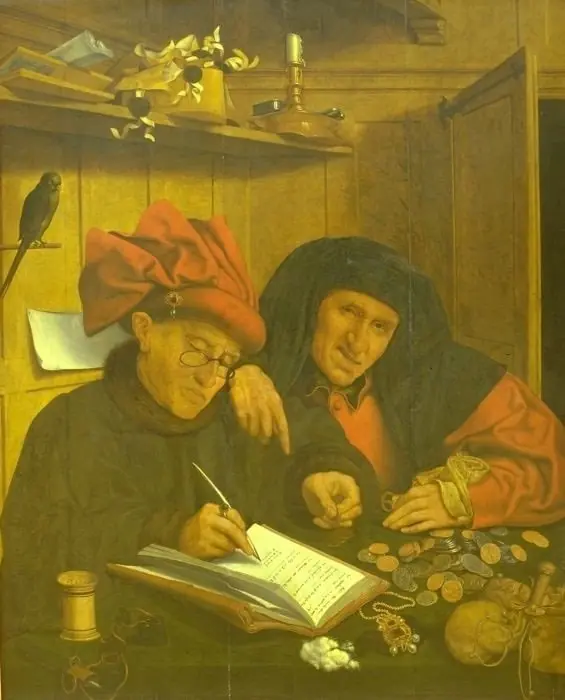
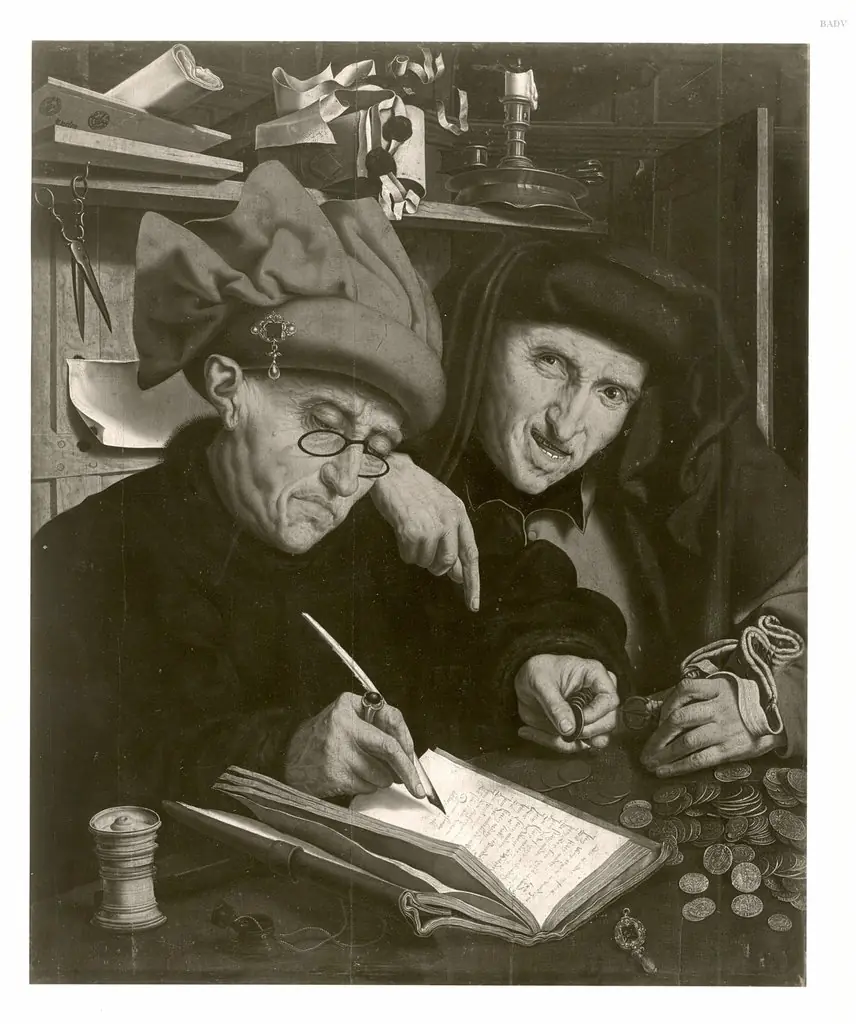
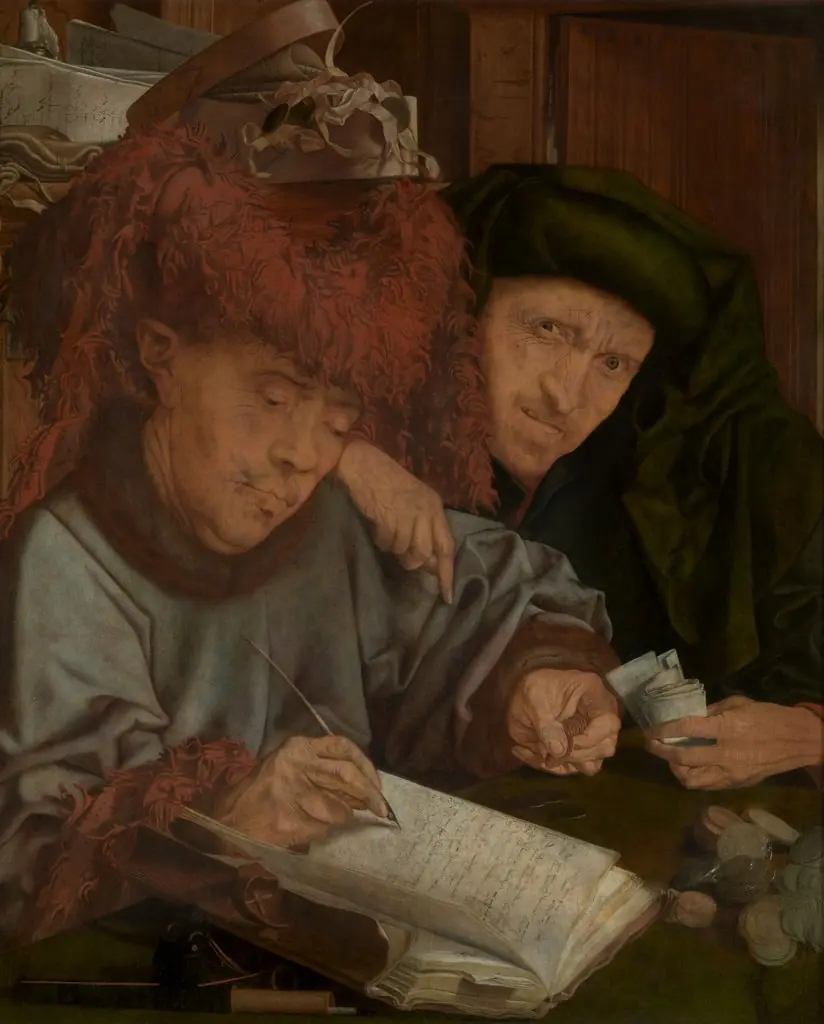
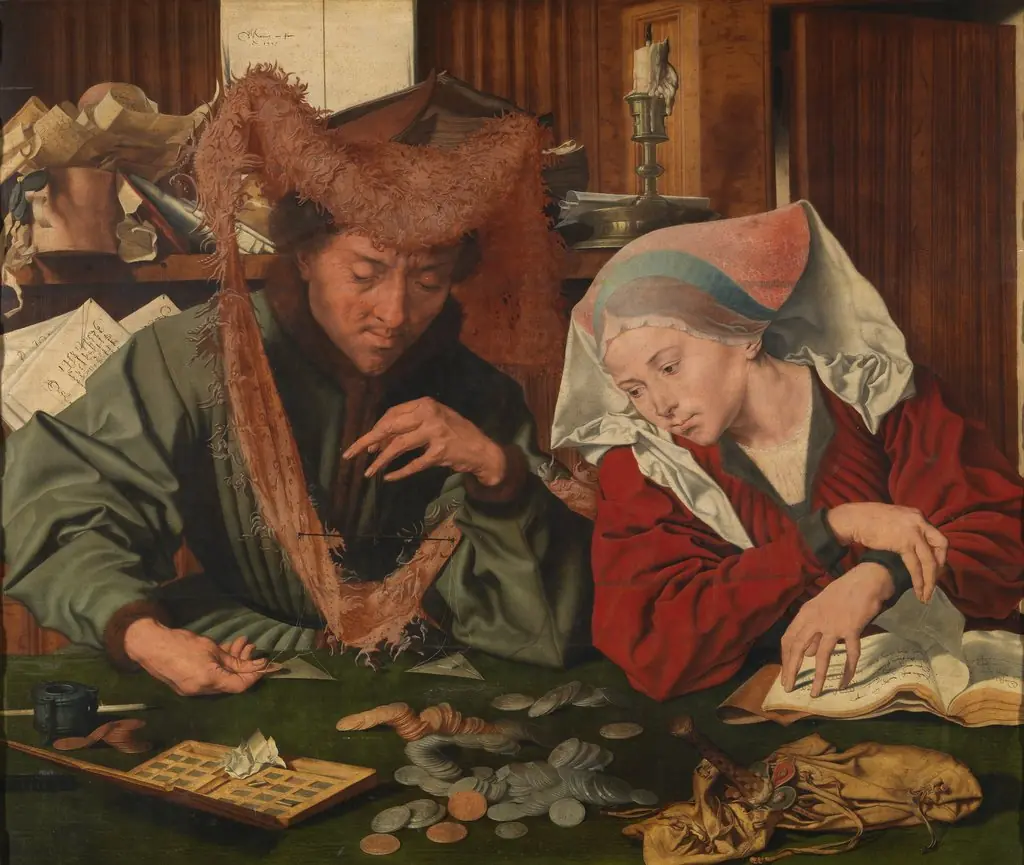
Two tax collectors (partial copy) is an oil painting. It dates from 1550 and is held in the collection of the Kunsthistorisches Museum. The canvas presents a modest interior where two figures are seated at a wooden table.
About this work
Overview
One individual, distinguished by a vivid red cap and spectacles, is engrossed in writing within a ledger, while scattered coins surround him.
The canvas presents a modest interior where two figures are seated at a wooden table. One individual, distinguished by a vivid red cap and spectacles, is engrossed in writing within a ledger, while scattered coins surround him. The second figure, dressed in darker attire, leans forward holding a small pouch, suggesting a transaction or exchange. A simple clay cup rests near the table's edge, and the backdrop remains unadorned and shadowy.
Subject & Meaning
The composition appears to depict a fiscal scene, likely involving tax collection or monetary accounting. The presence of a ledger, overflowing coins, and a pouch implies the recording and handling of public dues. By focusing on the meticulous act of tallying, the work reflects themes of civic duty, economic responsibility, and the everyday labor associated with state revenue in a period when such duties were visually codified.
Technique & Style
The artist employs chiaroscuro to separate the figures from the darkened background, allowing facial features and objects to emerge with clarity. Light falls on the ledger and coins, accentuating their texture, while the red hat catches the eye, creating a focal point. The brushwork is restrained, favoring smooth surfaces for the table and objects, contrasted with softer modeling of the men's faces, underscoring the narrative through visual contrast.
Context
Works that portray clerks, tax collectors, or accountants were common in periods when civic administration was a prominent subject in visual art. By situating the scene in a plain interior, the painting aligns with a tradition of genre scenes that emphasize occupational tasks over elaborate settings, offering insight into the socioeconomic structures of its time.
Artist & collection