Artwork
Madonna on a Crescent Moon in Hortus Conclusus
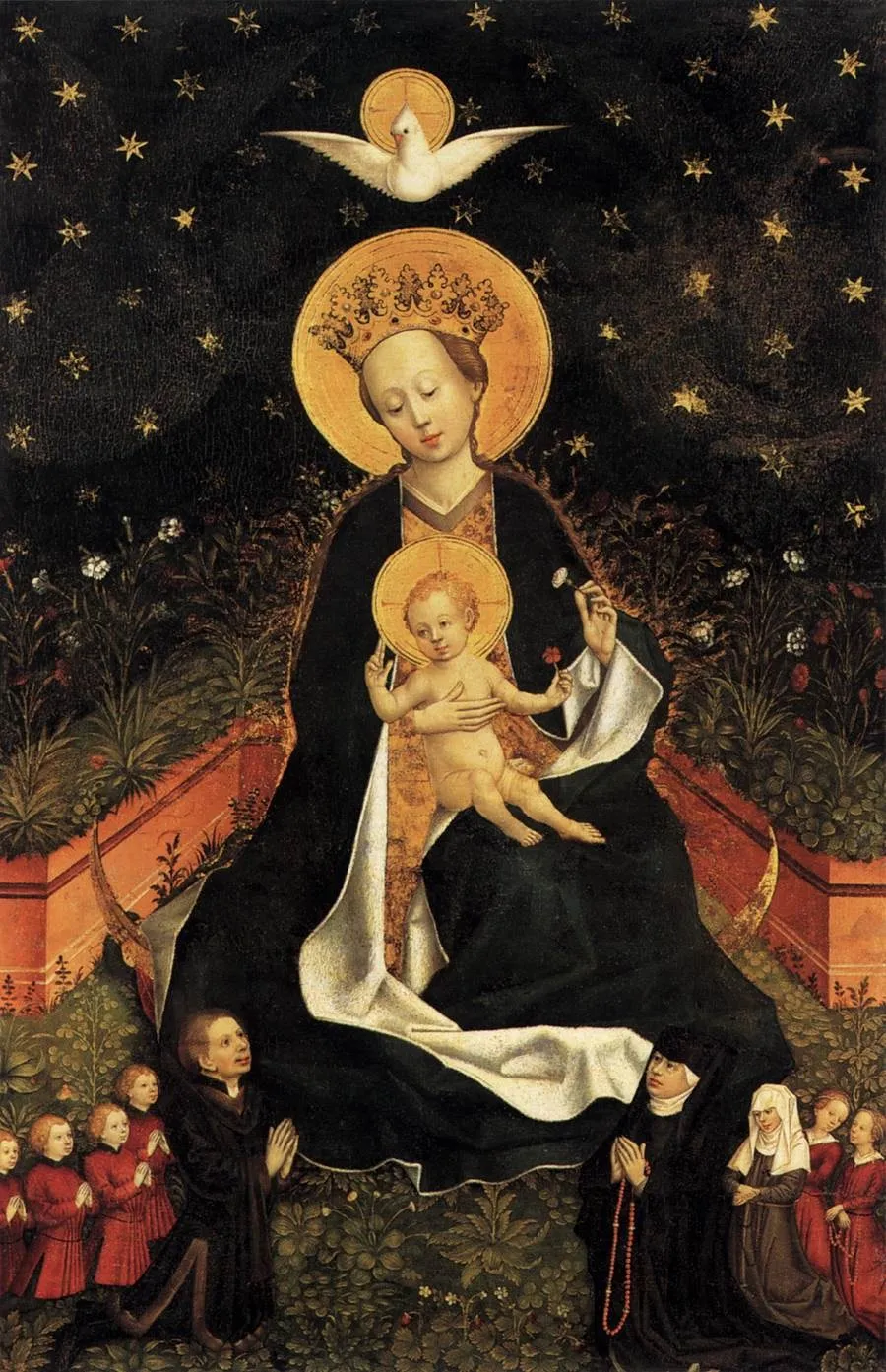
Madonna on a Crescent Moon in Hortus Conclusus is a paint painting. It dates from 1450 and is held in the collection of the Gemäldegalerie Berlin.
About this work
This painting is called Madonna on a Crescent Moon in Hortus Conclusus. It was made in 1450.
The painting is held by the Gemäldegalerie Berlin. It's also known for being created by an unknown artist, referred to as the Master of 1456.
To learn more about the style and techniques used in this painting, look up the technique of sfumato.
Overview
Created in the mid‑15th century, this oak‑panel painting depicts the Virgin Mary seated upon a crescent moon within an enclosed garden, a visual metaphor drawn from medieval symbolism. The work is attributed to an anonymous figure known to scholars as the Master of 1456 and is part of the collection of the Gemäldegalerie in Berlin.
Subject & Meaning
The composition combines two longstanding iconographic elements: the Virgin as the focal figure of devotion and the hortus conclusus, a Latin term for ‘enclosed garden’ that traditionally represents Mary’s purity and virginity. The crescent moon beneath her adds a celestial dimension, linking the earthly setting to heavenly realms.
Technique & Style
Executed on oak wood, the painting employs the delicate gradations of tone associated with the sfumato technique, allowing forms to emerge softly from the background. The handling of light and shadow creates a gentle atmospheric effect typical of Northern European art of the period.
History & Provenance
The piece dates to the 1450s and has long been ascribed to the enigmatic Master of 1456, a name given to an otherwise unidentified workshop active in the mid‑15th century. It entered the Gemäldegalerie’s holdings in Berlin, where it remains on display as part of the museum’s medieval collection.
Artist & collection
