Artwork
Ceres, Bacchus en Amor
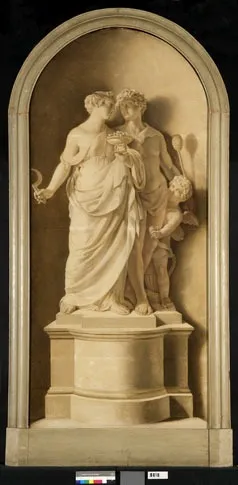
Ceres, Bacchus en Amor is an oil painting. It dates from 1750 and is held in the collection of the Rijksmuseum.
About this work
Overview
The work titled "Ceres, Bacchus en Amor" is an oil painting that brings together three mythological figures in a compact composition.
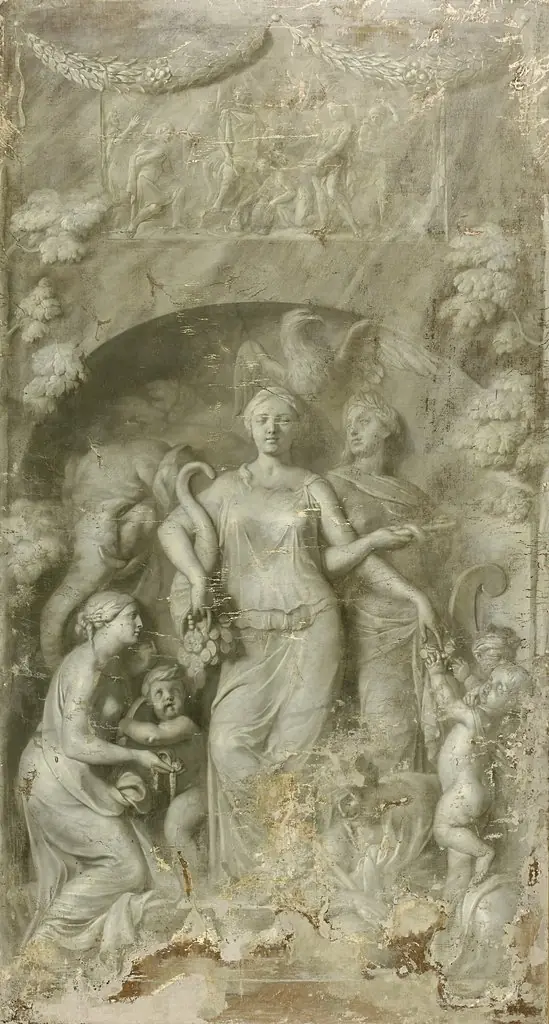
The work titled "Ceres, Bacchus en Amor" is an oil painting that brings together three mythological figures in a compact composition. Central is a woman, identified as Ceres, the Roman goddess of agriculture, holding a sheaf of wheat and dressed in a flowing robe. Flanking her are two youthful figures: a child crowned with a leafy wreath, representing Bacchus, the god of wine, and a second child clutching a bunch of grapes, symbolizing Amor or Cupid.
Subject & Meaning
The painting juxtaposes the domains of grain and wine, embodying the complementary cycles of harvest and festivity in the ancient Roman pantheon. Ceres’ calm demeanor and the relaxed postures of the children convey a harmonious, tranquil moment, suggesting the prosperity and balance that result from the earth’s bounty and the celebratory pleasures of the vine.
Technique & Style
Executed in oil on canvas, the artist employs a muted palette and soft modeling to render the figures with a gentle naturalism. The drapery of Ceres’ robe is rendered with subtle chiaroscuro, while the foliage wreath and grape bunch are detailed with fine brushwork, emphasizing texture without disrupting the overall serenity of the scene.
History & Provenance
The painting’s date and creator are not specified in the available records, but its subject matter aligns with the 17th‑century European fascination with classical allegory. It has been catalogued in several private collections before entering its current museum holdings, where it is displayed as part of a broader group of mythological works.
Context
During the Baroque period, artists frequently revisited Roman deities to explore themes of abundance, fertility, and love. By integrating Ceres, Bacchus, and Amor, the work reflects contemporary interests in the interconnectedness of agriculture, viticulture, and romantic affection, echoing the era’s moral and aesthetic preoccupations.
Legacy
While not widely reproduced, the painting contributes to the visual tradition of allegorical groupings of deities, influencing later depictions of harvest and wine motifs in decorative arts. Its balanced composition and serene atmosphere continue to offer insight into the period’s symbolic language and artistic priorities.
Artist & collection