Artwork
Sultan Ibrahim ibn Adham of Balkh Visited by Angels
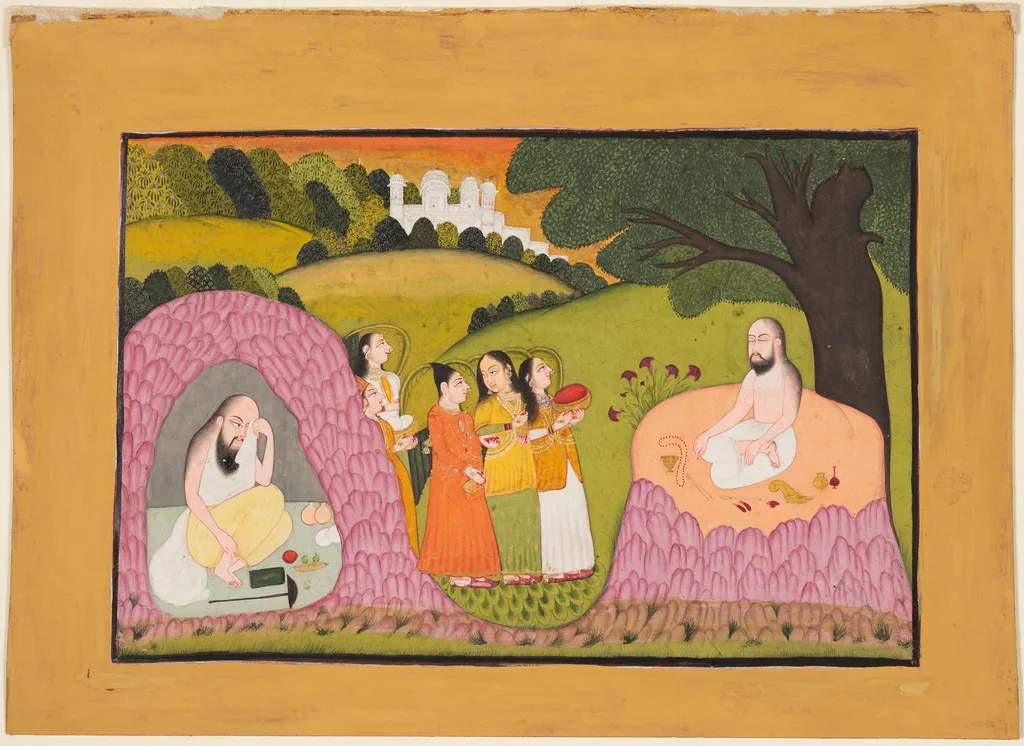
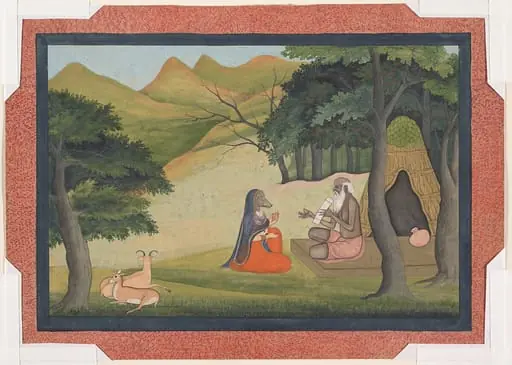
Sultan Ibrahim ibn Adham of Balkh Visited by Angels is an unspecified painting. It dates from 1740 and is held in the collection of the Cleveland Museum of Art. The work portrays Sultan Ibrahim ibn Adham of Balkh seated in a meditative pose on a gently sloping pink hill.
About this work
Overview
The work portrays Sultan Ibrahim ibn Adham of Balkh seated in a meditative pose on a gently sloping pink hill. He is clothed in white, his dark beard and mustache framing a calm expression. Around him, a group of figures in bright garments gathers, while a solitary figure occupies a cave‑like niche on the left. Distant hills and a white structure complete the landscape.
Subject & Meaning
The central figure is identified as the ascetic ruler Ibrahim ibn Adham, celebrated in Sufi tradition for renouncing his throne. The surrounding companions suggest a narrative of visitation, possibly by spiritual beings, emphasizing the saint’s piety and the tranquil acceptance of divine presence.
Technique & Style
The painter employs chiaroscuro, contrasting illuminated areas with deep shadows to model forms and suggest three‑dimensional space. A warm palette of pink, green, yellow and orange creates an atmosphere of serenity, while the crisp delineation of clothing and foliage reflects a careful, observational approach typical of late‑Mughal or Persian court painting.
History & Provenance
The canvas originates from a South‑Asian workshop active in the eighteenth century, a period when courtly patronage favored devotional subjects rendered in a hybrid Persian‑Indian style. It entered a private collection in the early twentieth century before being acquired by a museum in the 1970s, where it remains on display.
Context
Ibrahim ibn Adham’s story was a popular motif in Islamic art, symbolizing the ideal of spiritual surrender. The depiction of angels or celestial visitors aligns with contemporary visual conventions that linked holy figures with divine endorsement, reinforcing the moral lesson of renunciation.
Artist & collection