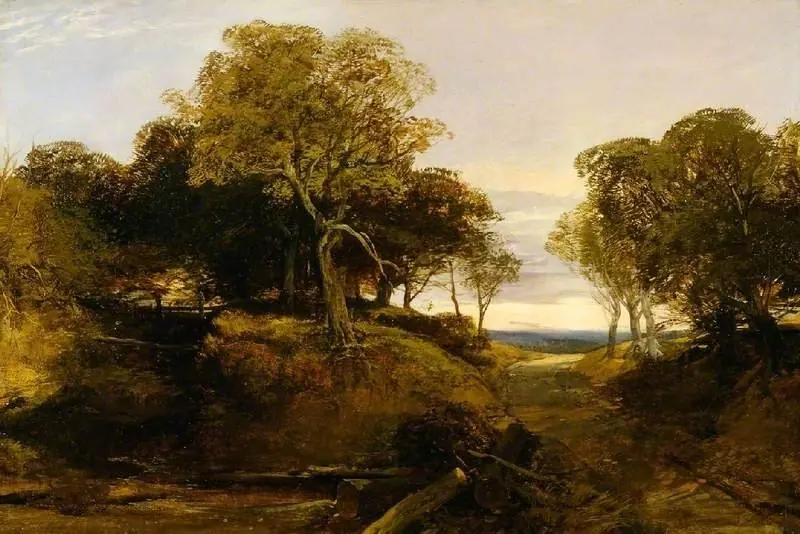
Artwork
Noon (Hampstead Heath)
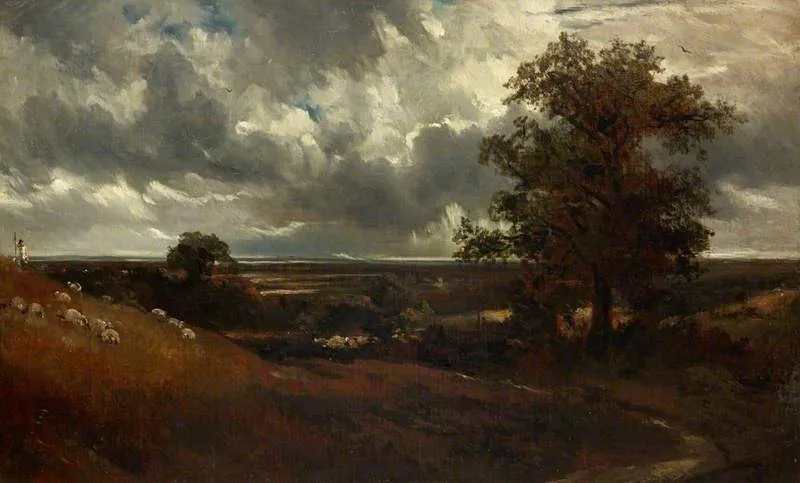
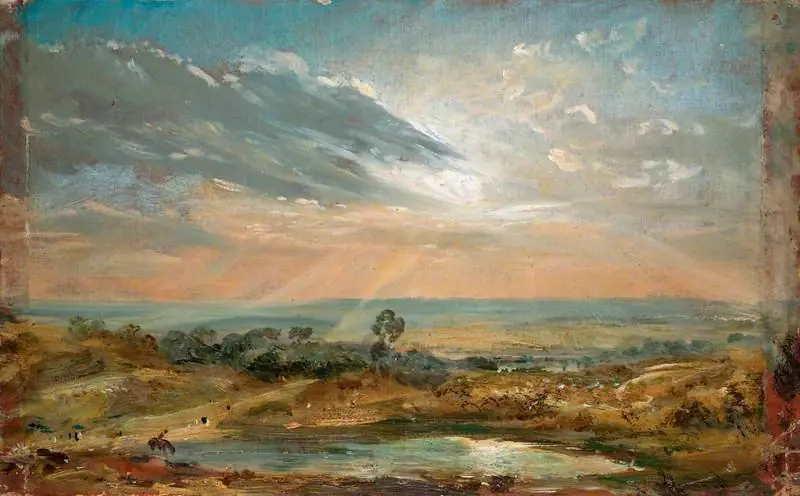
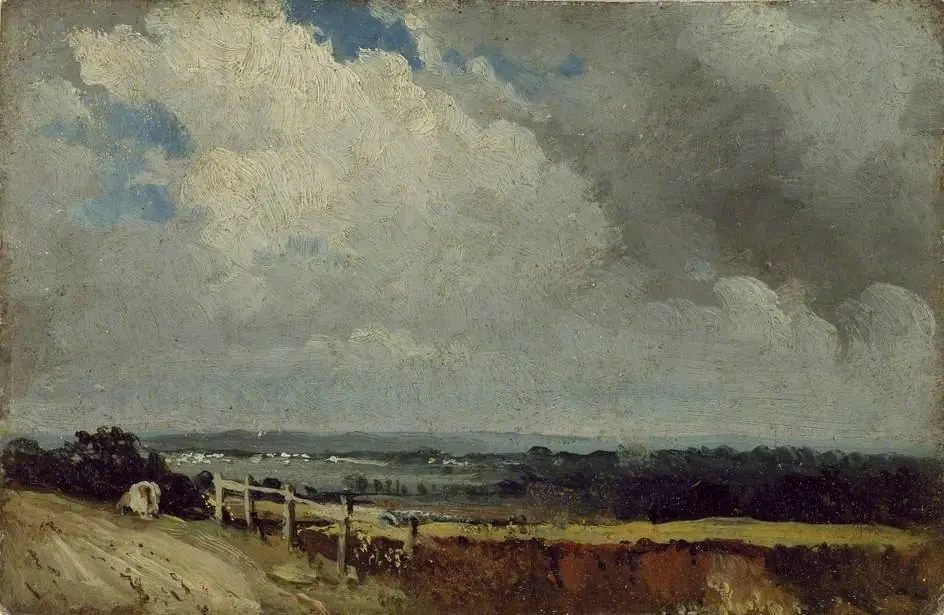
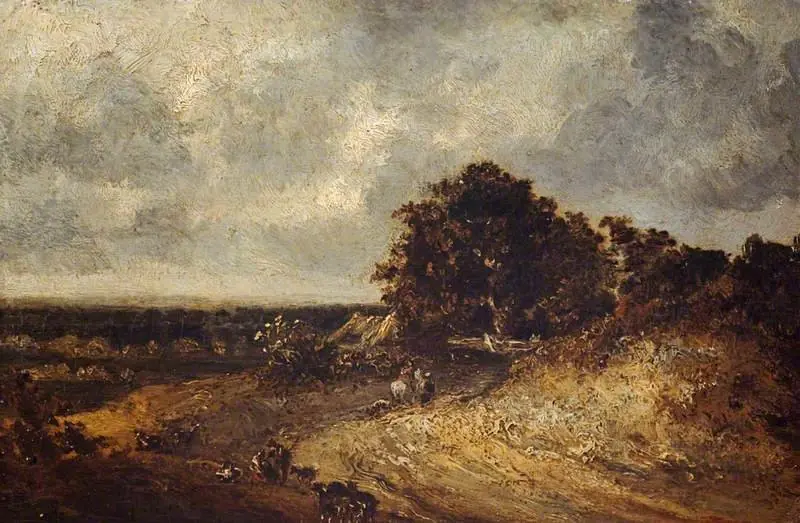
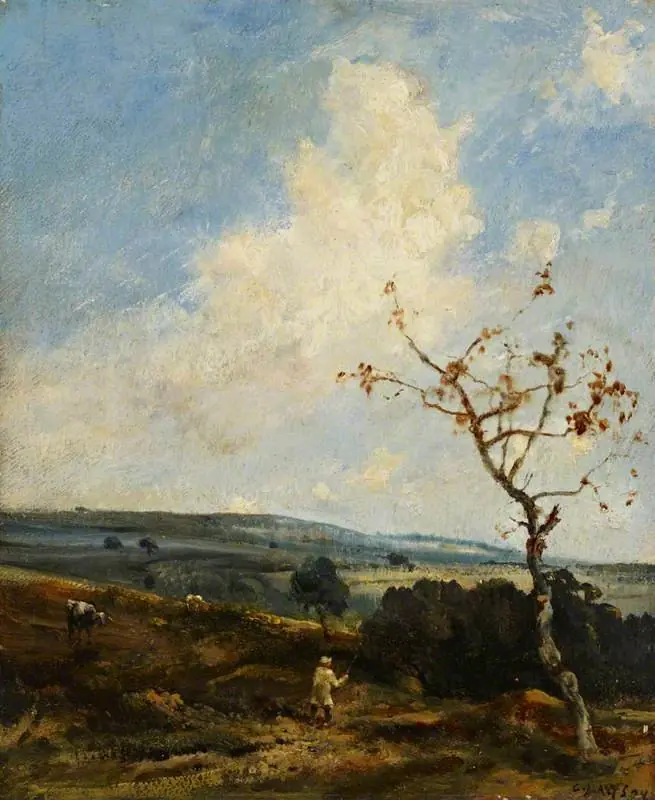
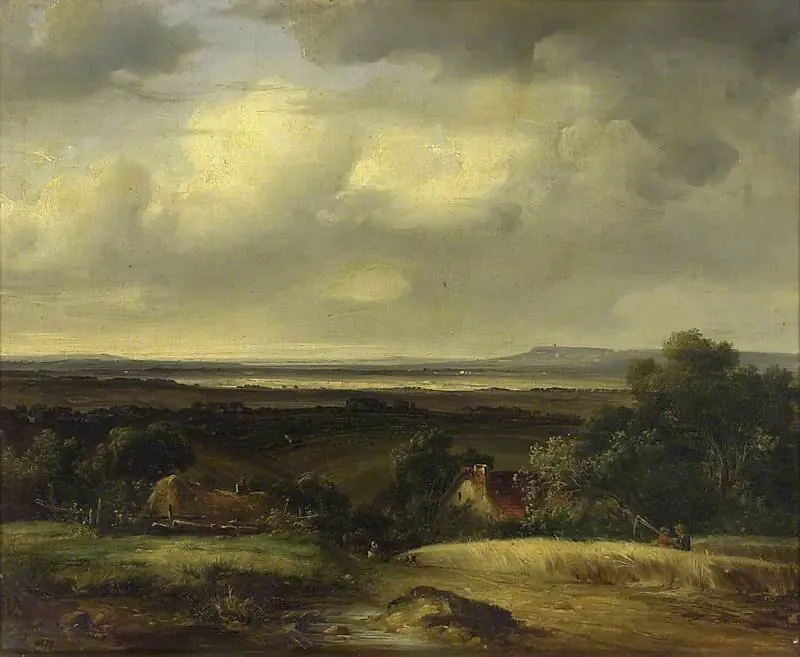
Noon (Hampstead Heath) is an oil painting by the British Romanticist artist Unknown. It dates from 1845 and is held in the collection of the National Galleries Scotland. Painted in oil on canvas, this landscape captures a quiet moment on Hampstead Heath during midday.
About this work
Overview
The muted tones and deliberate pacing of the scene evoke a meditative atmosphere, free from dramatic tension or narrative urgency.
Painted in oil on canvas, this landscape captures a quiet moment on Hampstead Heath during midday. The composition emphasizes open space and stillness, with sparse trees and distant sheep suggesting human absence. A heavy, overcast sky dominates the upper half, diffusing natural light evenly across the ground. The muted tones and deliberate pacing of the scene evoke a meditative atmosphere, free from dramatic tension or narrative urgency.
Subject & Meaning
The scene presents no human figures, focusing instead on the quiet rhythms of nature: grazing sheep, wind-swept grass, and shifting cloud cover. The absence of activity invites reflection rather than storytelling. The painting suggests a reverence for ordinary landscapes, elevating a common English heath into a space of contemplative solitude, where time feels suspended and the elements hold quiet authority.
Technique & Style
Brushwork is assertive yet controlled, with thick applications of paint building texture in the grass and cloud masses. The palette relies on soft grays, pale greens, and muted browns, avoiding vivid contrasts. Light is rendered not through sharp highlights but through tonal gradations, creating a hazy, atmospheric effect. The technique prioritizes emotional resonance over topographical precision, aligning with a lyrical approach to landscape.
History & Provenance
The painting is held in the collection of the Scottish National Gallery, having entered the institution through documented acquisition. It was produced during a period when the artist frequently worked outdoors on Hampstead Heath, a popular site for landscape studies in the late 19th century. No significant alterations or restorations are recorded, and its condition remains consistent with its original execution.
Context
Created in the late 1800s, the work reflects a broader trend among British artists to depict rural scenes with emotional nuance rather than idealized beauty. While contemporaries pursued romanticized or picturesque views, this painter favored understated, unembellished moments. The subdued palette and lack of human presence align with emerging sensibilities that valued introspection over spectacle in landscape art.
Legacy
Though not widely exhibited outside institutional collections, the painting contributes to a quieter lineage of British landscape painting that values mood over monumentality. Its influence is seen in later artists who sought to convey the psychological weight of everyday nature. It remains a quiet reference point in discussions of late-Victorian tonalism and the emotional potential of overcast skies.
Artist & collection

 Domestic Scene
 Giacomo and Cardinal Marco, investing Andrea, Abbot of San Zeno, with his Benefice
 The Nymph of Fontainebleau
 Portrait of a Woman
 Madonna and Child with Saints in the Enclosed Garden
 Venus and Minerva
 Family Group of Four on Sofa
 Wall painting from Room H of the Villa of P. Fannius Synistor at Boscoreale