Artwork
Virgin and Child, with Saint Dorothy
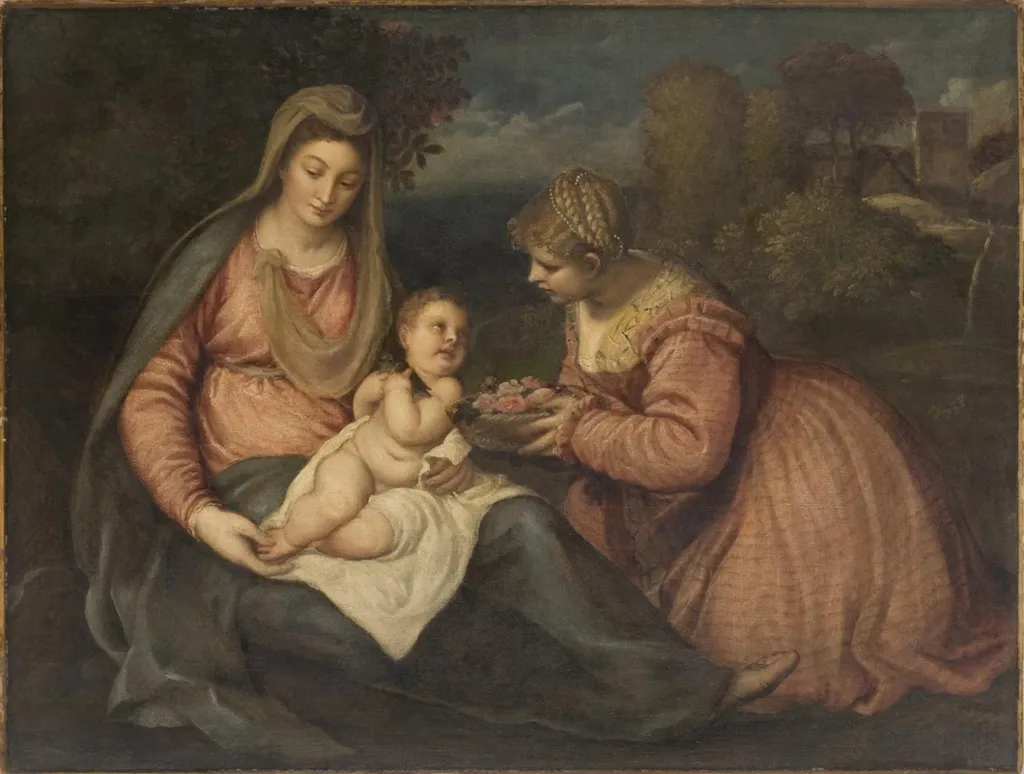
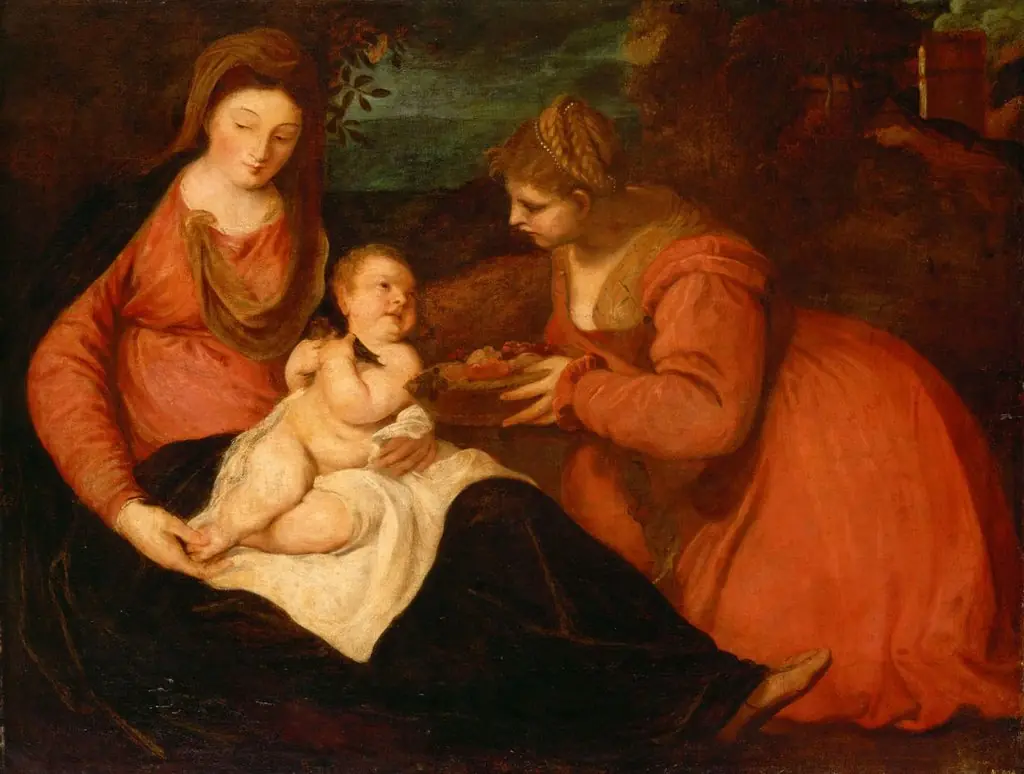
Virgin and Child, with Saint Dorothy is an oil painting by the Mannerist artist Titian. It dates from 1535 and is held in the collection of the Philadelphia Museum of Art.
About this work
Overview
Painted in 1535 by Titian, this oil work presents a devotional scene centered on the Virgin Mary, the Christ Child, and Saint Dorothy.
Painted in 1535 by Titian, this oil work presents a devotional scene centered on the Virgin Mary, the Christ Child, and Saint Dorothy. Executed in the Venetian Renaissance tradition, it reflects the artist’s refined command of color and spatial harmony. The composition follows the sacra conversazione format, uniting sacred figures in a quiet, intimate moment. It is now part of the Philadelphia Museum of Art’s permanent collection.
Subject & Meaning
The Virgin Mary, seated with the Christ Child on her lap, embodies maternal tenderness and divine grace. Saint Dorothy, kneeling beside them, offers a basket of flowers—a symbol of her martyrdom and heavenly reward. The grouping suggests spiritual communion, inviting contemplation rather than narrative action. The inclusion of Dorothy, less commonly depicted with the Holy Family, underscores personal or patronal devotion tied to her cult.
Technique & Style
Titian employs rich, layered pigments to achieve luminous skin tones and atmospheric depth. The pink and blue garments of the figures contrast subtly with the green landscape, enhancing spatial recession. Chiaroscuro models the forms with soft transitions, avoiding harsh shadows. The brushwork varies from smooth glazes in the faces to looser strokes in the foliage, revealing his evolving technique during this period.
History & Provenance
Commissioned likely for private devotion, the painting entered the Philadelphia Museum of Art’s collection in the early 20th century. Its earlier ownership is not fully documented, but its style and condition suggest it remained in private hands in Italy or the Veneto region before its modern acquisition. No major restorations are recorded, preserving much of Titian’s original surface.
Context
Created during Titian’s mature phase, the painting aligns with Venetian religious art’s shift toward emotional immediacy and sensory richness. While rooted in traditional iconography, its naturalistic setting and tender interactions reflect broader Renaissance interests in human experience. The inclusion of Saint Dorothy may reflect local devotional practices or the patron’s personal connection to the saint.
Legacy
Though not among Titian’s most widely reproduced works, it exemplifies his ability to infuse sacred subjects with psychological nuance and chromatic harmony. The painting contributes to understanding how Venetian artists adapted devotional themes for intimate settings, influencing later generations in both religious and portrait painting through its emphasis on quiet dignity and coloristic sensitivity.
Artist & collection
Artist
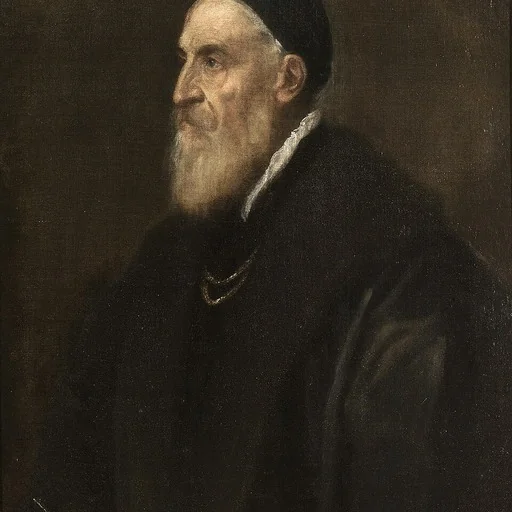
Tiziano Vecellio (Italian: ; c. 1488/1490 – 27 August 1576), Latinized as Titianus, hence known in English as Titian ( TISH-ən), was an Italian Renaissance painter. The most important artist of Renaissance Venetian…


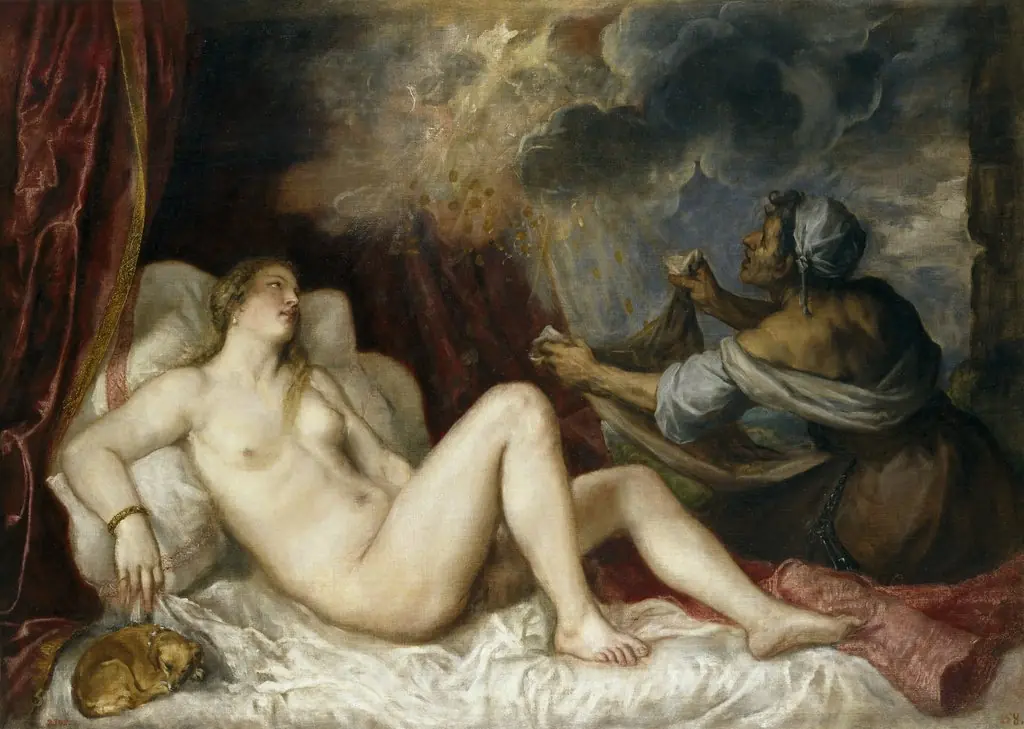
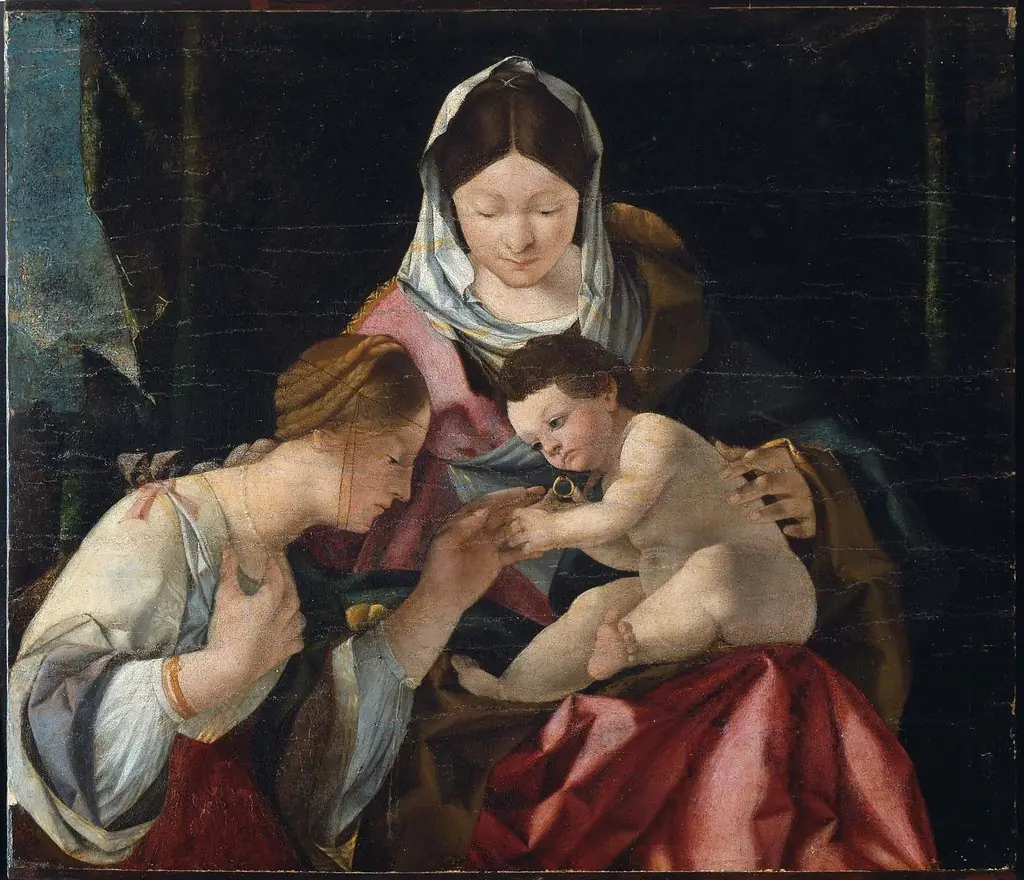 The Mystic Marriage of Saint Catherine
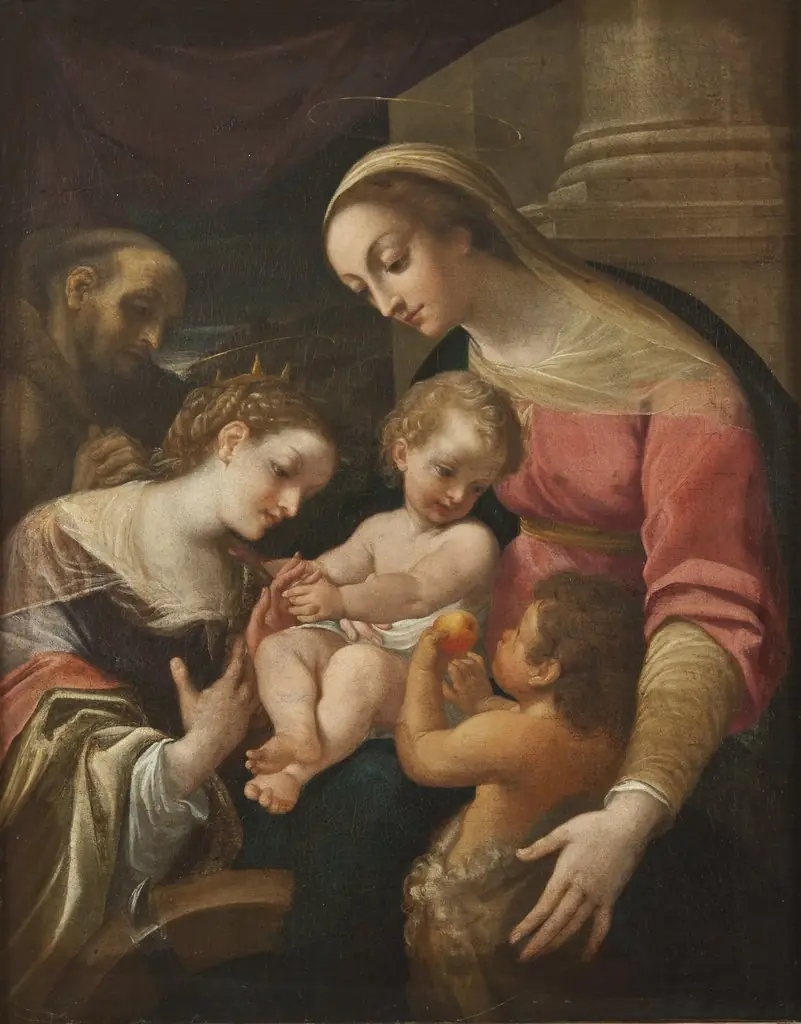 The Mystic Marriage of St Catherine
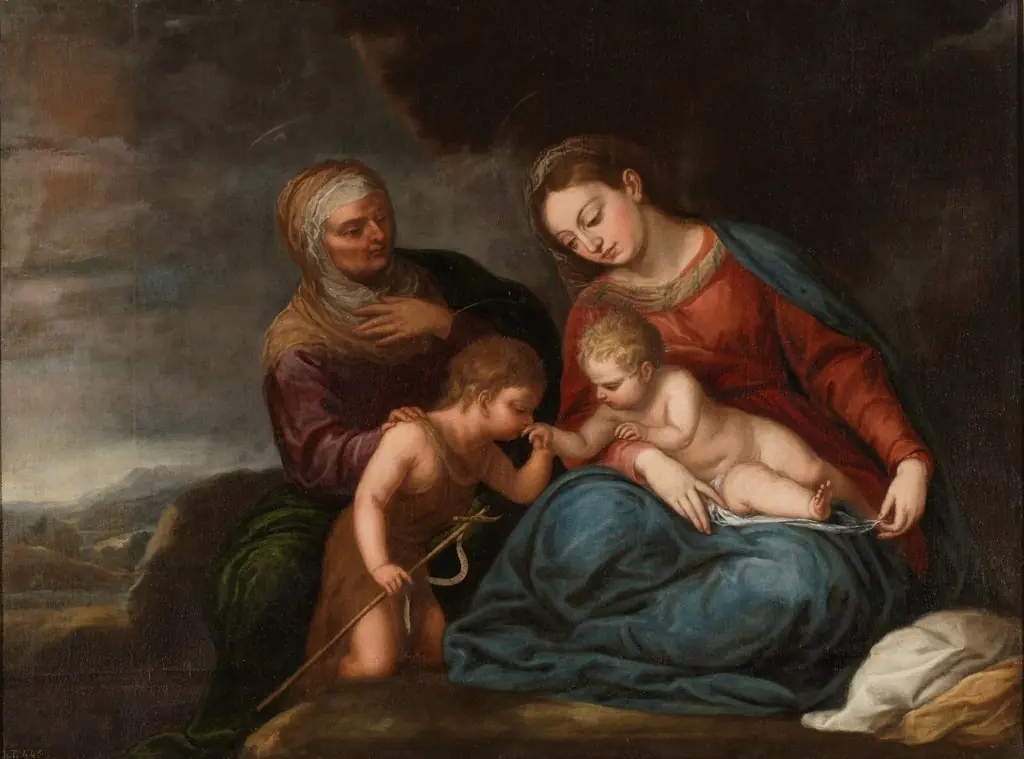 The Virgin and Child with Saints Elizabeth and John
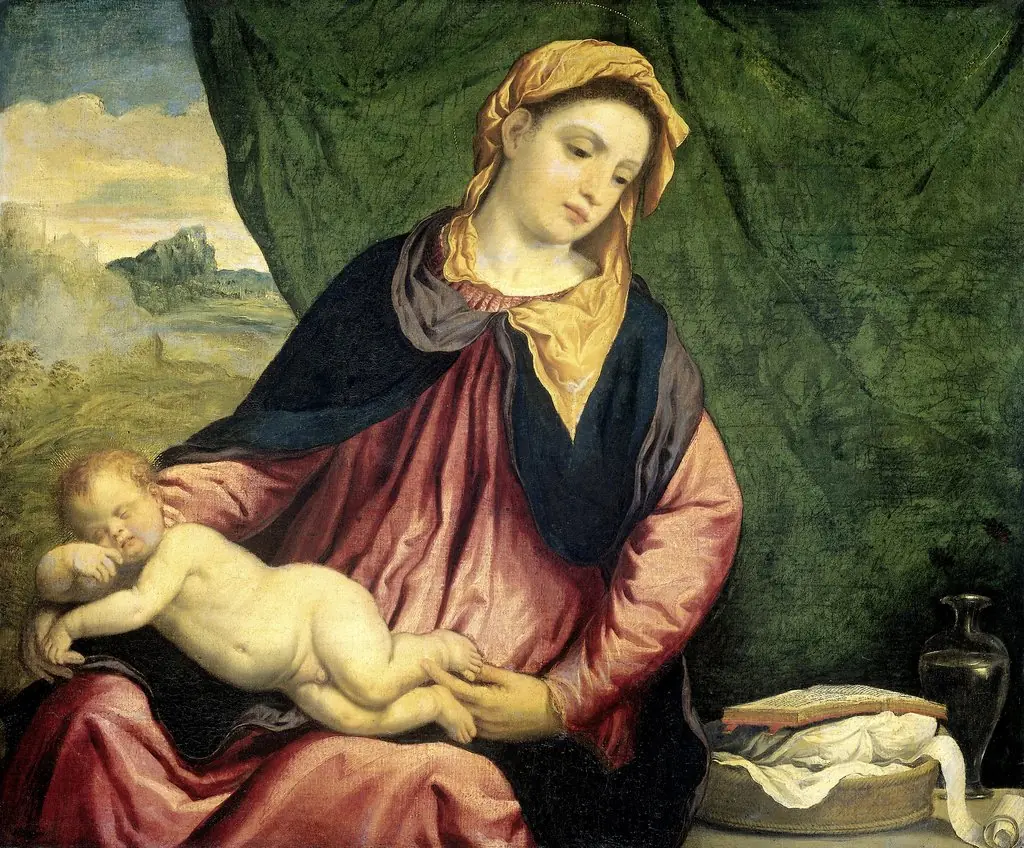 Madonna with Sleeping Child
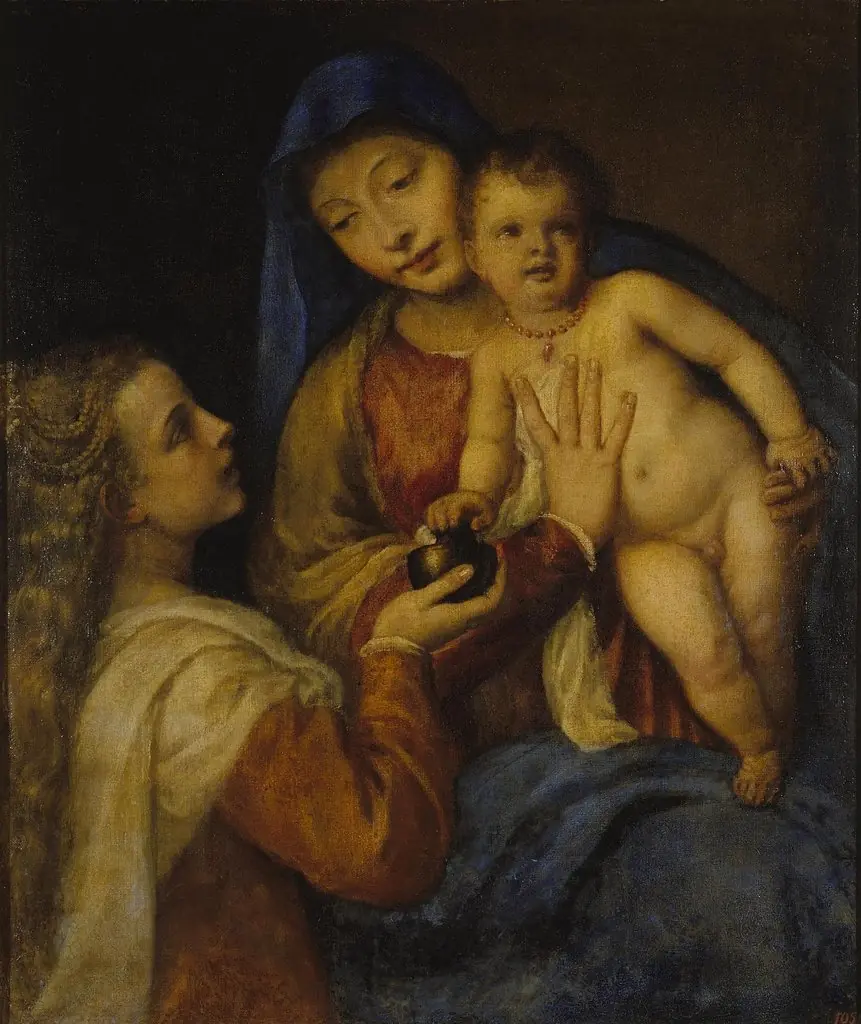 Madonna and Child with Mary Magdalene
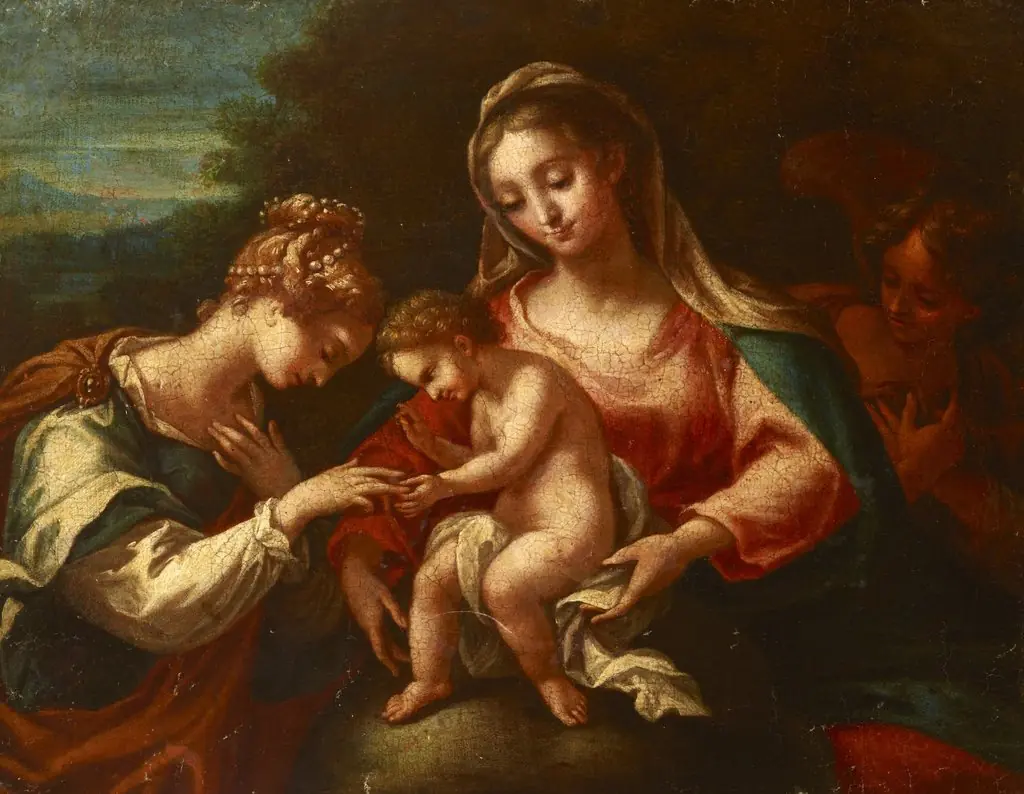 Mistic Marriage of Saint Catherine
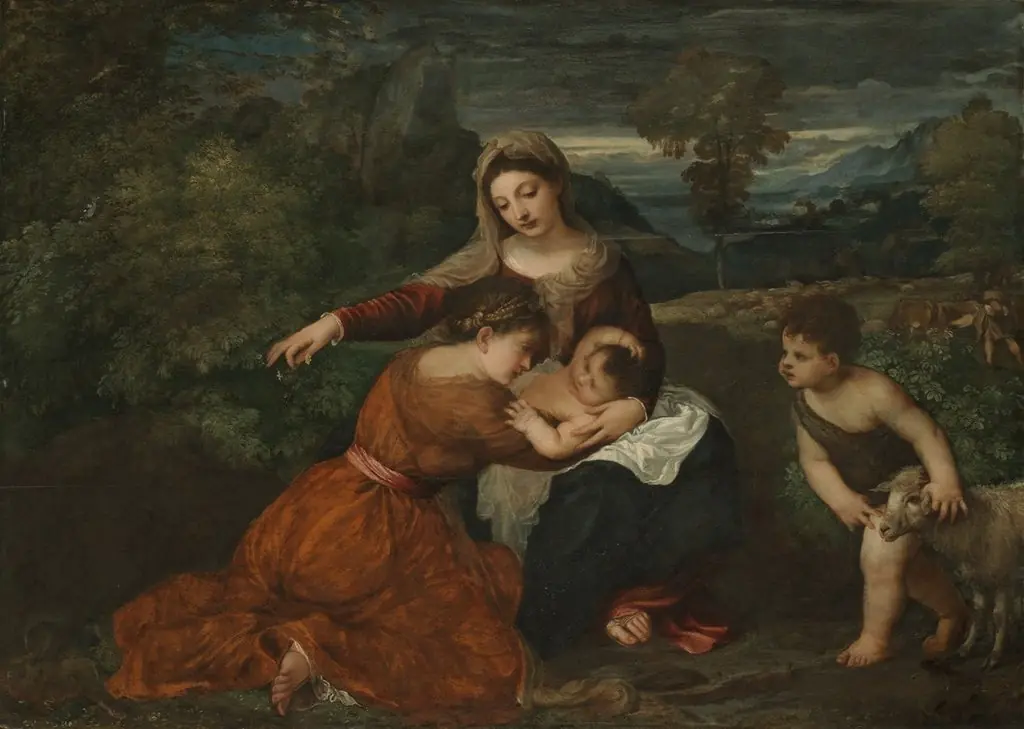 The Madonna and Child with a Female Saint and the Infant Saint John the Baptist
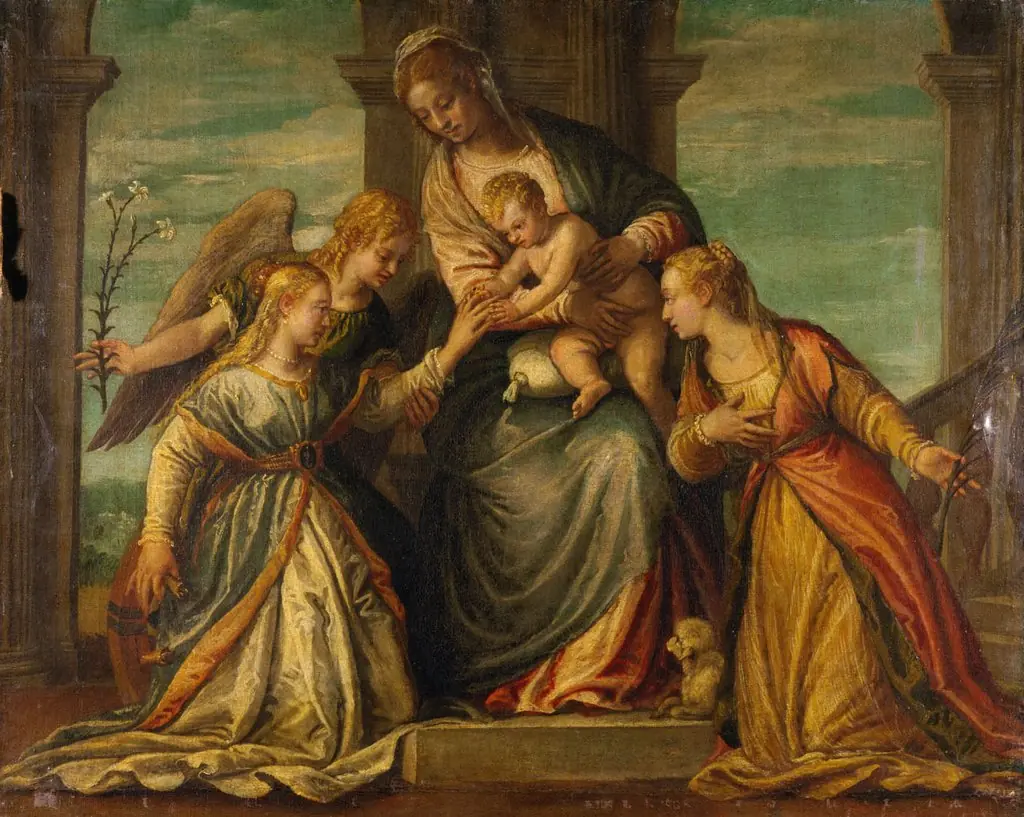 Mystic Marriage of St. Catherine
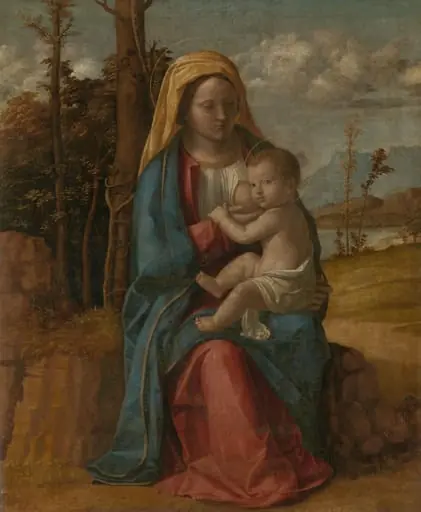 Madonna and Child
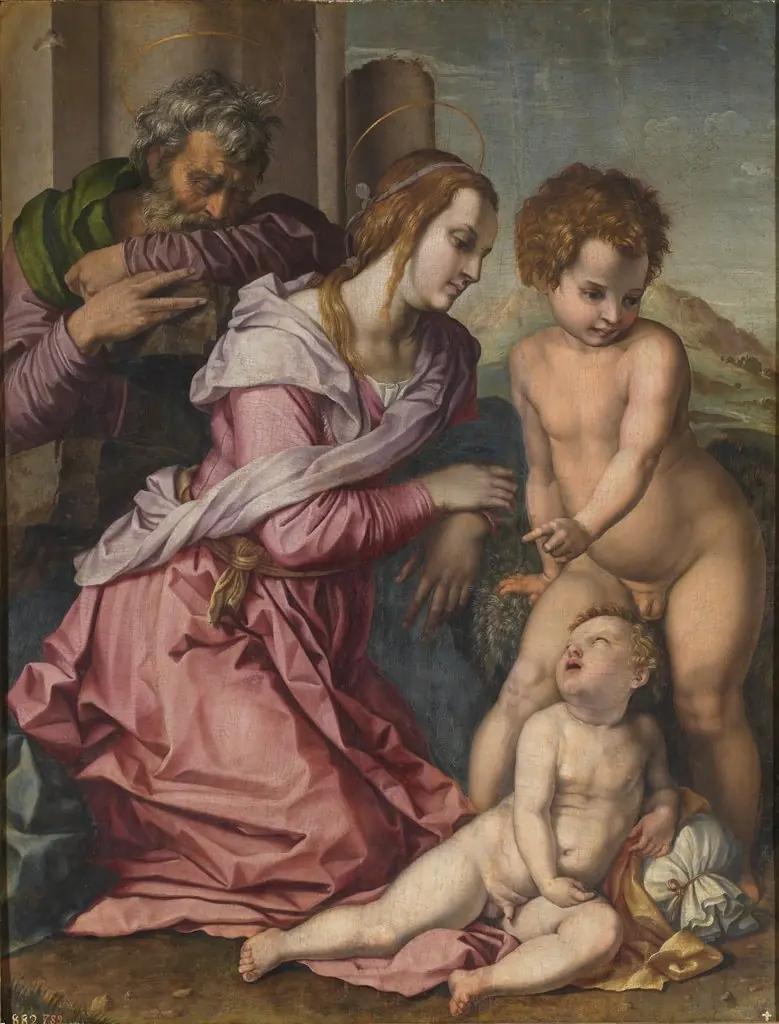 The Holy Family with the Infant Saint John the Baptist
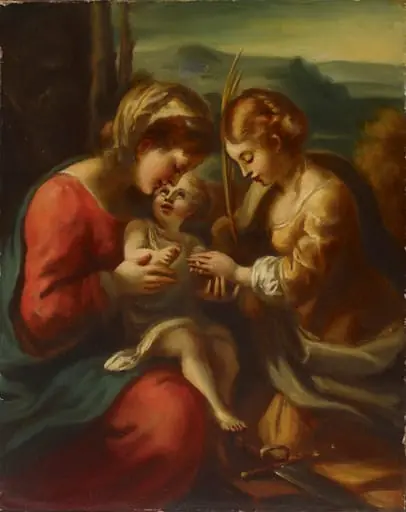 Pyhän Katariinan kihlaus
 Madonna and Child with Saint Dorothy