Artwork
Portrait of Frederik Hendrik van Oranje-Nassau (1584-1647)
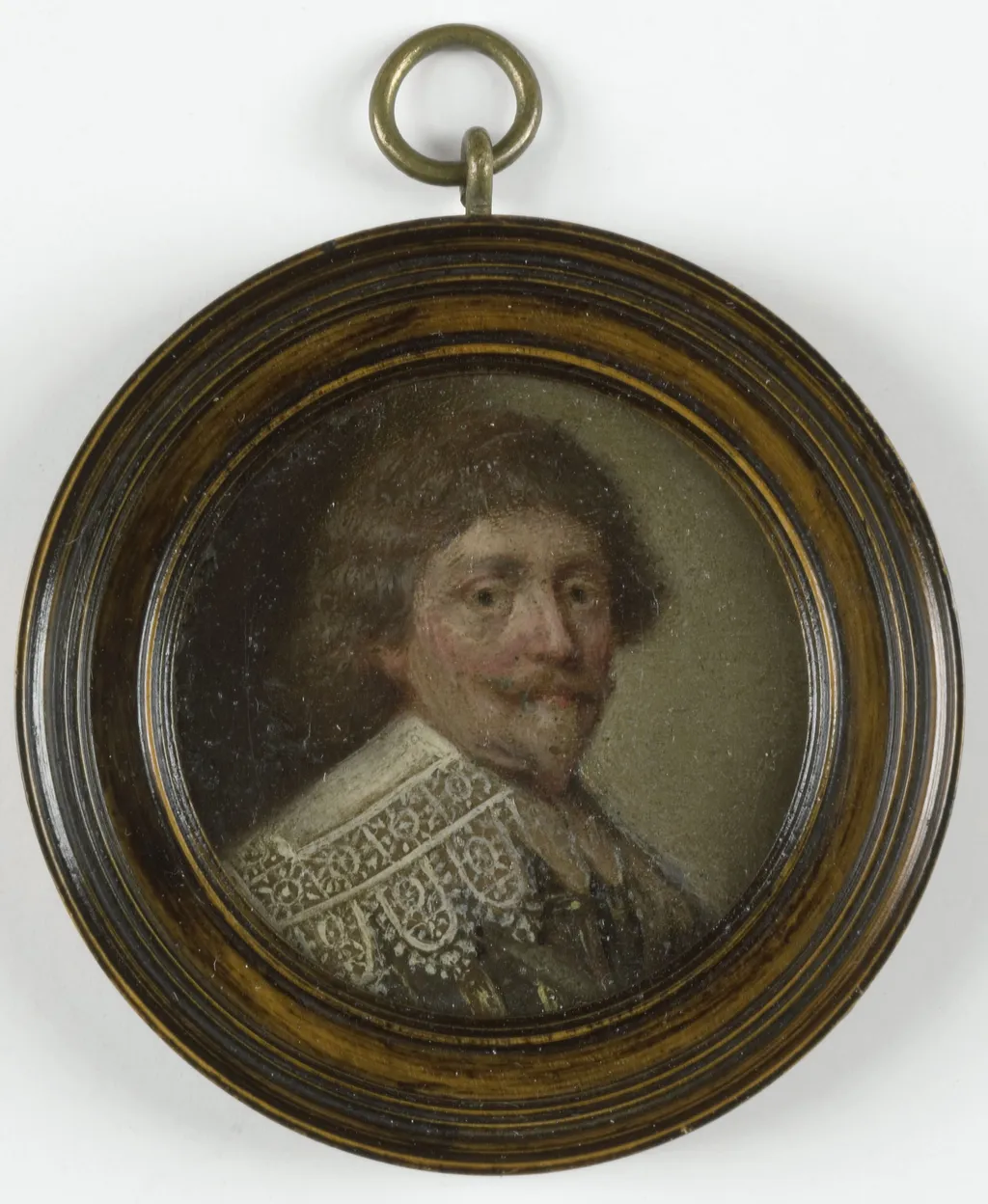
Portrait of Frederik Hendrik van Oranje-Nassau (1584-1647) is an oil painting by the Dutch Golden Age artist Unknown. It dates from 1635 and is held in the collection of the Rijksmuseum. The work is a small, circular portrait executed on copper, depicting Frederik Hendrik van Oranje‑Nassau (1584‑1647).
About this work
Overview
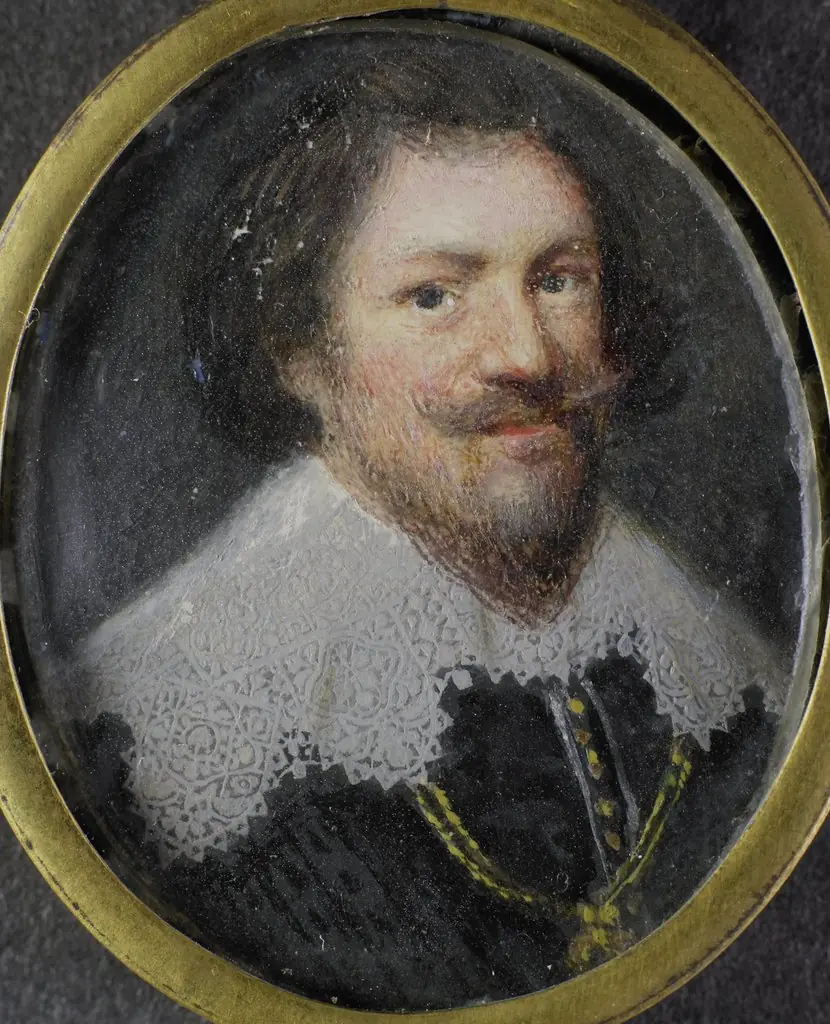
The work is a small, circular portrait executed on copper, depicting Frederik Hendrik van Oranje‑Nassau (1584‑1647). Rendered in a limited palette, the figure is set against a dark background that isolates his face and attire, emphasizing his status as a prominent Dutch noble.
Subject & Meaning
Frederik Hendrik, a leading statesman of the Dutch Republic, is presented with a white lace collar over a dark jacket, symbols of his rank and refinement. The direct gaze and meticulous rendering of his features convey both authority and personal presence, typical of portraiture intended to affirm lineage and political stature.
Technique & Style
The artist employed chiaroscuro on the copper surface, using strong contrasts of light and shadow to model the facial features and give the portrait a three‑dimensional quality. The smooth, reflective copper allows fine detail in the hair, moustache, and lace, while the dark background deepens the sense of volume.
History & Provenance
Created during the early 17th century, the portrait reflects the period’s interest in commemorating members of the House of Orange. While specific ownership records are limited, the work has been associated with collections of Dutch aristocratic portraiture and has circulated among European private holdings before entering a museum context.
Context
In the Dutch Golden Age, portraiture on copper was prized for its durability and luminous surface, enabling artists to achieve precise detail. This medium suited the portrayal of high‑ranking individuals like Frederik Hendrik, whose image served both personal commemoration and public propaganda.
Legacy
The painting exemplifies the technical skill and representational aims of early modern Dutch portraiture, influencing later depictions of political figures on similar media. Its preservation on copper offers scholars insight into material choices and aesthetic priorities of the era.
Artist & collection

 Domestic Scene
 Giacomo and Cardinal Marco, investing Andrea, Abbot of San Zeno, with his Benefice
 The Nymph of Fontainebleau
 Portrait of a Woman
 Madonna and Child with Saints in the Enclosed Garden
 Venus and Minerva
 Family Group of Four on Sofa
 Wall painting from Room H of the Villa of P. Fannius Synistor at Boscoreale
 Portrait of Franciscus Planté, Clergyman at Zevenbergen and in Brazil
 Portrait of a Man, Said to Be Philip Wharton (1613–1696), Fourth Baron Wharton
 Portrait of Petrus Baard, Physician and Poet from Leeuwarden
 Endymion Porter (1587–1649)
 Portrait of a man
 Portret van een man in zeventiende-eeuwse kleding
 Portret van een officier
 Portrait of Johan van Nijenborgh, Poet in Groningen
 Portrait of a Man
 Portrait of Frederick V, Elector Palatine, King of Bohemia